Customer Support Training

Customer Support Training that Improves CSAT & Resolution Time

Agents rehearse angry customers, escalations, and edge cases in realistic AI roleplays, then get scored on real interactions with the same scorecards.
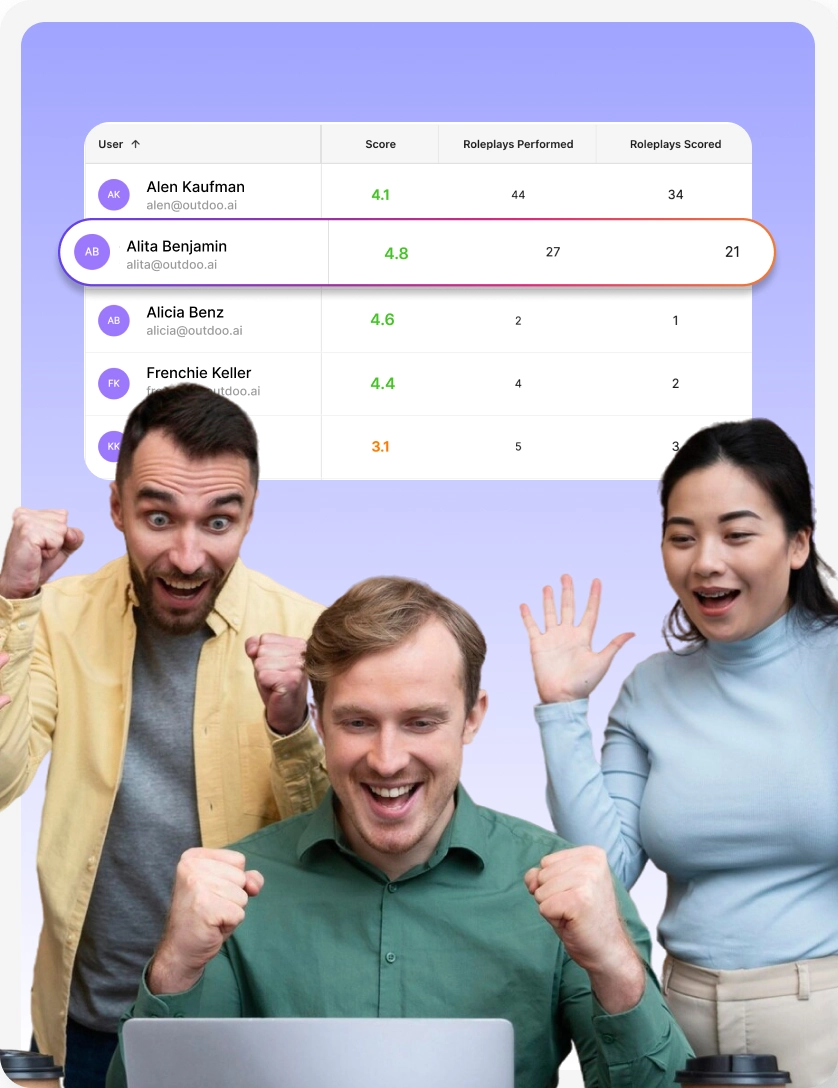
47% faster ramp for new support agents
3x increase in process adherence across teams
29% improvement in CSAT scores

Why Customer Support Training Fails to
Improve Outcomes

Classroom training skips the angry customers and edge cases, every agent improvises differently, and L&D can't see what happens on live interactions.

Agents aren’t prepared for real scenarios

Training doesn’t reflect angry customers, edge cases, or complex conversations.

Support quality varies across agents

Each agent handles situations differently, leading to inconsistent customer experiences.

No visibility into performance

Teams can’t see how agents handle empathy, clarity, or resolution in real interactions.
The Value of Outdoo AI

From Training to Consistent Support Execution

Outdoo connects roleplay practice, workflow simulation, and real interaction scoring into a closed loop. Support teams prepare in a controlled environment, learn how to handle conversations and workflows correctly, and improve with feedback tied to CSAT, resolution time, and consistency.

Practice Real Customer Conversations

Standard onboarding covers easy tickets. Angry customers and edge cases are what break new agents, so those get rehearsed first.
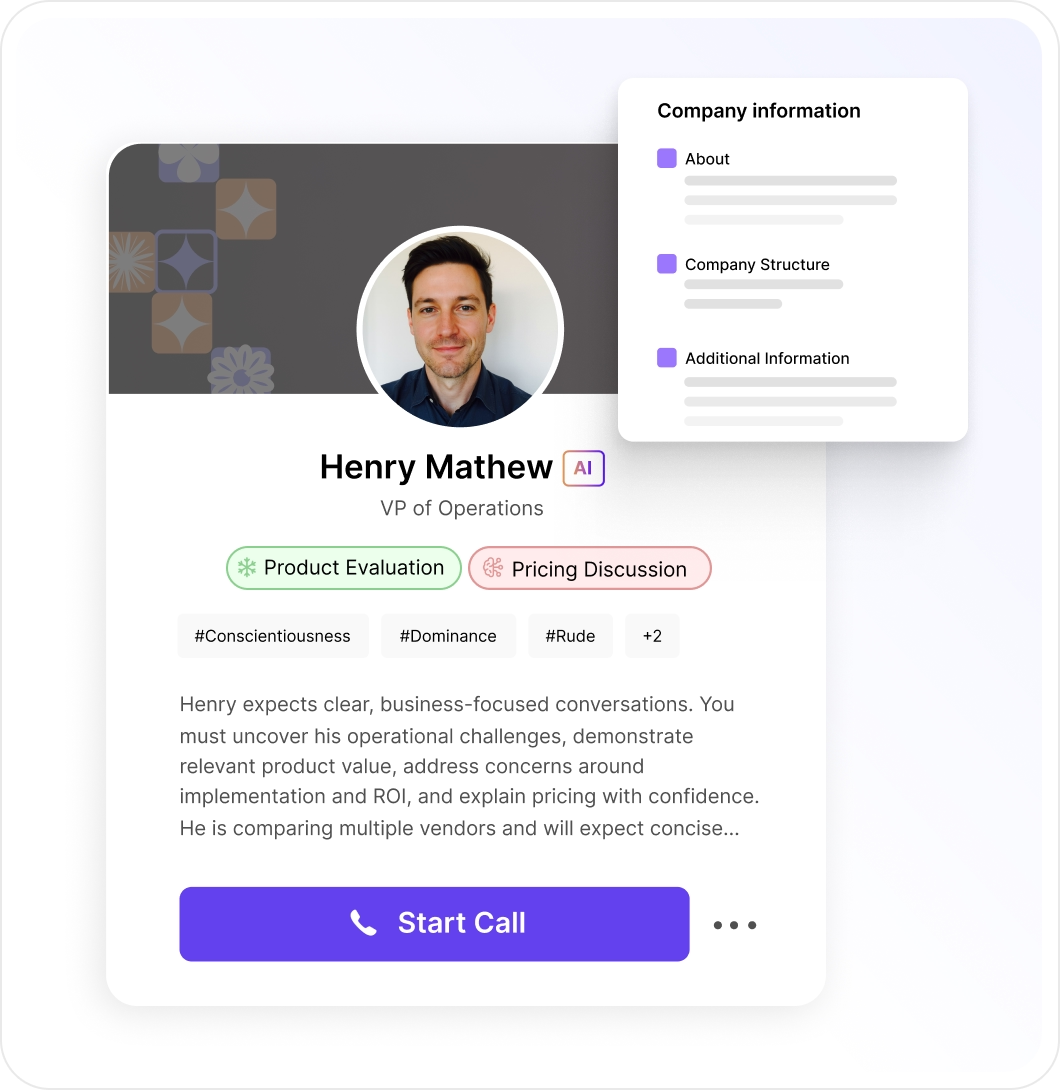
Simulate angry customers, edge cases, and complex issues
Prepare agents for chat, voice, and ticket interactions
Benchmark readiness before agents go live

Simulate Support Workflows

An agent can say the right things and still misroute a ticket. Practicing the system alongside conversation catches that before day one.

Practice ticket handling, escalation, and documentation flows
Mirror real systems and support processes
Build accuracy before handling real customer issues

Evaluate Real Interactions

Training can feel productive without changing agent behavior live. Scoring both with the same rubric makes 'did this work' measurable.
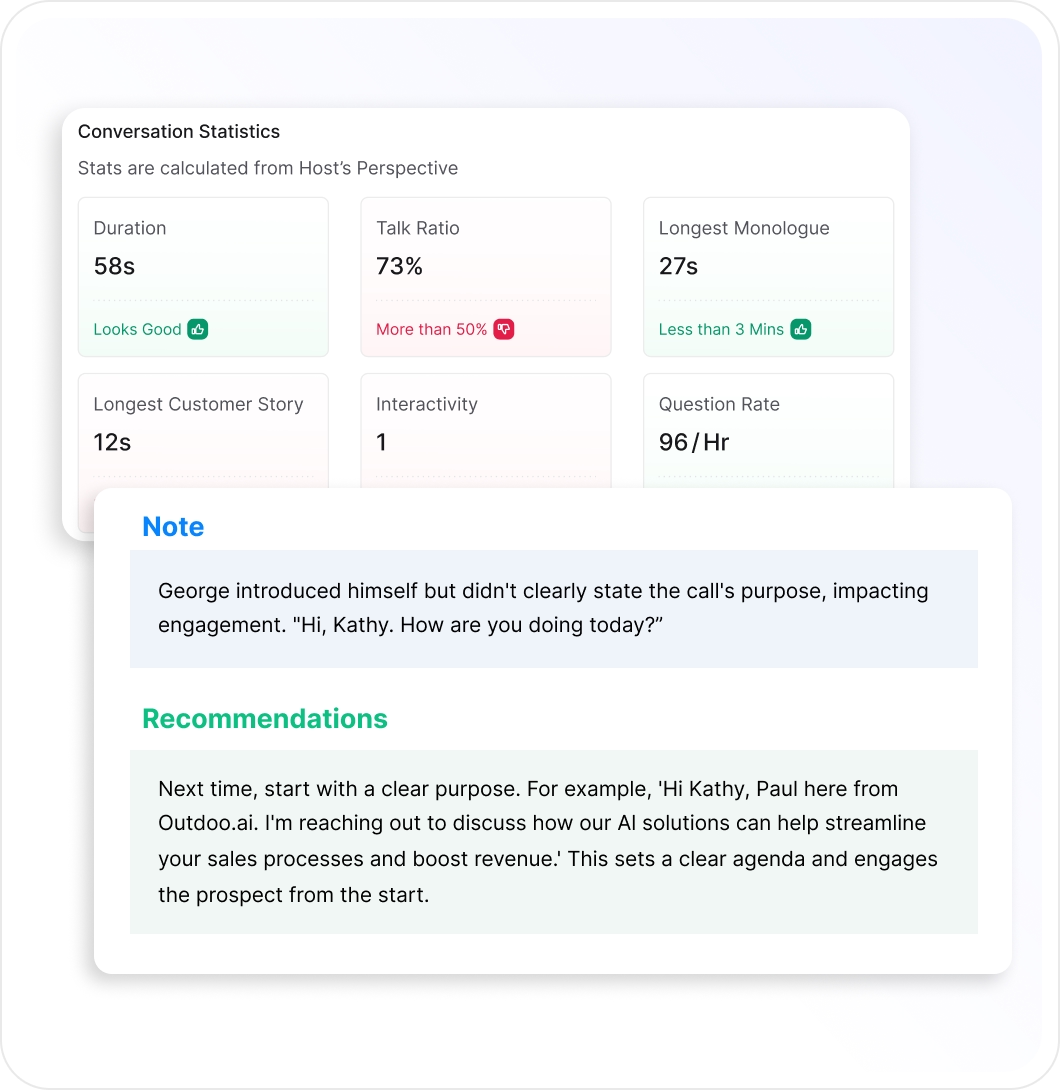
Score empathy, clarity, and resolution quality
Identify gaps in handling and decision-making
Compare performance across agents and teams

Continous Skill Improvement

A gap left for scheduled training repeats across dozens of tickets first. Closing it the moment it's flagged keeps quality consistent.
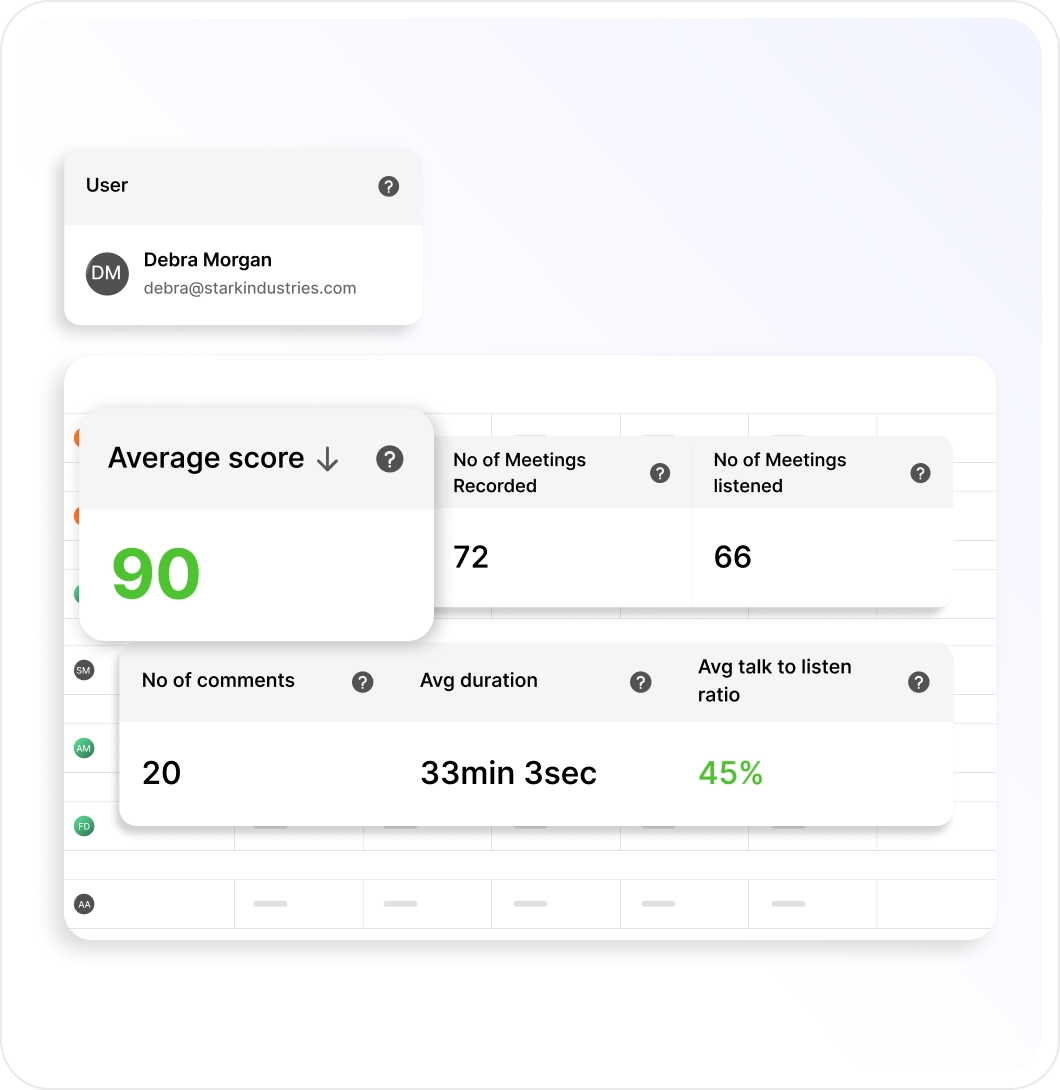
Reinforce best practices through targeted training
Close gaps in handling complex and repeat issues
Improve consistency across teams and channels

Measure Support Outcomes

L&D reports completions. Support leadership reports CSAT and resolution time. Tracking handling quality against that same data is what connects the two.
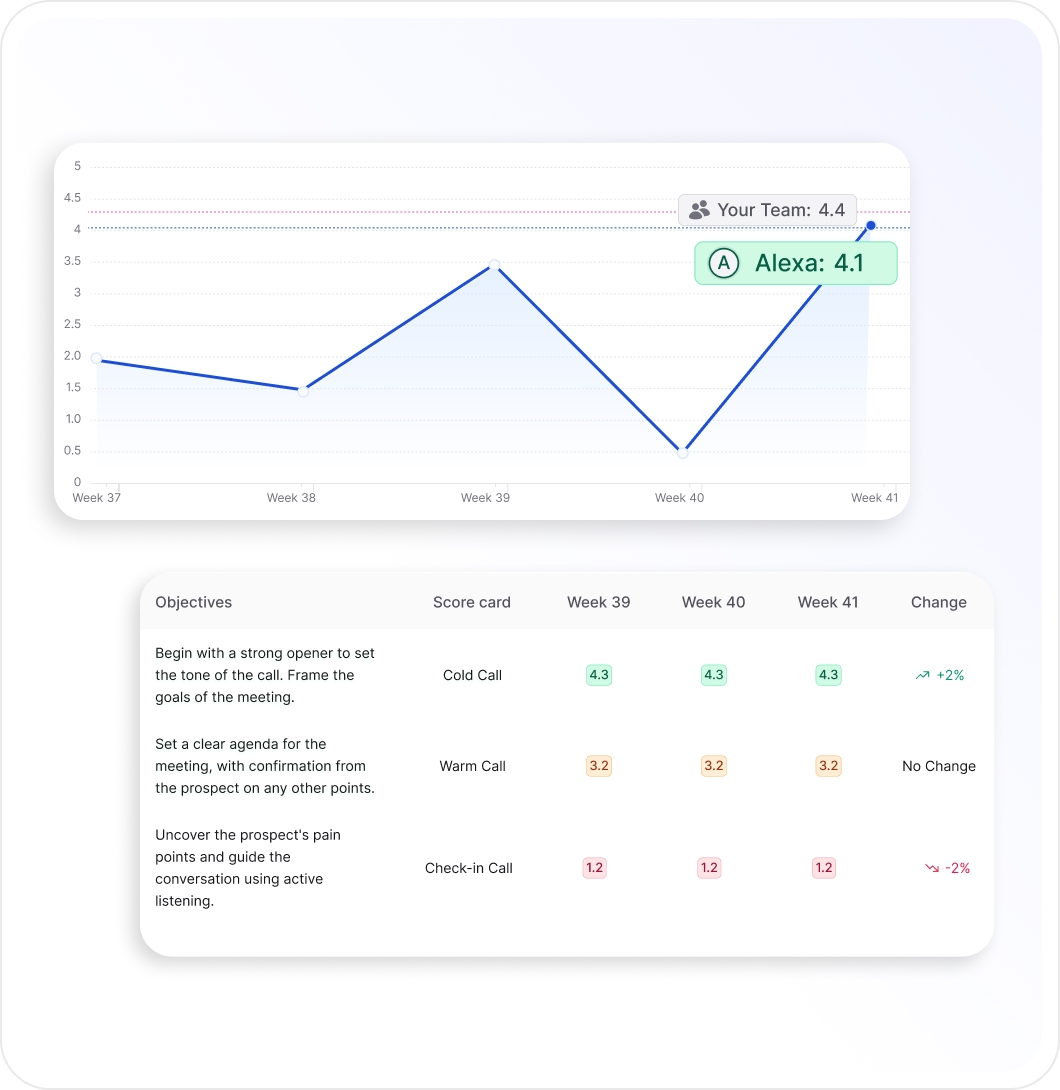
Track handling quality and resolution performance
Identify trends across teams and interaction types
Connect training to CSAT, resolution time, and retention

Enterprise-Grade Security

Built for regulated, global deployments. GDPR, HIPAA, CCPA, and SOC 2 compliant.

What Customers Say

28% Better Objection Handling

Practicing post-sale conversations keeps our teams sharp and confident exactly when it matters most , retention and follow-through.

Beau Cullen
Revenue Leadership, Globe Life

3 Regions, One Framework

For our managers in LatAm & Europe, having coaching data in the same format as North America changes how they participate in global enablement, everyone's working from the same framework.

Trevor Peglowski
Readiness & Learner Experiences, Cvent

40% Less Call Admin

Practicing against an AI that pushes back like a real engineer changes how you walk into the actual conversation.

Gustav Bergman
GTM, Cloudflare AI Infra

Frequently asked questions

Everything you need to know about the product and how it works for support teams.
What is customer service simulation training?
It's AI-powered practice where support agents rehearse real customer conversations (routine questions, complaints, escalations) before they happen live, so agents build confidence and consistency without any risk to a real customer relationship.
How does Outdoo help enablement leaders prove ROI?
AI-powered simulations where candidates engage in real-world scenarios to showcase their skills and fit. ROI is visible in dashboards and exportable reports.
Can it handle real customer scenarios like escalations?
Yes. Roleplays cover angry customers, complex issues, and escalations, so agents face the hard scenarios in practice before they face them live.
How does it improve CSAT and resolution time?
Agents practice, get scored feedback, and close specific gaps. Real interactions get resolved faster and more consistently, which shows up in CSAT.
Does it work across chat, call, and email support?
Yes, training can be tailored for different support channels, ensuring agents are prepared for chat, voice, and ticket-based interactions.
How does it keep service quality consistent?
Every agent practices the same scenarios and is scored on the same parameters, in training and on real interactions, across all teams.
Does it integrate with our existing support tools?
Yes, it integrates with tools like Zendesk, Salesforce, and other support platforms to align training with real workflows.
How does AI coaching improve objection handling?
It gives reps a safe environment to practice real objections over and over, get immediate structured feedback on what they got right and wrong, and build the muscle memory to respond naturally when the same objection comes up on a live call.
What types of sales objections can AI roleplay simulate?
AI roleplay platforms like Outdoo can simulate the objections reps actually face most: price and budget pushback, competitor comparisons, timing and urgency stalls, authority and stakeholder redirects, and status-quo resistance, using personas built from your own customer and deal data.
Is it enterprise-ready and secure?
Yes. Outdoo meets enterprise standards with SOC 2 certification, GDPR compliance, SSO, encryption, and audit logging.

See How Outdoo Turns Practice Into Results
Get a walkthrough of AI roleplays and unified real-call scoring, tailored to your use cases.