Banking
AI Roleplay and Training for Banking Teams
Advisors practice lending, retail, and wealth scenarios in AI roleplays before they sit with customers, applying product knowledge, risk checks, and process steps the way your bank defines them.
57% faster onboarding for new banking advisors
31% higher conversion rates across interactions
41% fewer compliance and workflow errors
.avif)



Trusted by Leading Enterprise Teams Worldwide















Why Banking Teams Struggle with Execution Readiness
Why banking teams struggle with execution readiness. Banking outcomes depend on accurate decisions, risk checks, and process adherence, yet training rarely reflects real customer situations and multi-step execution.

Pressure to Ramp in Regulated Environments
New advisors are expected to handle products, risk checks, and workflows quickly, but real readiness takes longer than the schedule allows.

Breakdown Between Knowledge and Decisions
Advisors know product details but stumble when customers ask about rates, eligibility, tradeoffs, or financial impact in live conversations.

Inconsistent Advisor Decisions
Similar customer situations get handled differently across advisors, creating variation in qualification, recommendations, and risk handling.
Roleplay Scenarios Designed for Every Banking Function
Advisors practice real interactions in scenarios aligned to risk frameworks, customer behavior, and product workflows.

AI Roleplays for Retail Banking
AI Roleplay for Retail Banking
Retail conversations are high-volume and repetitive by design, so small deviations compound fast into inconsistent KYC checks and missed cross-sell moments. Structured practice closes that gap before advisors hit the floor.
Ensure consistency across customer conversations
Follow KYC and service workflows accurately
Improve cross-sell through structured interactions
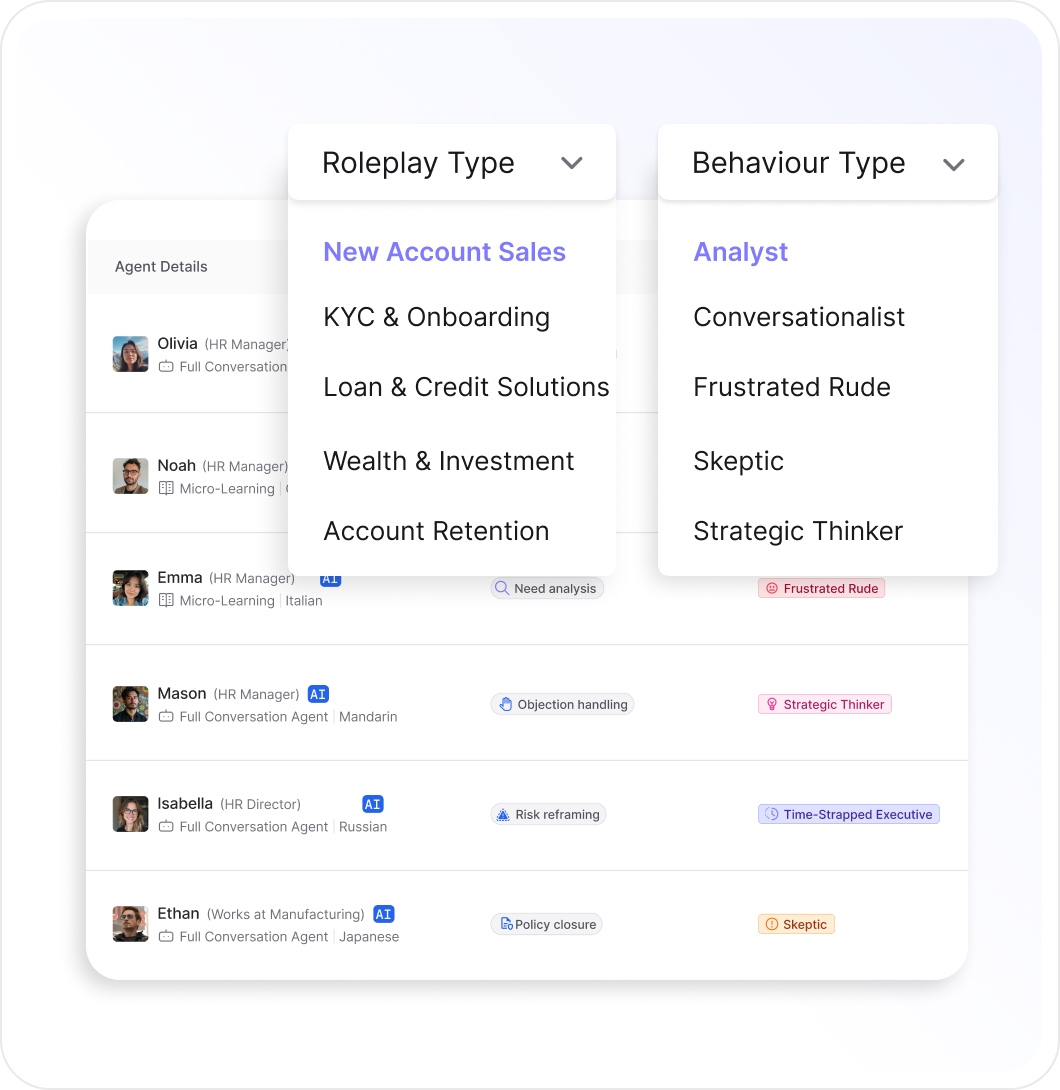
AI Roleplay for Lending Services
AI Roleplay for Lending Scenarios
Lending conversations mix math and emotion: eligibility numbers and approval anxiety. Advisors who've only memorized the rate sheet freeze when a customer pushes on both at once. Rehearsing the objection alongside the calculation turns knowledge into a confident answer.
Qualify customers with clarity and accuracy
Explain rates, terms, and eligibility clearly
Handle objections around approvals and risk
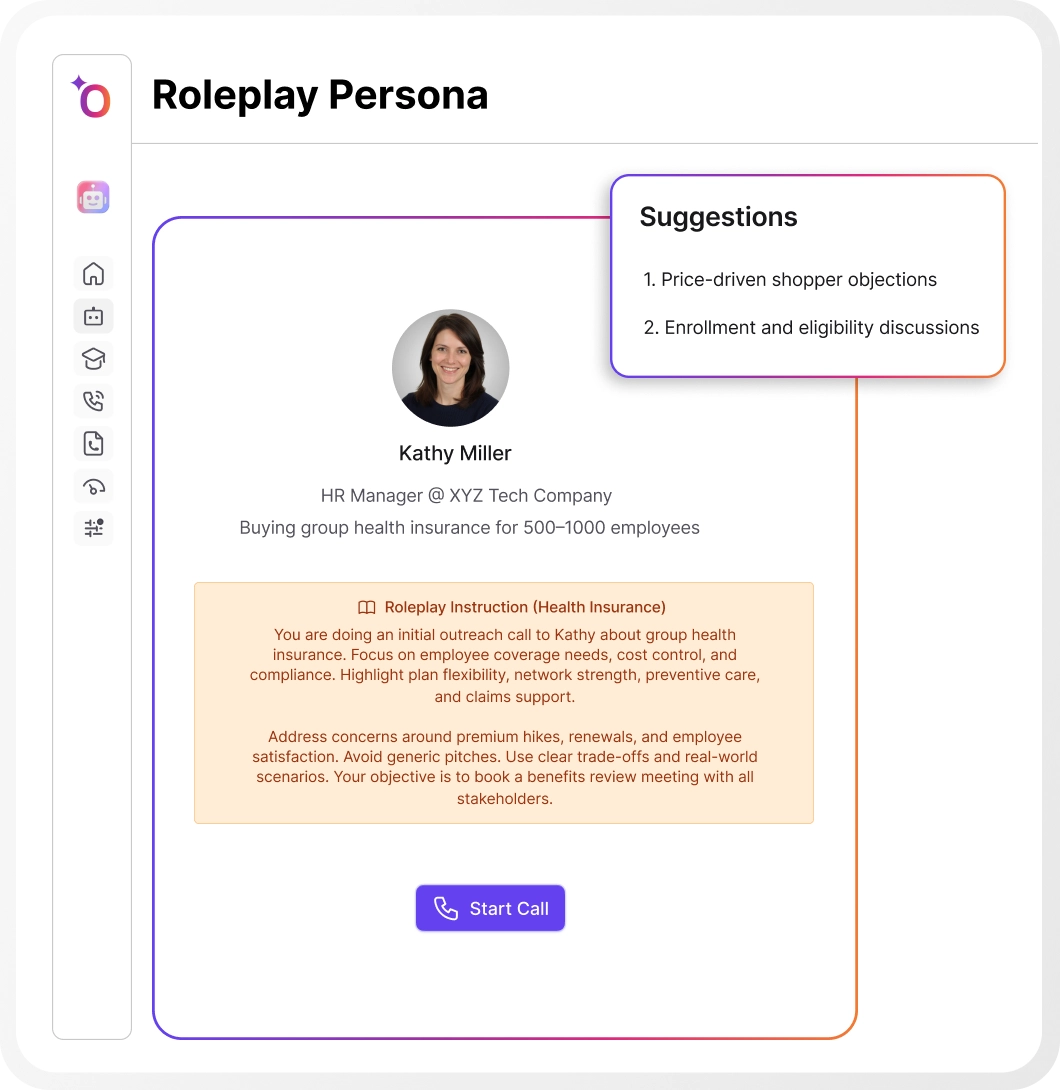
AI Roleplay for Wealth Management
AI Roleplay for Wealth Management
Wealth conversations get judged less on the recommendation than on whether the client believes the advisor understands their risk tolerance and horizon. That trust has to be demonstrated in the room, not just documented in the file. Practicing the suitability conversation, not just the product pitch, builds that credibility.
Build trust through structured advisory conversations
Align recommendations with risk and suitability
Navigate long-term planning and client objections
AI Roleplay & Coaching for Banking
Why Banking Teams Choose Outdoo
Built for banks that need training to show up as accurate execution, risk-aware decisions, and measurable performance across interactions and workflows.
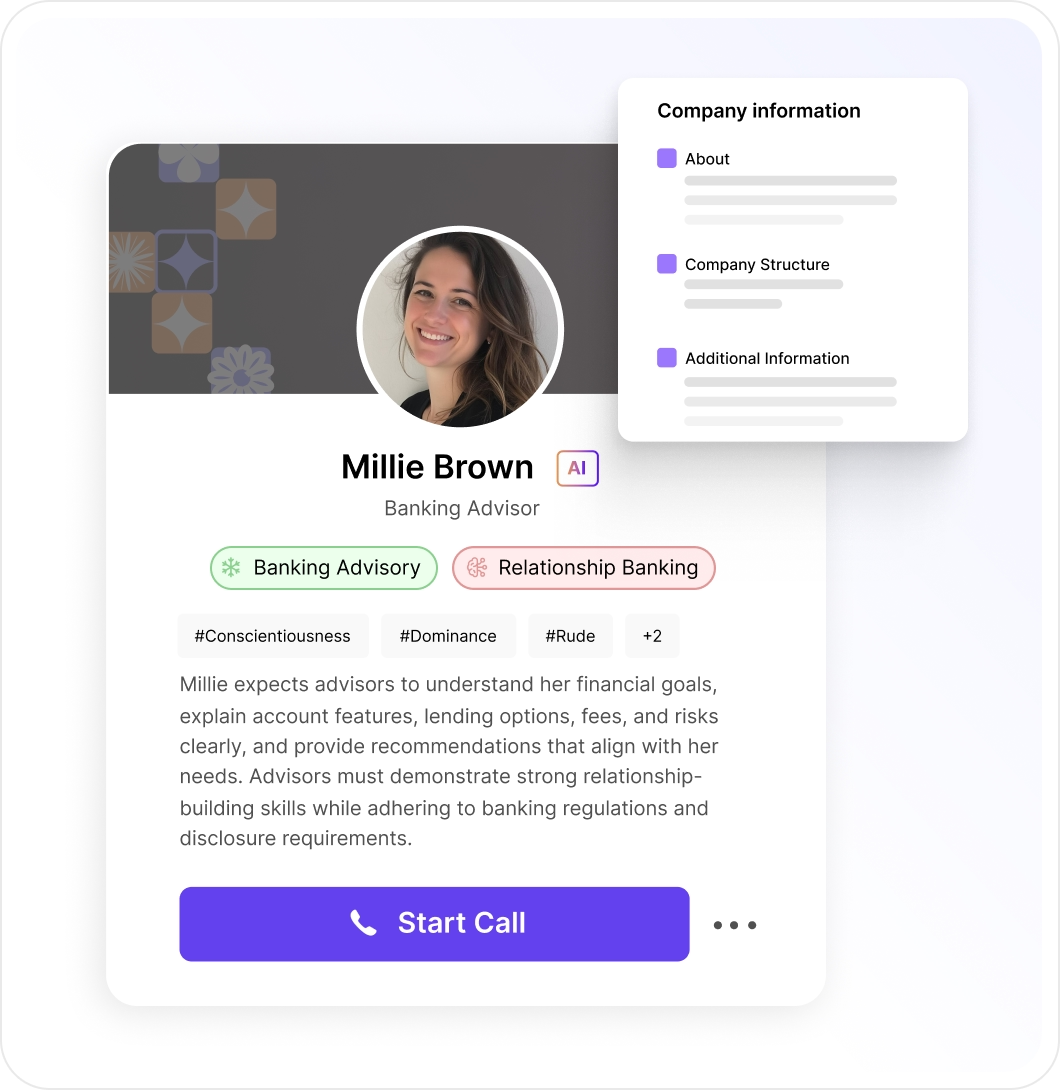
Practice Real Banking Scenarios Before Execution
Bank advisors rarely stay in one lane. A retail conversation turns into a lending question, then a referral to wealth. Rehearsing all three functions together, not one at a time, prepares advisors for the conversation as it actually happens.
Apply Your Methodology Across Every Interaction
Roleplays score against your bank's own risk framework, not a generic sales rubric. That turns KYC and qualification from a checklist advisors remember on good days into the standard every advisor is held to, every time.
Evaluate Real Interactions with Consistent Standards
Scoring live calls with the same framework used in practice puts practice and real-call scores on one scale. Gaps in qualification or risk handling surface as they start, not at the next audit.

Train for Workflows, Not Just Conversations
Most banking errors don't happen in what the advisor says. They happen in what gets typed into the system after the call ends. Extending practice into data entry and application steps catches what a talk-track-only script misses.

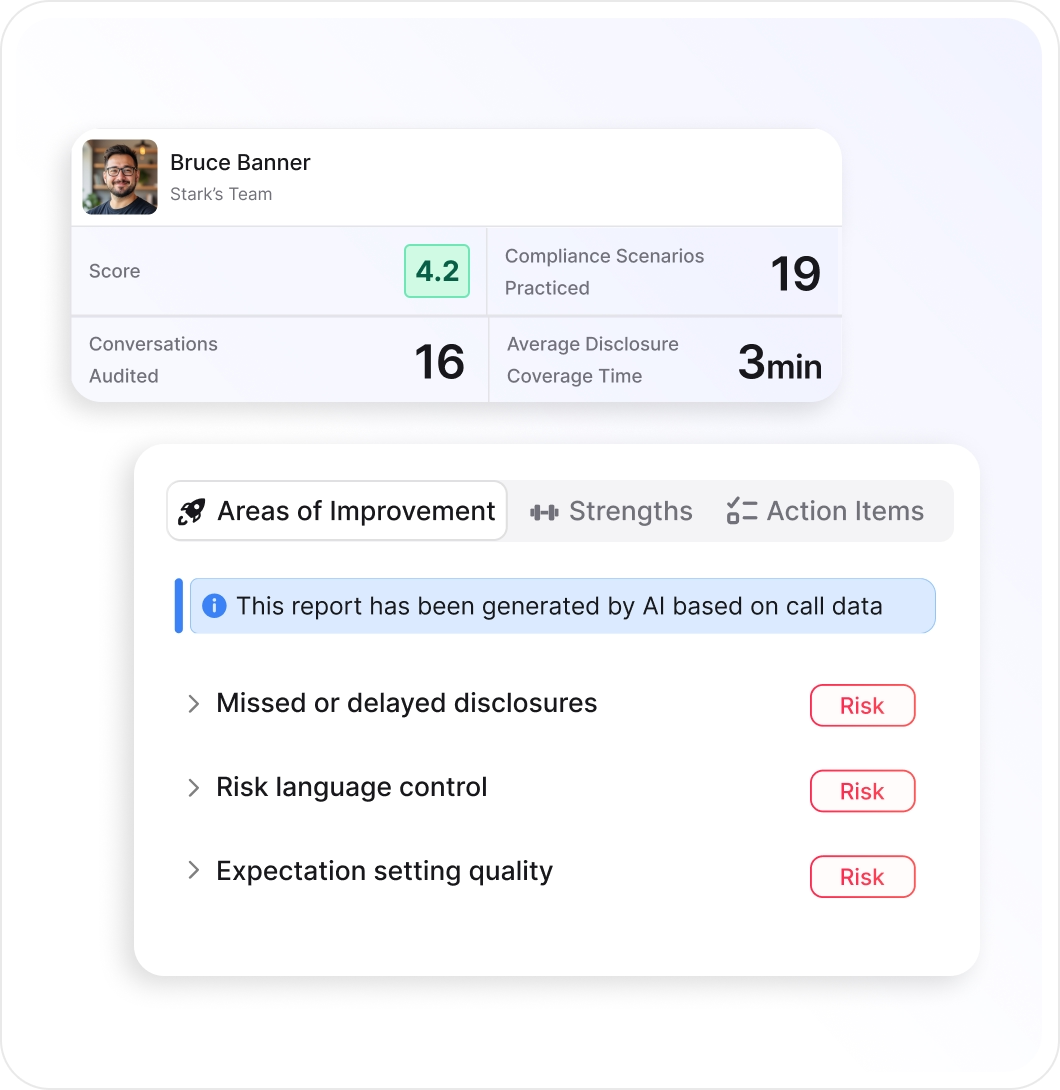
Catch Risks and Gaps Early
Every skipped risk check costs more the later it's caught. Surfaced in practice, it's a coaching conversation; surfaced in a live approval, it's a compliance incident. Catching it in rehearsal drives the 41% drop in compliance and workflow errors.
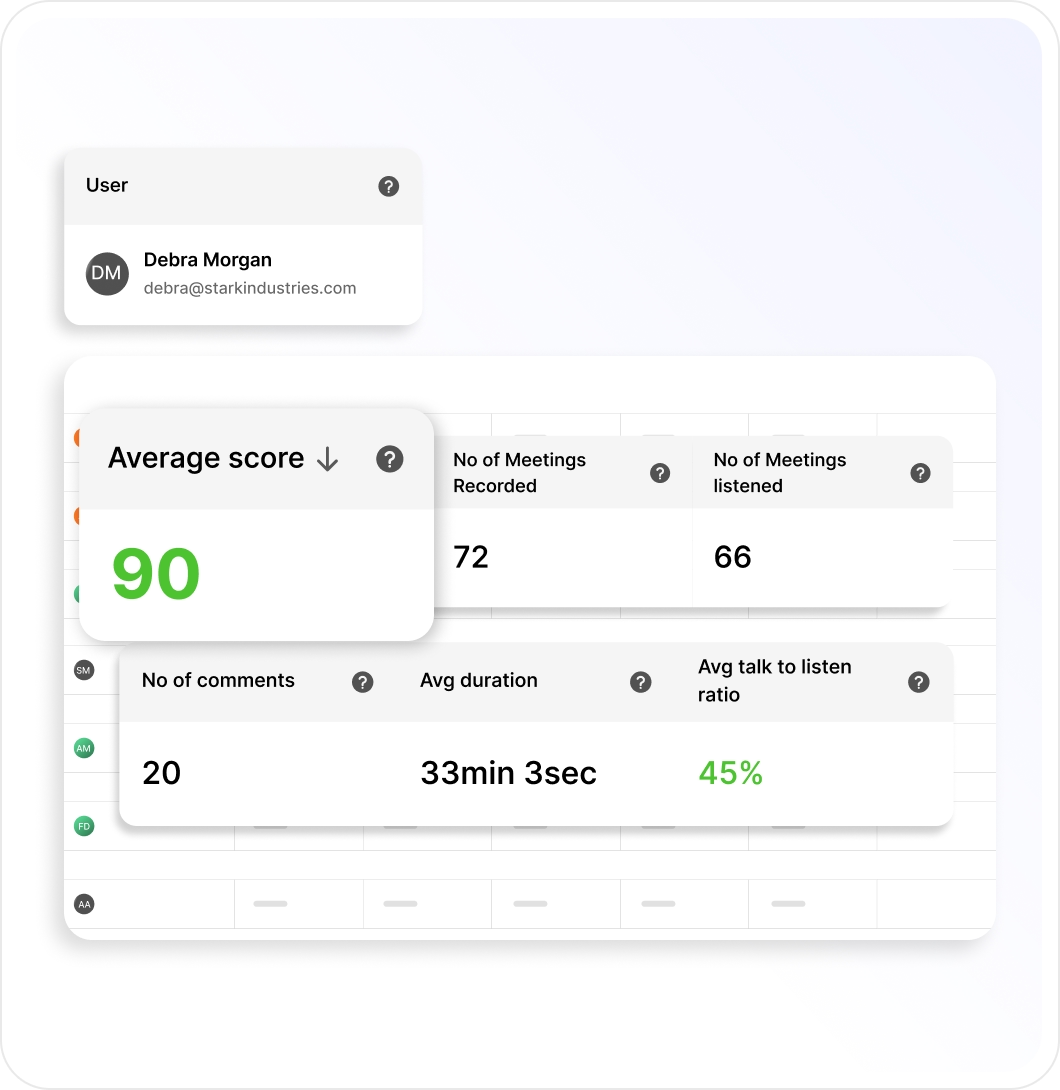
Track Readiness and Performance Across Teams
Readiness data broken down by advisor and role turns coaching from blanket retraining into a targeted fix. Leaders see exactly which advisor or branch is driving a gap in qualification or conversion, instead of retraining everyone because a regional number looks soft.
Enterprise-Grade Security
Built for regulated, global deployments. GDPR, HIPAA, CCPA, and SOC 2 compliant.







Frequently asked questions
Everything you need to know about the product and billing.
Can Outdoo support different banking functions and roles?
Yes. Outdoo covers retail banking, lending, and wealth management, with scenarios matched to each function's products, workflows, and customer interactions.
How does Outdoo help improve advisor readiness?
Advisors practice real scenarios before customer exposure, and every interaction gets evaluated the same way, so teams ramp faster and perform with confidence.
Can Outdoo enforce processes like KYC and risk checks?
Yes. Your bank's frameworks apply across roleplays and real interactions, keeping qualification steps, KYC requirements, and risk processes consistent.
Does Outdoo train workflows in addition to conversations?
Yes. Teams practice conversations plus workflows like data capture, application steps, and system updates.
How does Outdoo measure performance across teams?
Unified AI scorecards evaluate interactions and track readiness, so leaders can find gaps, measure improvement, and connect training to outcomes.
Is it secure for policyholder data?
Yes. Outdoo is SOC 2 certified, GDPR compliant, and supports SSO, encryption, and audit logging.
See How Outdoo Turns Practice Into Results
Get a walkthrough of AI roleplays and unified real-call scoring, built around your use cases.