
- Docebo alone leaves a gap in field execution: Course completion in Docebo does not confirm whether sales reps apply learned skills during real customer conversations.
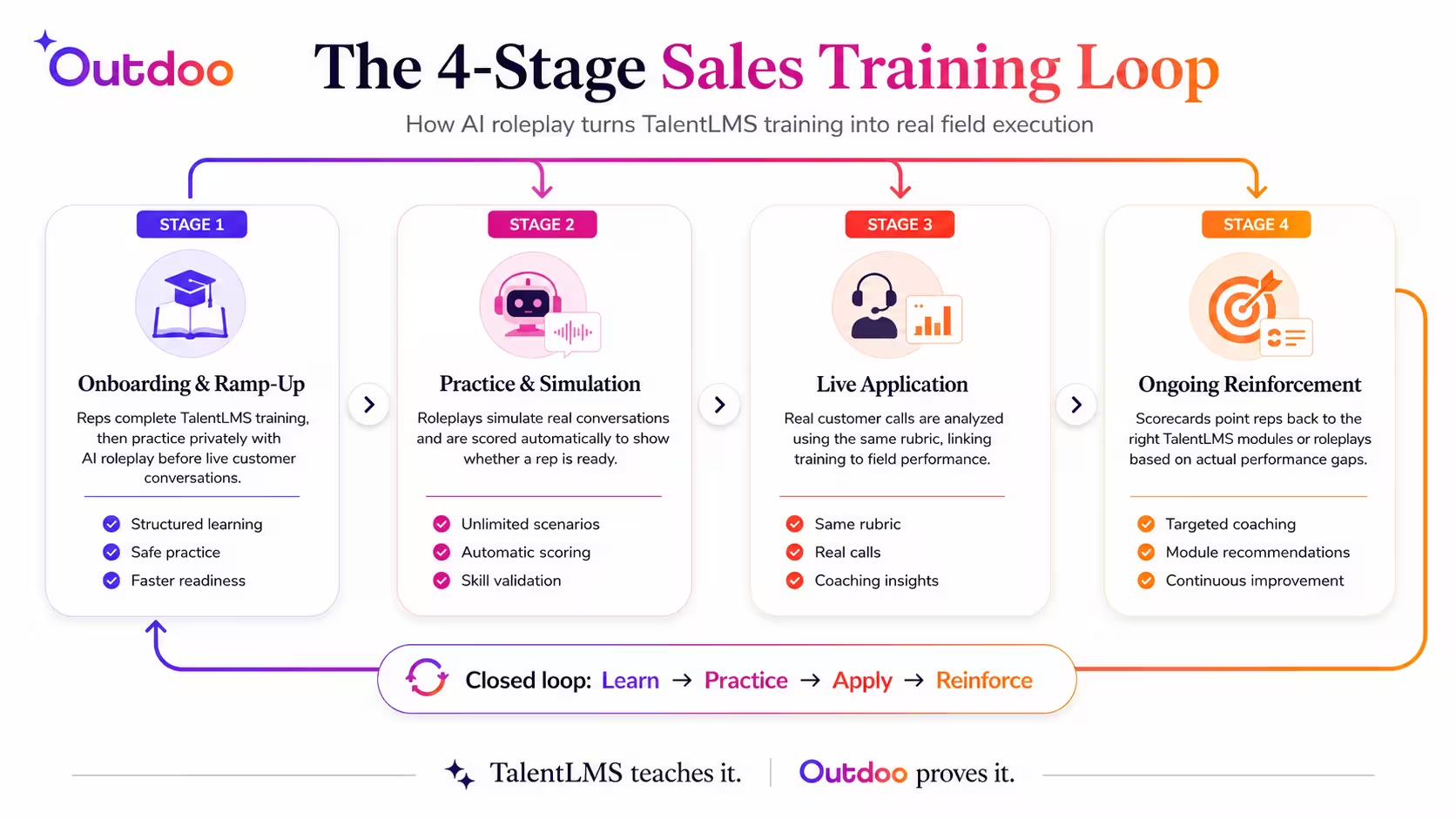
- Four stage loop connects practice to live performance: Onboarding, simulation, live application, and reinforcement form a closed loop that turns the LMS into a performance engine.
- Outdoo AI extends Docebo via SCORM without replacing it: Outdoo AI roleplays export as SCORM packages and embed inside Docebo learning paths, letting reps practice without leaving the LMS.
- Methodology scoring and multilingual depth fill native gaps: Enterprise teams often need MEDDIC or Challenger rubrics and multi-persona simulations that go beyond Docebo Roleplay's native communication metrics.
Companies running Docebo deliver training reliably. The harder question is whether reps actually apply what they learn once they are in front of a customer. This post looks at where AI roleplay in Docebo fits, what the integrated workflow looks like, and how to operationalize it with Outdoo AI.
Docebo is good at the things a learning platform should be good at: structured content, learning paths, certifications, and increasingly, native practice through Docebo Roleplay. For many teams that is plenty. But for enterprise sales orgs running a complex motion, with methodology depth, buying-committee dynamics, and a real need to confirm skills on live calls, the LMS layer alone often leaves a gap between course completion and field execution. The Outdoo AI and Docebo integration is built to close that gap. Here is how the pieces fit together.
The Docebo-based sales training stack today
It is worth being honest about the baseline, because most enterprise sales orgs running Docebo already have a capable stack. Typically that includes:
- Structured learning paths and certifications.
- AI-assisted course creation through Docebo's Creator tools.
- Native AI roleplay through Docebo Roleplay, with adjustable AI avatars (personality dialed from agreeable to skeptical), voice and chat interactions today with video avatars on the way, and scorecards covering clarity, confidence, energy, and topic coverage.
- Integrations with Salesforce, HubSpot, and BI tools.
- Mobile learning through Go.Learn.
- Gamification to drive engagement and recall.
The point here is not that Docebo is incomplete. For a lot of teams, this stack does the job. The argument is narrower: for enterprise teams running a complex sales motion that depends on methodology rigor, multi-persona dynamics, and live-call validation, a few additional layers extend what is possible without replacing the LMS foundation. The rest of this post is about those layers and where they slot in.
Where AI roleplay fits in a Docebo-based program
The cleanest way to see it is as a loop with four stages. Each one builds on the Docebo content your team already has.
Stage 1: Onboarding and ramp-up
Reps complete structured Docebo content, then move into AI roleplay scenarios that simulate real customer conversations and test decision-making before they ever dial a live prospect. Practice is unlimited and private, so the first hard conversation does not happen with a real buyer on the line.
Stage 2: Practice and simulation
Roleplays are scored automatically. That performance data is what tells you whether a rep is ready for customer-facing work or needs more reinforcement first, rather than inferring readiness from a completion checkmark.
Stage 3: Live application
Real calls are recorded and analyzed on the same rubric used in practice. Coaching is grounded in whether the rep actually demonstrates the skills covered during their Docebo training, so you can see the connection between what was taught and what happens in the field.
Stage 4: Ongoing reinforcement
When a key behavior is missing from live conversations, the scorecard points the rep back to the specific Docebo module that covers it, or to a new roleplay. Reinforcement is based on demonstrated need rather than a fixed schedule.
The architectural shift is the real story here. This turns the LMS from a content repository into a performance engine, with practice and live behavioral data feeding back into the learning system instead of stopping at completion.
Here is the whole loop at a glance.
What native LMS roleplay covers, and where enterprise teams need more
Docebo Roleplay is a genuinely useful tool, and this is not a teardown. It is worth being clear about what it handles well on its own, and then about the layers a sophisticated enterprise program typically needs beyond native LMS roleplay.
What Is Docebo Roleplay?
Docebo Roleplay is Docebo's native AI roleplay feature: in-LMS practice with adjustable AI avatars, voice and chat interactions, and scorecards on clarity, confidence, energy, and topic coverage.
What Docebo Roleplay handles well natively
- Dynamic AI avatars with adjustable disposition, from friendly to challenging.
- Multiple modalities, with voice and chat today and video avatars coming.
- Personalized scorecards on energy, confidence, clarity, and topic coverage.
- Pre-set scenario templates alongside custom scenario design.
- Practice delivered right inside the LMS, with the security and admin controls you already run.
- Fast deployment for general skill practice like objection handling and cold calling.
Where enterprise teams often need more depth
- Methodology-aligned scoring. SPIN, BANT, MEDDIC, MEDDPICC, and Challenger rubrics applied consistently across both practice and live calls, not just general communication metrics.
- Multi-persona buying-committee simulation. Practice against up to three AI stakeholders in a single resumable scenario, for example a CFO, a champion, and procurement, which mirrors how enterprise deals actually get decided.
- Live-call validation on the same rubric. Real customer calls scored against the same scorecard used in practice, pulled in from the call tools you already use like Gong or Clari, so you can confirm skills transfer.
- Performance-informed reinforcement. Real-call performance surfaces recommendations back to specific Docebo modules, so coaching targets the actual gap rather than a generic refresh.
- Post-call workflow simulation. Reps practice the process around the conversation, logging, disposition selection, and process navigation, in environments that mirror the actual tools and software they use, whether that is Salesforce, HubSpot, Pipedrive, or another system.
- Multilingual depth. Practice and methodology scoring across 120+ languages, which matters for global teams (Docebo's native AI coaching is English-only today).
- Certification with behavioral evidence. Roleplay outcomes built into certification programs as auditable proof of readiness, not just completion.
None of this replaces the LMS. It extends it, which is exactly the point of integrating the two rather than choosing between them. Teams on TalentLMS can follow the same model: see how AI roleplay fits into TalentLMS-based training.
How the Outdoo AI and Docebo integration works
This is the operational answer to the depth question above. The connection runs in both directions: practice content and outcomes flow into Docebo, and Docebo activity informs what happens in Outdoo AI.
Using Outdoo AI in Docebo
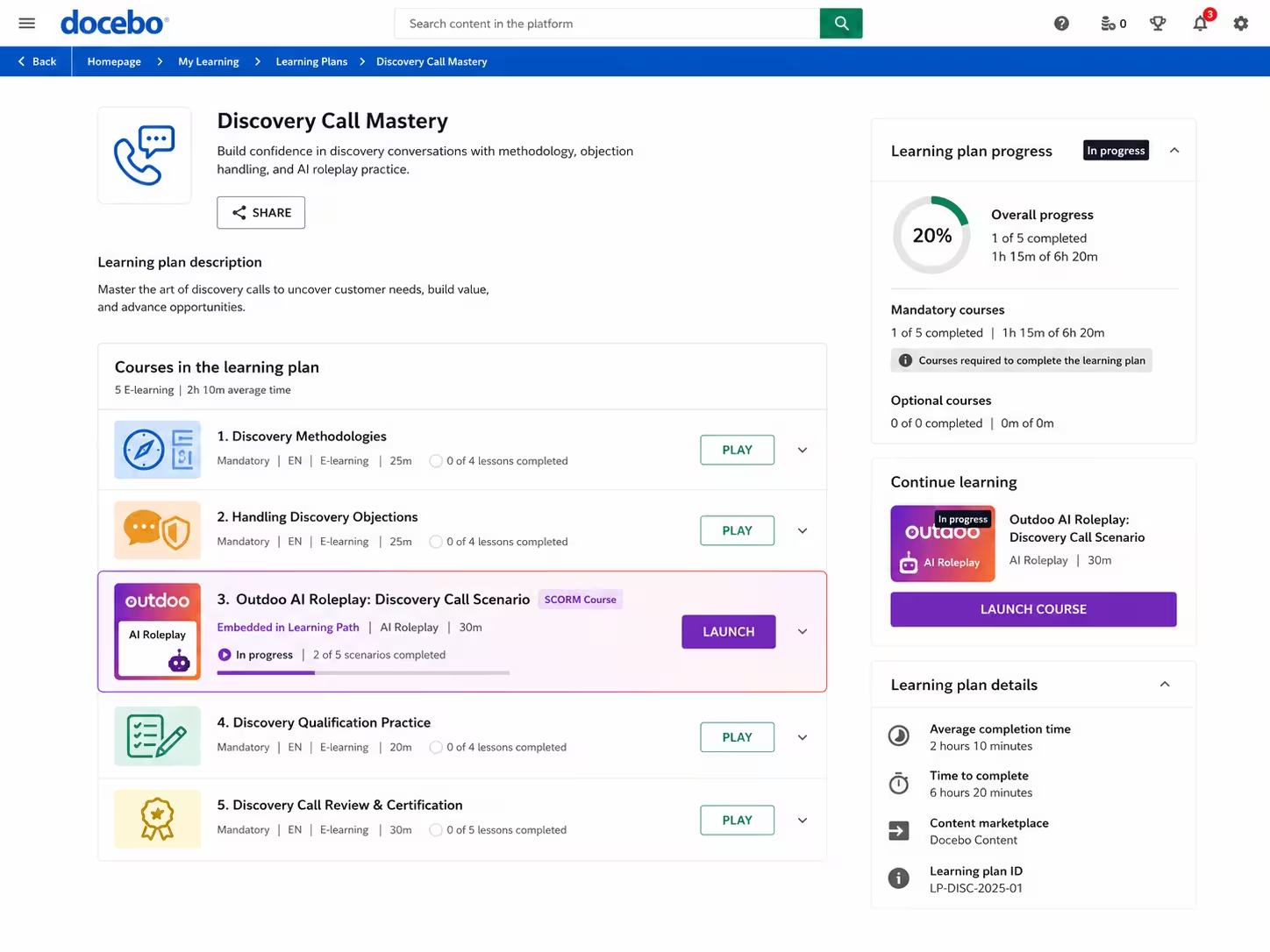
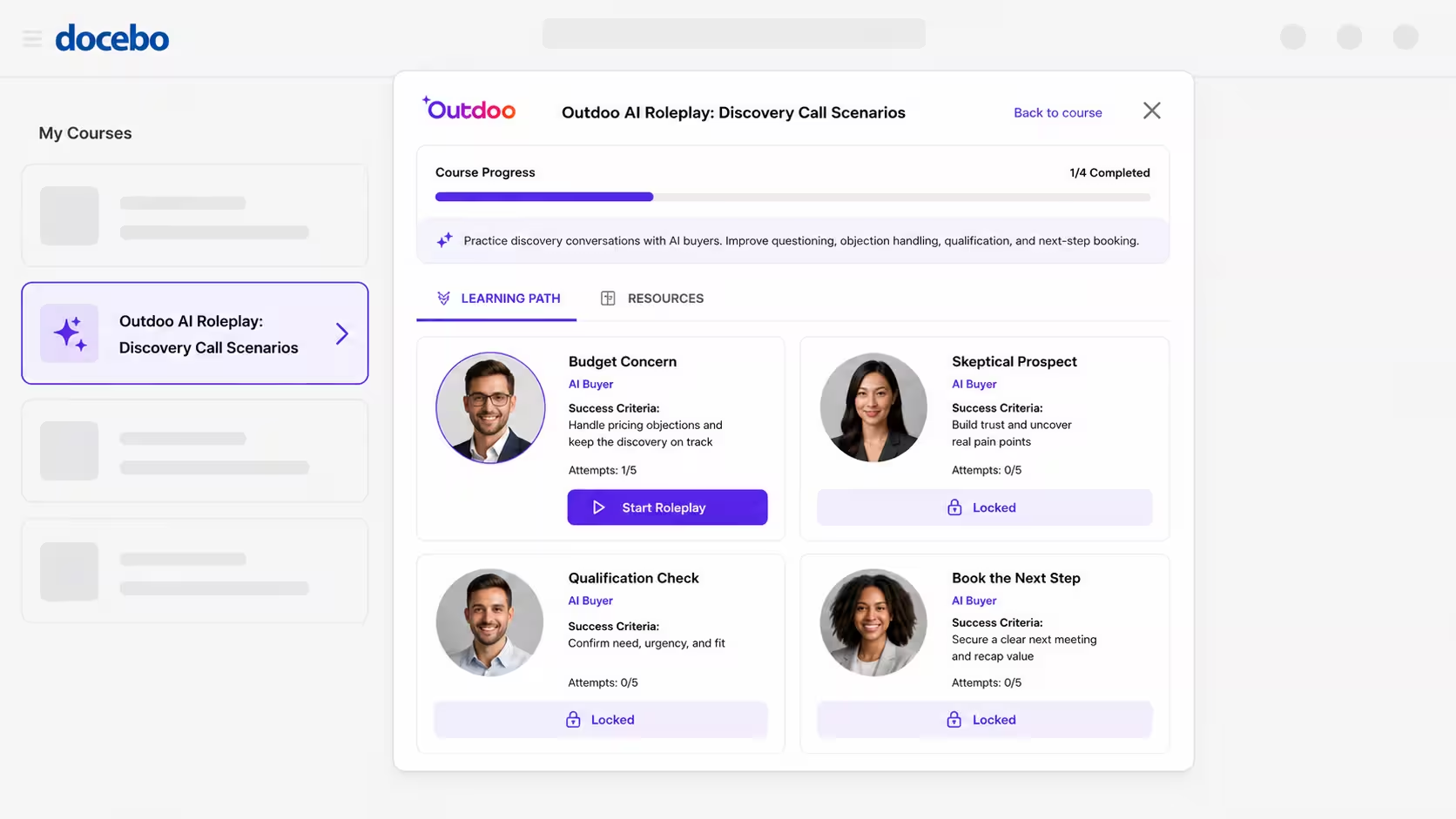
- AI roleplays are exported in SCORM-compatible format and embedded directly into Docebo learning paths, so reps practice without leaving the LMS.
- Real sales conversations, annotated and curated into playlists, are used inside Docebo as practical context alongside the formal content.
- The scorecard recommends specific Docebo modules based on roleplay or real-call performance, so learning paths adapt to where a rep actually needs work.
- Roleplay outcomes are included in certification programs as evidence of readiness.
Below is how the Outdoo AI roleplay course shows up in a Docebo learning path.
And here is what a rep sees when they launch an Outdoo AI course within Docebo.
Using Docebo data in Outdoo AI
- When a rep completes a Docebo training module, that completion is the cue to practice: their manager enrolls them in the matching roleplay in Outdoo AI.
- When a rep performs well in training but struggles on real calls, Outdoo AI surfaces that learning-to-performance gap so coaching can target it directly.
- Combined reporting brings Docebo training data and Outdoo AI behavioral insight into one view, so enablement leaders see completion and real performance side by side.
Standards and governance
- Supports SCORM and xAPI for broad LMS compatibility.
- Learning and roleplay activity is time-stamped and versioned, linked to performance data for audits and certification.
- Enterprise-grade security and regional compliance frameworks, including SOC 2 Type 2, GDPR, HIPAA, and CCPA.
Setting it up
Setup is admin-level and needs no engineering. Build the roleplay in Outdoo AI, export it as a SCORM package, and import it into the relevant Docebo course or learning path. Results flow back through SCORM and xAPI reporting, so Docebo reflects how reps performed, not just that they finished.
New to SCORM imports? This shows the steps, using SCORM Cloud as an example.
Roleplays are not the only thing you can build and export this way. You can also create full courses in Outdoo AI and export them as SCORM into Docebo, so structured learning and scored practice sit in one place. See the courses overview for how course creation works.
Here's how you can create a training course and certification in Outdoo AI.
Quick note: In order to tie each learner's completion back to Outdoo AI, admins or end users need to set the LMS Learner ID in their Outdoo AI profile under Settings.
What to measure once the loop is running
The reason to connect practice, live calls, and Docebo is that you can finally measure readiness instead of inferring it. A few metrics worth watching:
| Metric | What it tells you |
|---|---|
| Roleplay score progression | Whether reps improve with practice, and how fast they reach a ready threshold |
| Practice-to-live score gap | Whether the skill transfers from the simulation to real calls, by rep and by skill |
| Time to first ready score | A cleaner ramp signal than course completion alone |
| Certification pass rate | How many reps certify on demonstrated skill, not just completed content |
| Coaching time per rep | Whether managers spend time where the data says it is needed |
How to get started
You do not need to rebuild your Docebo program to test this. Start small and let the data make the case.
- Pick one high-stakes moment. Choose a single conversation that decides deals, a discovery call or a common objection, and build one roleplay for it in Outdoo AI.
- Connect it to the matching module. Export it as SCORM, drop it into the relevant Docebo course, and have managers enroll their reps after they complete that module.
- Watch the scores. Within one learning cycle you will have practice scores tied to a real course, and a clear read on whether the training is landing.
- Expand the loop. Add more roleplays mapped to more modules, turn on live-call scoring against the same rubric, and let reinforcement follow what the data shows.
Closing the gap between completion and performance
Docebo gives you a reliable way to deliver training and a capable native practice tool. For enterprise teams that need methodology depth, buying-committee simulation, and proof that skills show up on real calls, AI roleplay in Docebo extends that foundation into a full performance loop. Docebo teaches it, Outdoo AI proves it, and your team finally knows who is ready to sell.
If you want to map this to your own Docebo program and sales motion, schedule a demo.
Outdoo builds AI Roleplays from your own calls and scores practice and real calls with one scorecard. Rated #1 for Best Results on G2.
Frequently Asked Questions
1. Does Docebo have AI roleplay built in?
Yes. Docebo Roleplay offers native, in-LMS practice with adjustable AI avatars, voice and chat interactions, and scorecards on clarity, confidence, energy, and topic coverage. Outdoo AI adds depth on top: methodology-aligned scoring, multi-persona simulation, and live-call validation on the same rubric.
2. How do I add AI roleplay to Docebo?
Build the roleplay in Outdoo AI, export it as a SCORM package, and import it into Docebo. You can then deploy it inside any course or learning path, and reps practice without leaving the LMS.
3. Can I track roleplay scores inside Docebo?
Yes. Roleplay scores and completion flow back into Docebo through SCORM and xAPI reporting, so your LMS reflects how a rep performed, not just that they finished.
4. Can roleplay results count toward certification?
Yes. Roleplay outcomes can be built into Docebo certification programs as evidence of readiness, and the activity is time-stamped and versioned for audits.
5. Which sales methodologies can Outdoo AI score against?
Outdoo AI scores roleplays and live calls against frameworks including SPIN, BANT, MEDDIC, MEDDPICC, and Challenger, as well as a custom rubric built around your own playbook.