



Struggling to turn training into real sales performance with Allego? You're not alone. Many sales teams like Allego's all-in-one approach to revenue enablement (video learning, content hubs, coaching) yet still find gaps in adoption and outcomes. Maybe reps rarely use the content library in the moment of need, or coaching feels too static to change live sales conversations.
In this guide, we'll compare top Allego alternatives for 2026, from AI-driven roleplay tools to streamlined content platforms, so you can find the best fit for your team's unique needs.
What is Allego?
Allego is a modern revenue enablement and sales training platform that combines video-based learning, content management, peer collaboration, and coaching (including conversation intelligence) in one app. Founded in 2013, Allego became popular with hybrid and distributed sales teams by letting reps watch on-demand training, record pitch videos, share best-practice demos, and get feedback from managers or AI on laptop or mobile.
In 2026, Allego pushed further into agentic AI with its Allego 9 release, adding AI Deal Expert Chat, auto-generated battlecards, and deeper deal-risk alerts inside Deal Navigator. It was also named a Leader in Gartner's inaugural 2025 Magic Quadrant for Revenue Enablement Platforms.

Core capabilities of Allego include:
- A central content library for playbooks, decks, and marketing assets
- A video coaching module for practice, certifications, and peer feedback
- Built-in call recording and analysis through conversation intelligence
- Virtual SKO hosting, peer channels, and "digital sales rooms" for buyer collaboration
In short, Allego positions itself as an all-in-one enablement suite: content, learning, and coaching in a single platform.
Why Companies Explore Alternatives to Allego
Allego's breadth is impressive, but it can also create friction. Common reasons companies re-evaluate Allego in 2026:
1. Complex setup & heavy administration
With many modules, Allego can be time-consuming to implement, structure, and maintain. Admins often rely heavily on CSMs to configure pages, update content, and keep everything organized, which can slow down ROI for lean teams.
2. “Busy” user experience
The interface is powerful but dense. Multi-layered navigation and long content lists can make reps feel like they're "clicking down a rabbit hole" of videos and slides. When it's hard to find the right asset quickly, reps revert to old habits and adoption suffers.
3. Module-based pricing & rising cost
Pricing is opaque and often split across modules (learning, content, digital sales rooms, etc.). To get the full benefits and analytics, you typically need the full suite, which can be expensive, especially for smaller teams that don't use everything. Allego's standard commercial model reinforces this: contracts are typically structured as per-seat, paid annually upfront, on a standard three-year term. That's a real commitment before you know how much of the suite your team will actually use.
4. Video-first workflows, little in-flow guidance
Allego is built around asynchronous video learning and formal practice. But in day-to-day selling, reps often need in-flow support (quick answers in the CRM, live call assist, or just-in-time guidance), which Allego doesn't fully address.
5. Limited depth in AI coaching & analytics
Allego has added AI for pitch scoring and recommendations, but some teams want more advanced AI roleplays, realistic simulations, or deeper revenue intelligence. They’re turning to tools that specialize in AI-driven coaching, real-time assist, or pipeline analytics.
To be fair, Allego's own AI coaching and Deal Navigator are mature, shipped features. Of the five reasons above, this is the one where Allego already competes head-on. The difference comes down to how deep the practice goes (workflow simulation, multi-persona calls) and how the underlying platform is priced.
If you're seeing lagging adoption, admin overhead, or gaps in coaching and real-time support, it may be time to consider alternatives. The enablement market has no shortage of strong options that can complement or replace parts of Allego to better match your priorities.
Top 12 Allego Alternatives in 2026
Still not sure Allego is the perfect fit? Many organizations are experimenting with tools built for how selling happens today. Below, we break down 12 top Allego alternatives – what they do best, where they fall short, and who they’re ideal for.
Quick Comparison Snapshot
1. Outdoo AI
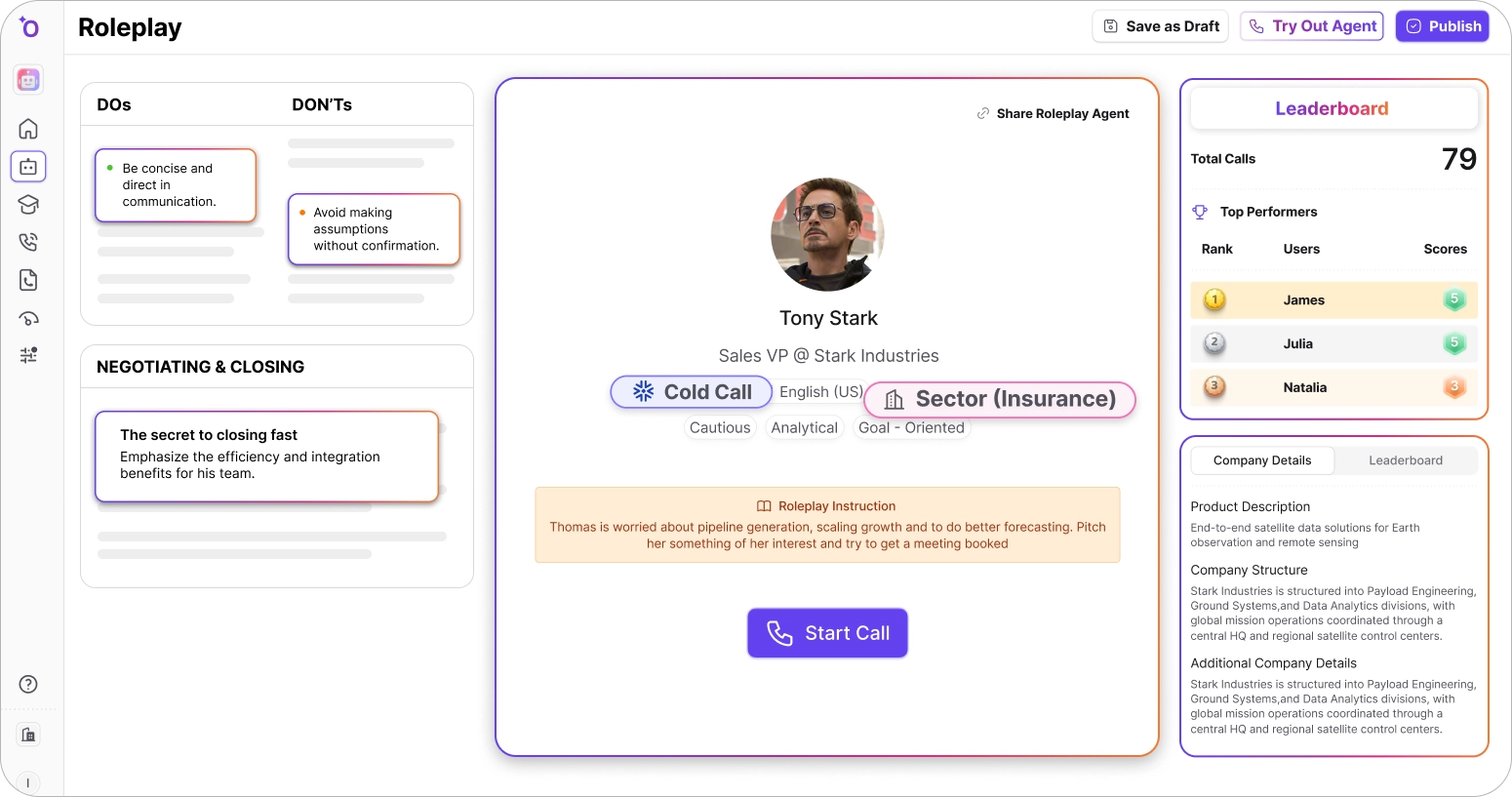
Outdoo is an AI roleplay and coaching platform for customer-facing teams. Instead of acting as a big content repository, it focuses purely on making reps better through realistic practice and feedback. Reps jump into lifelike AI conversations that mirror real pipeline scenarios, then get instant, objective feedback on how they handled them. Managers see dashboards on skill gaps and strengths, so coaching time goes exactly where it’s needed.
Pros:
Cons:
Ideal for: Teams that “know what to say” from training but struggle with how to say it on real calls, and want measurable improvement in conversations, objection handling, and win rates.
Pricing: Free plan with usage credits, plus usage-based and Enterprise (custom quote) plans. Schedule a demo to find the right fit for your team.
Testimonial:
2. Highspot

Highspot is a leading sales enablement platform focused on making content easy to find and use “in the flow” of selling. Its core strength is an intuitive content hub with smart tagging, search, and recommendations, so reps always know which deck, battlecard, or case study to use next. It also offers light training, guided selling pages, and strong CRM/email integrations.
Pros
Cons
Ideal for: Companies whose biggest pain is content chaos (reps using old decks, or marketing assets scattered across drives) and who want a single system sellers actually enjoy using.
Pricing: Quote-based, often in the $50–$80 per-user/month range for full functionality at mid-to-large scale.
Testimonial:
3. Mindtickle

Mindtickle is a revenue enablement platform built around sales readiness: structured onboarding, ongoing training, and rigorous assessments. It combines LMS-style courses, quizzes, AI-assisted video role-plays, and readiness analytics to show who is truly "ready to sell" before they hit the field.
Pros
Cons
Ideal for: Large or scaling organizations that want rigorous, data-driven training and certification across big salesforces, with leadership visibility into readiness.
Pricing: Custom, generally on the higher end; even mid-sized deployments can run into the tens or hundreds of thousands annually.
Testimonial:
4. Showpad

Showpad blends a central content hub with lightweight training and coaching. It’s known for a clean, user-friendly interface and polished seller and buyer experiences, including “Shared Spaces” – branded portals where you collaborate with prospects on content.
Pros
Cons:
Ideal for: Mid-market organizations wanting a visually polished, easy-to-run content + basic training platform, especially in industries like manufacturing or medical devices.
Pricing: Tiered per-user pricing; often cited in the $32–$42 per-user/month range depending on edition and modules.
Testimonial:
5. Seismic

Seismic is the heavyweight enterprise enablement cloud, combining advanced content management, dynamic document creation, robust governance, and integrated training (via its Lessonly acquisition). It’s designed to be the central enablement backbone for large, complex organizations.
Pros
Cons
Ideal for: Global enterprises with huge content volumes, multiple product lines, and strict compliance needs who want one central enablement cloud.
Pricing: Custom, typically high six-figure annual contracts for large deployments; mid-market deals still represent a major investment.
6. Bigtincan

Bigtincan is a broad enablement platform known for mobile-first experiences and content automation. Through acquisitions like Brainshark and ClearSlide, it bundles content, learning, and engagement into one suite aimed especially at field and frontline sellers.
Pros
Cons
Ideal for: Organizations with large field or frontline teams (e.g. retail, pharma, manufacturing) who need powerful mobile enablement and decent training in one place.
Pricing: Custom and modular; per-user costs vary by which bundles (content, learning, engagement) you enable.
Testimonial:
7. Mediafly

Mediafly positions itself as a revenue enablement platform that combines content management, interactive value selling tools, and revenue intelligence (via its InsightSquared acquisition). It goes beyond content to show how buyer engagement and activity data impact pipeline and forecasts.
Pros
Cons
Ideal for: Teams that want to tightly connect enablement with revenue analytics and lean heavily into value-based, consultative selling.
Pricing: Custom; expect enterprise-grade pricing, especially when including revenue intelligence modules.
Testimonial:
8. Salesloft

Salesloft is a leading sales engagement platform focused on cadences, multi-channel outreach, and call intelligence. It’s not a classic content/training tool, but many teams consider it as an “execution-first” alternative when their bigger problem is activity and follow-through rather than content.
Pros
Cons
Ideal for: Teams with decent enablement content but poor execution discipline, needing better outreach consistency, follow-up, and manager visibility into day-to-day selling.
Pricing: Tiered, quote-based; commonly in the $75–$125+ per-user/month range depending on features and intelligence modules.
Testimonial:
9. SalesHood

SalesHood is a sales enablement platform centered on peer-to-peer learning and collaborative "Huddles." It blends training, content, and coaching into a relatively light, team-friendly package, great for mid-market teams that want speed and simplicity.
Pros
Cons
Ideal for: Mid-sized SaaS and B2B sales teams that want collaborative, video-driven learning and quick-hit enablement without a heavy admin burden.
Pricing: Typically $40–$60 per user per month on annual contracts, with tiers based on features and analytics.
Testimonial:
10. Spekit

Spekit is an in-app learning and digital adoption tool that surfaces bite-sized guidance inside tools like Salesforce, email, and more. Instead of sending reps to a portal, Spekit overlays tooltips, sidebars, and searchable snippets right where work happens.
Pros
Cons
Ideal for: Teams rolling out or cleaning up tools like Salesforce who need in-flow guidance and lightweight enablement more than a full LMS.
Pricing: Per-user SaaS, often cited around $20–$30 per user per month, with discounts at scale.
Testimonial:
11. Guru

Guru is a company-wide knowledge base and “answer engine” that lives where you work. It’s used across sales, support, and more to store FAQs, objection handling, competitive intel, and policies in verified cards that reps can access via browser extension, Slack, or inside apps.
Pros
Cons
Testimonial:
Ideal for: Sales teams in fast-moving markets that need reliable, up-to-date answers on products, competitors, and processes without digging through docs.
Pricing: Freemium for small teams; paid plans usually in the $10–$20 per-user/month range with higher tiers for advanced features.
12. WorkRamp

WorkRamp is a modern all-in-one LMS that serves internal employees and customers. In sales enablement, it offers easy course authoring, role-based learning paths, quizzes, certifications, and pitch practice – all with a more modern UX than traditional LMS platforms.
Pros
Cons
Ideal for: Organizations treating sales enablement as a continuous learning journey and wanting a modern LMS to centralize onboarding and ongoing training across multiple audiences.
Pricing: Custom; often structured as a platform fee plus learner tiers, broadly comparable to modern enterprise LMS pricing.
Estimating ROI for Allego Alternatives
When evaluating alternatives, anchor your decision in ROI rather than features alone. Different categories drive value in different ways:
- AI Roleplay & Coaching (e.g. Outdoo): Model ramp time and win-rate improvements. Even one month faster ramp or a small win-rate lift across many reps can add up to millions.
- Content Hubs (Highspot/Seismic): Quantify hours saved searching for content and the impact of using the right assets (e.g. 5% productivity gain across 50 reps ≈ a few extra headcount in output).
- Readiness Suites (Mindtickle, SalesHood, WorkRamp): Tie training completion and certifications to quota attainment, ramp time, and retention.
- Sales Engagement (Salesloft): Map extra activities to extra meetings and opportunities, then to closed-won deals.
- Digital Adoption & Knowledge (Spekit, Guru): Estimate time saved on repetitive questions, fewer data errors, and smoother onboarding.
You can use the ROI calculator below to get an idea on which alternative would be a best fit for your team.
Which Sales Enablement Tool Should You Choose After Allego?
Rather than looking for a one-size-fits-all replacement, start with your top 2–3 bottlenecks:
- Need basics on a budget (content + FAQs): Pair Guru or Spekit with a simple content repository (Google Drive, SharePoint, or a lightweight hub). Good starter stack for small teams without overspending.
- Training and rep readiness are the priority:
- Choose Outdoo if you care most about practice and call execution.
- Choose Mindtickle if you want deep analytics and structured global programs.
- Choose SalesHood if you want fast, social, peer-driven learning for mid-market teams.
- Want AI and coaching embedded into daily workflows: Outdoo AI stands out here, adding AI practice and real-time coaching alongside your existing content platform.
- Enterprise-grade content and compliance needs: Highspot, Seismic, or Bigtincan shine when your biggest challenge is content sprawl, version control, and governance.
- Execution and follow-through are the real gaps: A sales engagement tool like Salesloft may deliver the fastest impact if your reps simply aren’t doing enough structured outreach.
Most mature teams end up with a stack, not a single product – for example:
- Highspot (content) + Outdoo (coaching) + Spekit (in-app guidance), or
- SalesHood (core enablement) + Guru (knowledge) + Salesloft (execution).
Map your pain points, stack-rank them, and then see which combination of tools addresses those priorities with the highest expected ROI and the implementation effort you can realistically support.
Turning Enablement into Real Sales Impact (Beyond Allego)
The enablement market has exploded, but many teams still struggle to connect training and content to better sales performance. Slide decks and video portals don’t automatically change how reps show up on calls.
The next wave of tools is closing that gap with:
- AI-driven practice and coaching
- Just-in-time guidance inside daily tools
- Tighter links between enablement data and CRM outcomes
Platforms like Outdoo focus on turning “knowing” into “doing” – using AI roleplays before calls and feedback after calls so reps actually master the talk tracks and objection handling your content teaches. When you pair that with a strong content foundation, you evolve from a static enablement library into a true performance engine.
Ultimately, the “best Allego alternative” is the one that makes your reps noticeably more effective – faster ramp, more consistent messaging, sharper discovery, better follow-through, and higher win rates. Start from the outcomes you want, not the feature matrix, and choose tools that will help every rep sell closer to your very best rep.
Frequently Asked Questions
.svg)
Outdoo is the strongest choice for coaching since it uses AI roleplays and real-time feedback to build real selling skills. Mindtickle is best if you need structured, analytics-heavy readiness programs, though it requires more setup.
Highspot offers the most intuitive content experience with powerful search and guided selling. Seismic is better for enterprises needing advanced customization, compliance, and document automation.
Yes. Small teams often succeed with Spekit or Guru, which provide lightweight, low-cost enablement for FAQs and quick guidance. Pair them with a simple shared content library for a budget-friendly setup.
Yes. Outdoo works as a coaching layer on top of Allego, Highspot, or any LMS, helping reps practice and apply your existing playbooks more effectively.
Teams typically switch for a simpler user experience, deeper AI or coaching capabilities, or to reduce cost by choosing more targeted tools. The goal is usually to improve adoption and see clearer enablement ROI.
Table of Contents
Talk to Sales
Have questions about training and enablement for your sales, CS, support, or leadership team? Let's talk.
Talk to Sales