





If you’ve ever logged into your CRM on a Monday and felt like it had aged a decade over the weekend, you’re definitely not alone.
Sales performance doesn’t just drop overnight. It quietly slips away in the same places sales leaders have been fighting for years: inconsistent discovery calls, weak follow-up, deals lingering without key stakeholders, and conversations for further coaching that happen weeks after the damage is done.
Studies indicate that sellers now spend only about 25% of their time actually selling, with the rest eaten up by admin work and manual processes. And let’s be real, a frustrating chunk of that time is spent by sales managers manually scoring calls, gathering feedback, and trying to decipher patterns from spreadsheets that are already outdated the moment they’re created.
Anyone who has led a team for more than a few cycles knows the grind. You’re not running a crime lab, yet somehow every month ends with an investigation into what went wrong and why no one caught it sooner.
A well-built sales scorecard puts an end to that loop.
So let’s start by understanding what a sales scorecard really is!
What Is a Sales Scorecard?
Unlike a dashboard, which looks at team-wide results, a scorecard zeroes in on the individual, their development, their consistency, and the specific actions that move their deals forward. Because scorecards provide real-time visibility, leaders can see how reps are performing in the moment rather than after the damage shows up in the forecast.
Why Modern Sales Teams Need a Scorecard Today
Sales environments flourish on data, transparency, and speed. Reps need clear expectations, and managers need a straightforward, dependable way to coach without drowning in admin work. A dynamic sales scorecard supports this by:
- Making performance visible in real time
- Highlighting behaviors that lead to more effective conversations
- Allowing managers to coach proactively rather than reactively
- Providing reps with a fair and objective way to monitor their progress
So, basically, a scorecard gives you a clear view of how deals are progressing so you can address issues early and support reps in the right areas.
The KPIs a Scorecard Directly Impacts
A modern scorecard ties directly to the KPIs sales leaders care about most:
- Win rate
- Deal velocity
- Pipeline hygiene
- Forecast accuracy
- Rep Ramp time
- Coaching impact
Instead of waiting until the end of the month to notice those KPIs slipping, scorecards keep an eye on the leading behaviors that affect them. They highlight the actions that can signal risk early on and show signs of improvement even sooner.
How Scorecards Align Reps and Managers
One of the biggest challenges inside a sales team is inconsistency: different managers have their own coaching styles, reps interpret expectations in various ways, and the quality of deals can fluctuate significantly. A scorecard helps align everyone’s understanding.
It gives:
- Reps a clear roadmap of what strong execution looks like
- Managers a unified way to evaluate and coach
- Leaders a consistent view of team performance
With a single standard in place, coaching becomes equitable, performance becomes more predictable, and teams can operate more efficiently since everyone knows exactly what is going right and what improvements need to be made.
Now you might be thinking, “Why can’t I just use a dashboard to understand how deals are going?”
And that’s exactly where most teams get misled. Dashboards tell you what happened. Scorecards explain why it happened and what to do next.
So let’s make the difference clear.
Scorecard vs Dashboard: Why Scorecards Drive Behavior Change
Why Sales Teams Should Adopt Scorecards Now
Dashboards help you understand your numbers. Scorecards help you understand your team members.
And when you roll those scorecards up at a team or multi-team level, the insights become even more valuable for a Director of Sales or VP of Sales. The patterns reveal where the real bottlenecks are, not just the ones that show up in the pipeline report.
They give sales teams a clearer view of how deals are being worked, help reps understand exactly where to improve, and make performance conversations more objective. Most importantly, scorecards let leaders act early, long before the quarter-end forecast turns into a rescue mission.
So now that the difference is clear, let’s look at what a scorecard actually delivers for every stakeholder across your sales organization.
The Key Benefits of Using a Sales Scorecard
See how AI coaching turns scorecard data into rep improvement:
A good scorecard does not just help reps. It helps every layer of the sales org work with more clarity, fewer interpretations, and more accountability. Below are the benefits broken down by role so each stakeholder can see where scorecards make the biggest impact.
A. For Sales Managers
1. You know exactly where a rep needs help.
Instead of reviewing random calls or relying on gut feel, scorecards show which part of the rep’s process needs attention.
2. You can coach sooner, not after the quarter is over.
Behavior gaps show up in scorecards long before they show up in pipeline numbers.
3. You save time on prep for one-on-ones.
Scorecards make performance conversations faster because you’re aligned on facts, not opinions.
B. For Sales Enablement Leaders
1. You can measure whether training sticks.
Scorecards show if reps apply the skills taught in onboarding, roleplays, or training sessions.
2. You can design targeted micro-learning sessions that hit the mark.
Instead of broad “everyone attend this” sessions, you build programs around the real gaps across the team.
3. You get consistent standards across all managers.
Scorecards create alignment so enablement team isn’t fighting inconsistent coaching styles.
C. For RevOps Teams
1. You get behavior signals that strengthen forecast accuracy.
A rep may say a deal is going “good,” but the scorecard shows if discovery was weak or follow-up stalled and the real risk indicators.
2. You reduce data turmoil caused by inconsistent execution.
When teams follow the same behaviors, CRM data becomes cleaner and more reliable.
3. You can spot stage-level bottlenecks faster.
Scorecards reveal where deals consistently slow down across teams or segments.
D. For SDR and BDR
1. You improve faster because feedback is specific.
You’re not told to “be better at discovery.” You're told exactly which part of discovery needs work.
2. Ramp time drops because learning becomes structured.
New reps get clarity on what to practice, what to fix, and how progress is measured.
Why Sales Scorecards Matter for Rep Productivity
Scorecards give reps a single source of truth for what to focus on each day, directly supporting rep productivity at every stage. Instead of reacting to whatever is on their calendar, reps get a clear path to stay on track, maintain momentum, and improve call by call.
Here’s how a scorecard directly supports rep productivity where it counts.
1. Give Reps Clear Success Benchmarks
A sales scorecard shows reps exactly what strong discovery looks like, what qualifies as a real next step, and how to judge whether a deal is actually moving forward. Instead of guessing, they see clear expectations for the actions that advance deals asking
- the right discovery questions
- confirming qualification signals
- securing commitments
- and keeping momentum between calls.
These benchmarks help reps focus on behaviors that drive AI Roleplay sales performance, not just activity tracking.
2. Improve Call Outcomes Through Consistency
Inconsistent execution leads to inconsistent deal movement.
A scorecard gives reps a steady structure for every stage of a deal
- early discovery
- deeper qualification
- solution alignment
- and late-stage negotiation.
Instead of relying on intuition, they follow clear steps such as validating needs, confirming next steps, identifying champions, and keeping conversations on track. This consistency strengthens call outcomes and creates smoother deal progress across the sales pipeline.
3. Close Skill Gaps Faster
Managers usually notice issues only after they show up in pipeline numbers, missed discovery details, weak qualification, and weak follow-up. A sales performance scorecard brings these gaps into view earlier by tracking the specific behaviors that slip first:
- shallow questions
- missing budget or timeline checks
- unclear next steps
- lost momentum between meetings.
When leaders see these patterns early, they can coach sooner, keeping deals healthy and helping reps correct problems before they impact the pipeline.
4. Increase Accountability Without Micromanaging
Reps perform best when expectations are clear and fair. A scorecard keeps accountability tied to observable behaviors, preparing for discovery calls, asking key qualification questions, confirming next steps, developing champions, and keeping buyers engaged.
Managers don’t need to monitor every call because the scorecard shows whether the right actions are happening. Reps get ownership of their progress, and managers can coach strategically instead of checking every detail.
To make a sales scorecard useful, you need to track the behaviors that move deals, not the ones that just look productive. So let’s look at the core metrics that actually matter.
Core Metrics to Include in a Sales Scorecard
The strongest scorecards focus on the parts of the sales process where rep behavior directly changes deal momentum. Instead of tracking only final outcomes, they measure how well reps frame the problem, position product value, involve the right stakeholders, and maintain steady engagement throughout the cycle.
These four metric categories cover the full path from first contact to close and make it easier to see where teams need support.
1. Readiness Metrics (Before the Call)
Readiness metrics show whether a rep is prepared before the meeting even begins. Strong preparation leads to better discovery, clearer qualification, and smoother pipeline movement.
1. Pitch clarity
Shows whether the rep can explain the problem and value simply and confidently.
2. Personalization depth
Captures how well the rep tailors the conversation to the buyer’s role, goals, and situation.
3. Objection preparedness
Indicates whether the rep is ready for common concerns and can handle them calmly.
4. Scenario practice quality (Roleplay readiness)
Reflects how well the rep performs in simulated conversations, which often predicts live-call performance.
2. Live Call Execution Metrics
These metrics evaluate the real-time moments that determine how a deal moves. They focus on how the rep runs the call and whether the conversation creates real progress.
1. Discovery depth
Shows whether the rep uncovers real business pain, context, and motivation.
2. Need qualification (MEDDIC/SPICED alignment)
Measures whether the rep validates decision criteria, urgency, influence, and impact.
3. Objection handling
Evaluates how effectively the rep diffuses concerns and keeps the call on track.
4. Talk-to-listen ratio
Indicates whether the rep keeps the buyer engaged instead of dominating the conversation.
5. Next steps quality
Captures whether the rep secures clear commitments, timelines, and momentum after the call.
3. Deal Execution Metrics
Deal execution metrics capture what happens between calls, the stage where most opportunities stall. These metrics reflect stakeholder engagement, competing priorities, and how effectively the rep manages the deal.
1. Multi-threading
Shows how well the rep engages multiple stakeholders instead of relying on a single contact.
2. Champion strength
Indicates whether there is a real internal advocate pushing the deal forward.
3. Competitive signals
Reveals where competitors are active and how strong their influence is.
4. Timeline accuracy
Shows whether the rep aligns with the buyer’s actual purchasing process and approval cadence.
5. Follow-up discipline
Measures how consistently the rep progresses the deal between meetings.
4. Productivity Metrics
These indicators show whether a rep’s effort converts into real pipeline momentum, not just surface-level activity.
1. Meetings held vs booked
Reveals how reliably scheduled meetings turn into real conversations.
2. Outreach quality
Captures whether outreach generates meaningful engagement instead of empty volume.
3. Pipeline creation
Shows how consistently reps generate qualified opportunities that move.
4. Activity-to-outcome correlation
Reflects whether daily work leads to real results like new opportunities, stage progression, or stakeholder engagement.
Now that we know what a scorecard can do, let’s look at how it actually takes shape for each role.
Sales Scorecard Examples for Different Roles
A good sales scorecard should never look the same for every role. SDRs, AEs, and Sales Managers each influence a different part of the revenue engine, so the metrics that matter and the ones that actually change outcomes need to match their responsibilities.
Below are practical scorecard examples for each role, built around the moments where performance truly shifts.
1. SDR Scorecard
SDRs work at the top of the funnel, where their job is to create qualified opportunities, not just add data to the CRM. A strong SDR scorecard highlights whether their outreach leads to real conversations, real qualification, and a real pipeline.
Key elements:
1. Personalization and account research
Shows whether outreach reflects the account’s context. Low personalization usually means low reply rates and low-intent conversations.
2. Strength of outbound attempts (email, call, video)
Evaluates clarity, relevance, and delivery. Strong outreach gets attention; weak outreach just fills sequences.
3. Early qualification accuracy
Indicates whether the SDR is targeting the right roles and pain points. Poor qualification hands AEs a bad pipeline and slows cycles.
4. Meetings booked vs. meetings accepted or held
Reveals the true credibility of a meeting. If buyers don’t show up, the meeting was never real.
5. Follow-up consistency and responsiveness
Shows whether SDRs keep prospects engaged after the first touch. Most early-stage pipelines die from weak follow-up.
6. What this scorecard drives
Intentional, targeted outreach that creates qualified opportunities instead of activity spikes.
2. AE Scorecard
AEs win by running strong conversations, building internal alignment, and driving deals through a clear decision path. Their scorecard should reveal whether they’re creating real impact in conversations, not just logging meetings.
Key elements:
1. Depth and structure of discovery
Shows whether the AE uncovers business pain, impact, and motivation, the foundation of every real opportunity.
2. Qualification strength (MEDDIC/SPICED signals)
Indicates whether authority, urgency, decision criteria, and value drivers are understood early. Missing this leads to late-stage surprises.
3. Clarity of next steps and mutual plans
Reveals whether the deal has direction. Weak or vague next steps create stalled opportunities.
4. Champion development
Shows whether the AE has someone inside the account advocating for the deal.
5. Multi-threading and stakeholder engagement
Evaluates whether the AE expands beyond a single contact. Single-threaded deals often fade without warning.
6. Deal hygiene and timeline accuracy
Captures whether the AE keeps the deal aligned with real approval processes. Most forecast misses come from gaps here.
2. Sales Manager Coaching Scorecard
Managers improve performance by building skills, not by monitoring dashboards. A strong coaching scorecard measures how consistently and effectively a manager develops their team.
Key elements:
1. Frequency and quality of 1:1 coaching
Shows whether coaching happens regularly and focuses on skill improvement, not just pipeline updates.
2. Call reviews with actionable feedback
Indicates whether managers spot real issues and give reps clear, practical adjustments.
3. Observable skill progression across the team
Reveals whether reps are improving in core areas like discovery, qualification, and deal management.
4. Pipeline quality improvements month to month
Signals whether coaching is lifting deal quality, not just driving more activity.
5. Rep adoption of coached behaviors
Shows whether reps apply what they learn. Without adoption, coaching does not change performance.
Before we build the perfect scorecard, it’s worth calling out the mistakes that quietly ruin most of them.
Common Mistakes in Designing Sales Scorecards
A scorecard only works if it measures the things that actually influence deals. But many teams unknowingly design scorecards that steer reps toward the wrong behaviors, chasing activity, guessing at priorities, and focusing on whatever is easiest to check off instead of what advances the sale.
These mistakes lead to teams optimizing for activity instead of progress, managers wasting time inspecting rather than coaching, and leaders getting a distorted view of pipeline health.
1. Over-Indexing on Activity Metrics
Tracking call counts and email volume makes it easy to reward “busyness” instead of effectiveness. Teams end up celebrating high activity and ignoring whether those actions actually create pipeline. A good scorecard shifts focus to behavior quality: strong discovery, next-step clarity, real engagement, and meaningful deal movement.
2. Using Too Many KPIs
A scorecard with 25 metrics doesn’t guide anyone; it overwhelms everyone. Reps can’t improve 25 things at once, and managers can’t coach them all either. High-performing teams keep scorecards tight: 8 to 12 metrics focused on the moments that truly change deal outcomes.
3. No Differentiation Between Roles
SDRs, AEs, and Managers all influence different parts of the sales motion. When everyone shares the same scorecard, expectations blur, coaching becomes inconsistent, and performance signals get lost. Each role needs metrics that match its responsibilities, not a generic checklist that fits no one.
4. Lack of Coaching Integration
A scorecard is not a report card; it’s a coaching enhancer. When it isn’t tied to weekly one-on-ones, call reviews, or skill development, it becomes another document reps ignore. The best teams use scorecards to guide coaching conversations, roleplays, and improvement plans so progress becomes consistent, not accidental.
5. Focusing Only on Post-Mortem Analysis
Many teams only evaluate skills after the damage is visible, at the end of the month or quarter, when stalled deals and missed discovery are already baked into the results. By then, it’s too late.
A modern scorecard should catch issues before they snowball.
This is where AI Roleplay and Digital Buyer Twins matter. Reps can practice real scenarios before speaking to actual buyers, get scored on their readiness, and adjust immediately. And instead of waiting for quarterly reviews, managers can assess execution right after each live call or at least weekly so reps correct mistakes while deals are still recoverable.
Now that we’ve figured out what tends to break most scorecards, let’s dive into how to create one that not only highlights past mistakes but also predicts future outcomes.
How to Build a Predictive Sales Scorecard
A predictive scorecard gives you a sneak peek into where deals and sales reps are headed, long before those results show up on your dashboard. Instead of sitting back and waiting for missed targets or a sluggish pipeline to highlight issues, it brings to light the important signals early on: the behaviors, patterns, and decision-making processes that drive deal momentum.
Creating a predictive scorecard isn’t rocket science, but it does take some thought: you need to focus on the evidence, keep an eye on the key moments in the sales cycle, and rely on trends rather than just isolated data points.
Step 1: Identify High-Impact Behaviors That Lead to Wins
A predictive scorecard starts with evidence, not opinions. Look at several quarters of closed-won deals and identify the actions that consistently moved deals forward early in the cycle.
Examples from top reps:
- Translate buyer pain into a quantified impact
Example: showing how a missed handoff slows cycle times by 12%, or how manual QA adds 6 hours per rep weekly. This turns vague frustration into a problem buyers can justify solving.
- Map the approval path in the first or second meeting
Example: confirming who signs, who controls the budget, who handles the security review, and what internal steps must happen. This prevents late-stage surprises.
- Engage a cross-functional stakeholder early
Example: looping in RevOps, IT, or frontline managers early when a workflow or integration is involved. Deals without this step often stall mid-cycle.
These are the kinds of behaviors predictive scorecards elevate because they separate strong opportunities from weak ones.
Step 2: Combine Leading and Lagging Indicators
A predictive scorecard works only when it blends leading indicators (future signals) with lagging indicators (past outcomes). Each tells a different story.
Lagging indicators:
These confirm what happened after the cycle ends
- win rate
- stage conversion
- forecast accuracy
- sales cycle length.
Scenario: Stage conversion from Evaluation to Proposal drops from 42% to 28%. By the time you see this, the damage is weeks old. Lagging indicators explain problems, but they can’t prevent them.
Leading indicators:
These appear early in the cycle and reveal how
- healthy a deal
- stakeholder involvement
- clarity of pain
- speed of follow-up
- champion engagement.
Scenario: A rep runs two strong early calls; the buyer shares internal pain, agrees to bring in IT, and responds quickly to follow-up. These signals predict steady movement. If they fade, the deal is weakening long before the forecast becomes unreliable.
A predictive scorecard must track both. One shows what happened; the other shows what’s likely to happen.
Step 3: Add Weighting to Avoid Activity Gaming
Not every metric deserves equal importance. In real sales teams, weighting is what prevents reps from “gaming” the scorecard, chasing easy tasks to look productive instead of doing the harder work that actually moves deals. When everything counts the same, reps naturally prioritize what’s fastest to complete, not what creates real pipeline momentum.
What “activity gaming” looks like in real life:
- Sending more low-effort emails because they’re fast
- Booking low-quality meetings just to hit a number
- Advancing stages in the CRM without real buyer signals
- Logging activity at the end of the week to appear compliant
When these low-impact actions inflate the scorecard, prediction becomes inaccurate.
Weighting fixes that by giving more value to behaviors that truly forecast deal success, things like qualification strength, stakeholder engagement, champion activity, and clarity of next steps. These signals consistently predict whether a deal will move or stall, so giving them a higher weight makes the scorecard more realistic and more predictive.
Step 4: Align With Your Sales Methodology
A predictive scorecard must reinforce the sales methodology your team already uses. When the scorecard measures behaviors that match the framework, reps know what’s expected, and managers can coach with clarity and consistency.
If your team uses a framework like MEDDIC or SPICED, the scorecard should track whether key elements show up in real calls and deal movement. For example, you might measure:
- How clearly the rep defines the business problem
- How early they identify economic buyers or decision makers
- Whether they validate criteria, timeline, and approval steps
- How consistently they confirm pain, impact, and urgency
- Whether they document buying process signals across calls
When the scorecard reflects your methodology, it becomes a natural extension of how your team sells, not an extra task. Reps see it as guidance, and leaders get a more predictable view of deal health.
Step 5: Automate Data Collection to Keep It Objective
A predictive scorecard only works when the data going into it is consistent. Manual scoring creates recency bias, uneven evaluation, and big gaps in what managers actually review. Most managers remember the last one or two calls they listened to, which gives reps a skewed picture of their performance.
Automating the collection of call signals, deal activity, and behavioral metrics removes this subjectivity. More and more teams use web scraping tools to get competitive intelligence, buyer activity data, and market signals straight into their CRM. This saves them hours of manual research that they would have to do otherwise. Every call is evaluated the same way, using the same criteria, so reps know the scorecard reflects their real performance, not a selective snapshot.
When inputs are automated and objective, the scorecard becomes a reliable picture of how reps are trending and how deals are moving. Leaders can trust the patterns they see, and reps can focus on improving the specific behaviors being scored, how they open calls, qualify, involve stakeholders, and keep deals progressing between meetings.
Step 6: Use Trends to Predict Deal Outcomes & Rep Performance
A predictive scorecard focuses on direction, not isolated numbers. Trends show whether a rep is improving, slipping, or staying flat and whether a deal is gaining or losing momentum.
Rep-level trends:
- Declining qualification accuracy predicts stalled deals.
- Expanding stakeholders early predicts stronger mid-funnel movement.
- Rising champion engagement signals better deal health.
Deal-level trends:
- Slowing buyer responsiveness signals early-stage risk.
- Fewer stakeholders joining mid-cycle calls shows weakening alignment.
- Repeated delays in confirming approval steps suggest likely slippage.
Team-level trends:
- A drop in discovery strength across reps may signal an enablement or messaging issue.
- A spike in competitive involvement may indicate positioning gaps.
Trends like these give leaders early warning. Instead of discovering problems after the forecast slips, you see patterns soon enough to coach, reinforce, or intervene before the quarter is lost.
Now that we’ve built a predictive scorecard, the next step is using it to actually improve how reps sell, and that starts with coaching!
Using Scorecards to Drive Coaching
See how a scorecard drives consistent coaching:
A scorecard should do more than measure performance; it should guide how reps prepare, how they run calls, and how they improve afterward. When coaching is tied to clear behaviors and real interactions, reps know exactly what to work on, and managers know where to focus their time. This turns coaching from a reactive, end-of-quarter scramble into a steady improvement process that compounds week after week.
Here’s how scorecards support coaching before calls, after calls, and across the full development cycle.
Before-Call Coaching Using AI Roleplays

Reps perform better when they rehearse before a real meeting. AI roleplays let them practice the flow of a call, test their messaging, and handle common situations in a safe environment. This gives managers a clear view of how prepared the rep is, not just how many meetings sit on the calendar.
How before-call scorecards help:
1. Reps rehearse actual deal scenarios
They practice openings, framing the problem, qualification questions, and how they plan to guide the conversation.
2. Simulations show how buyers might respond
Realistic reactions highlight where messaging works and where it falls flat.
3. A readiness score shows where the rep needs support
It surfaces lack of clarity, weak framing, or missed questions before they appear on a live call.
4. Managers get a clear signal on preparation quality
They can see immediately whether the rep is entering calls with a plan, a structure, and confidence.
After-Call Coaching Using Conversation Intelligence
After each call, conversation intelligence breaks the interaction into objective signals, not manager memory. It shows what the rep did well, where the call stalled, and which critical moments were missed.
What after-call scorecards reveal:
- Breakdown of behaviors across discovery, qualification, and next steps
- Missed opportunities such as skipped questions or weak follow-up
- Actionable feedback based on real call patterns, not guesswork
This helps managers coach faster and helps reps fix issues while deals are still in motion.
Turning Coaching Into a Continuous Improvement Loop
Great teams don’t coach once; they coach in cycles. Scorecards help teams build a loop where reps practice, perform, improve, and re-practice until the skill becomes consistent.
The loop:
1. Practice a scenario or skill
2. Perform in a live call
3. Improve based on scorecard feedback
4. Re-practice to lock in the skill
When reps repeat this cycle with scorecard feedback at each step, improvement stops being random and becomes part of the weekly rhythm.
Coaching is only one part of the equation; the real impact comes from how often you revisit and refine the scorecard itself.
How Often Should You Review and Update Scorecards

A scorecard only works when it stays updated. A static scorecard turns into another forgotten document, but a consistent one guides daily habits, weekly conversations, and quarterly strategy. The right cadence keeps your scorecards aligned with how real sales teams operate: fast, dynamic, and constantly adapting to shifting buyer behavior. Here’s how often each layer of your team should be reviewing and updating their scorecards.
1. Daily Readiness Checks for SDRs
SDRs work at high speed and high volume, which means small dips in readiness can quickly multiply into lost meetings and a weak pipeline. A daily check helps ensure they’re not just active, they’re prepared.
Daily checks include:
- Are they practicing common objections?
- Are they personalizing outreach or blasting templates?
- Did they research the account before reaching out?
Because SDRs interact with the most buyers, these small daily improvements compound quickly and keep top-of-funnel quality high.
2. Weekly Performance Reviews for AEs
AEs need a weekly rhythm that reveals gaps early and moves deals forward before they stall. Weekly reviews keep deal momentum steady and prevent the “quiet drift” that often destroys forecasts.
Weekly reviews focus on:
- Discovery depth
- Qualification strength
- Champion creation
- Pipeline hygiene
- Follow-up clarity
This cadence helps AEs reset, focus, and course-correct while deals are still in motion not after they’ve slipped.
3. Monthly Skill Progressions for Teams and Managers
Skills don’t change overnight. A monthly view gives managers and leaders enough time to see trends, not just snapshots. It connects coaching to actual progression instead of isolated wins or misses.
Monthly reviews help you:
- Track skill improvement across reps
- Identify recurring coaching themes
- Spot persistent gaps by role or segment
- Recognize and celebrate progress (which reps rarely hear enough)
This rhythm keeps the entire team invested in long-term improvement, not just short-term fixes.
4. Quarterly Recalibration Based on Winning Patterns
Sales cycles change, buyer expectations shift, and team motions evolve. What worked last quarter may not work now. Quarterly recalibration ensures the scorecard reflects current winning behavior instead of outdated assumptions.
Quarterly recalibration involves:
- Updating metric weights based on what top performers do today
- Aligning metrics with your evolving methodology (MEDDIC, SPICED, or your own)
- Removing metrics that no longer drive outcomes
- Adding deal signals that reflect your newest GTM motion
This is how scorecards stay predictive instead of reactive; they evolve with the business, the buyer, and the team.
Scorecards work best when the entire team uses them the right way, and that’s where best practices for consistently high-performing sales teams make all the difference.
Best Practices For High-Performing Sales Teams
Teams that hit their number quarter after quarter aren’t depending on luck. They’re disciplined. They know which behaviors create deal momentum, they reinforce those behaviors every week, and they treat scorecards as coaching tools, not inspection tools. Below are the practices that set top-performing teams apart.
1. Use Scorecards to Drive Behaviors, Not Just Reporting
A report tells you what happened. A scorecard guides what should happen next.
High-performing teams use scorecards as a behavioral contract with clear expectations reps can act on. They track the skills and actions that create pipeline health, deal movement, and consistent execution, not just the end-of-month results everyone can already see.
2. Blend Qualitative and Quantitative Indicators
Numbers tell only half the story. Calls tell the rest.
Leading teams evaluate both. Discovery depth, champion strength, problem framing, and follow-up quality matter as much as meetings booked or pipeline created. Qualitative signals often reveal risk weeks before dashboards do and long before deals disappear quietly.
3. Maintain Role-Specific Scorecards
No elite team uses a one-size-fits-all scorecard. SDRs need readiness and prospecting metrics. AEs need deal execution measures. Managers need coaching metrics. When each role has its own scorecard, expectations become clearer and performance conversations become easier.
4. Make Coaching Mandatory, Not Optional
Top teams do not wait until performance drops to start coaching. They coach the same way they sell: consistently, intentionally, and with a clear structure. Scorecards make this easier by giving managers a factual map of what each rep needs, not a vague sense of who is “doing fine.”
5. Review Scorecards as Part of Pipeline Reviews
Pipeline reviews are not just about predicting revenue. They are about preventing surprises. High-performing teams use scorecards in pipeline reviews to understand why deals are moving or stalling. This helps leaders coach strategy, not just inspect stages.
This is also where the right platform, like Outdoo AI makes a difference, because the scorecard becomes far more powerful when it’s powered by before-and-after call roleplays, real behaviors, and consistent coaching signals.
Outdoo AI Sales Scorecard: Transforming How Teams Practice, Perform and Improve
Most sales tools tell you what happened at the end of the call or the end of the quarter. Outdoo focuses on improving what happens next. By scoring skills before the call, analyzing behaviors during the call, and tracking execution signals throughout the deal, Outdoo helps teams build scorecards that actually change performance, not just report it. This is where scorecards finally become practical, fair, and scalable across an entire sales organization.
See how Outdoo scores practice and live calls on one framework:
1. Before-Call Scorecards Powered by AI Roleplay and Buyer Twin

Preparation is one of the strongest predictors of a successful sales call, but most teams can’t measure it. Outdoo makes readiness visible and coachable.
Outdoo enables:
- Personalized AI roleplay simulations that mirror real-deal scenarios
- Buyer Twin practice sessions that replicate how actual buyers react
- A pre-call readiness score that highlights exactly what a rep should refine
Reps no longer guess how prepared they are. They can test their messaging, sharpen their framing, practice objections, and fix weaknesses long before speaking to a real buyer. This alone cuts ramp time dramatically, because practice becomes part of the workflow, not an optional exercise.
After-Call Scorecards Powered by Sales Coaching Intelligence
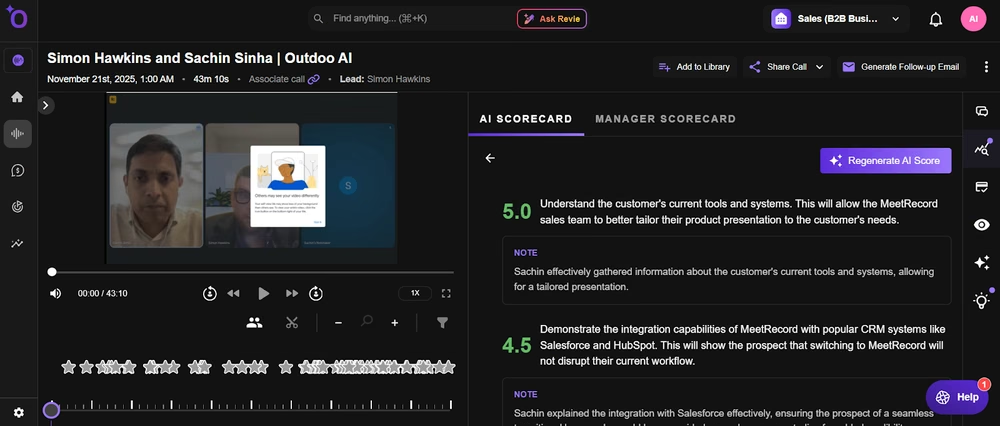
After each call, Outdoo analyzes the conversation and surfaces the behaviors that matter most. It replaces vague, subjective feedback (“I think you missed X”) with objective, behavioral insights.
After-call scoring includes:
- Skill scoring across discovery, qualification, objection handling, and more
- Behavior analysis showing which actions improved or hurt the call
- Clear improvement recommendations based on patterns across reps and deals
This makes coaching faster and far more specific. Managers save hours each week because they no longer sift through full recordings; they get a clear, accurate scorecard after every call.
Deal Execution Scorecards Using 240+ Signals
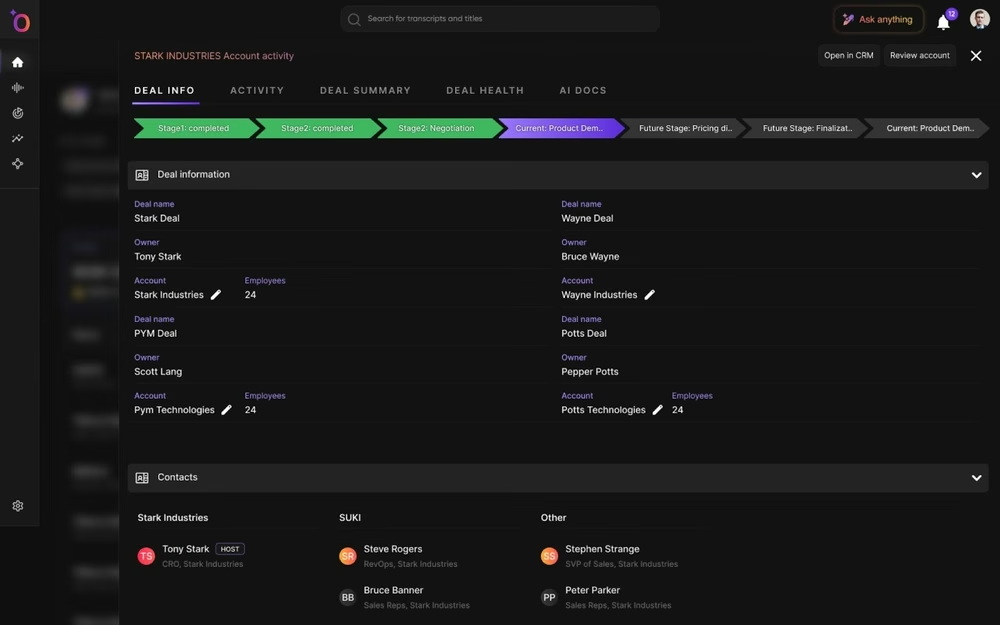
Deals rarely fall apart for mysterious reasons. They fall apart for predictable ones: no champion, slow follow-up, competitive pressure, or misaligned stakeholders. Outdoo tracks over 240 deal execution signals that help leaders catch these risks early.
Deal execution insights include:
- Champion strength and engagement patterns
- Competitive mentions and risk indicators
- Follow-up consistency across the deal cycle
- Stakeholder engagement signals across internal teams
These signals let managers step in at the right time, not when the deal is already slipping.
The Full Performance Loop
.webp)
Outdoo is built around one simple performance philosophy:
Practice → Perform → Improve
- Practice skills before the call through AI roleplays
- Perform with structure during the call
- Improve afterward with objective behavioral feedback
Very few tools support all three phases, and even fewer tie them together into a single scorecard that evolves with the rep. Outdoo does. giving leaders and reps a complete, continuous improvement system instead of isolated coaching moments.
As everything comes together; the behaviors, the coaching, the deal signals, and the feedback loop, it becomes clear that a scorecard isn’t just another tool. It’s the system that keeps your entire sales motion moving in the right direction.
Final Thoughts: Scorecards Aren’t Just for Tracking
Most teams treat scorecards like admin work; something to fill out, skim once, and ignore until the end of the quarter. But the real value of a scorecard isn’t in documenting what happened. It’s in shaping how your team sells every day.
When a scorecard focuses on the behaviors that move deals forward, reps finally get a fair, practical way to improve. They know what “good” looks like, where they need support, and how to show up prepared instead of improvising. And when managers use scorecards to coach skills, not just inspect numbers, performance becomes a shared effort instead of a monthly pressure test.
Modern sales teams win because they learn faster than they lose. They run better discovery, follow up with intention, develop stronger champions, and stay aligned with buyer expectations at every stage. A sales scorecard makes that improvement visible. A platform like Outdoo during the call, and while the deal is moving.
Scorecards aren’t paperwork. They’re the system that helps your team get better on purpose.
Ready to level up your team’s consistency and call quality? Try Outdoo and see how scorecards come alive before and after every call
Frequently Asked Questions
.svg)
Sales rep performance can be measured using a sales scorecard, which tracks activities, behaviors, and deal execution in real time. This allows sales leaders to gain insights into individual rep performance, identify areas for improvement, and provide targeted coaching.
The 10 3 1 rule in sales typically refers to a guideline for structuring sales calls or presentations, but specific details would depend on the context in which it is applied.
The five key performance indicators (KPIs) in sales that a scorecard can impact include win rate, deal velocity, pipeline hygiene, forecast accuracy, and rep ramp time. These metrics help sales leaders assess the effectiveness of their teams and identify areas for improvement.
A KPI in a scorecard is a measurable value that demonstrates how effectively a sales team is achieving key business objectives. Scorecards track specific KPIs related to sales performance, allowing for real-time visibility and proactive coaching.
Outdoo enhances sales performance by providing a comprehensive AI-driven roleplay and coaching platform that seamlessly integrates practice, live customer interactions, and post-call assessments. This closed-loop system ensures that training translates into measurable execution, allowing teams to practice realistic scenarios and receive structured feedback that confirms skill application in real conversations. With adaptive AI simulations that reflect genuine buyer behavior, Outdoo empowers enterprise sales teams to refine their techniques, validate improvements, and continuously evolve their approach based on actual performance data. This targeted, data-driven coaching not only boosts individual rep effectiveness but also drives overall team success in complex sales environments.
Table of Contents
Talk to Sales
Have questions about training and enablement for your sales, CS, support, or leadership team? Let's talk.
Talk to Sales