
.avif)
- Completion does not equal capability for L&D: Learners forget most of what they passively absorb within days, so the biggest L&D challenge in 2026 is closing the gap between finishing a course and changing behavior on the job.
- The 11 tools fall into four clear categories: Roleplay and coaching, content and course creation, learning platforms, and LearnOps and skills intelligence. Matching the category to your biggest gap matters more than picking the most popular tool.
- Outdoo AI turns your LMS into a readiness platform: With SCORM, xAPI, and AICC support, Outdoo AI roleplays embed into Docebo, 360Learning, TalentLMS, and Cornerstone, so reps practice and get scored inside the learning path and leaders can confirm skills show up on real calls.
- Most leading platforms use custom pricing: Pricing approaches vary widely: Docebo, Cognota, and Cornerstone are custom-quoted, Outdoo AI pairs a Free plan with usage-based and custom Enterprise pricing, and tools like Yoodli, SecondNature, Synthesia, Coursebox, and TalentLMS publish entry tiers. Total cost still depends heavily on team size and features.
Learning and development teams have never had more software to choose from. Yet the core problem most L&D leaders describe in 2026 is not a lack of content. It is that learners complete the training and still do not change how they perform on the job. Research on the Ebbinghaus forgetting curve has long shown that people forget most of what they passively learn within days, which is why a finished course rarely equals a capable employee.
AI is changing that math. The best tools in 2026 do more than draft a slide deck or auto-generate a quiz. They help L&D teams build content faster, personalize what each person learns, let people practice real scenarios with feedback, and connect all of it to measurable outcomes like time to proficiency and skill readiness.
This guide breaks down 11 AI tools every L&D team needs in 2026, grouped by what they do best. It covers what each tool does, where it fits in your stack, what it costs, and which L&D use cases it serves, so you can decide what to build, what to buy, and where the real gaps in your program are.
What Are AI Tools for L&D Teams?
AI tools for L&D teams are software platforms that use AI to create, deliver, practice and measure workplace learning. They cover four jobs: roleplay and coaching, course and video creation, LMS and LXP delivery, and LearnOps and skills intelligence.
Note: Last updated in June 2026. This guide is based on a detailed review of each platform's publicly available product information, G2 reviews, community feedback, and verified user data as of the time of writing. Platform capabilities, pricing, and positioning change frequently. We revisit and update this guide regularly to ensure accuracy.
Why AI Is Reshaping Learning and Development in 2026
Traditional L&D often stops at delivery. A team builds a course, pushes it through the LMS, tracks completions, and hopes the knowledge sticks. That model handles knowledge transfer, but it leaves the hardest part unsolved: turning what people know into what they actually do. This is the knowing-doing gap, and it is the single biggest reason training budgets get questioned.
Active practice is what closes it. According to StreamAlive, learners apply only about 15 percent of what they absorb in passive training, and active practice can lift retention to as much as 75 percent compared to roughly 5 percent from watching videos alone. The implication for L&D is direct: tools that only help you produce more content faster solve a speed problem, not a performance problem. For how L&D teams deliver that practice at scale for sellers, see our guide to how AI roleplays help L&D teams scale realistic sales training.
AI now spans the entire learning workflow. It drafts and translates content in minutes, personalizes paths to each role and skill gap, generates assessments, and increasingly lets people rehearse real conversations and tasks before they face them live. The most valuable category for 2026 is the one that ties practice and coaching back to business outcomes, because that is what lets L&D prove impact in the language leadership cares about. For why that makes AI a horizontal layer across L&D rather than a single feature, read our analysis of AI in L&D.
Tools at a Glance: Grouped by What They Do Best
Not every tool on this list solves the same problem. Before the full breakdown, here is a quick way to orient yourself based on where your program needs the most help.
1. AI Roleplay, Practice and Coaching
These tools let people rehearse real scenarios, presentations, and conversations with AI, then get scored feedback and coaching. Best for closing the knowing-doing gap, accelerating onboarding, and proving skill readiness.
Tools: Outdoo AI, Yoodli, SecondNature
2. AI Content and Course Creation
These platforms turn raw material into finished learning assets, from interactive modules to multilingual training videos. Best for instructional designers who need to produce more, faster, without a media team.
Tools: Synthesia, Articulate 360, Coursebox
3. AI Learning Platforms (LMS and LXP)
These systems deliver, personalize, and track learning at scale, with AI handling recommendations, tagging, translation, and admin. Best for centralizing delivery across employees, partners, and customers.
Tools: Docebo, 360Learning, TalentLMS
4. AI LearnOps and Skills Intelligence
These tools bring order to how L&D runs as a function: intake, capacity, project planning, skills mapping, and measurement. Best for teams that need visibility into demand, workload, and business impact.
Tools: Cognota, Cornerstone
Some tools span more than one category. Outdoo AI, for example, sits in the practice category but also feeds the measurement layer and plugs directly into your LMS, since its roleplays can be embedded inside courses in Docebo, 360Learning, TalentLMS, or Cornerstone. The full reviews below cover where each tool is strongest and what to weigh before rolling it out.
Quick Comparison of the 11 Best AI Tools for L&D Teams
| Tool | Category | Best For (L&D) | Starting Price |
|---|---|---|---|
| Outdoo AI | AI Roleplay & Closed-Loop Coaching | L&D teams that need training to translate into measurable on-the-job performance | Free, usage-based & Enterprise custom |
| Yoodli | AI Communication & Speech Coaching | Building presentation, interview, and conversation skills at scale | Free / from $8/user/mo; Enterprise custom |
| SecondNature | AI Conversational Roleplay | Structured, scored roleplay practice, including multilingual programs | From $99/mo; Enterprise custom |
| Synthesia | AI Video Creation | Producing multilingual training and onboarding videos without a studio | Free / from $29/mo; Enterprise custom |
| Articulate 360 | AI eLearning Authoring | Instructional designers building interactive, SCORM-ready courses | $1,749/user/year (AI Teams) |
| Coursebox | AI Course Generation | Rapidly turning documents and videos into structured courses | Free / from $30/mo |
| Docebo | AI-Powered Enterprise LMS | Centralized delivery across employee, partner, and customer training | Custom quote |
| 360Learning | Collaborative AI Learning (LXP) | Turning internal experts into course creators at scale | From ~$8/user/mo; Enterprise custom |
| TalentLMS | AI-Assisted LMS (SMB & Mid-Market) | Fast, affordable LMS setup for first-time or lean L&D teams | Free (up to 5 users) / from ~$119/mo |
| Cognota | AI LearnOps Platform | Managing intake, capacity, and project workflows for busy L&D teams | Custom quote |
| Cornerstone | AI Skills & Talent Intelligence | Connecting learning to skills, mobility, and workforce planning | Custom quote |
Sources: G2, Capterra, Vendr, and vendor pricing pages. Pricing is based on publicly available data as of 2026 and varies by team size, features, and negotiation.
1. Outdoo AI: Best Overall AI Roleplay and Coaching Platform for L&D

Outdoo AI is an enterprise roleplay and closed-loop coaching platform built for customer-facing teams. For L&D, it solves the part of the program that content tools cannot: it lets people practice the conversations and workflows they actually face, scores them against the same framework used on live work, and turns that into structured coaching. In short, it is the layer that takes a completed course and turns it into demonstrated capability.
What Outdoo AI covers across practice, coaching, and measurement:
- AI Roleplays Built From Real Work: Generate practice scenarios from real call recordings, playbooks, and battlecards, so simulations mirror what your people genuinely encounter, including gatekeepers and background noise.
- Multi-Persona Roleplays: Simulate up to 3 stakeholders at once, each with competing priorities, to prepare people for the messy, real dynamics of enterprise conversations.
- Voice, Video, and Chat Roleplays: Let people practice in the same format as the real interaction, across voice, video (with screen sharing), and chat, plus team-selling roleplays.
- Workflow and Software Simulation: Go beyond talk tracks. Reps rehearse the actual software and process workflows tied to the role, such as CRM updates, note-taking, and post-call steps, so they practice doing the job, not just saying the right thing.
- Unified AI Scoring: Score roleplay sessions and live work against the same rubric, so skill readiness is measured consistently from practice through to performance.
- AI Coaching and Micro-Learning: Personalized reinforcement paths driven by real performance data, extending coaching coverage well beyond what managers can deliver manually.
- Roleplays in 74+ Languages: Run the same scored practice for global teams, which makes it practical for international training and compliance.
- L&D-Ready Integrations: SCORM, xAPI, and AICC support plus 120+ integrations across LMS, CRM, and workflow tools, with GDPR, HIPAA, CCPA, and SOC 2 compliance.
How Outdoo AI fits inside your LMS and learning paths:
Because Outdoo AI supports SCORM, xAPI, and AICC, its roleplays package as standard modules that drop straight into the learning paths you already run in Docebo, 360Learning, TalentLMS, or Cornerstone. A roleplay becomes a step in the course, not a separate tool reps have to remember to open. When a learner finishes a lesson, the LMS can trigger an Outdoo AI roleplay to practice and test that exact skill, the session is scored against your rubric, and the result flows back as completion and performance data. That is what turns a learning platform into a complete readiness platform: reps do not just learn and get tested on knowledge, they are evaluated on whether they can actually hold the conversation, and leaders can compare those roleplay scores against real call performance to confirm the skill shows up in the field.
What makes Outdoo AI a strong fit for L&D teams:
- Closes the loop between learning and execution by scoring both practice and live work against one framework, so L&D can finally report on application, not just completion.
- SCORM, xAPI, and AICC support means roleplays embed inside your existing LMS and the skill data flows back rather than living in a silo.
- Resource uploads let teams ground every simulation in their own playbooks and recordings, so practice reflects real situations instead of generic scripts.
- Roleplays in 74+ languages make the same readiness loop work for global training and compliance programs.
What to know before rolling it out:
- Built for organizations and customer-facing teams, not individual learners, freelancers, or one-off self-study.
- Pricing is tailored rather than fixed per seat, so teams go through a consultation to scope a plan.
What sets Outdoo AI apart:
Most AI learning tools stop at either content or practice. Outdoo AI is designed around the full loop that L&D actually owns: assess a baseline, assign learning, let people practice in realistic roleplays, score them, coach the gaps, and then measure whether behavior changed on real work. Because the same scoring framework runs across practice and live conversations, leaders can see whether a program moved the needle on time to proficiency and skill readiness.
The other differentiator is how the loop connects to the rest of the stack. Roleplays embed inside your LMS as SCORM or xAPI modules, learning activities are time-stamped and versioned for audits, and coaching is triggered automatically when a rep performs well in training but poorly on real calls. That is the difference between a tool that trains people and a system that proves they are ready. For the controls L&D should check before rollout, see our guide on how to make AI roleplay reliable enough for enterprise L&D.
Best For:
L&D, enablement, and talent development leaders who need training to produce measurable performance changes, and customer-facing teams that want roleplay, coaching, and scoring connected in one closed-loop system that plugs into their LMS.
Pricing and how it is structured:
Three tiers (Free, Usage-based, and Enterprise) with tailored pricing based on team size and the capabilities you need. No fixed per-seat list price, no paid onboarding, and no forced multi-year lock-ins.
Testimonial:
“There was one roleplay agent that I put together named Chester... I made him be a little off kilter, talking about metaphors, be very artsy, talk about jazz a lot. That’s something we want to see within the senior population. They like to talk. Sometimes they’re not super clear. That’s been really good for our agents to experience before experiencing it in the wild”
Assistant Director of Human Development, ProvideSure
2. Yoodli: Best for AI Communication and Presentation Coaching

Yoodli is an AI communication coach that gives people private, real-time feedback on how they speak. It analyzes pacing, filler words, tone, and clarity (and, with video on, eye contact and body language) across presentations, interviews, and practice conversations. It is used by organizations like Google and Snowflake and is integrated with Toastmasters, which makes it a natural fit for broad communication and leadership development.
Key features of Yoodli:
- Real-Time Speech Feedback: Instant analysis of pace, tone, clarity, and filler words during practice.
- Conversation and Roleplay Practice: Practice interviews, pitches, and difficult conversations against AI-generated scenarios.
- Progress Analytics: Dashboards track delivery trends over time, useful for cohort programs.
- Meeting Integrations: Works with Zoom, Microsoft Teams, and Google Meet, plus desktop apps.
Where Yoodli works well:
- Excellent for general communication, public speaking, and interview preparation across the whole workforce.
- Private, judgment-free practice lowers the barrier for nervous learners.
- Accessible pricing and a strong free tier make it easy to pilot.
What to know before rolling it out:
- Focuses on delivery mechanics more than methodology adherence or scoring against a specific playbook.
- Less suited to complex, multi-stakeholder or workflow scenarios that customer-facing teams need.
What sets Yoodli apart:
Yoodli started as a speaking coach and has expanded into broader roleplay, so its strength is helping anyone become a clearer, more confident communicator. For L&D programs centered on presentation, leadership presence, and interview readiness, it is a low-friction way to give every employee a personal coach.
Best For:
L&D teams running organization-wide communication, presentation, leadership, or interview-prep programs that want scalable, private practice.
Pricing and how it is structured:
Free Starter tier, Pro from about $8 per user per month billed annually, an Advanced individual tier around $20 per month, and custom Enterprise pricing with admin controls and team analytics.
3. SecondNature: Best for Structured Conversational Roleplay

SecondNature is one of the platforms that helped popularize AI roleplay. Its signature feature is a virtual roleplay partner, a conversational AI avatar that holds simulated discussions with each person, scores them, and gives managers a real-time view of the team. It is mature and enterprise-ready, with particularly strong multilingual support and the kind of LMS integrations that L&D buyers care about.
Key features of SecondNature:
- Virtual Roleplay Partner: A conversational AI avatar that talks, pushes back, and scores reps after each session.
- AI Scenario Builder: Describe a scenario in plain text and get a playable roleplay in minutes.
- Manager Dashboards: Real-time visibility into each person's practice and performance.
- LMS Integrations and Languages: SCORM and LTI support plus multilingual roleplay with cultural adaptation for global teams.
Where SecondNature works well:
- Polished, mature platform that is comfortable in enterprise procurement.
- Strong multilingual support collapses a global enablement problem into one contract.
- Plain-text scenario building makes it fast for L&D to spin up new practice.
What to know before rolling it out:
- The grader can penalize reps who improvise off script, even when what they said was fine.
- Often described as pricier and slower to implement than newer alternatives.
What sets SecondNature apart:
SecondNature's edge is maturity and language coverage. For global L&D and enablement teams that need structured, scored conversational practice across regions, it is a proven option, though it leans toward scripted repetition rather than the open, multi-persona and live-call comparison that a closed-loop system like Outdoo AI provides.
Best For:
Enablement and L&D teams that want structured, scored conversational roleplay at scale, especially across multiple languages.
Pricing and how it is structured:
A Starter plan from about $99 per month for small teams, a Professional plan around $199 per month with unlimited sessions, and custom Enterprise pricing.
4. Synthesia: Best for AI Video Creation and Multilingual Training
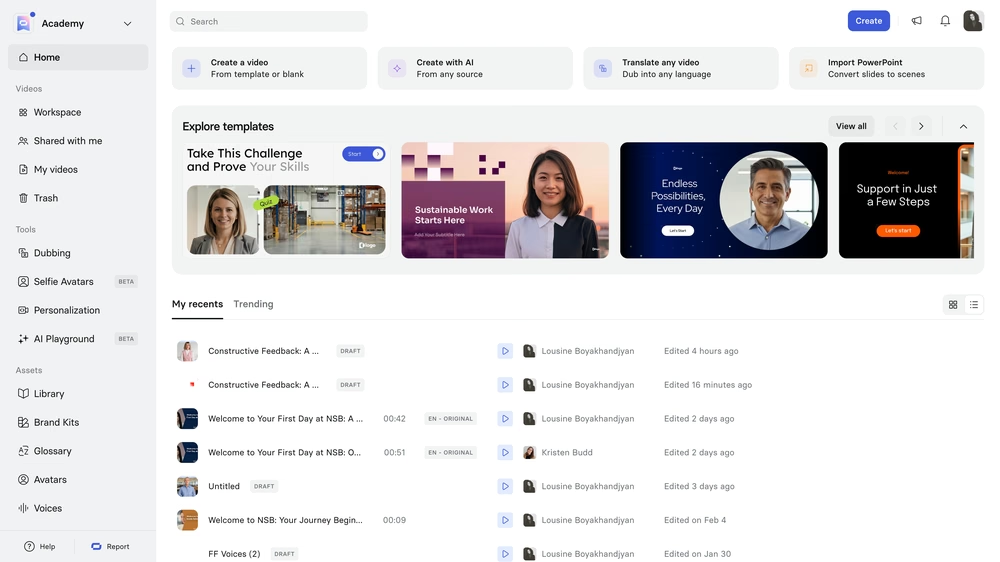
Synthesia is an enterprise AI video platform built for L&D and communications teams. It turns a script into a studio-quality video with AI avatars and voiceovers, then lets you translate and update that video in minutes. With support for 140+ languages and avatars, it is the default choice for teams that need to produce and localize training and onboarding content at scale.
Key features of Synthesia:
- Script-to-Video Avatars: Create training videos from text with 230+ avatars, no camera or studio required.
- Multilingual Delivery: Produce and dub content in 140+ languages, ideal for global onboarding and compliance.
- Instant Updates: Edit the script to refresh a video after a policy or product change instead of reshooting.
- Enterprise Governance: SCORM export, SSO, and audit controls on Enterprise plans for L&D libraries.
Where Synthesia works well:
- Dramatically cuts the cost and time of producing training video, especially multilingual content.
- Easy for non-video people on the L&D team to use.
- Strong enterprise compliance and the largest avatar and language library in its category.
What to know before rolling it out:
- Credit and video-minute model can make true cost hard to predict at scale.
- Avatar video is polished but passive, so it complements practice rather than replacing it.
What sets Synthesia apart:
Synthesia's edge is localization. For global L&D teams maintaining large libraries, the ability to dub and update a single video across dozens of languages can replace voice actors and reshoots entirely, which is often where the budget math justifies the platform.
Best For:
L&D and comms teams producing onboarding, compliance, and role-based training video at scale, particularly across multiple languages.
Pricing and how it is structured:
Free tier (limited minutes), Starter from about $29 per month, Creator at $89 per month, and custom Enterprise pricing that typically lands in the low five figures per year.
5. Articulate 360: Best for AI-Assisted eLearning Authoring
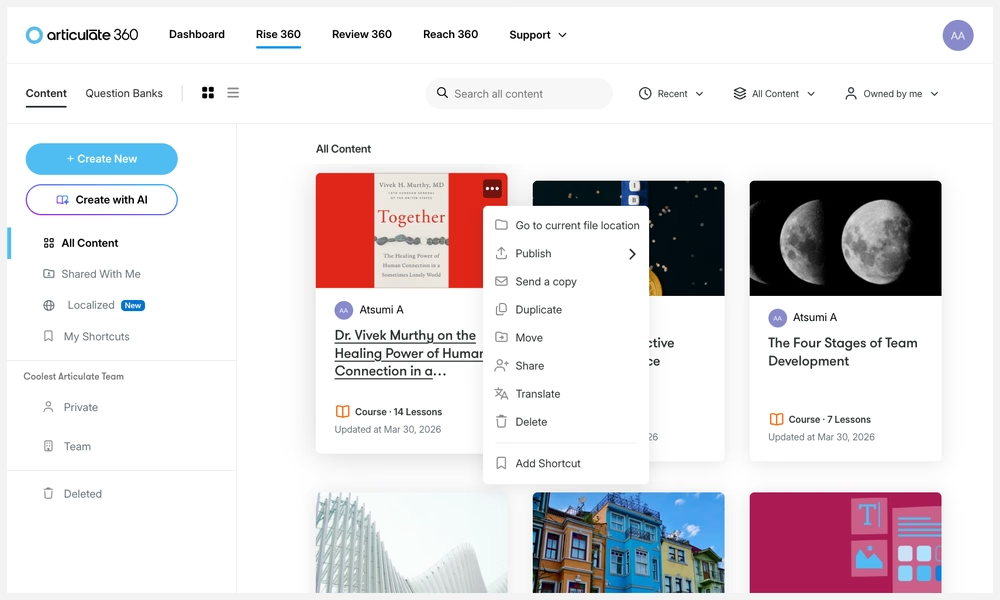
Articulate 360 is the long-standing authoring suite (Storyline and Rise) that most instructional designers already know, now with an AI Assistant built in. It helps designers generate course blocks from prompts or source material, convert content between formats, sharpen copy, and create imagery, which speeds up the most time-consuming parts of building interactive, SCORM-ready courses.
Key features of Articulate 360:
- AI Assistant: Generate and restructure course blocks from prompts or existing material.
- Rise and Storyline: Build responsive, interactive eLearning without coding.
- SCORM and xAPI Output: Publish to any standards-compliant LMS.
- Review and Collaboration: Stakeholder review workflows that shorten content cycles.
Where Articulate 360 works well:
- Industry-standard authoring that instructional designers can adopt with little ramp.
- AI Assistant meaningfully cuts the time to a first draft.
- Reliable SCORM and xAPI output that fits any LMS.
What to know before rolling it out:
- Per-user annual licensing adds up for larger design teams.
- Authoring tool only, so it covers creation but not practice, delivery, or measurement.
What sets Articulate 360 apart:
Articulate's advantage is maturity and ecosystem. The AI Assistant accelerates production inside a toolset designers already trust, which makes it a safe upgrade rather than a rip-and-replace decision for most content teams.
Best For:
Instructional design teams that build a high volume of interactive courses and want AI to speed up production without changing their core toolset.
Pricing and how it is structured:
The Articulate 360 AI Teams plan is around $1,749 per user per year, which adds the AI Assistant on top of the standard Teams plan.
6. Coursebox: Best for Fast AI Course Generation
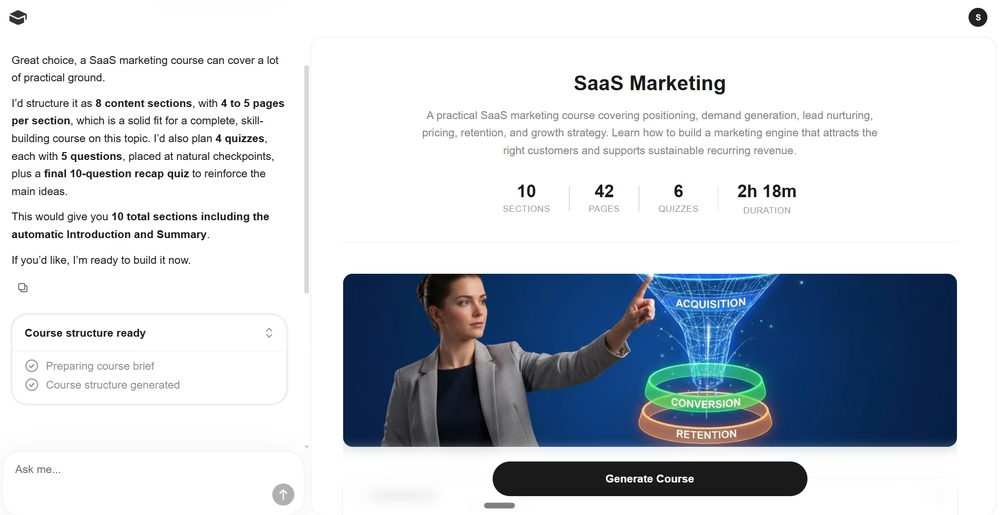
Coursebox is an AI-native course builder that turns existing materials (documents, links, or videos) into a structured course with lessons, quizzes, and even avatar videos in minutes. It includes a built-in LMS and an AI tutor chatbot, and supports SCORM export so generated content can drop into an existing platform. It is built for speed and rapid prototyping.
Key features of Coursebox:
- AI Course Creator: Generate a full course structure from a topic prompt or uploaded materials.
- AI Assessment and Grading: Auto-generate quizzes and grade against customizable rubrics.
- AI Tutor Chatbot: A chatbot trained on your course content answers learner questions in real time.
- SCORM Export and Built-In LMS: Deliver inside Coursebox or push content to your existing LMS.
Where Coursebox works well:
- Extremely fast for turning raw material into a first-draft course, ideal for pilots and prototypes.
- Built-in LMS removes the need for separate delivery software for small and mid-sized teams.
- Accessible pricing with a free tier to test the workflow.
What to know before rolling it out:
- AI-generated content usually needs manual refinement for rigor and brand alignment.
- Design control and advanced analytics are lighter than enterprise authoring suites.
What sets Coursebox apart:
Coursebox wins on speed. For teams that need to ship a lot of courses quickly without a production team, generating a structured draft from existing documents in minutes is a genuine time saver, with a human editing pass to finish.
Best For:
Lean L&D teams, corporate trainers, and training providers that need to produce structured courses quickly from existing material.
Pricing and how it is structured:
Free tier available, with paid plans from about $30 per month (Basic) and higher Expert tiers for SCORM and scaled use.
7. Docebo: Best for an AI-Powered Enterprise LMS
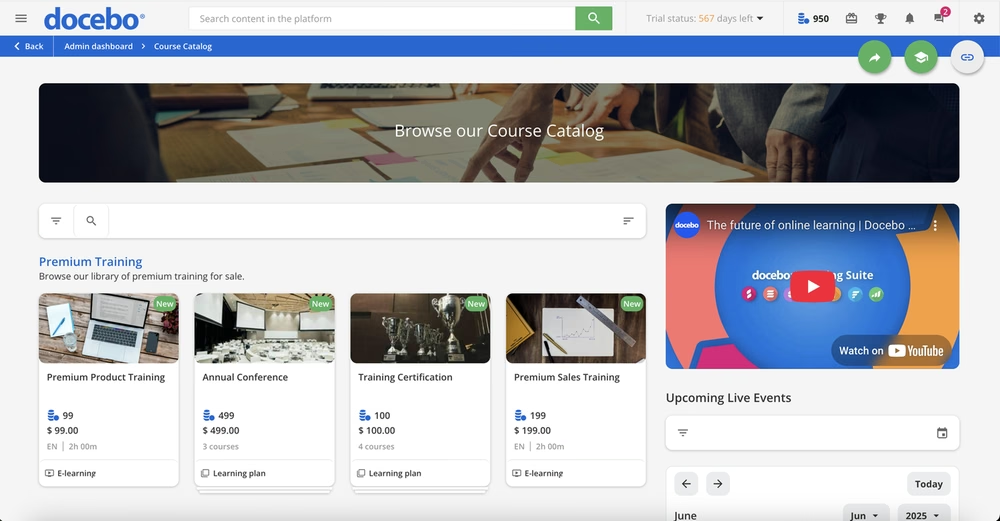
Docebo is an AI-powered learning platform built for mid-sized to large organizations that need one system for employee, partner, and customer training. Its embedded AI handles content tagging, recommendations, automated translation, and personalized learning paths, and it scores well for AI capability among enterprise LMS options.
Key features of Docebo:
- AI Personalization Engine: Recommends courses aligned to each learner's role, interests, and skills.
- Automated Admin: AI handles enrollments, content tagging, and translation across 40+ languages.
- Multi-Audience Delivery: One platform for employee, partner, and customer learning.
- Skills and Analytics: Skills tracking plus dashboards and a Learning Impact add-on for outcome reporting.
Where Docebo works well:
- Scalable, enterprise-grade delivery with strong integrations into HR and business systems.
- Best-in-class AI personalization for large, distributed audiences.
- Flexible support for online and instructor-led learning in one place.
What to know before rolling it out:
- Not ideal for organizations under a few hundred users, and pricing can climb with add-on modules.
- Built-in content creation is lighter than dedicated authoring tools.
What sets Docebo apart:
Docebo's strength is breadth and AI-driven personalization at scale. For enterprises consolidating a complex learning tech stack into one platform across multiple audiences, it is a reliable, governance-ready backbone.
Worth noting for readiness: because Outdoo AI offers a native Docebo integration over SCORM and xAPI, you can embed Outdoo AI roleplays directly into Docebo learning paths, so a Docebo course can move beyond completion tracking to actually testing whether reps can apply the skill.
Best For:
Mid-sized and large enterprises that need a scalable LMS to deliver and track learning across employees, partners, and customers.
Pricing and how it is structured:
Custom, modular, and usage-based pricing driven by active users, feature tiers, and add-on modules. Contact Docebo for a quote.
8. 360Learning: Best for Collaborative, Expert-Led Learning
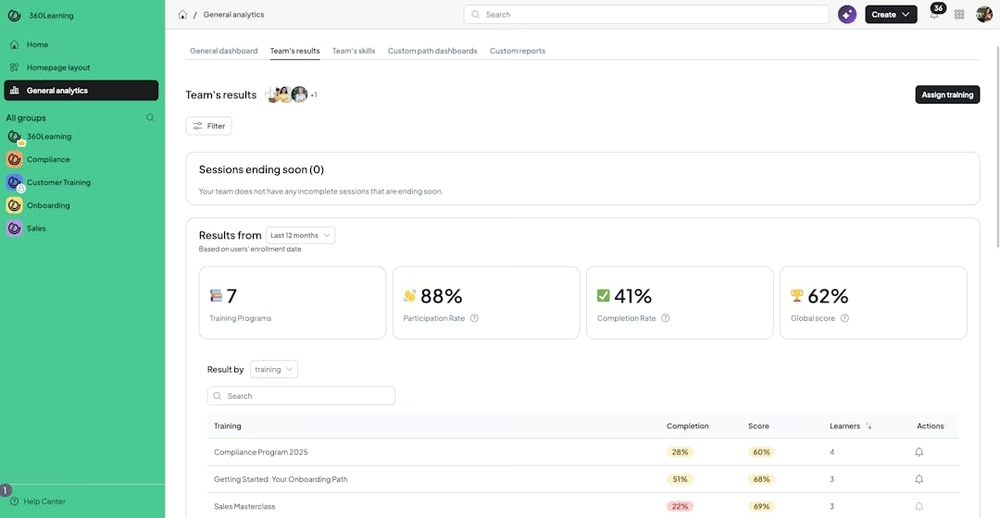
360Learning is an AI-powered platform that blends LMS and LXP capabilities with a distinctive focus on collaborative, bottom-up learning. It turns internal subject-matter experts into course creators, using AI to generate courses from documents, build quizzes, and translate content, all anchored by a skills ontology that activates skills-based learning.
Key features of 360Learning:
- Collaborative Authoring: Experts across the organization co-create and update courses quickly.
- AI Course Generation: Generate courses from existing documents, with automatic quiz creation and translation.
- Skills Ontology: AI-powered skills mapping to drive skills-based learning paths.
- Academies and Social Learning: Communities of practice around roles and topics.
Where 360Learning works well:
- Great for capturing internal expertise and scaling peer learning.
- AI augments expert knowledge rather than replacing it, keeping content credible.
- Strong engagement features and a clear path to skills-based learning.
What to know before rolling it out:
- Value depends on a collaborative culture, so it is less suited to simple top-down course delivery.
- Lighter on extended-enterprise and customer education than some alternatives.
What sets 360Learning apart:
360Learning's edge is collaborative learning. Instead of a small team producing everything, it decentralizes creation to the people who know the work best, which is powerful for fast-changing internal knowledge and just-in-time upskilling.
For teams that want practice and evaluation inside those expert-built paths, Outdoo AI roleplays embed into 360Learning over SCORM and xAPI, adding a scored application step to courses that would otherwise end at a quiz.
Best For:
L&D teams that want to mobilize internal experts, scale peer learning, and move toward skills-based development.
Pricing and how it is structured:
A published Team plan around $8 per user per month, with Business and Enterprise tiers priced on a custom basis.
9. TalentLMS: Best for Fast, Affordable LMS Setup

TalentLMS is a simple, scalable LMS with AI-assisted course creation that lets teams launch training roughly twice as fast for employees, partners, and customers. It supports SCORM, cmi5, and xAPI, includes gamification and learning paths, and is known for getting an organization live in under an hour, which makes it a favorite first LMS for lean teams.
Key features of TalentLMS:
- AI-Assisted Course Creation: Generate training content and launch courses roughly twice as fast.
- Standards Support: SCORM, cmi5, and xAPI for importing and tracking content.
- Gamification and Learning Paths: Leaderboards, badges, and structured paths on every tier.
- Multi-Audience Training: Train employees, partners, and customers, with a usable free plan to start.
Where TalentLMS works well:
- Fastest setup in the category, with most teams running courses within an hour.
- Genuinely usable free plan and transparent, affordable pricing.
- Simple enough that managers can assign and take courses without IT support.
What to know before rolling it out:
- Lighter on advanced analytics and AI-powered learning paths that large enterprises need.
- Best suited to small and mid-sized teams rather than complex global deployments.
What sets TalentLMS apart:
TalentLMS wins on speed and simplicity. For a first-time or resource-light L&D team, it is the quickest path from zero to a working training program without a heavy implementation.
It also pairs cleanly with practice: Outdoo AI offers a native TalentLMS integration, so you can deliver Outdoo AI roleplays as SCORM modules inside a TalentLMS course and have reps practice a scored scenario immediately after the lesson that taught it.
Best For:
Small and mid-sized L&D teams (roughly 5 to 500 employees) deploying their first LMS or wanting fast, affordable training and compliance.
Pricing and how it is structured:
Free for up to 5 users, with paid plans from roughly $119 per month and custom pricing for larger or enterprise deployments.
10. Cognota: Best for L&D Operations and Capacity Planning
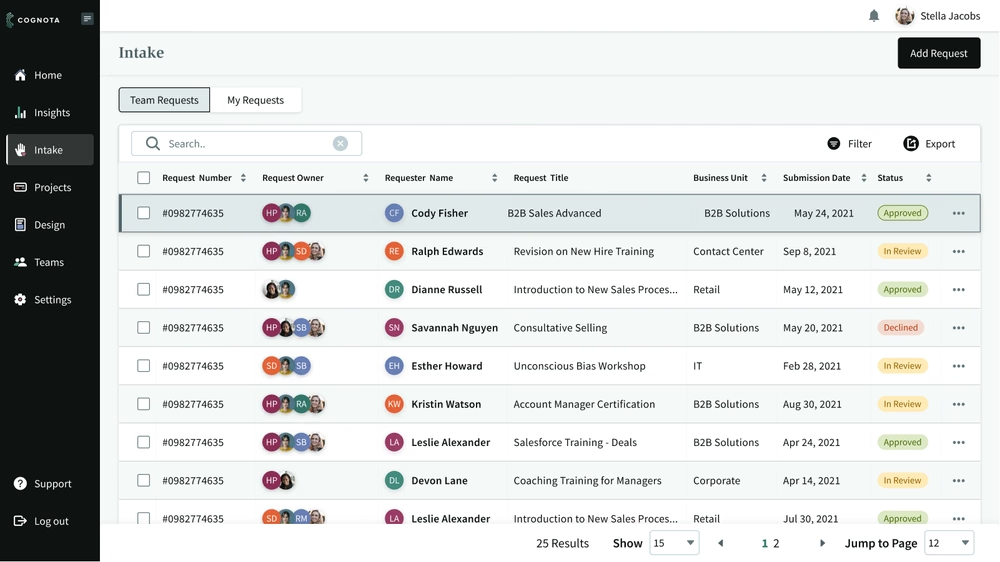
Cognota is an AI-powered LearnOps platform that brings the business of running L&D into one system. It centralizes training intake, project management, capacity planning, content design, and measurement, which is exactly what overloaded enterprise L&D teams need to manage demand and show results in business terms.
Key features of Cognota:
- Centralized Intake: Capture and triage training requests in one place instead of scattered emails.
- Capacity and Project Planning: See workload and demand across the team to prioritize the right work.
- Content Design Workspace: Storyboard and design learning collaboratively.
- Measurement: Tie L&D activity to outcomes for clearer reporting to leadership.
Where Cognota works well:
- Brings order to L&D operations: intake, prioritization, and capacity in one view.
- Helps teams say no with data and defend their roadmap to leadership.
- Purpose-built for the operational reality of enterprise L&D teams.
What to know before rolling it out:
- It manages how L&D runs, not content delivery or learner practice, so it complements an LMS rather than replacing it.
- Most valuable for larger teams handling a high volume of requests.
What sets Cognota apart:
Cognota addresses a gap most tools ignore: the operations of the L&D function itself. For teams drowning in requests with no visibility into capacity, it turns guesswork into a managed pipeline, which is increasingly how mature L&D orgs prove their value.
Best For:
Enterprise L&D teams (often 5,000+ employees) that handle a high volume of learning requests and need visibility into demand, workload, and impact.
Pricing and how it is structured:
Custom pricing aimed at enterprise organizations. Contact Cognota for a quote.
11. Cornerstone: Best for AI Skills Intelligence and Talent Development
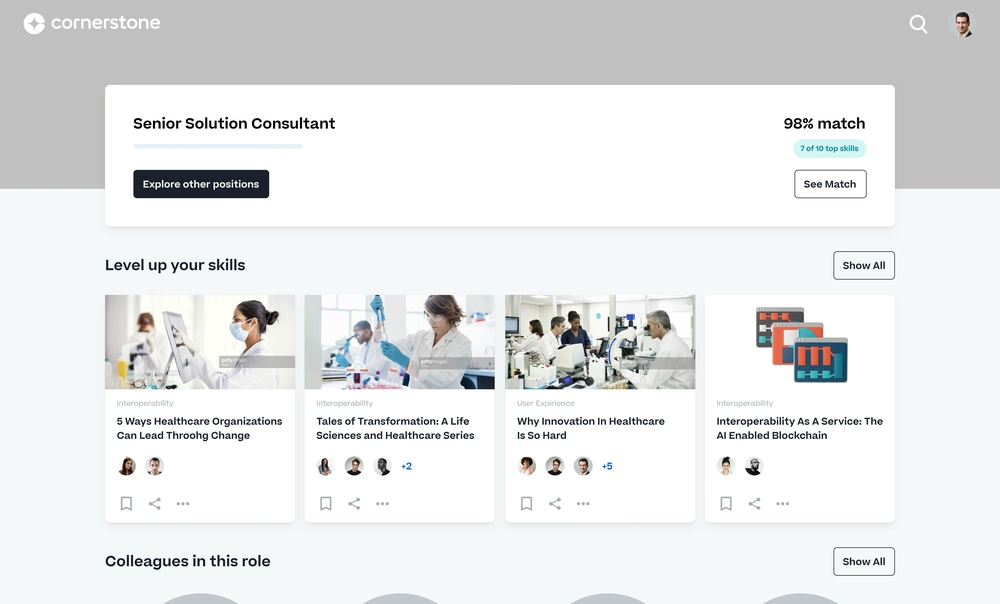
Cornerstone is an AI-powered workforce agility platform that connects learning to skills, mobility, and workforce planning. Its Galaxy AI and Workforce AI layers, built on a skills engine mapping tens of thousands of skills, infer capabilities from work and learning signals, then target development where it matters most across talent, performance, and career pathing.
Key features of Cornerstone:
- Skills Intelligence: A skills engine that maps 55,000+ skills and infers employee capabilities from real signals.
- Adaptive Learning Agent: AI that supports people in the moment of learning and skill practice.
- Talent and Mobility: Connects learning to career pathing, succession, and a skills-based talent marketplace.
- Immersive Practice: Role-based AI learning simulations across desktop and VR.
Where Cornerstone works well:
- Deep skills intelligence that ties learning to broader talent and workforce strategy.
- Strong reporting and governance for large, complex organizations.
- Connects development to business outcomes like readiness and mobility.
What to know before rolling it out:
- Enterprise scope and configuration make it heavy for smaller teams.
- Custom agents and full deployments can take multiple quarters to implement.
What sets Cornerstone apart:
Cornerstone's differentiator is its skills graph. By inferring skills from actual work and learning signals across a huge dataset, it gives leaders a predictive view of who is ready, where the gaps are, and what to do next, which is the strategic end of the L&D spectrum.
To make that readiness picture reflect real conversations, Outdoo AI integrates with Cornerstone over SCORM and xAPI, so roleplay scores and live-call performance can feed the same skills and readiness view.
Best For:
Large enterprises that want to connect learning to skills intelligence, internal mobility, and long-range workforce planning.
Pricing and how it is structured:
Custom enterprise pricing. Contact Cornerstone for a quote.
How End-to-End Roleplay Coaching Closes the Knowing-Doing Gap for L&D
Most of the tools above strengthen one stage of learning. Authoring and video tools help you create. An LMS helps you deliver and track. Skills and LearnOps tools help you plan and measure. The stage that is hardest to operationalize, and the one that decides whether training changes behavior, is practice and coaching. End-to-end roleplay coaching is how L&D turns a completed course into demonstrated capability, and it works as a continuous loop rather than a one-time event.
1. Assess the baseline. Before assigning content, you capture where each person actually stands on the skills that matter, using a consistent scoring rubric.
2. Deliver the learning. The LMS pushes the right content to the right person, personalized to role and skill gap.
3. Practice in realistic roleplays. Instead of hoping the content sticks, people rehearse the real conversations and workflows in AI roleplays grounded in your own playbooks and recordings, including multi-stakeholder scenarios.
4. Score and coach the gap. The same rubric scores every session, so feedback is objective and coaching is targeted. AI coaching extends coverage far beyond what managers can do one to one.
5. Measure on real work. Because practice and live work are scored against the same framework, L&D can see whether skills are actually showing up on the job, and feed that data back into the LMS through xAPI to close the loop.
This is what shifts L&D reporting from completion rates to the metrics leadership respects: time to proficiency, skill readiness scores, and coaching coverage. It is also why a practice and coaching layer belongs in every modern L&D stack, not just a sales toolkit. Outdoo AI is built specifically for this loop, which is why it leads this list: it connects practice, coaching, and measurement in one system instead of leaving L&D to stitch the loop together by hand.
How Outdoo AI Plugs Into Your LMS to Become a Complete Readiness Platform
An LMS is excellent at delivering and tracking learning, but on its own it can only confirm that someone finished a course, not that they can actually do the job. Connecting a roleplay and coaching layer to the LMS is what changes that, and it is the difference between a training platform and a readiness platform.
Because Outdoo AI supports SCORM, xAPI, and AICC, its AI roleplays package as standard modules that drop straight into the learning paths you already run in Docebo, 360Learning, TalentLMS, or Cornerstone. The roleplay becomes a step in the course, not a separate tool reps have to remember to open. The flow looks like this:
1. Learn: A rep completes a lesson or module in your LMS, just as they do today.
2. Practice and get evaluated: The LMS triggers an Outdoo AI roleplay to apply that exact skill in a realistic conversation. The roleplay is scored against your rubric, so reps are not just tested on knowledge, they are evaluated on whether they can hold the conversation.
3. Sync back: Completion and performance data flow back into the LMS, with learning activities time-stamped and versioned, which gives L&D audit-ready evidence that certified people are applying what they learned.
4. Confirm it shows up live: Outdoo AI scores real customer calls against the same framework, so leaders can compare roleplay scores to actual call performance. If a rep aces the lesson and the roleplay but struggles on real calls, coaching tasks are triggered automatically to close that specific gap.
With roleplays available in 120+ languages, the same readiness loop runs for global training and compliance, not just one region. The result is that your existing LMS keeps doing what it does well, and Outdoo AI adds the practice, evaluation, and live-performance proof on top, so you can finally answer the question completion rates never could: not who finished, but who is ready.
In short: Your LMS tells you who completed the training. Outdoo AI tells you who can actually do the job, in any of 120+ languages, with the evidence to prove it.
Here's how easy it is to import your SCORM package from Outdoo AI to any LMS platform
How to Choose the Right AI Tools for Your L&D Stack
The right starting point depends on the persona driving the decision and the gap you feel most. A practical way to map it:
1. 1. If you are an instructional designer who needs to produce more, faster: Start with creation tools. Articulate 360 speeds up interactive authoring, Coursebox generates structured courses from existing material, and Synthesia handles multilingual video without a studio. Once the course is built, add Outdoo AI to close the loop: upload the same source material, get a scored AI roleplay, and embed it as a SCORM module in the same learning path so learners practice and get evaluated right after the lesson.
2. If you are an L&D or enablement leader fighting the knowing-doing gap: Prioritize practice and coaching. Outdoo AI gives people AI roleplays plus scoring and coaching that connect to live performance and embed into your LMS, Yoodli builds communication and presentation skills across the broader workforce, and SecondNature offers structured, multilingual conversational practice.
3. If you need to deliver and track learning at scale: A modern LMS or LXP is the backbone. Docebo suits large, multi-audience enterprises, 360Learning is strong for collaborative, expert-led internal learning, and TalentLMS is the fastest, most affordable option for smaller or first-time teams.
4. If you are an L&D ops or talent leader who must prove impact: Look at operations and skills intelligence. Cognota brings order to intake and capacity, and Cornerstone ties learning to skills, mobility, and workforce planning.
5. If your goal is to connect learning to measurable performance: The missing piece is usually the practice and coaching layer that scores practice and live work the same way and feeds it back into your LMS. That is the loop Outdoo AI is built to close, and it is what lets the rest of your stack prove its value.
Bottom line: A strong 2026 L&D stack is layered. Creation tools build it, an LMS delivers it, operations and skills tools plan and measure it, and a practice and coaching layer that plugs into the LMS turns it into performance. If learners finish your courses but behavior does not change, that practice and coaching layer is the gap to fill first.
Final Thoughts
The best L&D stack in 2026 is not the one with the most tools. It is the one that connects creation, delivery, practice, and measurement so learning reliably becomes performance. AI has made every stage faster and more personalized, but speed only matters if it eventually changes what people do at work.
Start where your gap is biggest. If you cannot build content fast enough, invest in authoring and video. If delivery and tracking are messy, fix the platform layer. If you are buried in requests, bring in LearnOps. And if learners complete training but execution does not improve, add the practice and coaching layer that closes the loop and plugs into the LMS you already run.
Outdoo AI combines AI roleplay, structured coaching, and unified scoring across practice and live work in one system, embeds into your LMS over SCORM and xAPI, and runs in 120+ languages, helping L&D teams turn learning into measurable readiness. If that is the gap you are trying to close, it is the logical place to start.
Schedule a demo to get started with Outdoo AI today!
Outdoo builds AI Roleplays from your own calls and scores practice and real calls with one scorecard. Rated #1 for Best Results on G2.
Frequently Asked Questions
What are the best AI tools for L&D teams in 2026?
The best AI tools for L&D in 2026 span four categories: roleplay, practice and coaching (Outdoo AI, Yoodli, SecondNature), content and course creation (Synthesia, Articulate 360, Coursebox), learning platforms (Docebo, 360Learning, TalentLMS), and LearnOps and skills intelligence (Cognota, Cornerstone). Outdoo AI stands out for connecting practice and coaching to measurable on-the-job performance and embedding into your LMS.
How is AI changing learning and development?
AI now supports the entire learning workflow. It drafts and translates content in minutes, personalizes paths to each role and skill gap, generates assessments, and lets people practice real scenarios with feedback. The biggest shift is toward tools that connect learning to outcomes like time to proficiency and skill readiness rather than just tracking course completions.
What is AI roleplay and how does it help L&D teams?
AI roleplay lets people rehearse real conversations and workflows with realistic AI personas, then receive scored feedback and coaching. For L&D, it closes the knowing-doing gap by turning passive course completion into active, evaluated practice, which research shows can lift retention from around 5 percent to as much as 75 percent and helps prove skill readiness.
Can AI roleplay integrate with an LMS like Docebo, TalentLMS, or Cornerstone?
Yes. Because Outdoo AI supports SCORM, xAPI, and AICC, its AI roleplays can be embedded as modules inside courses in Docebo, 360Learning, TalentLMS, and Cornerstone. A learner finishes a lesson, the LMS triggers a roleplay to practice and test that skill, and the score syncs back as completion and performance data. This turns an LMS from a completion tracker into a readiness platform.
What is Outdoo AI and how does it help L&D teams?
Outdoo AI is an enterprise roleplay and closed-loop coaching platform for customer-facing teams. It lets people practice the conversations and workflows they actually face, scores roleplays and live work against the same framework, and turns that into structured coaching. With SCORM, xAPI, and AICC support, 120+ integrations, and roleplays in 120+ languages, it embeds into your LMS so L&D can report on application and readiness, not just completion.