
- TalentLMS handles core training: TalentLMS supports fast course creation, learning paths, certifications, AI coaching, gamification, and general practice for growing teams.
- Sales readiness needs more depth: Sales teams need methodology-based scoring, manager coaching, exportable reports, and proof that skills transfer to real calls.
- Outdoo AI adds the practice layer: Outdoo AI integrates with TalentLMS through SCORM and xAPI to add roleplays, scorecards, call scoring, and certification-ready evidence.
- Start with one workflow: Teams can begin with one roleplay tied to one TalentLMS course, then expand based on practice scores and live-call gaps.
Companies that run TalentLMS can roll out training fast and at low cost. The harder question is whether reps use what they learn once they are in front of a customer. This post covers where AI roleplay in TalentLMS fits, how the connected workflow works, and how to set it up with the Outdoo AI and TalentLMS integration.
TalentLMS does the core things a learning platform should do well: quick course creation, learning paths, certifications, and now some practice too. For many teams that is enough. A sales team needs more: scoring tied to a sales method, and proof that skills hold up on real calls. That is the gap the Outdoo AI and TalentLMS integration closes.
What Is AI Roleplay in an LMS?
AI roleplay in an LMS is scored conversation practice that sits inside the learning platform: a rep finishes a course, practises that conversation against an AI buyer, and the score flows back into the LMS record.
What you already have in TalentLMS
Most teams on TalentLMS already have a solid setup:
- Fast course creation with TalentCraft, the built-in AI tool that turns a prompt or document into text, visuals, flashcards, and quizzes.
- Learning paths and certifications.
- Learning Playground, a self-directed AI practice space where users can rehearse conversations and work through scenarios, including a roleplay mode (more on that below).
- An AI Coach that answers learner questions about course content.
- Gamification with points, badges, and leaderboards.
- A setup that goes live fast, with no IT help, at a price growing teams can afford.
TalentLMS is not incomplete. For many teams it does the job. The point is narrower: a sales motion that runs on a clear method and manager coaching needs a few extra layers on top, without replacing the LMS. That is the sales-readiness layer the integration adds.
TalentLMS recently added roleplay. Here is what it covers
TalentLMS recently added roleplay through its Learning Playground. The basics it covers:
- Role Play: reps practice a conversation by chat or voice and get AI feedback on how they did.
- Self-paced practice and learning tools for building general skills.
- A safe, private space any user can open from inside the LMS.
That is a real step, and for general skills it is plenty.
For a sales team, though, practice is only useful if it reflects the way the team actually sells. A rep can sound confident in a generic conversation and still miss discovery depth, qualification rigor, next-step control, or stakeholder alignment. That is why the scoring layer matters. Here is what you still need on top:
- Scoring tied to your sales method. SPIN, BANT, MEDDIC, MEDDPICC, or Challenger, applied the same way every time, not just general communication feedback.
- Reports you can export. Learning Playground does not export reports. Coaching, certification, and audits need data you can pull out and track over time.
- Practice with a full buying committee. Up to three AI stakeholders in one scenario, like a champion, a finance lead, and procurement.
- Scoring on real calls too. The same scorecard runs on live customer calls, pulled in from tools you already use like Gong or Clari, so you can see if the skill shows up for real.
- A manager-led loop. Managers enroll reps, review scored sessions, and coach to one shared standard, instead of leaving it all to self-practice.
- Practice in the tools reps use. Logging, disposition, and process steps in screens that mirror your real software.
- Practice in 120+ languages. Useful if your team works across regions.
None of this replaces Learning Playground or TalentLMS. It adds a sales-readiness layer on top.
This is also where one-time training starts to break down. Reps may complete the course, pass the quiz, and still lose the behavior if they do not apply it repeatedly in realistic situations.
The case for practice is clear. Gartner research on the forgetting curve finds that reps forget about 70% of what they learn within a week of training, and 87% within a month, unless they keep using it. Practice is how you beat that, and for sales the quality of that practice is what moves the numbers.
That gap is what a standalone AI roleplay tool is built to close. Run alongside TalentLMS, it adds the scored practice and live-call checks the LMS was never designed for, and it fits into your existing program instead of replacing it. The same setup works for Docebo teams too, as covered in how AI roleplay fits into Docebo-based sales training.
Where a standalone AI roleplay tool fits in a TalentLMS program
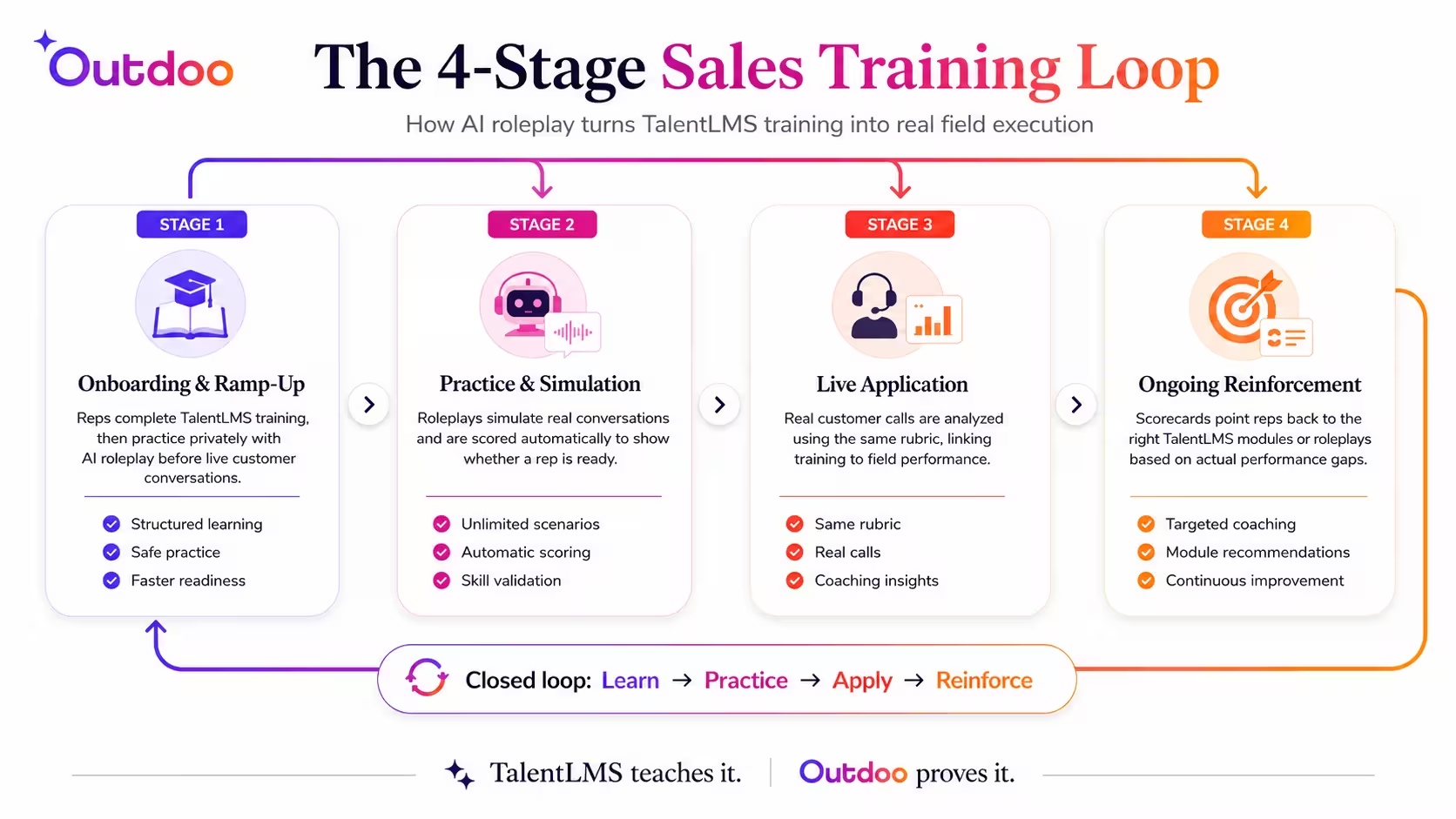
Think of it as a four-step loop, built on the TalentLMS content you already have. Outdoo AI handles the roleplay, the scoring, and the live-call side.
1. Onboarding and ramp
Reps finish the TalentLMS content, then practice the conversation in an Outdoo AI roleplay before they call a real prospect.
2. Practice and scoring
Each roleplay is scored automatically against your sales method. Outdoo AI's scores show who is ready and who needs more work, instead of guessing from a completion check.
3. Real calls
This is where Outdoo AI earns its place. It records and scores real calls on the same rubric used in practice, so coaching is based on whether the rep actually shows the skills the training covered.
4. Reinforcement
When a skill is missing on real calls, the scorecard points the rep back to the right TalentLMS module or a new roleplay. Practice goes where it is actually needed.
This turns the LMS from a place to store content into a system that drives performance. Here is the whole loop at a glance.
How the Outdoo AI and TalentLMS integration works
Setting that loop up is more straightforward than it sounds, because the two systems work together in both directions. Content and scores flow into TalentLMS, and TalentLMS activity flows back to shape what reps practice next.
For example, a rep can finish a discovery module in TalentLMS, get assigned a matching Outdoo AI roleplay, receive a method-based score, and have that result reflected back in the training workflow. The manager sees both sides: what the rep completed, and how well they performed.
Outdoo AI inside TalentLMS
Inside the LMS, Outdoo AI adds the practice content and the data that comes out of it:
- Roleplays are exported as SCORM and added straight into TalentLMS learning paths, so reps practice without leaving the LMS.
- Real sales calls, marked up and grouped into playlists, sit inside TalentLMS as real examples.
- The scorecard suggests specific TalentLMS modules based on how a rep did in roleplay or on real calls.
- Roleplay results can count toward certification as proof a rep is ready.
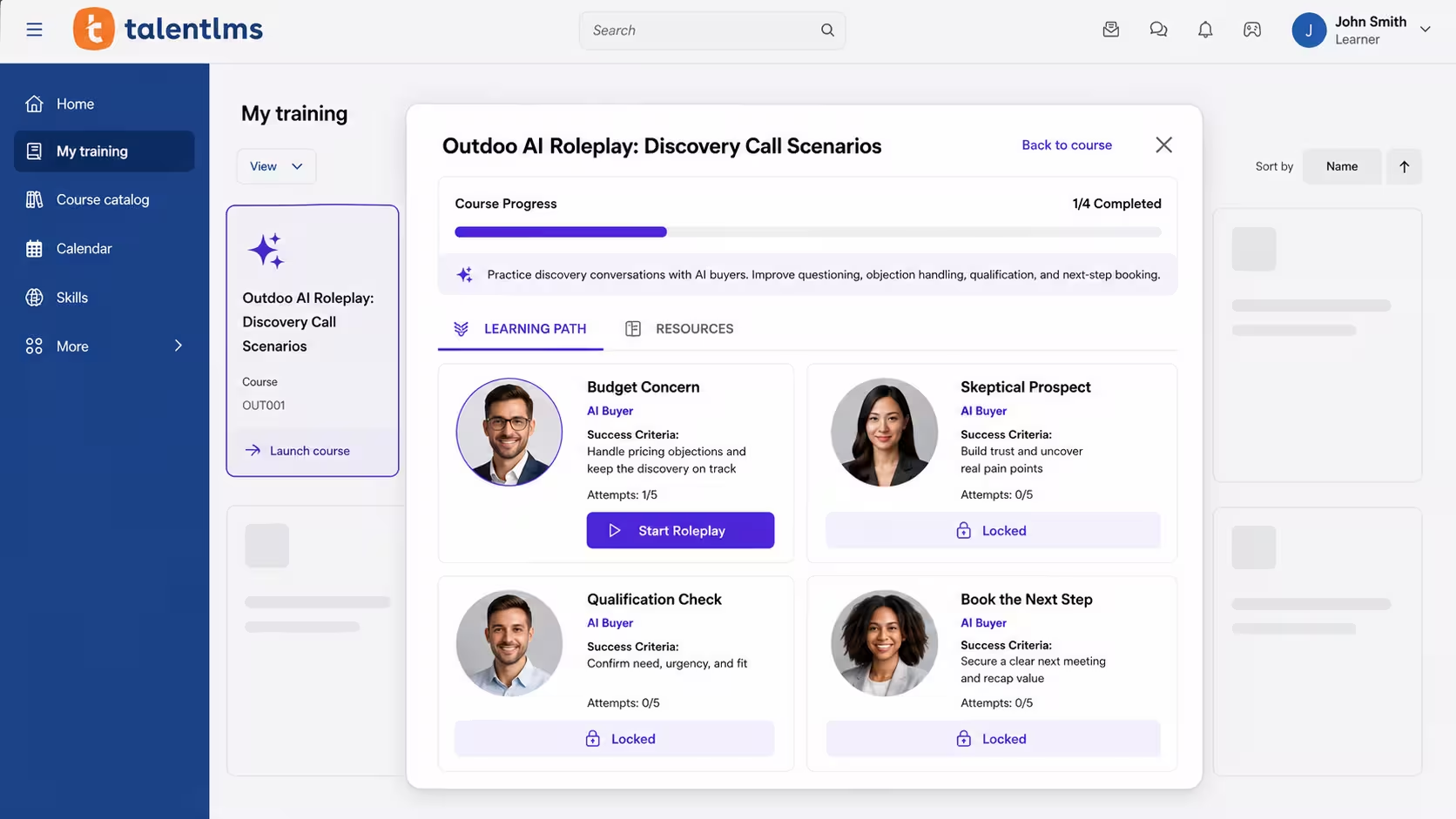
Below is how the Outdoo AI roleplay course shows up in a TalentLMS training dashboard.

And here is what a rep sees when they launch an Outdoo AI course within TalentLMS.
TalentLMS data inside Outdoo AI
Going the other way, what happens in TalentLMS shapes the coaching in Outdoo AI:
- When a rep finishes a TalentLMS module, that is the cue to practice: their manager enrolls them in the matching roleplay.
- When a rep does well in training but struggles on real calls, Outdoo AI flags the gap so coaching can fix it.
- One report brings TalentLMS training data and Outdoo AI performance data together, so you see completion and real results side by side.
Standards and security
The integration is built to clear the bar your IT and compliance teams set:
- Works with SCORM and xAPI.
- Activity is time-stamped and versioned, tied to performance data for audits and certification.
- Enterprise-grade security and compliance, including SOC 2 Type 2, GDPR, HIPAA, and CCPA.
How to set it up
Setup is admin-level and needs no engineering. In Outdoo AI, open the Integrations page and enable TalentLMS. Download the SCORM package (.zip) from the courses page, then import it into TalentLMS as a course. Results flow back through SCORM and xAPI, so TalentLMS shows how reps did, not just that they finished.
New to SCORM imports? This shows the steps, using SCORM Cloud as an example.
Roleplays are not the only thing you can build and export this way. You can also create full courses in Outdoo AI and export them as SCORM into TalentLMS, so structured learning and scored practice sit in one place. See the courses overview for how course creation works.
Here's how you can create a training course and certification in Outdoo AI.
Quick note: In order to tie each learner's completion back to Outdoo AI, admins or end users need to set the LMS Learner ID in their Outdoo AI profile under Settings.
What to measure
Once the loop runs, you can measure readiness instead of guessing. The goal is not more reporting for its own sake. It is to separate activity from readiness: course completion tells you someone finished training, while these metrics tell you whether the skill is improving and showing up in customer conversations. A few are worth watching:
- Roleplay score progression. Whether reps improve with practice, and how fast they reach a ready level.
- Practice-to-live score gap. Whether the skill carries over from practice to real calls, by rep and by skill.
- Time to first ready score. A cleaner ramp signal than course completion.
- Certification pass rate. How many reps certify on proven skill, not just finished content.
- Coaching time per rep. Whether managers spend time where the data says it is needed.
It adds up over time. The Association for Talent Development reports that companies investing in comprehensive sales coaching see around a 50% increase in net sales per rep, and a connected practice loop is how you keep that coaching going.
How to get started
You do not have to overhaul anything to begin. A small first run is enough to see whether it works, and it looks like this:
- Pick one conversation that matters. A discovery call or a common objection, and build one roleplay for it in Outdoo AI.
- Tie it to the right course. Export it as SCORM, add it to the matching TalentLMS course, and have managers enroll reps after they finish that module.
- Watch the scores. Within one training cycle you will have practice scores tied to a real course, and a clear read on whether the training is landing.
- Grow the loop. Add more roleplays for more modules, turn on scoring for real calls, and let reinforcement follow the data.
Closing the gap between completion and performance
TalentLMS gives you a fast, affordable way to train, and a space to practice. For sales teams that need methodology scoring, manager coaching, and proof that skills work on real calls, AI roleplay in TalentLMS turns that into a full loop: TalentLMS teaches it, Outdoo AI proves it.
Start with one roleplay tied to one course, with managers enrolling reps and watching the scores. To map it to your own TalentLMS setup and sales motion, schedule a demo with Outdoo AI today!
Outdoo builds AI Roleplays from your own calls and scores practice and real calls with one scorecard. Rated #1 for Best Results on G2.
Frequently Asked Questions
Does TalentLMS have AI roleplay built in?
Yes. TalentLMS recently added a Role Play mode in its Learning Playground, where users practice a conversation by chat or voice and get AI feedback. Outdoo AI adds depth on top: scoring tied to your sales method, a manager-led coaching loop, reports you can export, and scoring on real calls using the same rubric.
How do I add Outdoo AI roleplay to TalentLMS?
Build the roleplay in Outdoo AI, export it as a SCORM package, and import it into TalentLMS. You can add it to any course or learning path, and reps practice without leaving the LMS.
Can I track roleplay scores inside TalentLMS?
Yes. Roleplay scores and completion flow back into TalentLMS through SCORM and xAPI, so the LMS shows how a rep did, not just that they finished.
Can roleplay results count toward certification?
Yes. Roleplay results can count toward TalentLMS certification as proof of readiness, and the activity is time-stamped and versioned for audits.
Which sales methods can Outdoo AI score against?
Outdoo AI scores roleplays and real calls against methods like SPIN, BANT, MEDDIC, MEDDPICC, and Challenger, plus a custom rubric built around your own playbook.