



You have heard of the learning curve. The more you practice, the better you get.
But there is another curve most teams ignore, the forgetting curve. Most people forget 90% of what they learn in training within a few weeks.
That is a problem, especially for sales practitioners. Because sales is not a theory test. It is live, unpredictable, and unforgiving.
Most reps do not struggle because they lack information. They struggle because they have not experienced pressure. They have not practiced objections. They have not roleplayed awkward silences. They have not been tested before the test.
Sales simulations fix that by reinforcing learning repeatedly. They flip the model from passive learning to active doing, using realistic scenarios, AI-driven coaching, and repeatable practice to help reps build muscle memory fast.
This guide covers what sales simulations are, why traditional training fails, the types of simulations that work, how AI is reshaping the category in 2026, and how to choose the right tool for your team.
What Is a Sales Training Simulation?
A sales training simulation is a structured, scenario-specific exercise that lets sales reps practice real-world selling in a controlled, risk-free environment. Simulations replicate key buyer interactions like discovery calls, objection handling, demos, and negotiations, so reps can build muscle memory and prepare for high-stakes conversations before they happen with real prospects.
Unlike most other sales training programs, sales simulations are not limited to theory. They teach through doing and help salespeople learn how to respond, adapt, and think under pressure.
Done right, simulations bridge the gap between training and actual performance. You do not just hear what good sounds like. You practice saying it, in the right moment, with real consequences.
Here is an example of how simulations look in a modern sales simulation environment with life-like virtual buyers:
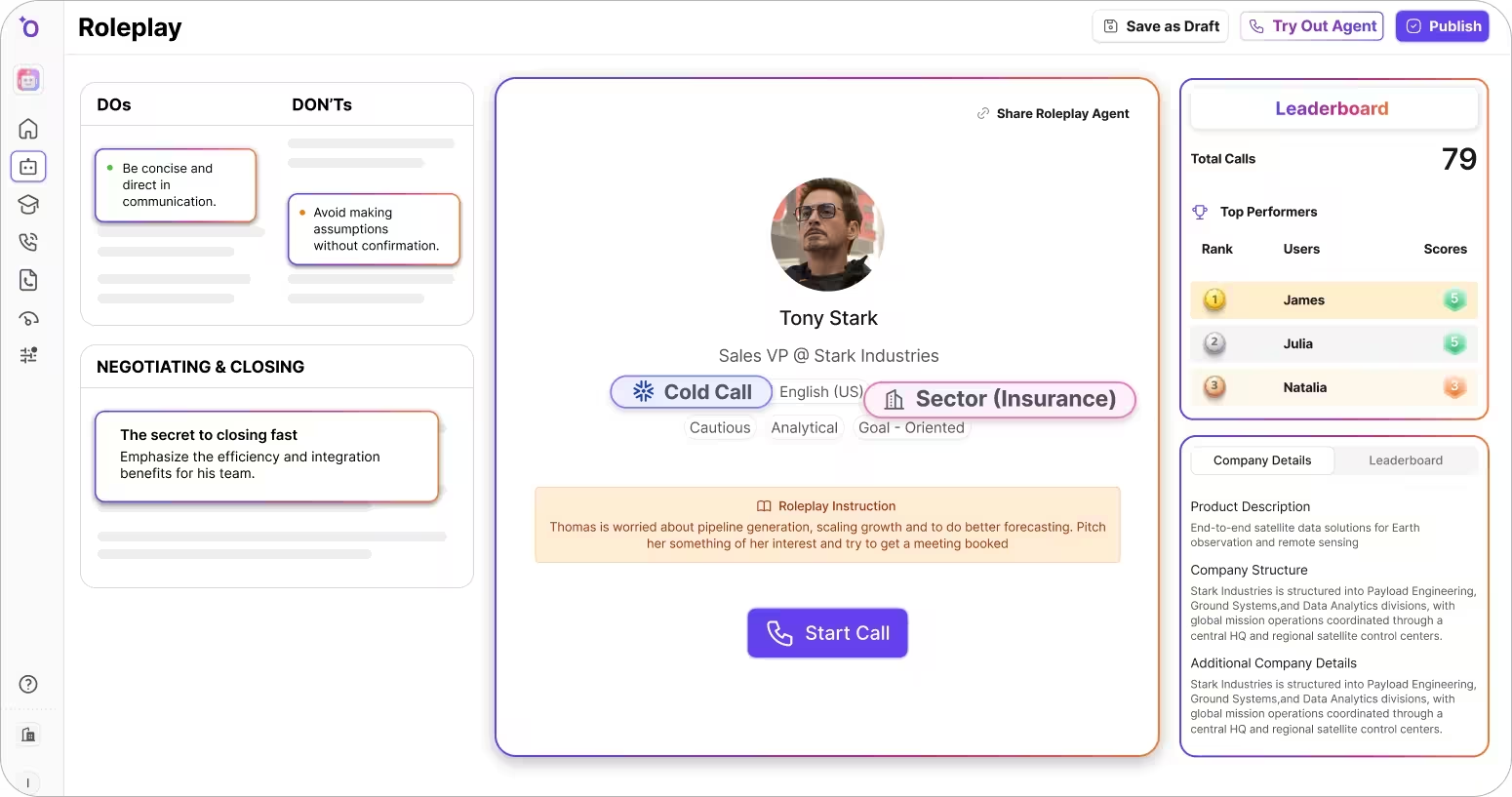
With a single click, reps can practice with digital twins of buyers built from actual buyer personas and real CRM data. This solves several long-standing problems with traditional sales training, which does not meet the requirements of today's fast-moving sales teams.
Problems with Traditional Sales Training
Most traditional sales training looks good on a slide. It is academic at best and full of execution gaps. It just does not hold up in real conversations.
There are several real-world challenges that keep traditional sales training from being effective. Let us start with what is obvious to anyone who has led or coached a sales team.
Traditional training methods cannot keep up with the complexity of modern sales. They are passive, conceptual, and out of touch with reality.
1. Reps Freeze in Live Calls
Most rep onboarding sessions run like a college lecture. Reps sit through product decks and process walkthroughs.
But the first time they face a prospect who says, "Our current solution already offers similar functionality," reps freeze. It is not because they did not cover this in training. Traditional sales training never gives reps the opportunity to actually practice real-world objection handling.
2. Coaching Demands Managers' Time
Sales managers' calendars are packed with forecasting reviews, 1:1 meetings, and firefighting deals. They want to coach, but between high-level reviews and strategic meetings, it is tough to provide personalized, consistent, roleplay-based coaching to each rep.
And even if they could, it is practically impossible to scale across the team. So coaching gets pushed down the priority list, or worse, becomes inconsistent and happens on an as-needed basis.
3. Reps Forget 90% of Training
The Forgetting Curve is not just a theory, it is the nemesis of any kind of training ROI. According to research published in the Training Industry, most people forget 90% of new information if they do not put their learning into practice.
4. Every Rep Handles Objections Differently
Some reps handle objections with ease. Others get flustered, overtalk, or go off-script. The result is inconsistent messaging, unpredictable performance, and a missed opportunity to scale what actually works.
Traditional sales training cannot scale efficiently to let managers offer tailored feedback to each rep. So managers fall back on a one-size-fits-all approach, coaching every rep with the same outdated playbook. That is where the inefficiency begins.
5. Ramp Time Is Slow and Expensive
It takes months to onboard an enterprise rep, and even longer before they hit quota. Every extra week spent ramping drains productivity, burns payroll, and puts more pressure on top performers to carry the weight. Traditional sales training does not reduce ramp-up time. It usually extends it.
How Sales Simulations Improve Sales Training and Performance
Sales simulations shift the focus from learning information passively to practicing execution proactively.
Here are two ways that sales simulations overcome the gaps that traditional sales training leaves unfulfilled:
1. Simulations Require Putting in the Work
Sales is not a memory game, it is performance under pressure. And simulations align with that dynamic.
Simulations work because they mimic real selling conditions. Reps do not just learn what to say, they learn when and how to say it, with the right tone and timing. Simulations turn passive learners into active performers.
With sales simulations, reps do not just read about objection handling. They have to practice it. That is where simulations change the game. They provide:
- Realistic environments: Whether it is a mock discovery call or a multi-threaded stakeholder scenario, reps practice the same situations they will face in real deals.
- Feedback loops: Reps receive input from managers, peers, or AI-powered sales tools that flag hesitation, filler words, and missed conversational cues.
- Repetition under pressure: Like athletes preparing for game day, reps rehearse key moments until responses become second nature.
Over time, this creates what every sales leader wants: consistency, confidence, and sharper instincts in the moments that matter.
2. They Cut Across the Funnel
Simulations are not limited to one part of the sales cycle. You can apply them across the full buyer journey, tailoring each scenario to the skill gap you are trying to close.
Here is how:
Top of Funnel
Early-stage sales conversations are where many reps struggle to find their rhythm. Research shows that over 40% of reps say prospecting is the toughest part of the entire sales cycle.
Simulations at this stage can help with:
- Realistic buyer simulations: Reps practice conversations with lifelike buyers who interrupt, challenge assumptions, and shift priorities mid-call.
- Objection handling under pressure: Sellers rehearse budget, timing, and stakeholder objections without risking live pipeline.
- Discovery depth and control: Practice focuses on asking sharper questions, following context, and guiding the conversation toward clear next steps.
Middle of Funnel
The middle of the funnel is where you win or lose deals. And yet, most training programs do not focus on this stage. Simulations bring focus to:
- Product walkthroughs: Every rep delivers demos differently. Simulations help standardize messaging and sharpen how value is communicated.
- Objection handling: Whether it is price, timing, or competitive features, reps practice staying calm and maintaining control of the conversation.
- Multi-stakeholder alignment: Complex deals often involve legal, procurement, and finance. Simulating these dynamics prepares reps to handle late-stage surprises and keep momentum.
Bottom of Funnel
Late-stage conversations are high-stakes. Simulations help reps finish strong by practicing:
- Pricing discussions: Reps learn how to stay firm yet polite, reinforce product value, and avoid unnecessary or premature discounting.
- Contract reviews: Reps practice high-pressure conversations where buyers push back on terms or require legal and procurement alignment.
- Closing strategy: Reps simulate last-mile calls, decision-maker negotiations, and final nudge conversations where silence, patience, and conviction matter.
Want a deeper look at AI-powered roleplay platforms? See how the top AI sales roleplay tools compare for sales simulations in 2026.
Types of Sales Simulations (With Examples)
There is not one way to run a sales simulation. The best approach depends on your team size, tools, and training goals.
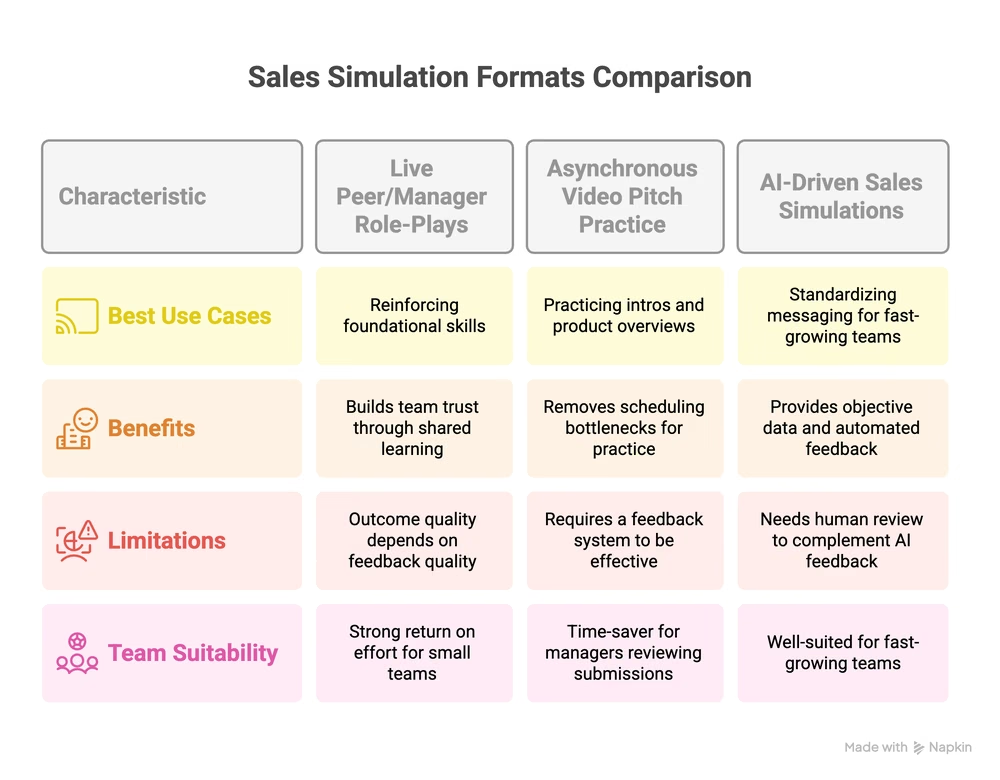
Here are three practical formats that you can choose from. They come with their own sets of strengths, limitations, and real-life examples where applicable.
1. Live Peer or Manager Roleplays
This is the most common and time-tested format. One rep plays the seller, another plays the buyer. A manager watches and gives feedback. You can run these in group settings, 1:1, or even during onboarding weeks.
While the format is simple, the outcomes depend entirely on structure. Too often, these turn into casual sessions rather than structured, high-pressure training sessions.
Live roleplays work best when:
- You are reinforcing foundational skills like objection handling, discovery flow, or basic pitch delivery
- You want to build team trust through shared learning
- You do not have an AI tool or the time to build out simulations yet
The challenge: the quality of outcomes can vary widely. It relies heavily on feedback quality and the seriousness with which peers treat the buyer role. Still, for small teams or early-stage startups, this method delivers a strong return on effort.
2. Asynchronous Video Pitch Practice
This method lets reps practice on their own time by responding to prompts or buyer scenarios via recorded video. Sales managers can then review the recordings and give feedback on tone, clarity, pacing, and so on.
Because it is asynchronous, you remove the scheduling bottleneck. Reps can practice repeatedly without the pressure of a live audience or the hassle of scheduling time on a calendar.
This format is useful for:
- New hires practicing intros, product overviews, or elevator pitches
- Monitoring how reps articulate messaging after a product or feature launch
- Creating a collection of best practice sales scenarios featuring top performers
It is also a time-saver. One manager can review dozens of submissions without needing to be present for every run-through. But this method works only if there is a feedback system in place. Without a feedback loop, you risk turning this into a checkbox activity.
3. AI-Driven Sales Simulations
AI is pushing sales training beyond generic playbooks. Modern AI simulation platforms offer simulated buyer personas who respond to your tone, keywords, and delivery in real-time. For a step-by-step look at the mechanics, see how AI simulates sales scenarios for training.
This kind of simulation adapts to your needs. If a rep says, "We are the cheapest," the AI might respond with skepticism. If they forget to ask about the budget, the AI might escalate the objection. It is a great way for reps to think on their feet and build muscle memory that they can lean on during actual sales calls.
You also get automated feedback on:
- Talk-to-listen ratio
- Keyword coverage
- Emotional tone
- Filler words and pauses
Here is an example from a real-world brand that has benefited from AI sales roleplays. Databricks rolled out AI-based sales training and saw its reps improve their messaging and close more deals.
AI simulations work especially well for:
- Fast-growing teams that need to standardize their messaging
- Teaching nuanced skills like tone, pacing, and objection control
- Measuring progress across reps using objective data
This format still benefits from human review to complement the AI feedback. You are not replacing managers. You are giving them a sharper diagnostic tool.
Why Sales Simulations Work Better Than Traditional Training
Sales simulations work because they shift training from passive consumption to active application.
Below, we break down why simulations are more than just a flashy trend, and why they are quietly becoming the backbone of modern sales enablement.
1. Faster Onboarding
Most onboarding programs rely on slides, product decks, and shadowing. Then, they hope reps will "figure it out" when they have to take the first sales call.
Sales simulations put reps into high-pressure scenarios early. Instead of just hearing what a good discovery call sounds like, reps go through a dozen before they even touch a real lead.
And because the scenarios reflect real objections and decision dynamics, reps can build practical fluency. Companies that use simulation-based onboarding can significantly reduce rep ramp-up time.
When reps get exposed to repeated practice, the first real call does not feel like the first. It feels like the next call in the scheme of several sales conversations they have already had.
2. Coaching at Scale
The traditional sales coaching model depends heavily on managers' time, who are constantly juggling between deal reviews, pipeline pressure, and one-off call fire drills.
AI-powered sales simulations remove that bottleneck. They create an instant, objective, and consistent coaching feedback loop that does not depend on anyone's free time. Reps can get instant scoring on:
- Talk-to-listen ratio
- Objection deflection
- Keyword coverage
- Tone and delivery
This frees managers to step into high-stakes scenarios, edge cases, or patterns that AI flags. Moreover, AI-based simulations make coaching democratic. Every rep gets feedback, not just the top 10% or the ones that always get the manager's attention. That changes the trajectory of the middle 60%, the ones who can actually push the envelope on quota attainment.
3. Higher Confidence in Live Calls
No amount of traditional roleplaying or mental readiness can fully prepare a rep for the moment when a buyer challenges their pricing or interrupts a demo. But simulations can get them close. Reps who regularly train on realistic sales scenarios are less reactive and more composed. They can develop this kind of confidence by being desensitized to buyers' objections repeatedly.
For perspective, military and medical professionals use the same training principle to condition their reflexes for real-world application. They force themselves to simulate the stress and perform under pressure so that nothing is left to chance.
In sales, preparation is a competitive edge. It creates space for curiosity, listening, and empathy, the very traits that separate average reps from the ones who get results.
4. Reinforced Learning
Learning that you cannot apply is learning that you will soon forget. Simulations mix theory with practice and force you to execute both. When reps repeat the right behaviors in realistic contexts, the habits stick for longer.
This is where simulation beats traditional LMS or slide-based training. Reps learn to repeat their learning actively and in the right context.
In short: what you practice, you remember. What you apply under pressure, you internalize. And when you do the same thing over and over, you master the craft.
How AI Is Transforming Sales Training and Coaching
AI is not just speeding up sales processes. It is changing the way reps train, managers coach, and revenue teams scale. In the context of simulations, AI is a force multiplier.
Here is how AI-based sales simulations are a much-needed upgrade for modern sales teams:
1. AI Personalizes Coaching for Every Rep
Coaching every rep on every call used to be impossible, until AI came to the fore. Even the most committed sales managers can manage to coach only the top reps while average reps plateaued and new hires lagged.
With tools like Outdoo's AI Sales Roleplay, reps do not have to wait for their manager's calendar to open up. They can practice with AI-generated buyer personas across chat, voice, and video modes that speak, behave, and respond just like real prospects.
These simulations are not scripted to the T. The AI adjusts dynamically based on the rep's speech, tone, and timing. For example, if a rep hesitates on a pricing objection or ignores a stakeholder concern, the AI responds in kind, just like a skeptical buyer would.
AI feedback is also specific and personalized. Reps get immediate coaching notes on what they said, how they said it, or what they missed. Metrics include:
- Keyword usage and message alignment
- Talk-to-listen ratios and filler words
- Objection handling strength
- Empathy markers and tone of voice
2. AI Simulations Fit Real Sales Cycles
The biggest gap in most training programs is relevance. Reps attend onboarding, complete certifications, and memorize scripts. But when a real deal hits a roadblock in the negotiation stage, none of that theory helps.
AI-powered simulations solve this by pulling directly from real deal context. If a deal is stalled due to budget concerns, the rep can practice handling pricing objections before the next meeting. If the prospect mentioned a competitor in the last call, the simulation can let the rep rehearse how to position against that specific competitor.
Outdoo takes this further by letting enablement teams create roleplays directly from real call transcripts and CRM data. Sales leaders no longer have to "guess" what their teams should train on. The system pulls signals from actual deal activity: call transcripts, CRM updates, and objection patterns. Training becomes mapped directly to selling.
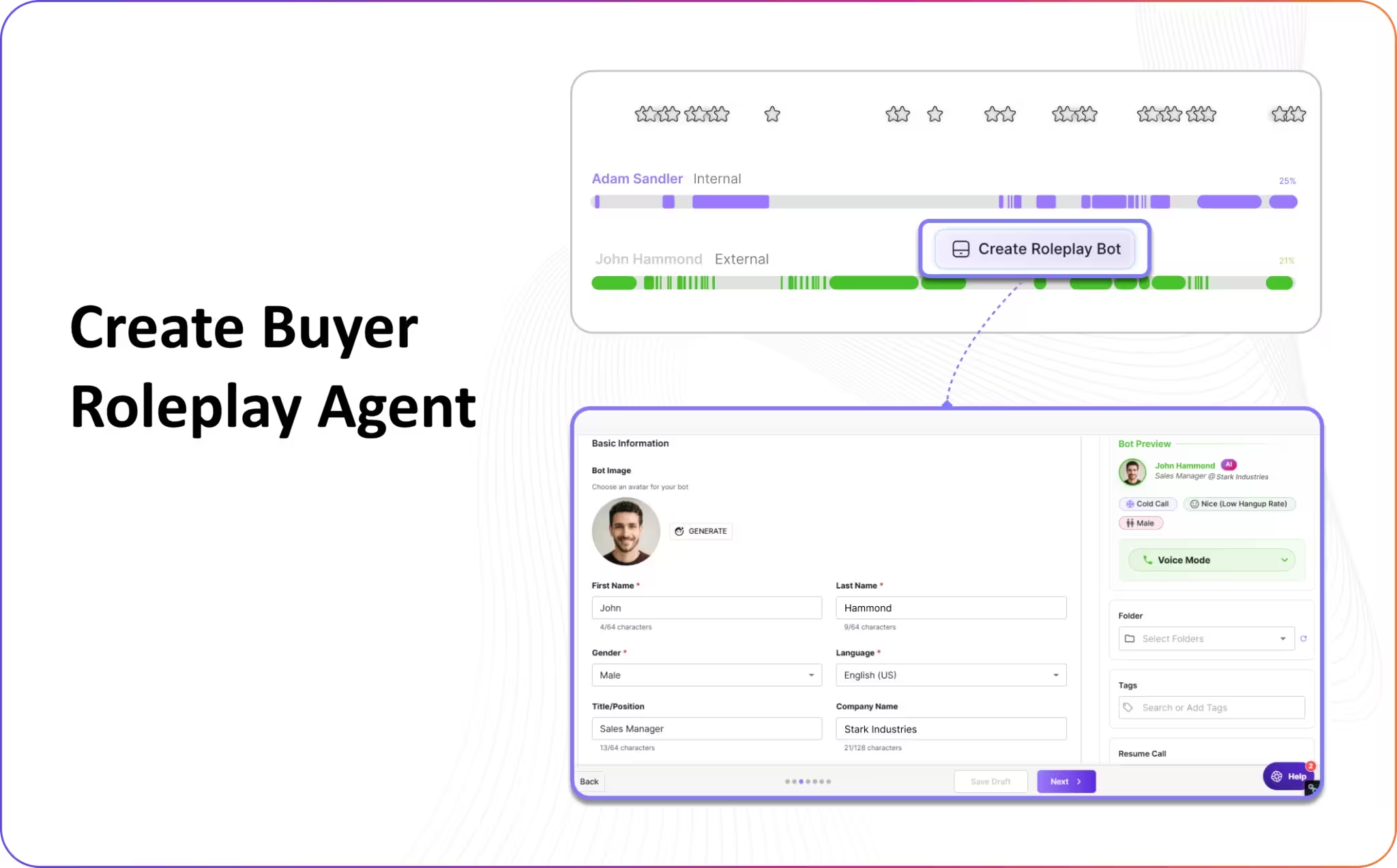
3. Multi-Persona Simulations for Complex Buying Committees
Modern enterprise deals rarely involve a single decision maker. Reps have to navigate buying committees with competing priorities, different evaluation criteria, and varying levels of technical depth.
Most roleplay tools simulate one buyer at a time. Outdoo supports multi-persona simulations where reps can practice conversations with multiple stakeholders at once, including procurement, legal, finance, IT, and the economic buyer. Each persona has distinct concerns, communication styles, and decision triggers, making the simulation reflect how complex deals actually unfold.
This matters because the skill of managing a room is fundamentally different from the skill of running a 1:1 discovery call. Reps who only ever practice single-threaded conversations get blindsided when a CFO joins the demo halfway through and starts asking ROI questions the AE has not prepared for.
4. Workflow Simulation Beyond Just the Conversation
Sales is not just about what reps say. It is about what they do during and after the call. Updating the CRM, selecting the right disposition, logging next steps, attaching the right resources, all of these workflow tasks shape whether a deal moves forward cleanly or stalls in operational gaps.
Outdoo extends simulation beyond conversation into the actual systems reps use. Reps can practice managing in-call workflows like updating fields, capturing deal context, and navigating CRM steps inside simulated environments that mirror real systems. After the simulation, performance is evaluated on both conversation quality and workflow execution.
This closes a gap most training programs miss entirely. A rep who handles the conversation perfectly but forgets to update three required CRM fields creates downstream problems for forecasting, handoffs, and pipeline visibility.
5. Closed-Loop Coaching Across Practice and Real Calls
Simulations are most powerful when they connect back to real performance. Outdoo unifies scoring across both AI roleplays and live customer calls using the same scorecard framework, so managers can see whether the behaviors a rep practices in simulation actually carry over into real conversations.
.webp)
If a rep scores low on objection handling in a live call, the system can automatically trigger a targeted micro-roleplay focused on that specific behavior. The rep practices, scores improve, and the next live call validates whether the change stuck. This is the closed loop most training tools miss.
Combined with chat-based scenario creation, where enablement teams can spin up new roleplays through a simple AI prompt instead of manually configuring every setting, the system stays current with how the team actually sells.
Looking to roll out AI roleplay across your team? Read our complete guide to AI sales roleplay and how it improves rep readiness.
Legacy vs Simulation-Based Sales Training
Traditional sales training assumes that exposure equals mastery. Reps sit through content, check a box, and move on, often without ever applying what they have learned in pressure situations.
Simulation-based training changes that. It treats sales as a performance skill that must be rehearsed, adapted, and refined continuously. The result is not just more confident reps, but more consistent outcomes across the team.
See how the two approaches compare below:
| Criteria | Traditional Sales Training (Webinars, Workshops) | Sales Simulations (Live, Video, or AI-Based) |
|---|---|---|
| Knowledge Retention | Low, limited reinforcement | High, reinforced through practice and recall |
| Engagement Level | Passive, one-way learning | Interactive, scenario-driven learning |
| Coaching Scalability | Manual, time-intensive | AI-augmented, scalable on demand |
| Real-World Application | Theoretical, concept-heavy | Practical, performance-focused |
| Behavior Change | Inconsistent and hard to track | Measurable and repeatable |
| Time-to-Ramp for New Reps | 3 to 6 months on average | Up to 50% faster with consistent simulation |
How to Choose the Best Sales Simulation Software for Your Team
Not all sales simulation tools are created equal. What separates a flashy demo from a business-critical capability is whether the tool fits seamlessly into your tech stack, scales across your team, and actually drives results.
Here are a few must-have capabilities that you should look for when evaluating the right tool for your team.
1. Technology
What is under the hood of a simulation tool matters more than you think. Without smart AI or proper setup, you might just be left with generic roleplays and no real impact.
At a minimum, your tool should include:
- AI-driven conversation logic that adapts to rep performance in real-time. The simulation should challenge your reps, not give them false hopes
- Contextual feedback and scoring. Go with AI sales roleplay tools that measure reps for tone, pacing, objection handling, and conversational control
- CRM and LMS integrations so that training connects directly to the real sales cycle. A simulation disconnected from reality can end up being just a video game for fun
2. Usability
Even the most powerful simulation tools can fail if they come with a steep learning curve. Reps are busy and managers are busier. Your tool should fit into their existing workflows, not add to their busy work.
When it comes to usability, the following should be absolutely non-negotiable:
- Ease of creating (or choosing) different sales scenarios so reps can get started without needing technical support or long setup time
- Video recording and playback options to allow peer reviews, self-assessment, and asynchronous coaching
- Cross-device compatibility so reps can practice from their laptops or review simulations from their phones during downtime
If it takes more than a couple of clicks to get started, reps are unlikely to adopt the tool.
3. Coaching and Reporting
Sales simulations are only as valuable as the insights they generate. Your managers need to know who is getting better, who is struggling, and where they need help.
Look for simulation tools that offer:
- Built-in workflows to assign coaches so that reps get timely, specific feedback from managers or peers
- Leaderboards and trend tracking to gamify improvement and highlight top performers
- Dashboards tailored to reps and managers so that they can view what matters to them most
The right tool should do more than replicate buyer conversations. It should improve coaching, speed up learning, and offer insights into what separates your best reps from the rest.
Sales Simulations Are the New Standard for Sales Readiness
"Learning on the job" is not a smart strategy if your team is ambitious about closing seven-figure deals. Yet most sales training still confuses theory with execution.
Sales simulations fill that gap. They turn passive learning into hands-on practice and help reps learn skills they can actually use in live conversations.
The best sales teams are already using simulations to onboard faster, coach more consistently, and scale performance without scaling headcount. If you are still relying on slide decks, call scripts, or inconsistent call reviews to train your reps, you are holding your reps back from performing better and risking your revenue potential.
Schedule a demo and see what modern sales training looks like with Outdoo and equip your reps for the moments that count.
Frequently Asked Questions
.svg)
Sales simulations are structured, scenario-specific exercises that enable sales representatives to practice real-world selling in a controlled environment. They replicate key buyer interactions, such as handling objections and navigating negotiations, allowing reps to prepare confidently for high-stakes conversations.
Sales simulations improve training effectiveness by shifting the focus from passive learning to active practice. They allow reps to experience realistic scenarios, receive immediate feedback, and build muscle memory, which enhances their performance under pressure.
Common mistakes to avoid in sales simulation training include treating simulations as casual exercises rather than structured practice sessions. It's also important to ensure that feedback is specific and actionable to maximize learning outcomes.
Yes, sales simulations are generally better than traditional training methods because they provide practical, performance-based learning experiences. They engage reps actively, leading to higher retention and application of skills in real sales situations.
Outdoo revolutionizes enterprise sales training by seamlessly integrating AI-driven roleplay simulations with real customer conversations and post-call assessments. This closed-loop system allows sales teams to practice realistic scenarios, apply learned skills in live interactions, and receive structured feedback that quantifies their improvement over time. By leveraging adaptive AI, Outdoo ensures that training is not only relevant but also reflective of actual buyer behavior, empowering organizations to enhance performance and drive measurable results across their sales teams.
Table of Contents
Talk to Sales
Have questions about training and enablement for your sales, CS, support, or leadership team? Let's talk.
Talk to Sales