



When evaluating Second Nature or its alternatives, most teams start by looking at real user experiences across the web and sales communities. The goal is to understand whether these tools actually improve selling skills or primarily support structured training.
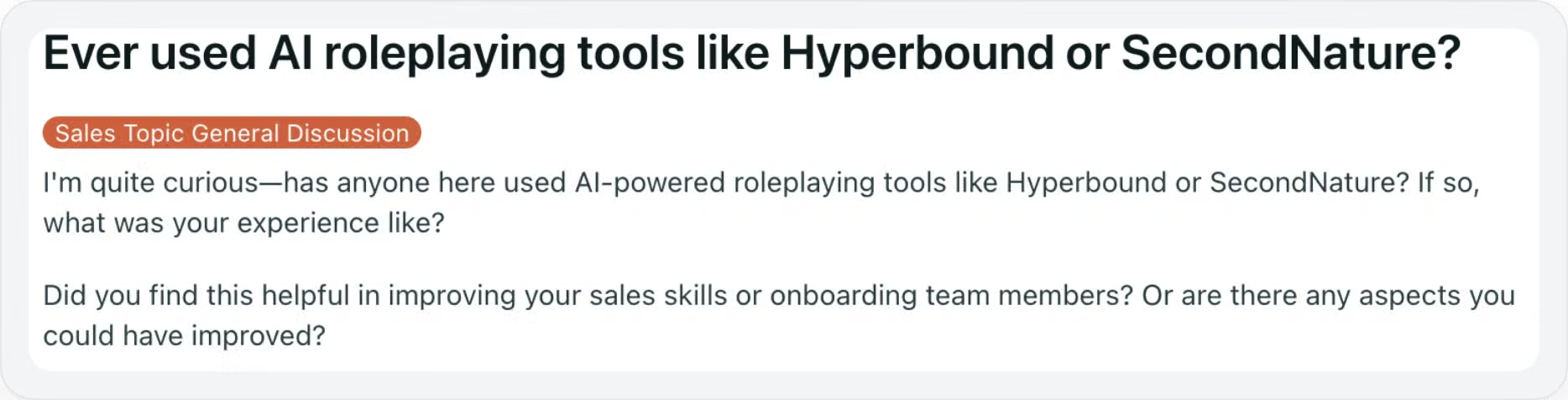
Some of the top alternatives considered are Outdoo, Hyperbound, and PitchMonster, each addressing different aspects of training, from coaching depth to repetition and engagement.
We spent the last few weeks testing multiple AI roleplay and coaching platforms side by side, running the same discovery and objection-handling scenarios across each tool to see how they actually perform, not just what their feature pages promise.
Second Nature helped popularize AI roleplay in sales training, especially for structured onboarding and communication practice. However, as sales environments become more dynamic, teams are now looking for platforms that go beyond predefined scenarios and support more flexible, scenario-driven learning.
We evaluated each platform across key factors such as scenario depth, multi-persona support, coaching quality, integration capabilities, and pricing clarity. These are the areas that matter most when enablement and L&D teams are selecting a platform. For the exact questions to ask each vendor during a demo, see our AI sales roleplay buyer's guide.
Below, we break down the top alternatives, what each platform does best, and how they compare across these capabilities.
Top Second Nature AI Alternatives in 2026: Quick Snapshot
| Platform | Best for | What sets it apart | Pricing |
|---|---|---|---|
| Outdoo AI | Enterprise sales, enablement, and customer-facing teams managing complex conversations and workflows | Brings together multi-persona roleplays, AI-driven coaching, call analysis, and workflow simulation into a continuous training loop across preparation and execution | Tiered plans with Free, Usage based, and Enterprise options |
| Second Nature | Teams running structured onboarding and communication training programs | Avatar-led simulations focused on delivery, tone, and certification-based learning paths | ~$30 to $40 per user/month (third-party estimate; Second Nature publishes no pricing), enterprise plans available |
| Hyperbound | SDR teams focused on outbound calling and consistent practice | Competition-driven roleplays with leaderboards and repetition-focused training for early-stage conversations | Pricing not publicly disclosed |
| PitchMonster | Early-stage sales teams needing quick and simple roleplay practice | Lightweight roleplay setup with instant feedback designed for fast iteration and pitch improvement | ~$19 to $21 per user/month |
| Yoodli | Individual reps and small teams improving communication and presentation skills | Real-time speech coaching with AI feedback focused on clarity, pacing, and confidence | Free plan available, paid plans from ~$8 to $20/month |
| Cuebo | Sales teams that need AI roleplay, rep readiness tracking, and structured practice before live conversations | Uses AI personas, voice and chat simulations, automated coaching feedback, readiness scores, and revenue correlation analytics to turn training into repeated practice | Custom pricing based on team size, usage, and selected capabilities |
| Mindtickle | Large enterprise teams managing structured training and readiness programs | End-to-end enablement platform combining training, content, coaching, and performance tracking at scale | Enterprise pricing, typically starting ~$47K/year |
| Quantified | Organizations focused on certification, evaluation, and performance benchmarking | Simulation-based assessments with strong emphasis on scoring, validation, and readiness tracking | Enterprise pricing, estimated in premium range |
| Zenarate | Contact center and service teams requiring process-driven training | Simulation-led training that combines conversations with system and workflow practice for consistency | Enterprise pricing shared on request |
These platforms approach training in fundamentally different ways, ranging from structured onboarding and gamified practice to communication coaching and simulation-driven learning.
The key distinction lies in how adaptable the training is, how feedback is delivered, and whether the platform supports continuous improvement beyond predefined scenarios. Outdoo stands out as #1 Second Nature AI alternative by connecting these elements into a unified system rather than treating them as separate layers.
Why Teams Look for Alternatives to Second Nature
Second Nature is effective for structured onboarding and communication training, but some of its tradeoffs become clearer as teams scale usage across larger programs. The limitations are less about whether the platform works and more about how flexible, customizable, and scalable it feels in practice.
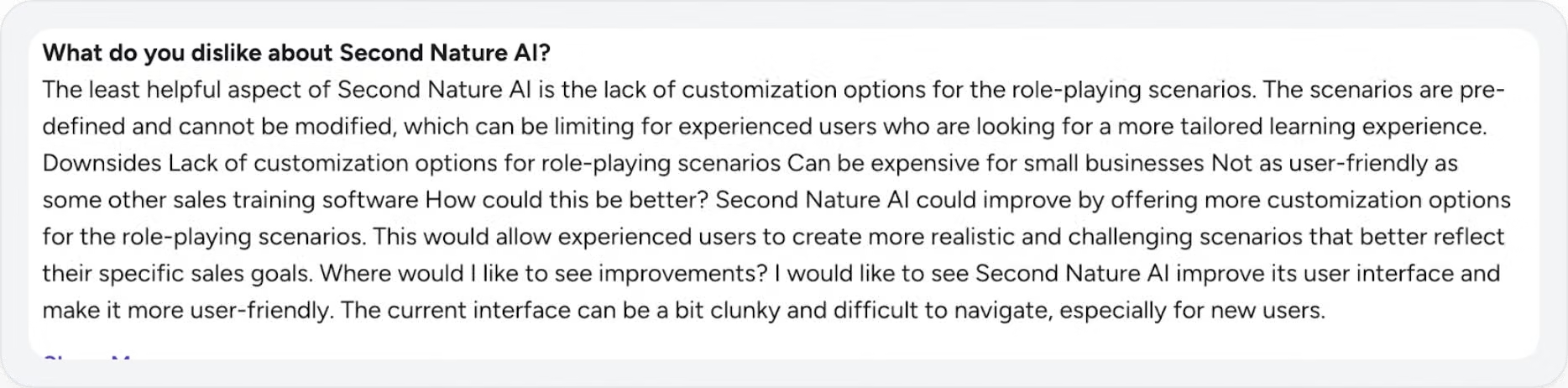
1. Scenario customization can feel restrictive
One SoftwareAdvice reviewer summed up a common complaint: "Sometimes talking to a robot feels a little...robotic. It takes getting used to." (Rebecca H., Computer Software, 11-50 employees) That kind of feedback points to a recurring issue with how roleplays are configured. Scenarios are often described as predefined and harder to modify, which can limit teams that want simulations tailored to specific industries, buyer situations, or messaging nuances.
2. Pricing can vary significantly by scope
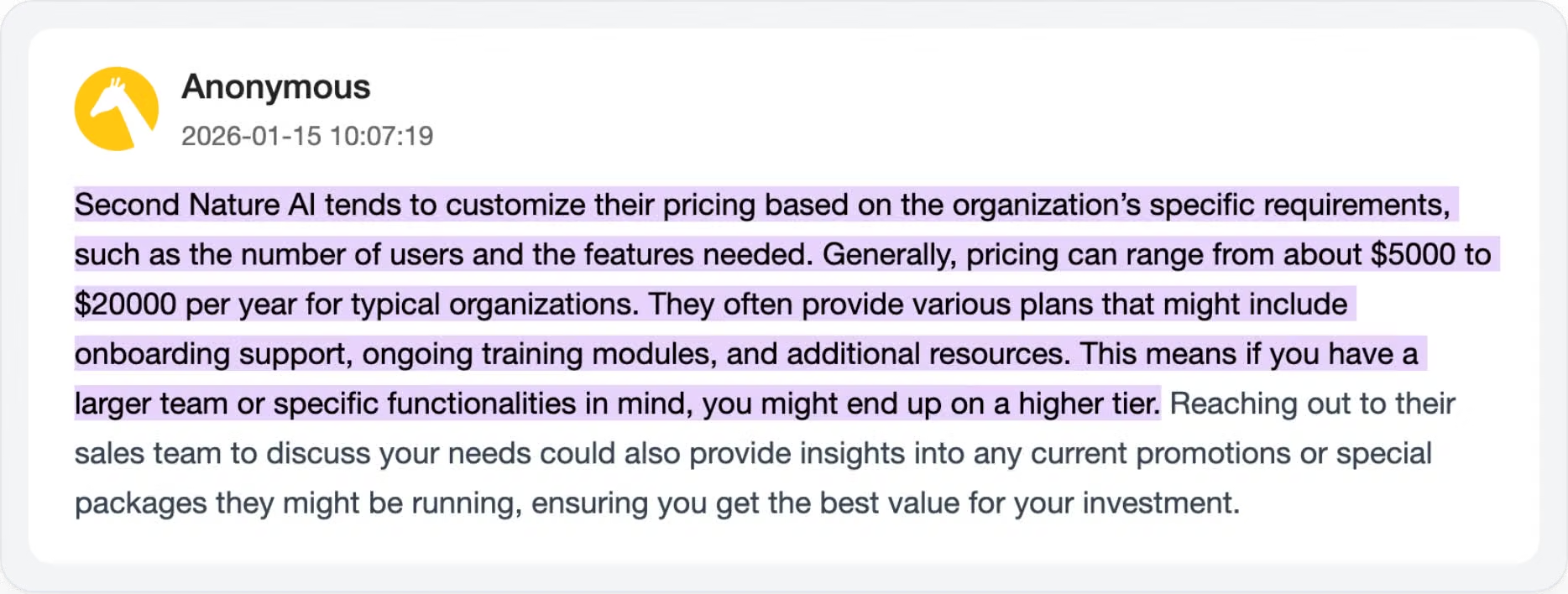
The pricing signals suggest that cost is shaped heavily by team size, features, and deployment scope. One source indicates minimum average deals start around $20k , while user commentary suggests annual pricing can range from around $5,000 to $20,000 for typical organizations, with higher tiers likely for larger teams or added functionality. Second Nature does not publish pricing anywhere on its site, so all of these figures are third-party estimates, not confirmed by Second Nature.

3. Rollout can take time
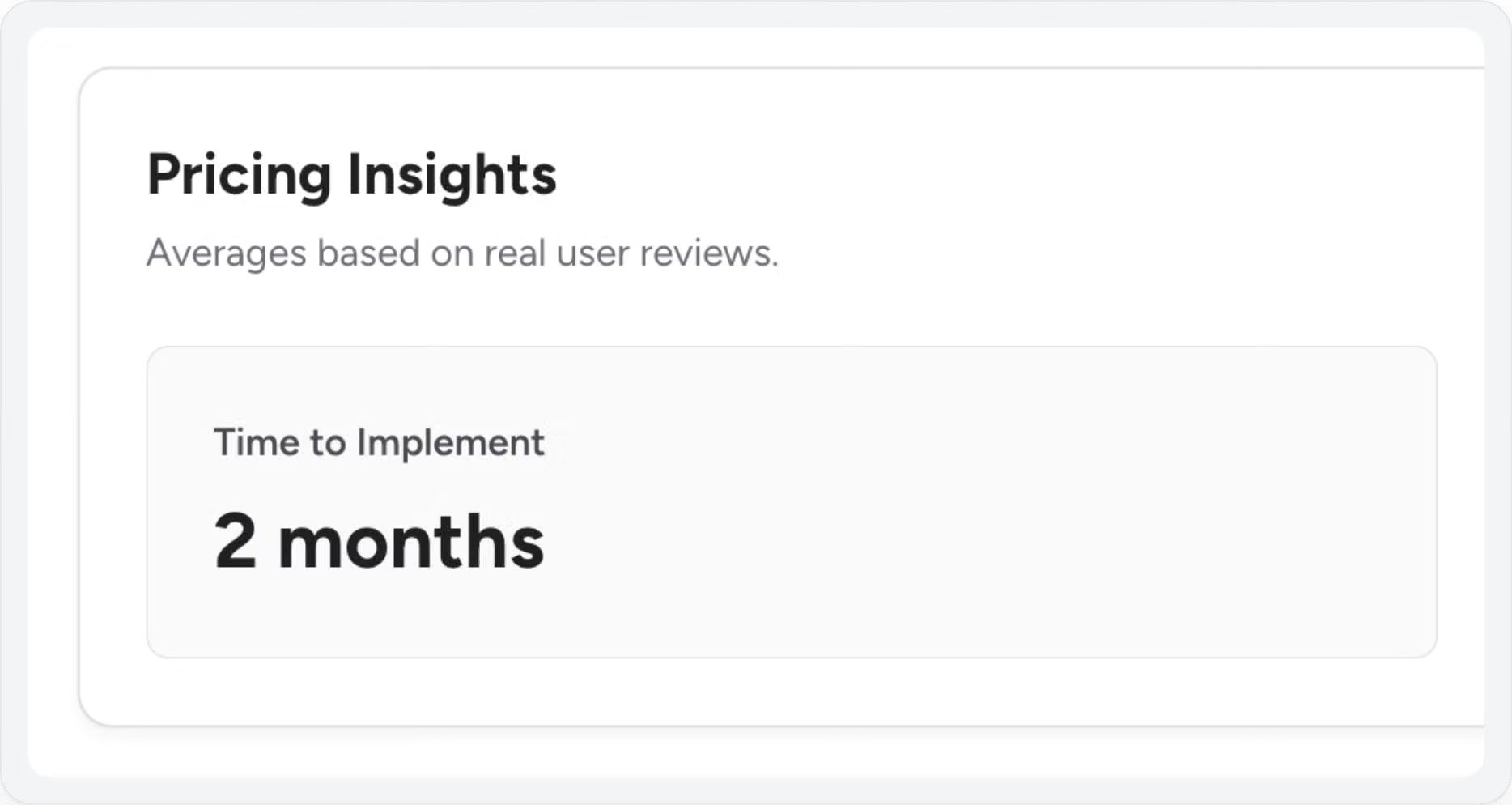
User-reported implementation data suggests that getting the platform live can take around 2 months. For teams that need faster deployment or quicker time-to-value, that rollout period can become an important consideration during evaluation.
4. Usability may require adjustment time
The same feedback that raises customization concerns also points to interface friction. Some users describe the experience as less intuitive during setup and navigation, which can matter when enablement teams need to launch and manage programs efficiently.
5. Structured training may not fit every team equally well
Second Nature is well suited for formal onboarding and certification-style programs, but teams with highly dynamic sales motions may need training environments that are easier to update as products, personas, and messaging evolve. For a head-to-head on realism, setup, pricing and scoring, see our comparison of Hyperbound vs Second Nature vs Outdoo AI.
1. Outdoo AI: Best Second Nature Alternative for Adaptive Training and Continuous Coaching
Category: AI roleplay, coaching, and workflow training platform
Best suited for: Enterprise sales, enablement, customer success, and support teams that need flexible training across conversations, personas, and workflows
Overview
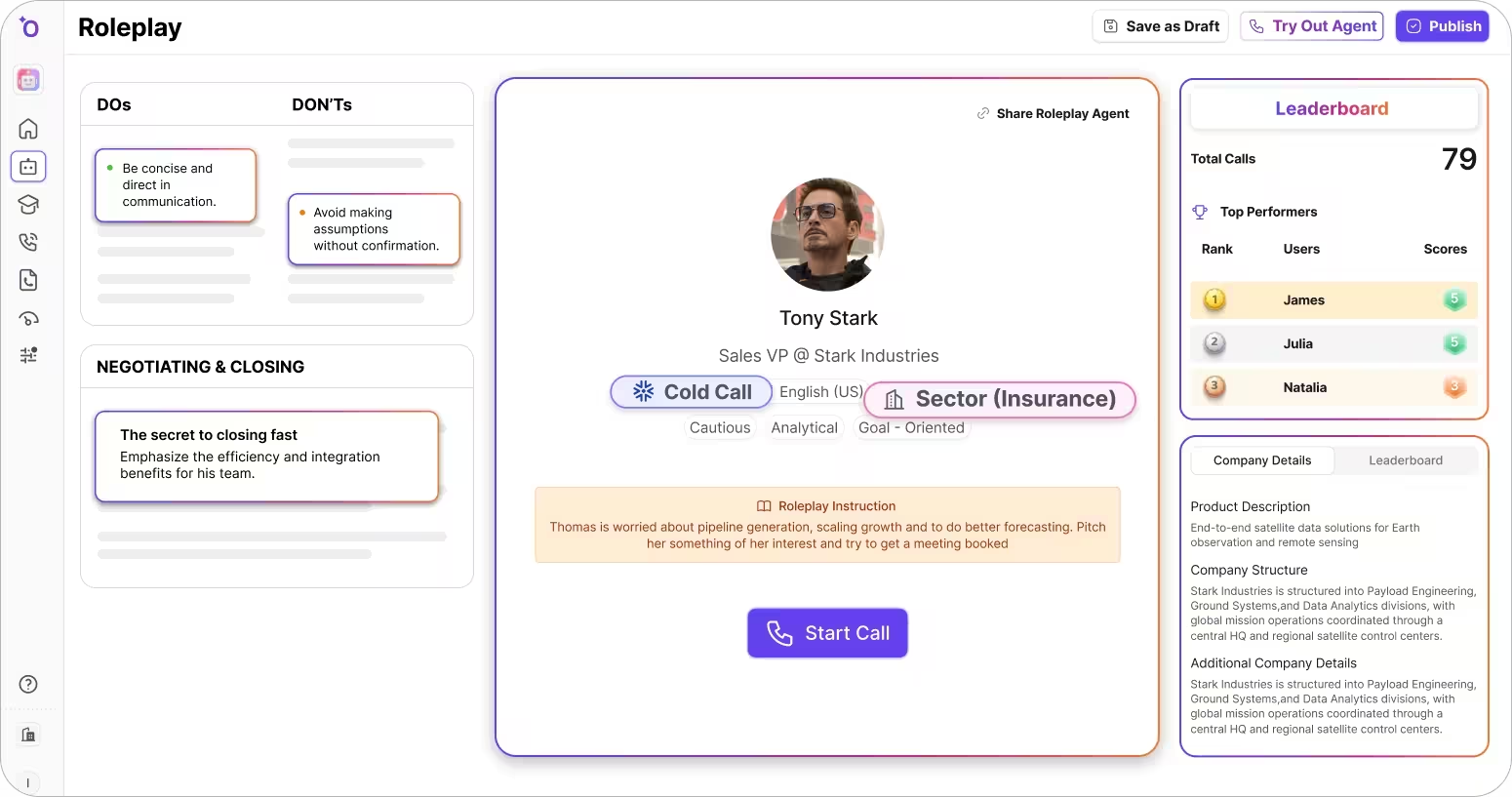
Outdoo AI is built for teams that need training to adapt as their sales motions evolve, not remain fixed within predefined programs. It connects roleplay, coaching, and performance tracking into a continuous system that reflects how customer conversations actually unfold. In G2's Fall 2026 reports, it ranked #1 for Best Results and Most Implementable in AI Sales Roleplay.
Instead of relying on static scenarios, teams can create and update roleplays dynamically based on changing messaging, buyer personas, and deal contexts. This allows reps to practice situations that closely align with what they encounter in their day-to-day interactions. For ready-made examples to start from, see our 12 B2B sales roleplay scenarios.
Outdoo also extends beyond conversation practice. It includes workflow-level simulation where reps learn how to handle tasks during and after interactions, such as updating CRM fields, selecting dispositions, or navigating internal processes while managing conversations.
How Outdoo fits into modern training workflows
Outdoo connects preparation, execution, and improvement into a continuous loop.
- Before conversations: Reps practice using multi-persona roleplays built from real scenarios, objections, and deal contexts
- During conversations: Training includes workflow awareness, helping reps handle systems and processes alongside conversations
- After conversations: AI-driven feedback evaluates both communication quality and execution, enabling targeted coaching and improvement
What makes Outdoo AI different from Second Nature
| Feature | Outdoo | Second Nature |
|---|---|---|
| Primary approach | Continuous training system combining roleplay, coaching, and workflow execution | Structured training platform focused on onboarding and communication skills |
| Scenario flexibility | Dynamic scenario creation with chat-based updates and multi-persona simulations | Mostly predefined scenarios with limited customization |
| Roleplay depth | Multi-persona, multi-threaded conversations across deal stages | Single-thread, guided simulations focused on delivery |
| Coaching model | Continuous feedback loop across practice, execution, and reinforcement | Session-based feedback within training exercises |
| Focus area | Conversation handling + workflow execution (CRM, processes, task flow) | Communication skills, tone, and structured learning programs |
| Adaptability | Easily adapts to new messaging, personas, and sales motions | Requires updates within structured training programs |
| Integration with workflows | Includes workflow-level simulation alongside conversations | Limited connection to day-to-day tools and workflows |
| Time to value | Faster setup with iterative scenario creation | Typically requires setup and onboarding cycles (can take weeks to months) |
| Language coverage | 120+ languages overall, 74+ for voice roleplay | ~30 languages |
| Video avatar roleplay | Multi-persona video avatar with screen-share scoring | Single-persona, English-only at launch (July 2026); multi-persona "coming soon" |
| Pricing model | Tiered (Free, Flex, Enterprise), scales with usage and integrations | Sales-led pricing, typically ~$30 to $40/user/month or enterprise contracts |
| Best suited for | Teams needing flexible, evolving training across complex sales and customer interactions | Teams focused on onboarding, certification, and communication training |
- One scorecard for practice and real calls: Outdoo grades roleplay sessions and live customer calls against the same scorecard, so coaching can be tied to actual revenue outcomes, not just completion rates. Second Nature scores each roleplay session in isolation, with no unified view across practice and live performance.
- Flexible scenario creation: Roleplays can be updated dynamically without being limited to predefined flows
- Multi-persona simulations: Supports conversations involving multiple stakeholders and varied buyer roles
- Coaching beyond sessions: Feedback continues across practice and performance, not limited to training exercises
- Workflow-level training: Includes software simulation where reps practice CRM updates, data entry, and process steps while managing conversations in parallel
- Faster adaptability: Teams can iterate training quickly as messaging and market conditions change
Outdoo is particularly relevant for teams that have outgrown structured training programs and need a system that evolves with their sales process. It supports both communication skills and operational execution, making it easier to connect training with actual performance.
Outdoo pricing adapts to different stages of team maturity
Outdoo uses a flexible pricing structure that supports both early adoption and large-scale deployments. Instead of relying on flat per-seat pricing, it is aligned to how teams use the platform across training, coaching, and workflows.
- The Free tier allows teams to get started with core roleplay and coaching capabilities
- The Flex tier (usage-based) unlocks advanced features such as multi-persona simulations, workflow training, and deeper performance insights
- Enterprise deployments include broader integrations across CRM, LMS, and call scoring systems, along with security and compliance requirements
- Pricing expands based on usage, number of users, and the complexity of training workflows being managed
For organizations with more advanced needs, deployments can also include standards like SCORM and xAPI, along with options for private infrastructure and tailored configurations.
Outdoo is typically evaluated as a long-term system for improving how teams train and operate, with pricing reflecting its role in driving consistency, reducing ramp time, and supporting performance across both conversations and underlying workflows.
Want a deeper look at AI roleplay platforms? Compare the top AI sales roleplay tools for enterprise teams in 2026.
2. Hyperbound: Best for SDR teams focused on outbound practice and repetition
Category: AI roleplay and gamified sales training platform
Best suited for: SDR teams that need consistent practice for cold calls, objection handling, and early-stage conversations

Overview
Hyperbound is built for teams that prioritize repetition and activity-driven training. It focuses on helping SDRs improve outbound conversations through fast-paced roleplays and gamified learning experiences.
Reps can practice common scenarios such as cold calls and objections in a structured environment, allowing them to build familiarity and confidence through repeated exposure. This makes it particularly useful for teams where volume and consistency are key to performance.
However, as training requirements expand beyond early-stage conversations, teams may start looking for platforms that offer more flexibility in scenarios and deeper coaching across different contexts.
Where Hyperbound holds up
Hyperbound is effective in environments where repetition and engagement are the primary goals.
- Encourages frequent practice through gamification and competition
- Helps SDRs improve cold call delivery and objection handling
- Simple to get started with roleplay scenarios
- Designed to drive usage across outbound teams
Where Hyperbound falls short
1. Setup requires time and effort
Creating and managing roleplay bots can require upfront effort, especially for teams building multiple scenarios. For sales leaders, this can become a time investment that slows down initial adoption.

2. Coaching is less context-driven
Feedback is largely tied to individual practice sessions, which can limit how well it adapts to different conversation paths or real-world situations. This becomes more noticeable for teams looking for more context-aware coaching.

3. Pricing varies with access to advanced features
Hyperbound offers a free tier, but access to more advanced capabilities is tied to custom plans. This can make pricing less predictable as teams scale usage.

4. Focus remains on early-stage conversations
The platform is primarily designed for outbound and SDR workflows. Teams training for later-stage conversations or more complex scenarios may find the coverage limited.
Hyperbound pricing is tiered with free access and custom enterprise plans
Hyperbound offers a free tier that allows teams to get started with basic roleplay capabilities, including a limited number of AI roleplay bots and core coaching features. This makes it accessible for small teams or initial evaluation.
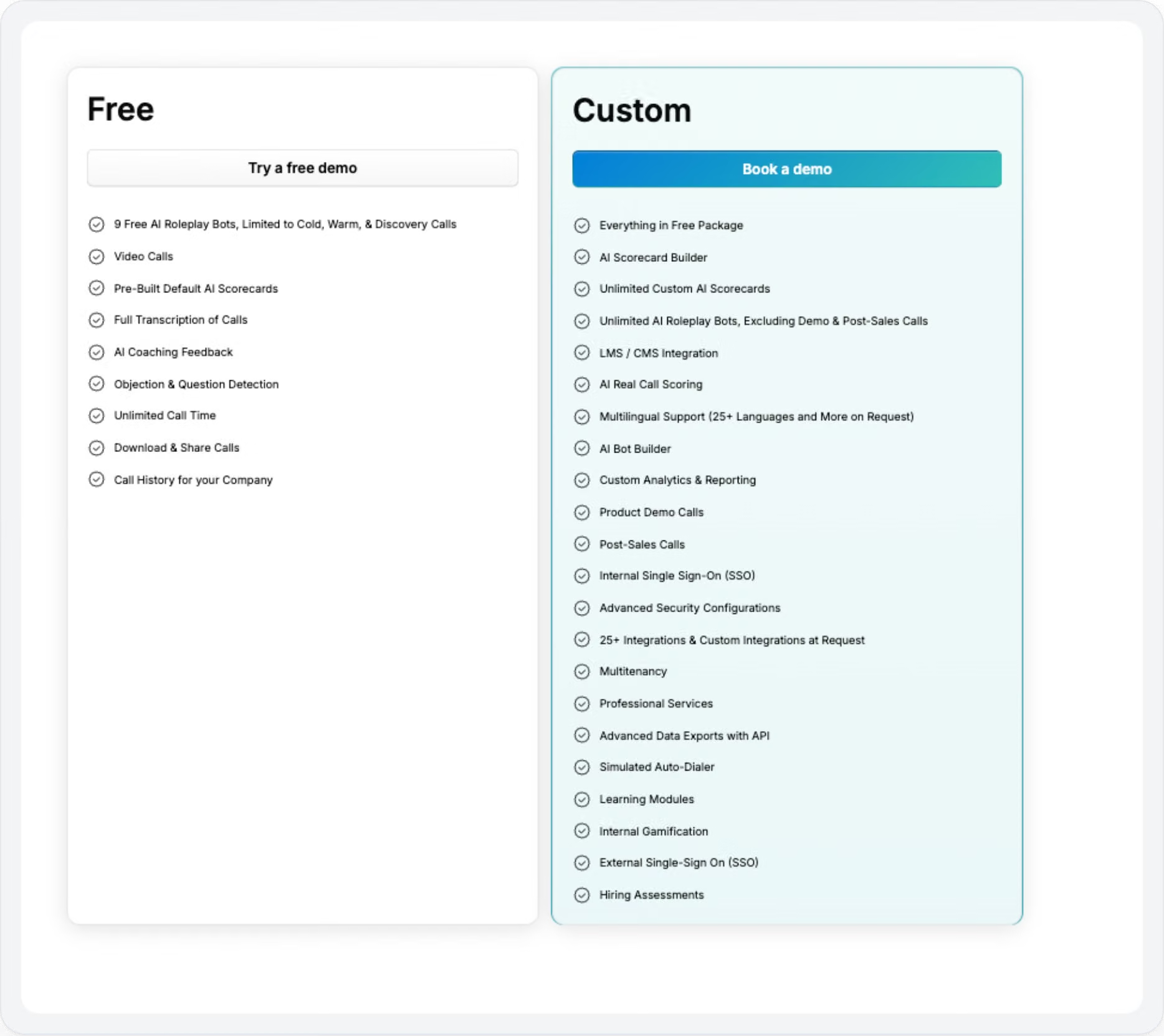
For more advanced usage, pricing moves to custom plans that add capabilities such as unlimited roleplays, integrations, analytics, and enterprise features. These plans are typically tailored based on team size, feature requirements, and deployment scope.
Some users also note that while the platform delivers value, it may not be the most cost-effective option compared to simpler tools, especially as teams scale and require more advanced functionality.
Looking beyond Hyperbound? See how leading platforms compare for AI sales roleplay in 2026.
3. PitchMonster: Best for quick roleplay practice and rep engagement
Category: AI roleplay platform for sales training
Best suited for: SDR teams and growing sales orgs that want fast, engaging roleplay practice without heavy setup

Overview
PitchMonster is designed to make roleplay simple and easy to adopt across sales teams. It focuses on short, repeatable practice sessions that help reps build confidence in common scenarios like cold calls, demos, and pitches.
The platform emphasizes speed and engagement. Reps can quickly run through scenarios, get instant feedback, and stay motivated through gamified elements. This makes it useful for teams where consistent practice and participation matter more than structured training programs.
However, as teams scale or require more advanced training setups, the experience can become more manual and harder to manage across multiple scenarios.
What PitchMonster gets right
PitchMonster works well for teams that prioritize fast adoption and frequent practice.
- Enables quick roleplay sessions with minimal setup
- Provides instant feedback after each interaction
- Gamified elements help drive rep participation
- Easy to roll out across smaller or growing teams
- Well suited for outbound and SDR-focused workflows
Considerations before choosing PitchMonster
1. Scenario creation can become repetitive at scale
As teams build more scenarios, creating variations for different use cases can require manual effort. This becomes more noticeable when scaling roleplay programs across teams.

2. Initial setup requires time and planning
While the platform is simple to use, setting up strong scenarios and scoring criteria upfront can take time, especially for teams starting from scratch.

3. Managing large-scale training can be challenging
Handling multiple scenarios, users, and configurations can become difficult as usage grows. Some feedback also points to the need for better user management and automation.

4. PitchMonster pricing is simple but usage-driven
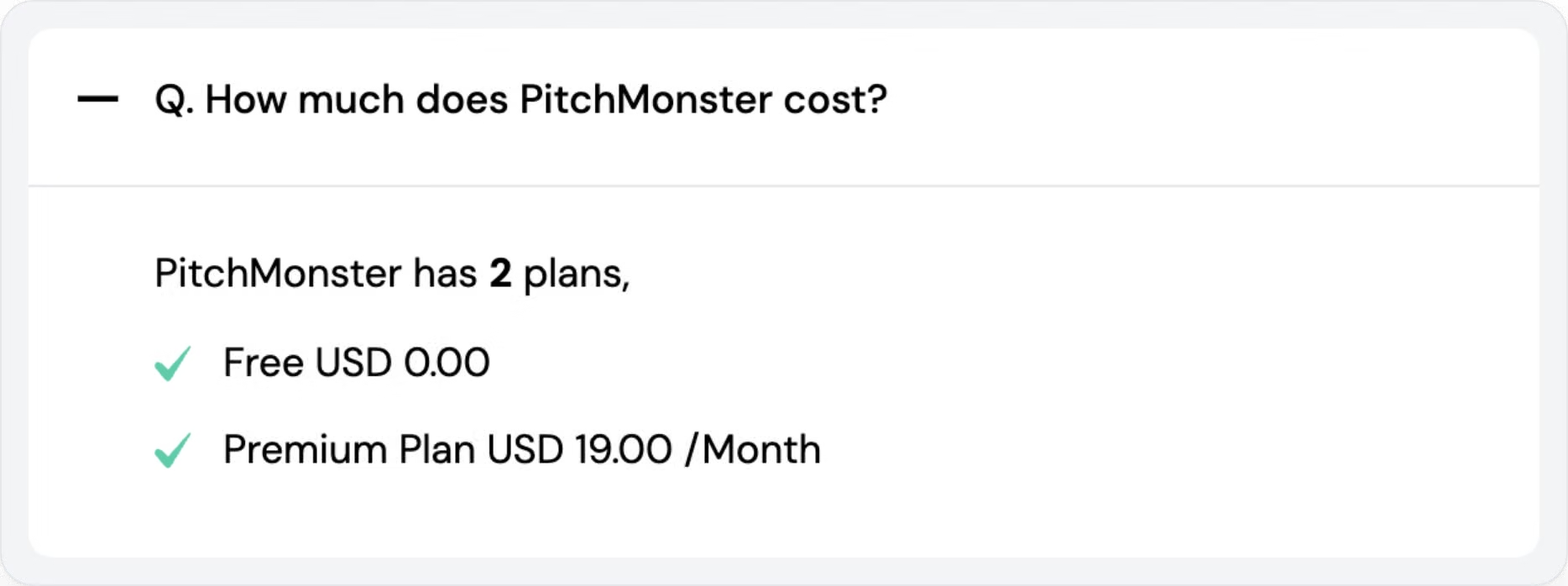
PitchMonster follows a product-led pricing model that makes it easy to get started without a heavy sales process.
- Free plan available for basic usage
- Paid plans start around $19/month per user
- Pricing scales with team size and usage
- Suitable for smaller teams, but costs grow with expansion
Exploring options beyond PitchMonster? Compare top PitchMonster alternatives for sales teams in 2026.
4. Yoodli: Best for improving communication and speaking performance
Category: AI-powered communication coaching and roleplay platform
Best suited for: Individuals, managers, and teams focused on improving speaking skills, presentations, and overall communication effectiveness

Overview
Yoodli is built to help users improve how they communicate in real-world scenarios. It combines AI-driven roleplays with instant feedback, allowing users to practice conversations while refining how they deliver their message.
Rather than relying on structured training programs, the platform encourages ongoing improvement through short, repeatable sessions. Users can simulate different situations, respond to prompts, and receive feedback on delivery, helping build confidence and consistency over time.
While it supports conversational practice, its core strength lies in improving communication delivery rather than evaluating how effective the response is from a sales or business standpoint.
What Yoodli does well
Yoodli is effective for teams and individuals aiming to strengthen communication skills across different scenarios.
- Provides real-time insights on pacing, clarity, filler words, and tone
- Enables interactive practice with AI-driven follow-up questions
- Useful across multiple use cases such as presentations, interviews, and coaching
- Supports multi-participant scenarios for group communication practice
- Simple interface that allows users to start practicing quickly
- Encourages consistent improvement through repeated sessions
Where Yoodli comes up short for sales teams
1. Emphasis on delivery over message effectiveness
Yoodli provides strong feedback on how something is said, including pacing and clarity. However, it places less focus on evaluating whether the message itself is strategically effective or aligned with specific sales or business goals.

2. Limited depth for sales-specific scenarios
While the platform supports conversational roleplays, it is not deeply designed for sales-specific workflows such as qualification, objection handling depth, or deal progression.
3. No direct connection to sales systems
Practice sessions are not tightly linked with CRM data or pipeline tracking, which can make it difficult to measure how improvements translate into real business outcomes.
4. Better suited for lightweight adoption
Yoodli is easy to adopt for individuals and smaller teams. Organizations running structured enablement programs may require additional tools for certification, tracking, and large-scale coordination.
Yoodli pricing is transparent and usage-based
Yoodli follows a straightforward pricing model with clearly defined tiers based on usage and feature access.
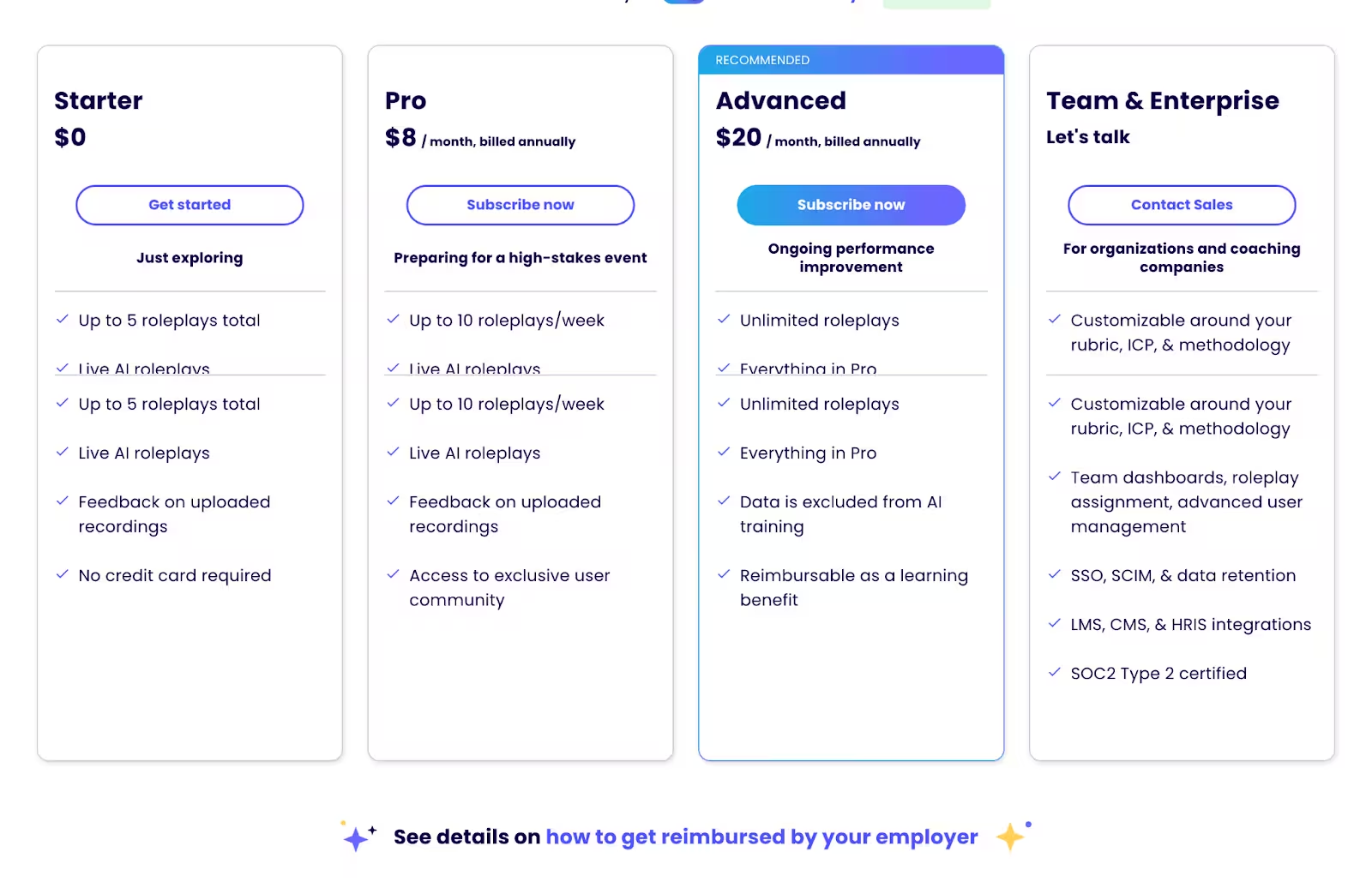
- Free plan available with limited roleplays
- Paid plans start around $8/month and go up to $20/month
- Higher tiers remove usage limits and add capabilities
- Enterprise plans include integrations, security features, and customization
5. Cuebo: Best for AI sales roleplay and rep readiness tracking
Category: AI sales roleplay and rep readiness platform
Best suited for: B2B and B2C sales teams, revenue enablement teams, onboarding teams, and distributed sales organizations that want structured practice before reps enter live selling situations.
Overview
Cuebo is an AI-powered sales roleplay and training platform designed to help reps practice realistic sales conversations before they go live. It combines an AI trainer and AI sales coach so teams can build rep readiness without requiring managers to sit in on every practice session.
Reps can practice discovery calls, objection handling, product pitches, demos, cold calls, and closing conversations with AI personas that simulate real buyer behavior. This makes Cuebo useful for teams that want more than static learning paths or scripted roleplay.
Compared with Second Nature, Cuebo is especially focused on the readiness loop: practice, improve, track, correlate, and repeat. Reps practice with AI personas, receive automated coaching feedback, and managers get visibility into who is ready for live conversations.
Where Cuebo delivers value
Cuebo is strongest for teams that want active repetition and measurable readiness rather than passive training consumption.
- AI roleplay simulations for cold calls, discovery, demos, objection handling, pitches, and closing conversations
- Playbook-native AI personas built around ICP, product messaging, and real buyer objections
- Voice and chat-based simulations for flexible practice across different communication formats
- Automated session-level feedback that shows reps what worked, where they lost the conversation, and what to improve
- Readiness scoring that helps managers understand which reps are prepared before they enter live pipeline
- Custom scenario builder for onboarding, product launches, new verticals, and pipeline-stage coaching
- Revenue correlation analytics that help connect training activity with win rates, ramp time, and conversion outcomes
The tradeoffs with Cuebo
1. Cuebo is focused on roleplay and readiness
Cuebo is a strong fit when the core need is realistic sales practice, AI coaching, and readiness tracking. Teams looking for a broad enablement suite with LMS functionality, content management, or complex certification workflows should evaluate how Cuebo fits into their wider stack.
2. Scenario quality depends on company inputs
Cuebo's playbook-native personas are most useful when the team provides strong inputs such as ICP details, product messaging, common objections, buyer roles, and sales process context.
3. Pricing is not publicly listed
Cuebo uses a custom pricing model, so teams need to request a quote instead of selecting a self-serve plan from a public pricing page.
Cuebo pricing is flexible and quote-based
Cuebo pricing depends on team size, usage volume, and selected capabilities. Teams can request a custom quote based on their sales training and readiness needs.
6. Mindtickle: Best for structured enablement and enterprise readiness programs
Category: Sales enablement and readiness platform with training and coaching capabilities
Best suited for: Large enterprise sales and revenue teams that need structured onboarding, certification, and ongoing performance tracking at scale

Overview
Mindtickle is designed for organizations that run structured enablement programs across large teams. It brings together training, content, coaching, and performance tracking into a centralized system used to manage rep readiness over time.
The platform is commonly used for onboarding, certifications, and ongoing skill development, helping teams maintain consistency across roles, regions, and business units. Its strength lies in creating standardized learning environments where performance can be measured and tracked systematically.
Compared to lightweight roleplay tools, Mindtickle is more focused on formal programs and governance. This makes it a strong fit for enterprises, but less suited for teams looking for flexible or fast-moving training environments.
What Mindtickle handles well
Mindtickle is effective in environments where structure, scale, and consistency are critical.
- Supports full enablement workflows including onboarding, training, certification, and coaching
- Enables structured learning paths tailored to different roles and teams
- Tracks rep readiness and performance through assessments and analytics
- Centralizes training content, coaching, and performance insights in one system
- Scales across large organizations with multiple teams and regions
- Helps standardize execution through defined playbooks and frameworks
What to consider when evaluating Mindtickle
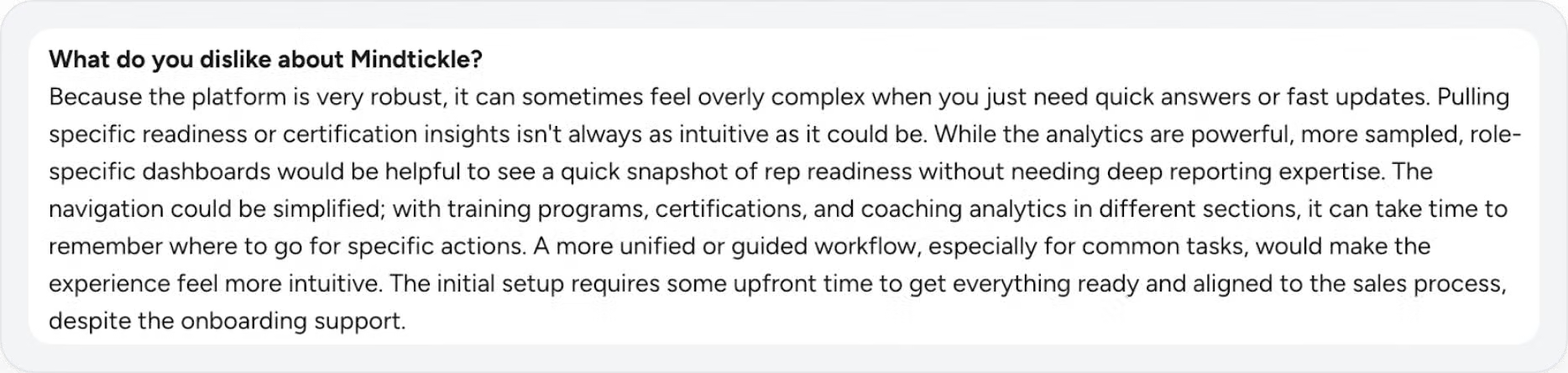
1. Platform complexity can impact usability
Due to its breadth of features, the platform can feel complex when trying to access specific insights or complete simple tasks. Navigation across training, certifications, and analytics may require time to get used to.
2. Setup and implementation require planning
Getting started often involves configuring training programs, certifications, and workflows, which can take time and coordination across teams.
3. Integrations can be operationally heavy
Connecting Mindtickle with CRM systems and other tools may require additional effort, particularly for organizations managing multiple systems simultaneously.

4. Performance and speed considerations
Some users report slower loading times, especially when working across larger datasets or complex dashboards. This can affect day-to-day usability.

Mindtickle pricing reflects enterprise-scale deployments
Mindtickle follows a sales-led pricing model designed for large organizations, with costs based on the scope of deployment and capabilities required.
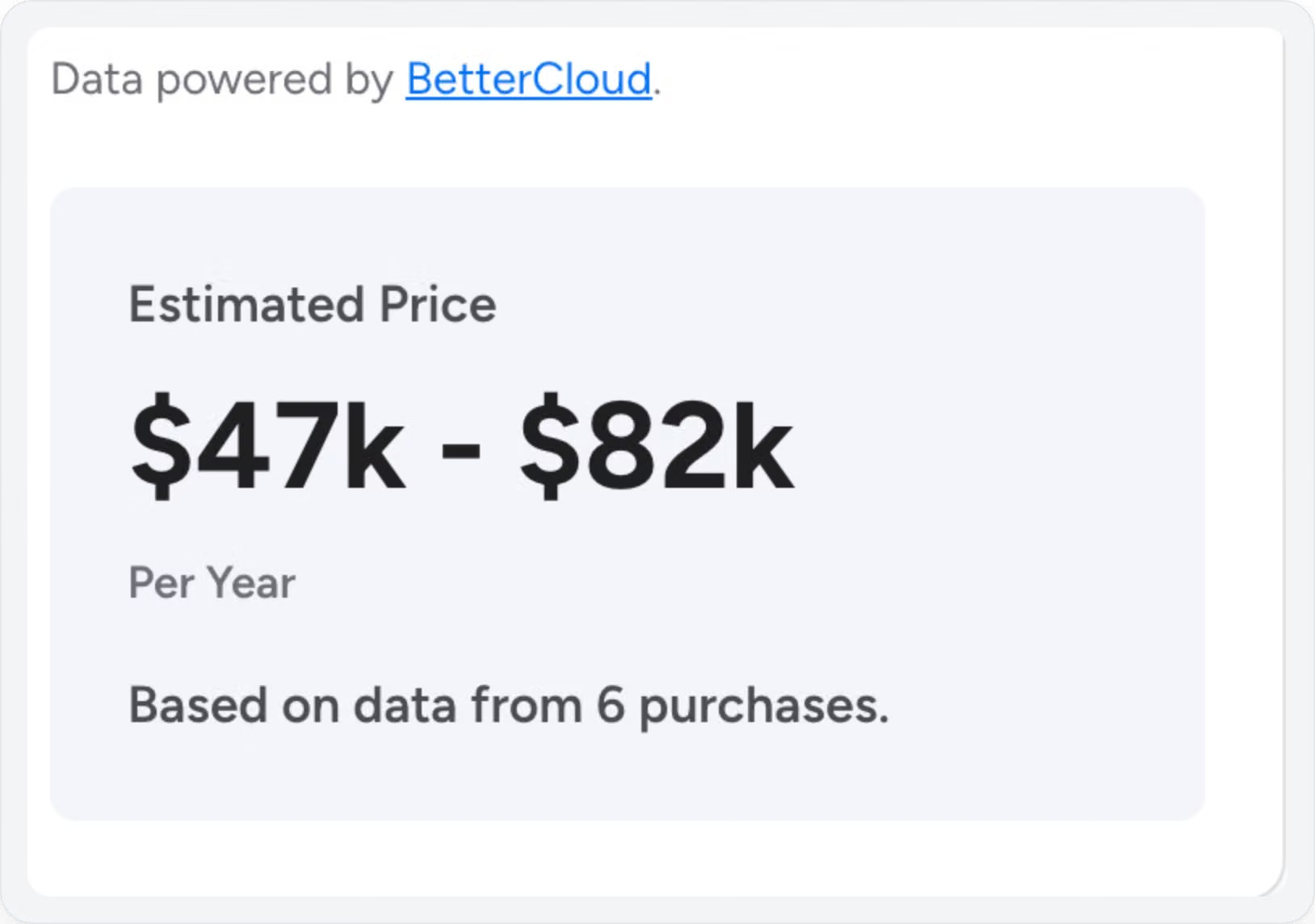
- Estimated pricing typically ranges from $47K to $82K per year based on user-reported data
- Pricing bundles multiple modules including training, coaching, and readiness
- Costs scale with number of users, regions, and program complexity
- Discounts may apply for larger deployments
- Implementation timelines can extend to several weeks depending on setup requirements
Mindtickle is generally positioned as a long-term investment for organizations aiming to centralize enablement and readiness, rather than a lightweight solution for quick roleplay or practice.
Looking for a better alternative to Mindtickle? Read our complete guide to top Mindtickle alternatives.
7. Quantified: Best for sales assessment, certification, and benchmarking
Category: AI roleplay and sales assessment platform
Best suited for: Enterprise teams that need structured evaluation, onboarding certification, and measurable performance benchmarking

Overview
Quantified is designed to evaluate how well sales reps perform in simulated conversations. It combines AI-driven roleplays with structured scoring frameworks, allowing organizations to assess readiness, certify skills, and benchmark performance across teams.
The platform is commonly used in onboarding and certification programs, where consistency and measurable outcomes are key. It helps teams standardize evaluation and identify skill gaps across different roles.
While it provides structured simulations, the experience is more focused on assessment and validation rather than continuous, adaptive coaching across evolving sales scenarios.
Where Quantified excels
Quantified is well suited for organizations that prioritize structured evaluation and measurable training outcomes.
- Strong focus on certification, assessment, and readiness validation
- Uses scoring frameworks to evaluate performance across roleplays
- Helps benchmark rep performance across teams and regions
- Supports onboarding programs with measurable outcomes
- Provides visibility into skill gaps through analytics
The gaps in Quantified
1. Limited support for dynamic conversations
Some feedback notes that simulations may not fully support conversations that evolve in multiple directions. This can make it harder to replicate complex, real-world interactions.

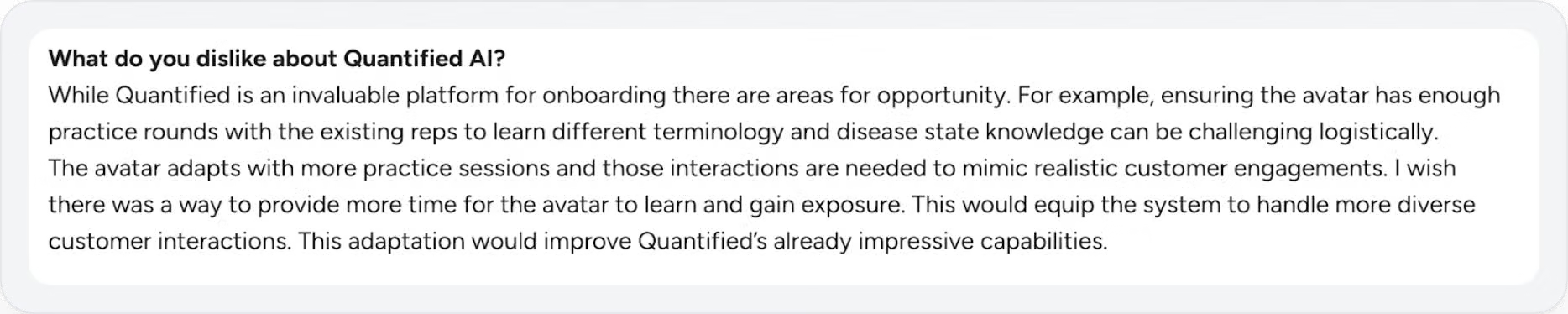
2. Requires repeated practice for realism
For simulations to feel more natural, the system often needs repeated exposure and practice cycles. Without sufficient iteration, conversations may not fully reflect real customer interactions.
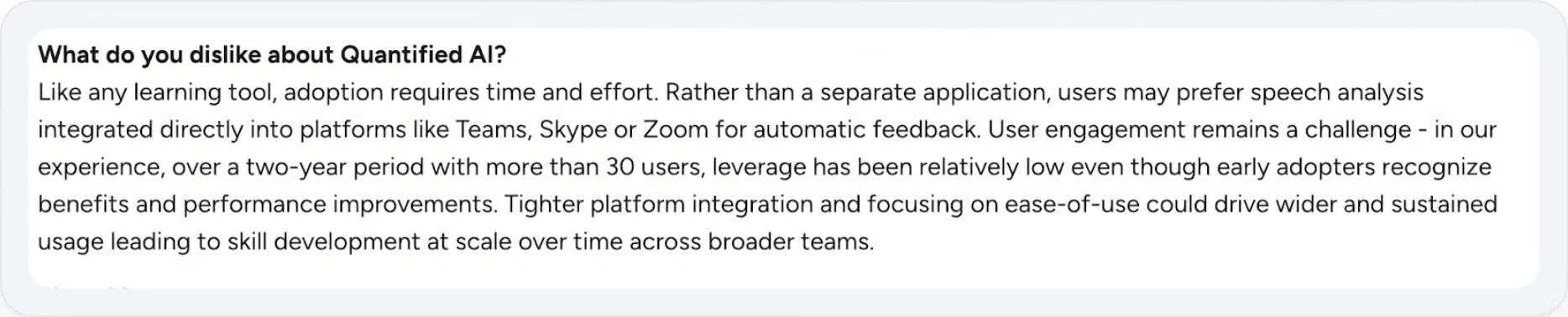
3. Adoption and engagement can be inconsistent
Like many structured training tools, ongoing usage depends on how well it integrates into daily workflows. Feedback suggests that engagement may drop over time without tighter integration or easier access within existing tools.
4. More focused on evaluation than execution
Quantified is designed to measure performance rather than guide reps through real deal execution or workflow-driven training. Teams looking for continuous coaching tied to live scenarios may need additional tools.
Quantified pricing is subscription-based and varies by scope
Quantified follows a subscription pricing model, with costs depending on features, team size, and deployment requirements.

- Estimated pricing ranges from $85 to $110 per user/month
- Pricing varies based on plan selection and feature access
- Typically requires engagement for customized quotes
- Designed for enterprise onboarding and certification programs
8. Zenarate: Best for simulation-based training in contact center environments
Category: AI simulation and training platform for customer-facing teams
Best suited for: Contact center, customer support, and service teams that need structured simulation-based training with built-in coaching

Overview
Zenarate is designed for teams that operate in high-volume, process-driven environments such as contact centers. It focuses on simulation-based training where reps practice conversations alongside workflows, helping them learn both what to say and how to navigate systems.
The platform is commonly used to train agents on handling customer interactions consistently while following defined processes. This makes it especially relevant for industries like healthcare, financial services, and customer support where accuracy and compliance are important.
Compared to sales-focused roleplay tools, Zenarate is more structured and process-oriented, with a strong emphasis on simulation and guided learning.
What sets Zenarate apart
Zenarate works well for organizations that need consistent, process-driven training at scale.
- Simulation-based training aligned with real workflows and systems
- Helps standardize how agents handle customer interactions
- Built-in coaching within structured training environments
- Designed for high-volume teams and regulated industries
- Supports repeatable training for consistent execution
Where Zenarate has limits
1. Content creation and maintenance can require effort
While the platform supports highly customizable simulations, maintaining and updating training content over time can require ongoing effort, especially for fast-changing environments.

2. Less useful for experienced users
Some feedback suggests that structured guided formats may not be as valuable for tenured team members who need more advanced or flexible training approaches.

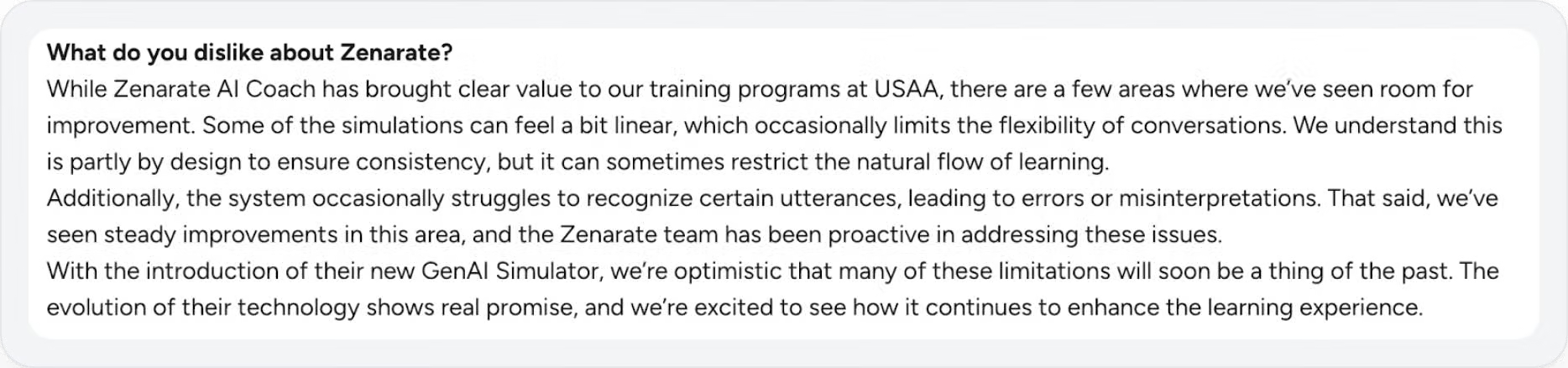
3. Simulations can feel structured or linear
Because the platform is designed for consistency, some simulations may feel linear, which can limit how naturally conversations evolve compared to real interactions.
4. Feedback may lack contextual depth in some cases
Coaching is built into the system, but it may not always provide highly tailored feedback based on nuanced conversation paths or specific user behavior.
Zenarate pricing is enterprise-focused and customized
Zenarate follows a sales-led pricing model designed for enterprise deployments.
- Pricing is not publicly listed
- Costs vary based on team size, industry requirements, and deployment scope
- Typically includes onboarding, training configuration, and support
- Best suited for organizations running large-scale training programs
How to Choose the Right Second Nature Alternative
Choosing a Second Nature alternative is less about finding another roleplay tool and more about understanding how your team actually improves performance.
Different platforms address different parts of the problem, from communication training to structured enablement to real-world execution. The right choice depends on how closely the platform aligns with your actual sales environment.
1. If your focus is improving real execution across conversations and workflows
If your team is looking to go beyond structured training and connect learning with real performance, the focus should be on platforms that simulate not just conversations but also execution.
Outdoo is designed for this layer, combining roleplay, coaching, and workflow simulation so reps can prepare, execute, and follow through within the same system. This ensures that improvements made during practice carry into real interactions and post-call workflows.
2. Start with how your team learns and improves
Some teams rely on structured programs with certifications and guided paths, while others improve through repetition, real conversations, and continuous feedback. Before comparing tools, it is important to define whether your primary goal is to standardize training, improve communication, increase practice frequency, or drive better execution in live deals.
3. Look beyond scripted roleplay experiences
Many platforms simulate conversations, but not all reflect how real interactions unfold. Evaluate whether the system allows conversations to evolve naturally based on responses, objections, and changing context rather than following predefined paths. The closer the experience is to real conversations, the more effective the training becomes.
4. Consider how well the platform supports complex scenarios
Sales conversations often involve multiple stakeholders, especially in mid-market and enterprise environments. Check whether the platform can simulate interactions across different personas within a single scenario, allowing reps to navigate competing priorities and layered decision-making processes.
5. Assess how training connects to actual work
Practice in isolation has limited impact if it does not reflect real selling environments. The most effective platforms align training with how teams operate, including deal stages, messaging, and workflows used during and after conversations. This ensures that training translates into execution.
6. Evaluate how coaching is delivered and reinforced
Feedback is valuable, but consistency is what drives long-term improvement. Look for platforms where coaching extends beyond a single session and continues across practice, live interactions, and follow-up analysis. This helps ensure that improvements are sustained over time.
7. Think about execution, not just conversation
Sales performance is influenced not only by what is said, but also by how tasks are handled during and after conversations. This includes note-taking, CRM updates, follow-ups, and process adherence. Platforms that incorporate these elements into training help teams operate more consistently across the entire workflow.
8. Check how well the system integrates into your stack
Integration depth plays a large role in long-term effectiveness. A platform that connects cleanly with CRM systems, call tools, and analytics platforms creates a more connected experience where training, insights, and execution are aligned.
9. Consider scalability and operational effort
Some platforms are easy to adopt but difficult to scale, while others require more setup but offer greater control over time.
Evaluate how much effort is needed to launch initial programs, maintain scenarios, and expand usage across teams and regions as your organization grows.
Which Second Nature Alternative Actually Fits Your Team
Choosing the right Second Nature alternative depends on what your team is trying to improve. While many platforms offer roleplay or training, they differ in how well they help reps improve over time and perform in real conversations.
Here are the top options based on what most teams need:
- Outdoo AI : Best for teams that want a complete system, not just training. It combines roleplay, coaching, and real performance feedback into a closed loop where reps practice, get feedback, apply it in real conversations, and continue improving over time. This makes it suitable for teams that want consistent performance across different scenarios, not just better practice sessions.
- Mindtickle & Outdoo AI : Best for structured onboarding and certification. These platforms work well for organizations that need standardized training programs, assessments, and performance tracking across teams.
- PitchMonster: Best for SDR teams focused on repetition and outbound practice. They help reps build confidence through frequent roleplays and improve early-stage conversations.
- Yoodli: Best for improving communication and presentation skills. It focuses on delivery, clarity, and speaking confidence across different scenarios.
- Outdoo AI & Zenarate: Best for training support and service teams through structured simulations and guided learning.
If your goal is to run structured onboarding or increase practice volume, tools like Mindtickle, Quantified, Hyperbound, or PitchMonster can support those needs.
However, if you want a system that improves how reps actually perform over time, not just how they practice, Outdoo offers a more complete approach by connecting practice, feedback, and real execution into a continuous improvement loop.
Schedule a demo with Outdoo to see how it can help your team move beyond isolated training and build consistent performance across real customer conversations.
Frequently Asked Questions
.svg)
Outdoo is considered one of the best alternatives to Second Nature AI. It connects roleplay practice, live customer conversations, and post-call assessment, ensuring that coaching translates into real execution.
Second Nature doesn't publish pricing. There's no pricing page on their site, and quotes are only available through a sales conversation. Third-party estimates put typical deals around $20K+ per year, but these aren't vendor-confirmed.
Outdoo starts with a free tier and moves to usage-based pricing, so teams pay for training that's actually driving impact rather than a flat per-seat enterprise contract. Second Nature is sold exclusively through custom, sales-led quotes.
Second Nature supports roughly 30 languages. Outdoo supports 120+ languages overall and 74+ for voice roleplay, a gap real users have flagged, including a SoftwareAdvice reviewer who couldn't deploy Second Nature for a customer in Japan.
Outdoo is an AI roleplay and coaching platform built for enterprise customer-facing teams. It connects roleplay practice, live customer calls, and post-call scoring into one system, so coaching is grounded in real conversations rather than isolated training exercises. Pricing runs Free, Flex (usage-based), and Enterprise, and the Enterprise tier is where security, compliance, and integration requirements for larger organizations get built in.
Table of Contents
Talk to Sales
Have questions about training and enablement for your sales, CS, support, or leadership team? Let's talk.
Talk to Sales