



PitchMonster makes sales roleplay engaging, but as teams grow, its limitations become clear. Practice often stays surface-level, scenarios lack real-world depth, and it becomes difficult to connect training with how reps actually perform in live conversations.
That gap is what pushes most teams to start comparing options.
The best PitchMonster alternatives include Outdoo AI for teams that need a complete system across roleplay, coaching, and real customer interactions, Second Nature for structured onboarding and communication training, Hyperbound for SDR-focused, high-volume practice, Quantified for formal training and certification programs, and Zenarate which focuses primarily on simulation-based training for customer support and call center environments.
Gamified roleplay tools are effective for driving repetition and early-stage confidence. They work well for SDR teams and high-volume practice, but are not designed to support deeper coaching, complex deal scenarios, or evolving sales workflows.
As teams mature, the need shifts from practice alone to systems that can provide better context, continuous coaching, and measurable improvement across real customer interactions.
This comparison is based on a detailed review of each platform's product capabilities, positioning, and real user feedback across sources such as G2, community forums, and publicly available product documentation. We analyzed how these tools are used in practice and where limitations emerge as teams scale. Worth noting up front: PitchMonster carries a strong headline G2 rating, around 4.9/5, but that comes from a small sample of roughly 14 reviews and no native Capterra reviews. Keep that in mind when weighing any "best-in-class" claim based on review counts alone, including the ones in this article.
Comparing the Best PitchMonster Alternatives in 2026
Outdoo is the only platform here that connects roleplay, coaching, and real customer interactions into a single system, rather than solving for just one layer of training. The table itself tells the bigger story: the market is moving from standalone practice tools toward platforms that support deeper coaching, context, and consistent performance across real sales scenarios.
Why look for a PitchMonster alternative
Here is where that gap actually shows up in day-to-day use. Six patterns keep coming up as reps go from practicing basics to handling the kind of deals that make or break a quarter.
1. Practice does not reflect real sales scenarios
Roleplays are easy to run, but they often lack the depth needed for real-world selling. Teams struggle to simulate multi-stakeholder conversations, evolving objections, and deal-specific context that reps face in actual sales cycles.
2. Feedback lacks context and depth
PitchMonster provides quick scoring, but the feedback is often generic. It does not account for deal stage, buyer intent, or conversation flow, making it difficult for reps to understand what to improve and why.
Scoring is also templated to named frameworks like MEDDIC, SPIN, or Sandler by default, which works well if a team already sells strictly that way, but adds friction if it doesn't. Platforms that grade against a team's own playbook rather than a fixed methodology tend to produce feedback reps trust more, because it reflects how the team actually sells rather than a generic rubric.
3. Scenario creation becomes repetitive at scale
As teams grow across regions, products, and segments, maintaining relevant scenarios becomes a manual and repetitive task. This creates operational overhead and slows down how quickly teams can adapt training to changing sales conditions.

Across user reviews, a consistent pattern emerges around the effort required to design scenarios upfront and maintain them over time, especially as teams scale.
4. Managing users and workflows becomes harder
As adoption increases, managing users, permissions, and workflows becomes less efficient. Teams often need better bulk actions, automation, and hierarchy management to scale training effectively across larger organizations. This shows up directly in user feedback: a common limitation noted in PitchMonster reviews is the need for better user management features.

5. Product experience limits adoption
The interface and overall experience can become a friction point, especially when managing a large number of scenarios. Reps are less likely to engage consistently if the product does not feel smooth or easy to navigate. User feedback aggregated from third-party review sources points to slow loading with large content libraries and a steep learning curve as recurring friction points.

6. Limited connection to real sales context
Practice largely happens apart from real customer conversations and deal progression. PitchMonster does offer call analysis, but it lives as a separate add-on rather than feeding the same scorecard as roleplay, so it is hard to tell whether training is actually changing how reps perform on live calls.
1. Outdoo - Best for enterprise sales training beyond gamified roleplay
Category: Enterprise AI roleplay, training, and coaching platform
Best suited for: Enterprise and growing customer-facing teams that need deeper roleplay, structured coaching, and more realistic training across complex buyer conversations.
Overview
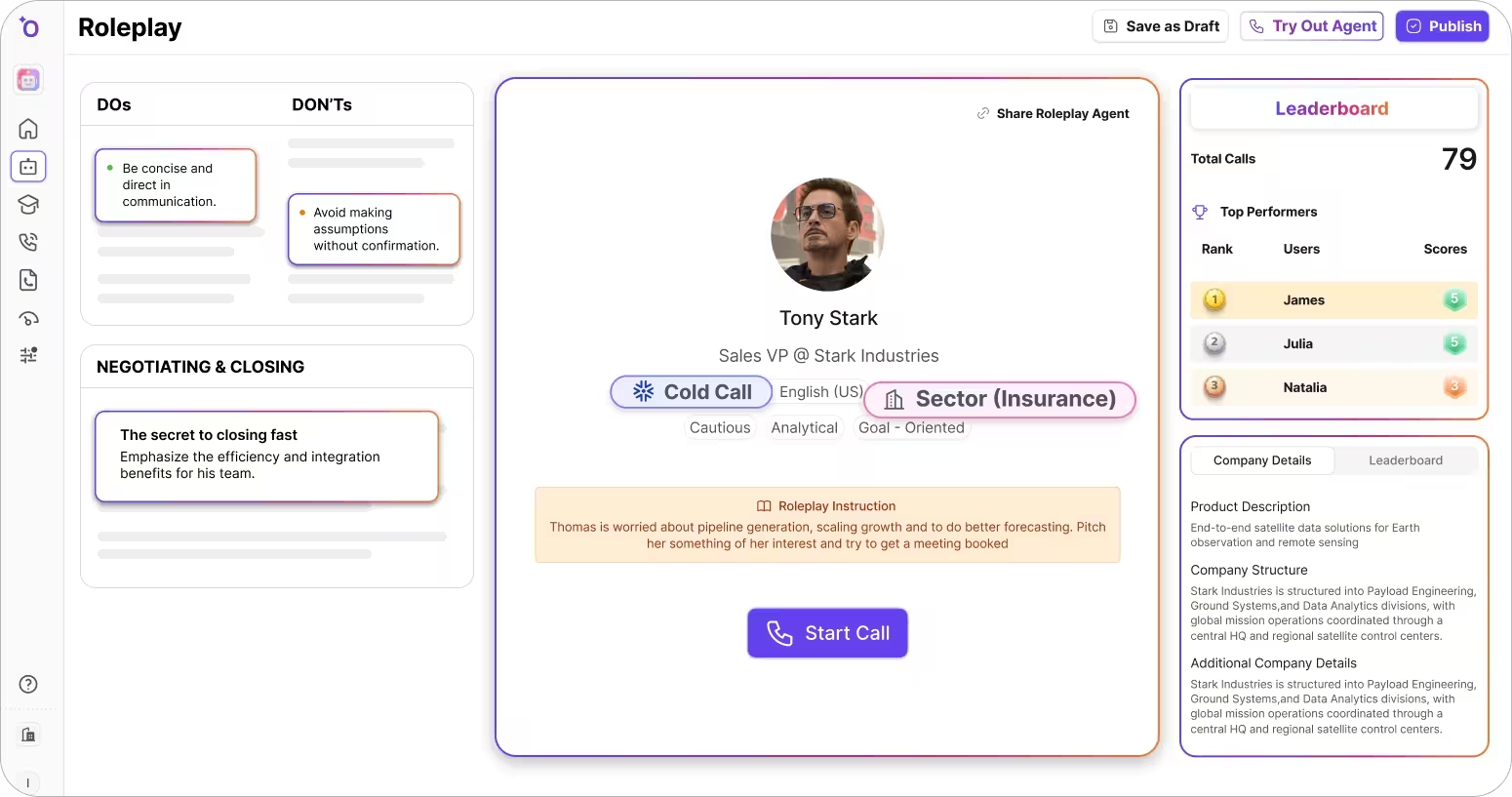
Outdoo is built for teams that need more than fast, repetitive roleplay sessions. It is designed to improve how reps handle real customer conversations by combining enterprise AI roleplay, structured coaching, and performance analysis in a single system.
While tools like PitchMonster make practice easy to start, Outdoo is built for teams that need more depth, more realism, and better continuity between training and live customer interactions. Reps prepare through realistic scenarios, practice against dynamic buyer behavior, and improve through coaching that reflects how they communicate in actual sales situations.
This makes Outdoo particularly relevant for teams that want training to go beyond confidence-building. It helps organizations improve conversation quality, reinforce coaching over time, and prepare reps for the complexity of modern customer-facing work.
How Outdoo supports real sales readiness
Outdoo helps teams prepare for the kinds of conversations that are harder to simulate with lightweight roleplay tools. It brings together roleplay, coaching, and reinforcement in a way that reflects how enterprise sales training actually needs to work.
What makes Outdoo different
Most roleplay tools focus on helping reps practice more often. Outdoo focuses on helping them improve how they handle complex conversations and coaching expectations over time.
Built for team-based training and coaching
Outdoo is designed for teams that want to standardize training and improve performance across multiple reps, regions, and customer-facing functions. It works best in environments where roleplay, coaching, and readiness are managed as part of an ongoing enablement system.
- Best suited for organizations with defined training, coaching, and performance expectations
- Designed for team-level adoption rather than individual, standalone practice
Pricing and packaging for different team needs
Outdoo follows a tiered pricing model designed to support both initial adoption and enterprise-scale deployments. Pricing is based on usage, capabilities, integrations, and the scope of training and coaching workflows being supported.
- Free tier available for evaluation with core roleplay and coaching capabilities
- Flex tier (usage-based) includes advanced roleplays, multi-persona simulations, certifications, and deeper performance insights
- Enterprise tier supports integrations across CRM, LMS, and call scoring systems along with security, compliance, and customization
- Pricing scales based on team size, use case depth, and workflow requirements
Outdoo vs PitchMonster: Key Differences
Outdoo stands out as a platform built for teams that need more than repeated practice. While PitchMonster focuses on helping reps practice frequently, Outdoo focuses on improving how they handle complex conversations, adapt to different buyer scenarios, and build consistency through structured coaching over time.
Want a deeper look at AI roleplay platforms? Compare the top AI sales roleplay tools built for enterprise teams.
2. Cuebo - Best for AI sales roleplay and rep readiness
Category: AI sales roleplay and rep readiness platform
Best suited for: Sales teams, revenue enablement teams, frontline sales managers, and onboarding teams that want reps to practice realistic conversations before going live.
Overview
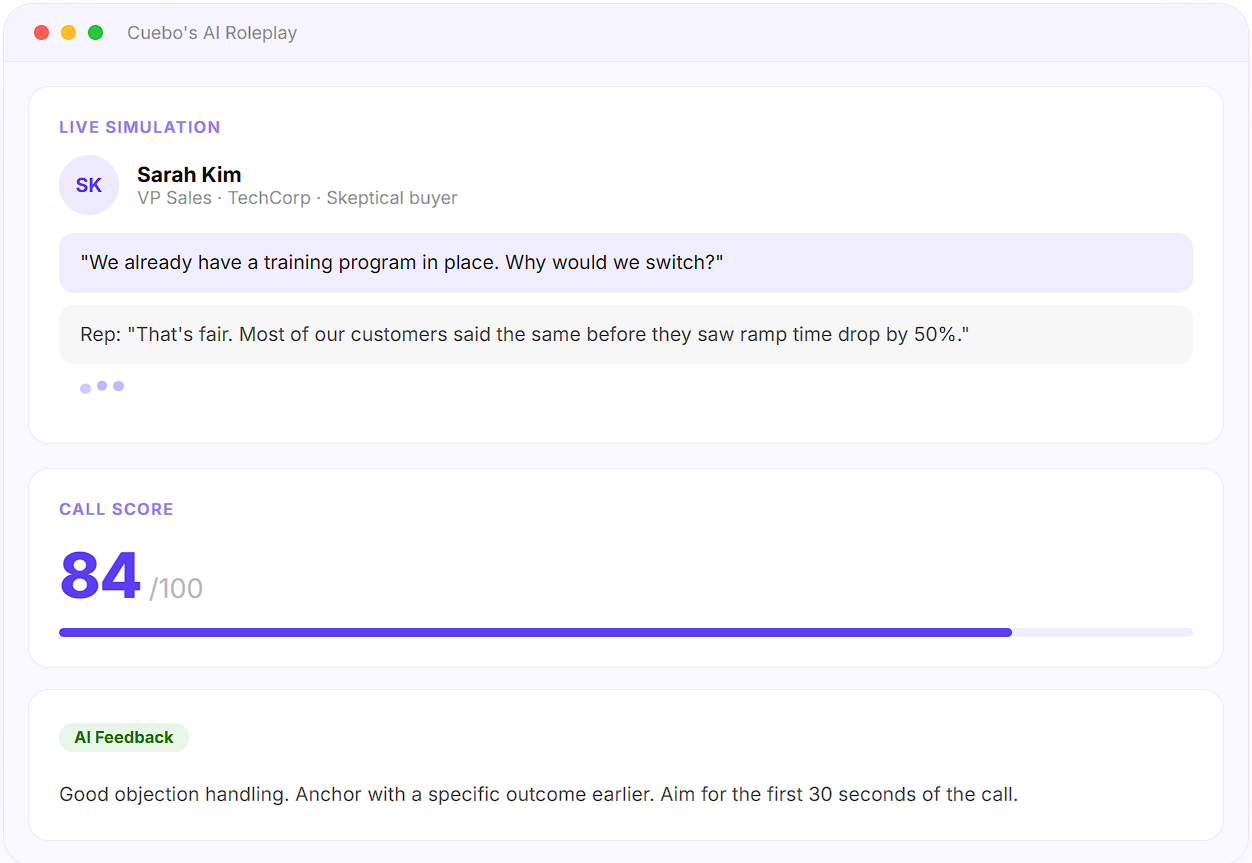
Cuebo is built for teams that want sales training to move beyond passive videos, decks, and LMS modules. Instead of asking reps to watch examples of strong discovery, objection handling, or pitching, Cuebo lets them practice those conversations directly with AI personas.
The platform combines AI roleplay, an AI trainer, and an AI sales coach to help reps improve through repetition. Reps can practice cold calls, discovery calls, demos, product pitches, objection handling, and closing conversations in a structured environment before they speak with real prospects.
Compared with lighter pitch-practice tools, Cuebo is more focused on readiness. Managers can track rep-level performance, identify who is ready to go live, and see where reps need more coaching.
3. Second Nature - Best for structured onboarding and communication training
Category: AI roleplay and communication coaching platform
Best suited for: Teams that need structured onboarding, pitch certification, and consistent communication training across reps.

Overview
Second Nature is designed for teams that need structured onboarding and consistent communication training across reps. It focuses on improving how reps deliver their pitch, handle objections, and follow defined messaging frameworks through guided, avatar-based simulations.
The platform is particularly effective in environments where training needs to be standardized. Reps move through predefined scenarios, receive feedback on delivery and clarity, and are evaluated against set benchmarks before progressing to customer interactions.
Compared to gamified roleplay tools like PitchMonster, Second Nature introduces more structure and control into training. However, its approach is more scripted and less adaptable to conversations where buyer behavior, context, and deal dynamics continuously evolve.
How Second Nature supports training
Second Nature is designed to bring structure and repeatability into sales training programs.
What makes Second Nature different
Second Nature stands out for its focus on standardization and communication quality within training programs.
Where Second Nature may not be the right fit
While Second Nature works well for structured training, limitations begin to appear when teams need flexibility across different scenarios and use cases.
Second Nature pricing suits enterprises
Second Nature uses a sales-led pricing approach, with no clear pricing details available publicly. Most cost-related information is shared during demos and adjusted based on team size, use case, and overall deployment requirements.

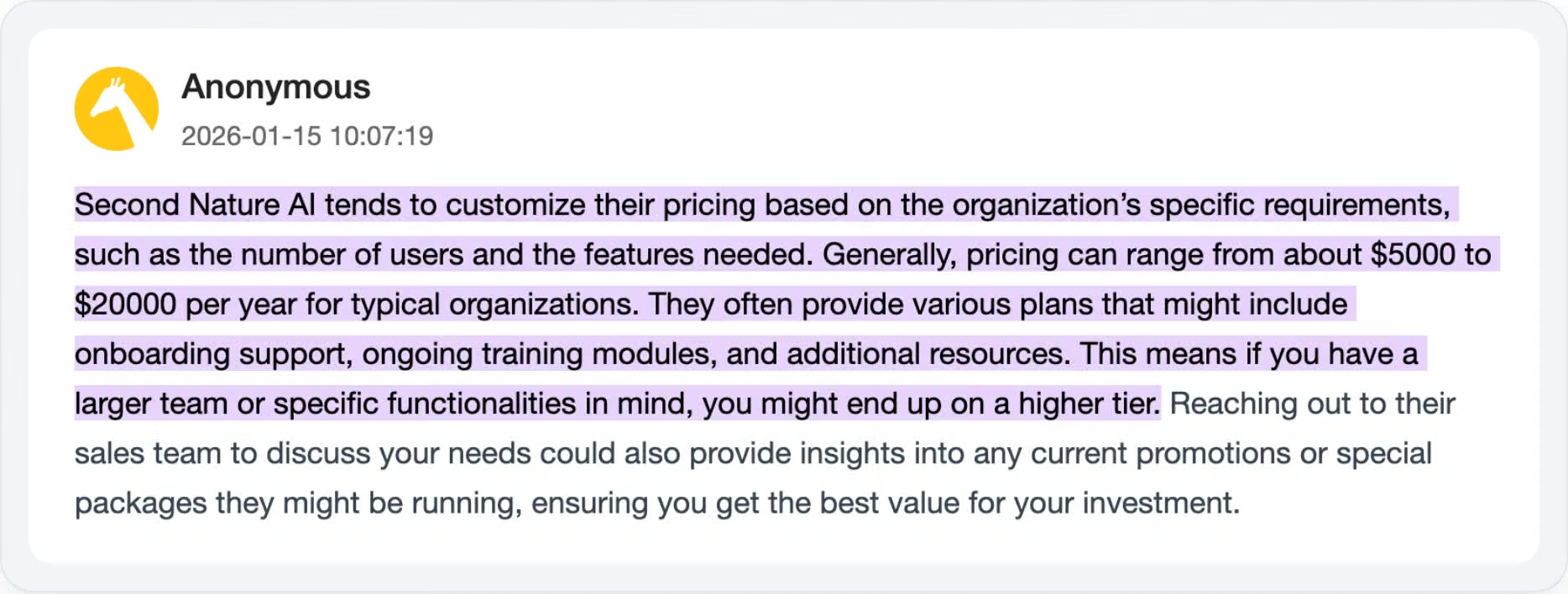
From publicly available sources and user feedback, pricing tends to align with enterprise training programs rather than straightforward per-user licensing.
- Estimated cost is typically in the range of $30–$40 per user per month based on aggregated user insights
- Larger teams often enter into annual contracts with higher minimum commitments
- Pricing varies depending on factors such as onboarding support, training modules, and customization needs
- There is no upfront pricing visibility, and teams usually need to engage with sales to get accurate quotes
Feedback from community discussions also suggests that pricing can increase significantly as organizations expand usage across teams and regions. This is especially relevant for companies rolling out structured onboarding and certification programs at scale.
What to evaluate before adopting Second Nature
Second Nature is effective for structured onboarding, but teams should assess how well it fits into their broader sales and enablement workflows before moving forward.
- Roleplays are primarily designed for training programs and are not closely connected to active deals or pipeline activity
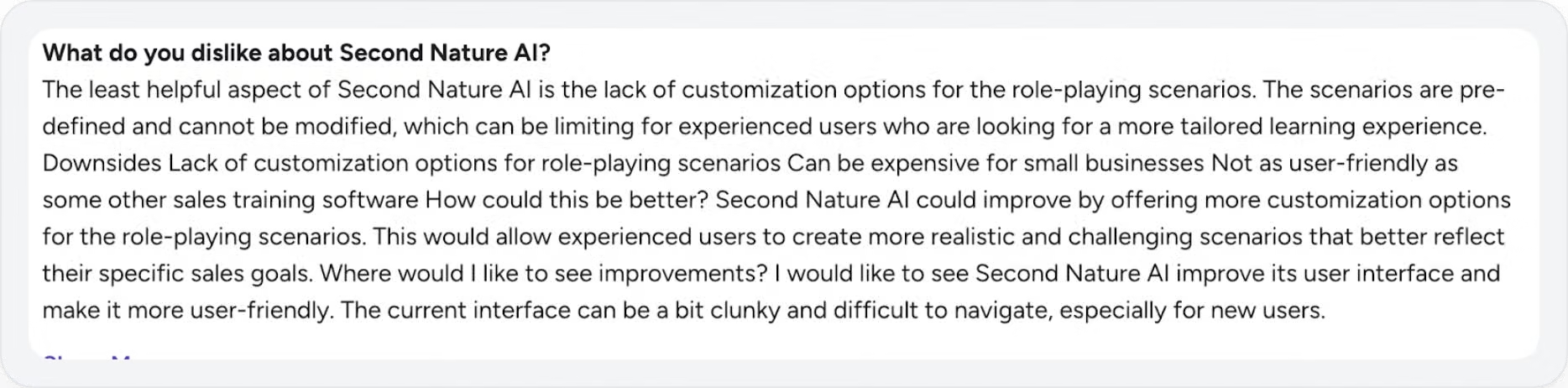
- Scenario flexibility can be restrictive for teams that need to adapt messaging across industries or complex sales motions
- Customization may not support advanced use cases that require layered or dynamic simulations
- Integrations with CRM systems and call data are not deeply embedded, which can create gaps between training and day-to-day workflows
- Pricing is not publicly visible and typically requires sales engagement, with costs scaling based on team size and deployment scope
- Implementation timelines can extend over multiple weeks, which may slow down how quickly teams can roll out training and start seeing impact

Considering alternatives to Second Nature? Explore tools that offer better flexibility and pricing.
4. Hyperbound - Best for SDR-focused, high-volume roleplay practice
Category: AI roleplay and gamified sales training platform
Best suited for: SDR teams that need frequent practice and repetition for outbound calling and early-stage conversations.

Overview
Hyperbound is designed for teams that want to drive consistent practice through repetition and engagement. It focuses on helping SDRs improve outbound conversations by using gamified roleplays, leaderboards, and quick feedback loops to encourage regular usage.
The platform is built for speed and volume. Reps can run through scenarios quickly, repeat conversations multiple times, and build familiarity with common objections and cold call patterns. This makes it a strong fit for teams that rely on high activity levels and continuous practice.
Compared to other roleplay tools, Hyperbound places more emphasis on engagement and repetition rather than structured training or coaching depth. Its approach works well for early-stage conversations, but is less suited for handling complex scenarios or advanced sales situations.
What Hyperbound does well
Hyperbound is effective for teams that prioritize consistent practice and engagement, especially in outbound-focused environments where repetition plays a key role in improving performance.
Where Hyperbound may not be the right fit
While Hyperbound is effective for driving repetition and engagement, limitations become more noticeable as teams require deeper training and broader coverage across the sales cycle.

User feedback also highlights gaps in context-based coaching, where feedback does not always reflect the situation or nuance of the conversation.
Hyperbound pricing is not public, built for SDR teams
Hyperbound follows a tiered pricing approach with a free entry point and a custom plan for advanced capabilities. The structure is designed to support early experimentation as well as team-level adoption.
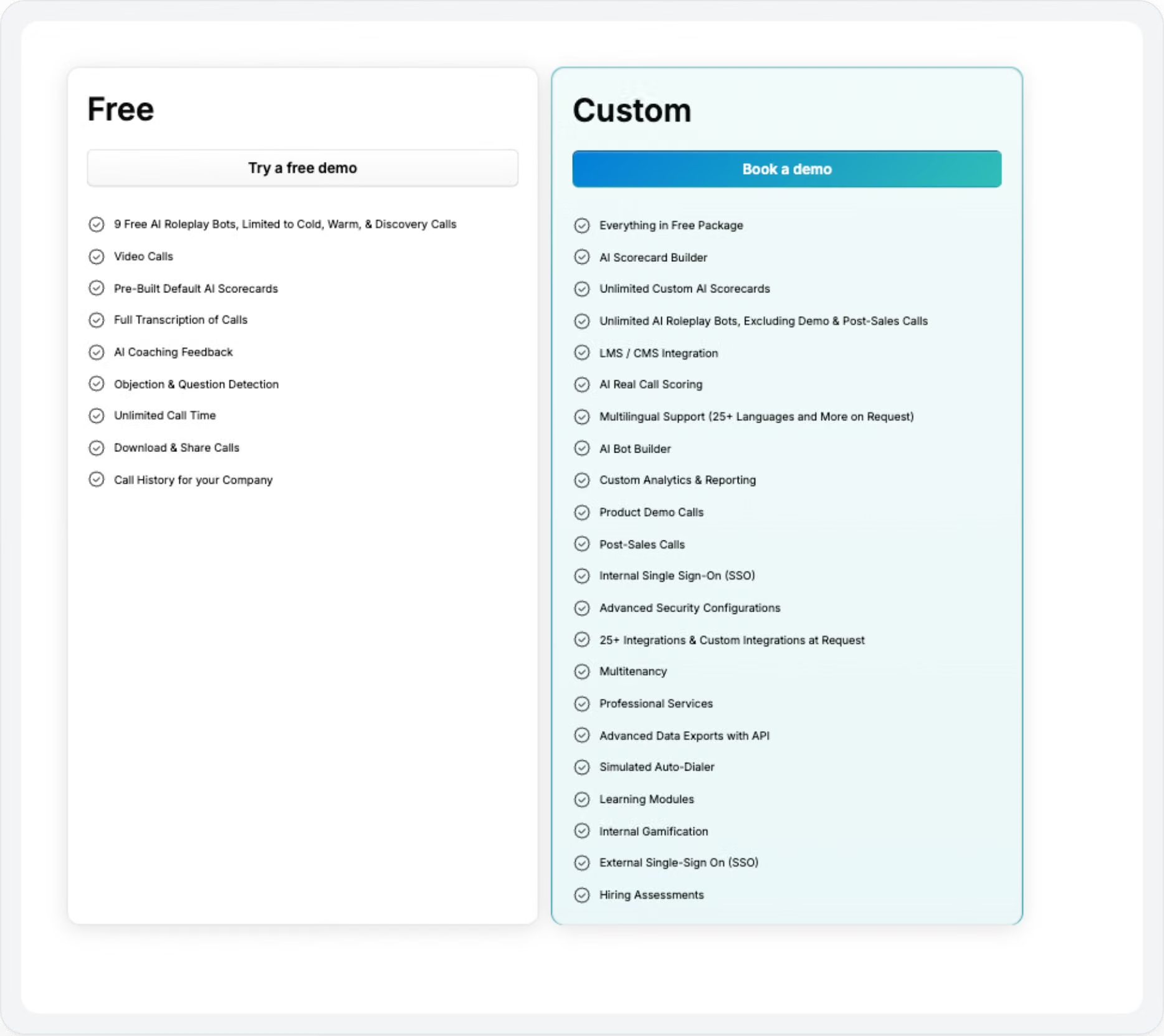
- Free plan available: Includes limited roleplay bots, basic scorecards, transcription, and coaching feedback for core use cases
- Custom plan for teams: Unlocks advanced features such as unlimited bots, custom scorecards, analytics, integrations, and security configurations
- Scales with usage: Pricing varies based on team size, feature requirements, and level of customization
- Demo-led access: Most advanced capabilities require engaging with sales through a demo
Looking beyond Hyperbound? See how leading platforms compare for AI sales roleplay in 2026.
5. Quantified - Best for structured training and certification programs
Category: AI-powered sales training and assessment platform
Best suited for: Enterprise teams that rely on formal onboarding, certification, and standardized performance evaluation across reps.

Overview
Quantified is built for organizations that treat training as a structured program with defined milestones and measurable outcomes. It focuses on evaluating how reps perform within guided scenarios, with an emphasis on readiness, consistency, and benchmarking across teams.
The platform is typically used in onboarding and certification workflows where reps are required to meet specific standards before moving forward. Simulations are designed to assess performance against predefined criteria, helping teams track progress and maintain consistency across large groups.
This makes Quantified well-suited for environments where validation and standardization are important. However, it is less focused on continuous practice or adapting training to evolving sales situations, and is often used alongside other tools that support ongoing coaching and scenario flexibility.
What Quantified does well
Quantified is effective for organizations that prioritize structured training programs and consistent evaluation across teams.
Where Quantified may not be the right fit
While Quantified works well for structured training and certification, certain limitations become noticeable when teams need flexibility, adaptability, and sustained usage across workflows.
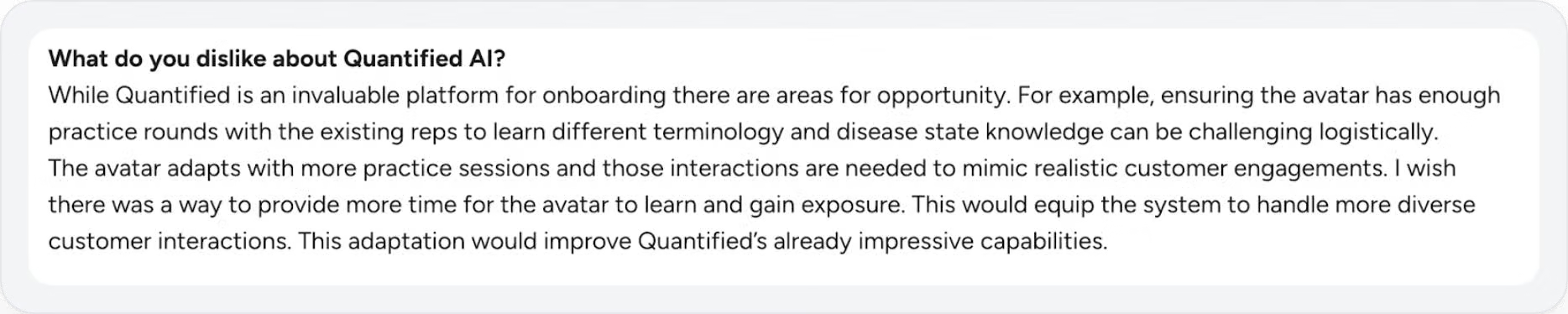
- AI requires repeated exposure: The system improves with more practice cycles, which can increase the effort required to make simulations effective across different use cases

- Limited conversational flexibility: Simulations may not handle conversations that move in multiple directions, which can restrict how varied scenarios are practiced
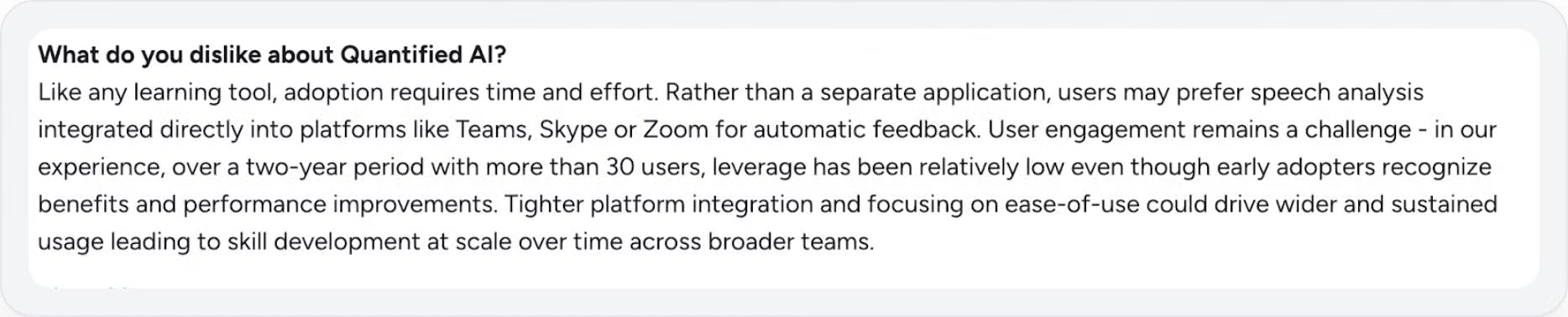
- Adoption can be slower across teams: Usage may remain limited unless training is tightly embedded into daily workflows
- Integration gaps: Users often prefer solutions embedded within tools like video conferencing or CRM systems rather than separate platforms
- Limited transparency in feedback: Some users expect clearer reasoning behind AI-generated scores and evaluations
- Scenario coverage may require effort: Expanding into diverse or advanced use cases can need additional setup or configuration
- Content and flexibility constraints: Teams may need more flexibility to extend beyond core training modules as requirements evolve
Quantified pricing is not disclosed, enterprise-focused
Quantified follows a subscription-based pricing model, but detailed pricing is not disclosed on its official website. Most organizations need to request a quote based on their specific requirements and deployment scope.
Based on third-party sources and aggregated data, estimated pricing is typically in the range of $85 to $110 per user per month. However, actual costs can vary depending on features, onboarding requirements, and the scale of implementation.

- Pricing is customized based on team size, use case, and training scope
- Enterprise deployments may include additional costs for onboarding, configuration, and support
- No upfront pricing visibility, requiring engagement with sales for accurate quotes
- Estimated ranges should be treated as directional, not definitive
Evaluating alternatives to Quantified? Read our complete guide to top Quantified.ai alternatives.
6. Zenarate - Best for contact center simulation training and coaching
Category: AI-powered simulation training and coaching platform
Best suited for: Customer support, contact center, healthcare, and service-driven teams that need structured simulation training and performance consistency.

Overview
Zenarate is built as a simulation-first training platform that combines conversation practice, software simulation, and coaching into a unified system. It focuses on helping teams improve customer interactions through guided simulations, performance analysis, and continuous coaching.
The platform extends beyond conversation practice by incorporating software and workflow simulations alongside interactions. This allows teams to train on both communication skills and process adherence within structured environments.
Zenarate is commonly used in contact centers and service-driven industries where consistency, compliance, and process adherence are critical. It emphasizes structured learning paths, performance measurement, and coaching delivered within workflows rather than standalone practice sessions.
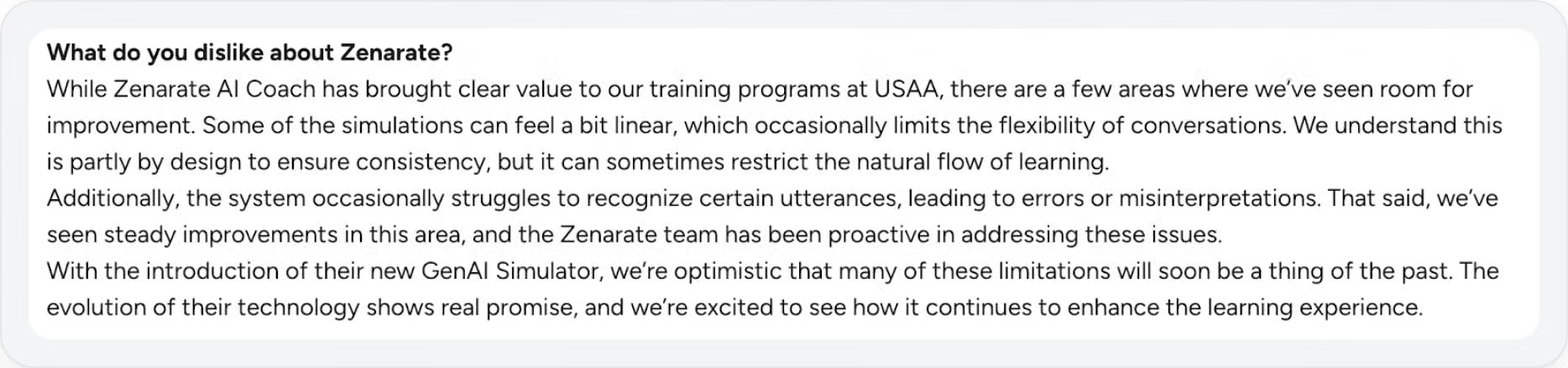
While this makes it effective for standardizing training and improving consistency, its approach is more aligned with controlled environments. It is less suited for flexible scenario creation or evolving conversation strategies across complex sales cycles.
What Zenarate does well
Zenarate is effective for teams that require structured, process-driven training with a strong focus on consistency and coaching.
Where Zenarate may not be the right fit
While Zenarate is effective for structured simulation training, certain limitations become visible when teams need flexibility, personalization, and long-term scalability.


Zenarate pricing is shared on request, built for contact centers
Zenarate follows a sales-led pricing model where detailed costs are shared during demos based on team size, deployment scope, and training requirements. The platform does not publish fixed pricing tiers or entry-level plans.
- Pricing is customized for large-scale training programs across contact centers and service teams
- Costs vary based on simulation depth, coaching features, and number of users
- Typically positioned for enterprise deployments rather than small teams or individual use
- Requires direct engagement with sales to receive a tailored quote
- No publicly listed plans or self-serve pricing options
This structure aligns with how Zenarate is deployed, where organizations implement it as part of broader training and performance programs across teams and regions.
How to Choose the Right PitchMonster Alternative
Choosing the right PitchMonster alternative starts with understanding what your team actually needs to improve. Most tools look similar on the surface, but differ significantly in how they support training, coaching, and long-term performance improvement.
1. Start with your primary use case
Before comparing features, define what problem you are solving. Some platforms are built for onboarding, others for outbound practice, and some for structured training programs.
If your focus is ramping new reps, structured onboarding matters. If your focus is improving conversation quality, scenario depth and coaching become more important.
2. Evaluate scenario depth and flexibility
Basic roleplays help with repetition, but deeper scenarios prepare reps for complex conversations.
Look for platforms that:
- Support multi-persona conversations and different buyer roles
- Allow customization based on your product, industry, and objections
- Adapt dynamically instead of following fixed scripts
More advanced tools simulate varied responses and evolving conversations rather than repeating predictable patterns.
3. Look at coaching quality, not just scoring
Scoring alone does not improve performance. What matters is whether feedback is specific, actionable, and tied to how reps actually communicate. Data-driven coaching that connects practice to live execution makes a measurable difference.
Ask:
- Does feedback explain what went wrong and why?
- Can reps act on it immediately?
- Does it track improvement over time?
4. Check how well it fits into your workflow
Many tools operate in isolation, which limits adoption and long-term impact.
The right platform should:
- Integrate with CRM, call recordings, or training systems
- Fit into daily workflows instead of being a separate activity
- Provide visibility into how training connects to performance
Platforms that align with existing workflows tend to drive better adoption and outcomes.
5. Consider scalability and ease of rollout
Some tools are quick to start but harder to scale. Others require more setup before teams can use them effectively.
Evaluate:
- Time required to launch scenarios
- Effort needed to maintain content
- Ability to scale across teams and regions
Ease of adoption directly impacts how much the tool is actually used.
6. Assess pricing structure and long-term cost
Pricing models vary widely across platforms, from free entry points to enterprise contracts.
Look beyond base pricing and consider:
- Whether pricing scales with usage or users
- What features are included versus gated
- Total cost as your team grows
A tool that seems affordable initially can become expensive as usage increases.
Which PitchMonster Alternative Actually Fits Your Team
Choosing the right PitchMonster alternative depends on what your team is trying to improve. While many tools offer roleplay, they differ in how they support coaching, scenario depth, and long-term skill development.
Here are the top options based on what most teams need:
- Outdoo AI: Best for teams that need deeper training, continuous coaching, and consistent performance across customer conversations. It brings together roleplay, feedback, and structured reinforcement to help reps improve how they handle complex scenarios over time.
- Second Nature: Best for structured onboarding and certification. It works well for organizations that need standardized training programs and consistent messaging across teams.
- Hyperbound: Best for SDR teams focused on high-volume practice. It is effective for repetition, engagement, and improving early-stage outbound conversations.
If your goal is to run structured onboarding or drive repetition-based practice, tools like Outdoo AI and Hyperbound can support those needs.
However, if you are looking to improve how reps handle conversations, adapt to different scenarios, and build consistency through coaching over time, Outdoo provides a more complete approach.
Schedule a demo with Outdoo to see how it can help your team move beyond practice and improve performance across customer conversations.
Frequently Asked Questions
.svg)
The best PitchMonster alternatives for sales teams include Outdoo, SecondNature.ai, Hyperbound.ai, Quantified.ai, and Zenarate. Each of these tools offers unique features that cater to different sales training needs, from gamified learning to real-time coaching.
PitchMonster alternatives improve sales performance by providing more customizable and realistic roleplay scenarios, detailed feedback, and integration with real sales data. This allows sales reps to practice in contexts that closely mirror actual sales conversations, enhancing their skills and confidence.
When selecting sales training tools, look for features such as real-time feedback, integration with CRM and call data, customizable scenarios, and detailed analytics. These features ensure that the training is relevant, actionable, and tailored to your team's specific needs.
Yes, many PitchMonster alternatives, such as Quantified.ai and Outdoo, specifically support objection handling by providing real-time prompts and feedback during practice sessions. This helps sales reps prepare for challenging conversations with potential clients.
Outdoo is an advanced enterprise AI roleplay and coaching platform specifically designed for customer-facing teams. It seamlessly integrates roleplay practice, live customer interactions, and post-call assessments, enabling sales teams to translate training into measurable performance improvements. By utilizing adaptive AI, Outdoo provides immersive simulations that reflect real buyer behavior, ensuring that reps not only prepare effectively but also receive structured feedback that validates their growth. This comprehensive approach empowers organizations to close the loop between practice and execution, driving accountability and enhancing overall sales effectiveness.
Table of Contents
Talk to Sales
Have questions about training and enablement for your sales, CS, support, or leadership team? Let's talk.
Talk to Sales