



A 50-person sales team on Gong is looking at roughly $85,000 to $92,500 in year one. The same team on Fireflies? Under $1,200.
Gong.io pricing in 2026 continues to be one of the most searched topics among RevOps leaders and sales teams evaluating revenue intelligence platforms, and that gap is a big reason why.With no public pricing page and packaging that varies by seats, add-ons, and contract length, estimating Gong's true cost often requires peer conversations and detailed vendor discussions. Add in platform fees, onboarding charges, and multi-year lock-ins, and the final number often looks very different from what teams expect going in.
While Gong remains a category leader in conversation intelligence and revenue analytics, buying criteria have evolved. Many organizations now compare Gong's pricing against platforms that offer clearer contracts, flexible billing, and faster time to value, especially for distributed sales teams operating across regions.
In this guide, we compare Gong with 4 revenue intelligence platforms, including Outdoo, Chorus, Salesloft, and Fireflies, evaluating pricing structure, feature depth, coaching capabilities, and long-term scalability. We also highlight a newer class of platforms that extend beyond traditional revenue intelligence by combining AI roleplay and structured coaching with conversation and pipeline insights, ensuring that training and analysis directly influence execution and outcomes.
Gong Pricing (Updated March 2026)
Gong does not publicly list prices, but based on industry sources and proposals, here’s an overview of Gong.io’s pricing structure in 2026 :
Source: Proposals
What Gong Costs for Small, Mid-Market, and Enterprise Teams?
1. Small Teams (10–50 Sales Reps)
Gong’s pricing can be steep for small teams. With $1,200–$1,600 per user annually plus a $5,000 platform fee, a 10-person team is looking at ~$17,000 before onboarding. That climbs to $85,000 for 50 users, and adding the $7,500 onboarding fee pushes totals even higher. For lean teams, this level of spend may not match current needs, making lighter tools like Fireflies or Avoma more cost-effective options.
2. Mid-Market Teams (50–250 Sales Reps)
Mid-sized orgs feel the pricing pinch most. A 250-rep team could pay $300K–$400K per year in license fees alone. Add Gong’s platform and onboarding costs, and the first-year spend hits $312K - $412K. With contracts often locked in for 2–3 years, many teams negotiate aggressively using timing, competition, and budget constraints to reduce long-term commitments.
3. Enterprise Teams (250+ Sales Reps)
At the enterprise level, Gong spend can reach $500K–$800K+ annually, especially when layering in modules like Forecast or Engage. But big accounts also have leverage. Gong frequently offers deep discounts, custom onboarding, or waived platform fees to win large deals. Savvy procurement teams often explore mix-and-match strategies with competitors to optimize cost and coverage.
Here's a quick overview of Gong's pricing across teams:
What Actually Drives Gong Cost?
Gong’s pricing is not always as simple as a flat per-user fee. In most cases, the final cost depends on a few moving parts, and that is why quotes can vary quite a bit from one company to another.
Here's a few key things to note that have the biggest impact:
- Seat count - The more users you add, the higher the total cost. Larger teams may get better per-seat pricing, but the overall spend still increases.
- Contract length - Multi-year agreements can bring the annual price down, but they also lock you in for longer.
- Tier and feature access - If your team needs deeper analytics, API access, or advanced integrations, pricing can go up.
- Add-ons - Products like Gong Engage and Gong Forecast can add a meaningful extra cost on top of the base plan.
- Deployment scope - A rollout across sales alone will cost less than a broader deployment across customer success, partnerships, or other teams.
So, while Gong is often discussed in terms of per-user pricing, the actual quote usually depends on how your team plans to use the platform, how many people need access, and what extra capabilities are included. Let's dive in deeper on what actual cutoemrs think about Gong's pricing
How Gong’s Customers Really Feel About its Pricing
Gong’s pricing structure can vary significantly based on negotiation skills, timing, and growth potential. To give you an insider perspective, here are some real quotes from actual Gong customers and revenue leaders across various company sizes who recently negotiated Gong pricing, sourced via Vendr:
1. On Hidden Costs and Platform Fees:
2. On Bundled Product Constraints:
3. On Pricing Flexibility:
4. On Reductions and Limited Discounts:
5. On Reduced Functionality (Gong Lite):
Here’s a snapshot of pricing quotes and feedback shared by Gong’s customers on Reddit


Source:
2. r/sales
In plain terms, Gong pricing is roughly $1,200–$1,600 per user per year (billed annually) plus a mandatory platform subscription fee of $5,000. For example, a small team of 10 users would pay about $21,000 per year (10 × $1,600 + $5,000 base) just for licenses. On top of that, Gong typically charges a one-time onboarding and training fee of $7,500 for professional services. And keep in mind, Gong often requires a multi-year contract (commonly 3 years up front) with no month-to-month option.
Hidden Complexities in Gong.io Pricing You Should Know
When evaluating Gong, it’s crucial to understand some nuanced aspects that significantly impact your total investment. Here's what Gong users have recently experienced, based on industry insights:
1. The Hidden Costs of "Platform Fees"
Gong typically adds a significant annual "platform subscription fee," commonly set around $5,000–$10,000 annually. While this might sometimes be negotiable or waivable, it's frequently charged unless strongly contested. Customers who aren't proactive can easily find this fee embedded in their contract, raising their total costs substantially.
Customer Quote:
"Initially, our Gong renewal included a $10,000 platform fee, which only got waived after multiple rounds of negotiation citing tight budget constraints."
(Company with 201–1000 employees) - Source : Vendr Community
For smaller sales organizations or those without dedicated procurement teams, such hidden fees can dramatically skew budgets, especially since Gong’s standard negotiation cycle can be challenging and opaque.
2. Gong Engage: A Double-Edged Sword
Gong Engage is Gong’s additional sales engagement product. However, there's an important catch: Gong Engage licenses cannot be purchased separately. To use Gong Engage, companies must also buy Gong’s core licenses, which effectively doubles your investment.
This bundling requirement often results in organizations paying for licenses or features they don’t fully utilize, significantly inflating annual spending. It also restricts flexibility, forcing you into a heavier investment than you might initially plan.
Customer Quote:
"We wanted Gong Engage, but Gong required us to purchase a Gong Core license for every Gong Engage seat. This forced bundling substantially increased our total cost beyond our original budget."
Source : Vendr Community
This bundling approach limits your ability to scale efficiently, especially when budgets or headcount fluctuate during uncertain growth periods.
3. Gong Lite: A Lower-Cost Compromise?
Recently, Gong introduced Gong Lite, a stripped-down, more affordable variant aimed at companies experiencing significant price pushback. Gong Lite attempts to retain customers who find Gong's standard pricing too steep.
But here’s the critical question: what essential capabilities are missing from Gong Lite? Customers forced onto this plan often sacrifice significant functionality in coaching insights, detailed analytics, and predictive deal intelligence, precisely the features that justified using Gong initially.
Customer Quote:
"Due to internal budget pressures, Gong offered Gong Lite as an alternative to our regular plan, but we quickly realized it lacked many advanced analytics and coaching features essential for our team."
Source : Vendr Community
This means that opting for Gong Lite often puts companies in a difficult position to accept reduced functionality, or remain tied to Gong's expensive standard plans.
How Negotiation Impacts Gong Pricing
One reason Gong pricing feels hard to pin down is that it is heavily influenced by negotiation. Similar companies can end up paying very different amounts based on deal timing, contract structure, and how much competitive pressure is involved.
Here's a few things make the biggest difference:
- Initial quotes are often higher - Vendr notes that first quotes can be 20% to 40% above final negotiated pricing.
- Multi-year commitments can reduce pricing - Longer contracts often unlock better annual rates, though they also reduce flexibility.
- Timing matters - Quarter-end and year-end deals often come with more pricing flexibility.
- Competitive pressure helps - Buyers comparing Gong with alternatives often get better discounts or concessions.
If you want the best quote, it helps to start early, benchmark multiple options, and avoid negotiating from the first number you receive. Teams that come in with alternatives, clear budget limits, and enough time before renewal usually have more leverage.
While Gong is the market leader and offers a very robust platform, this level of spend might not make sense for every organization. The good news: there are several Gong alternatives in 2026 that deliver comparable conversation intelligence features at a fraction of the cost. The key is finding a tool that balances powerful capabilities with pricing and flexibility that align to your business.
Next, we’ll explore four top alternatives to Gong – including what they cost in 2026, what they do best, and how their contracts work, so you can evaluate which fits your needs.
Top Gong Alternatives (with 2026 Pricing & Features)
To set the stage, here’s a quick comparison of Gong and four alternative revenue intelligence tools on key pricing and contract points:
Notes: All prices are as of 2026 and may vary based on negotiations, enterprise packages, or add-ons. Per-user costs assume annual billing unless noted.
As shown above, alternatives like Outdoo AI, Fireflies, and Chorus.ai can come at significantly lower per-user costs than Gong. Most have no hefty platform fee and free or low-cost onboarding, which alone can save $5K–$12K upfront. Several also offer monthly billing or shorter contract terms, whereas Gong typically locks you into a large annual (or multi-year) commitment. Next, we’ll dive deeper into each alternative and how they compare to Gong in use cases and value.
1. Outdoo AI vs. Gong.io
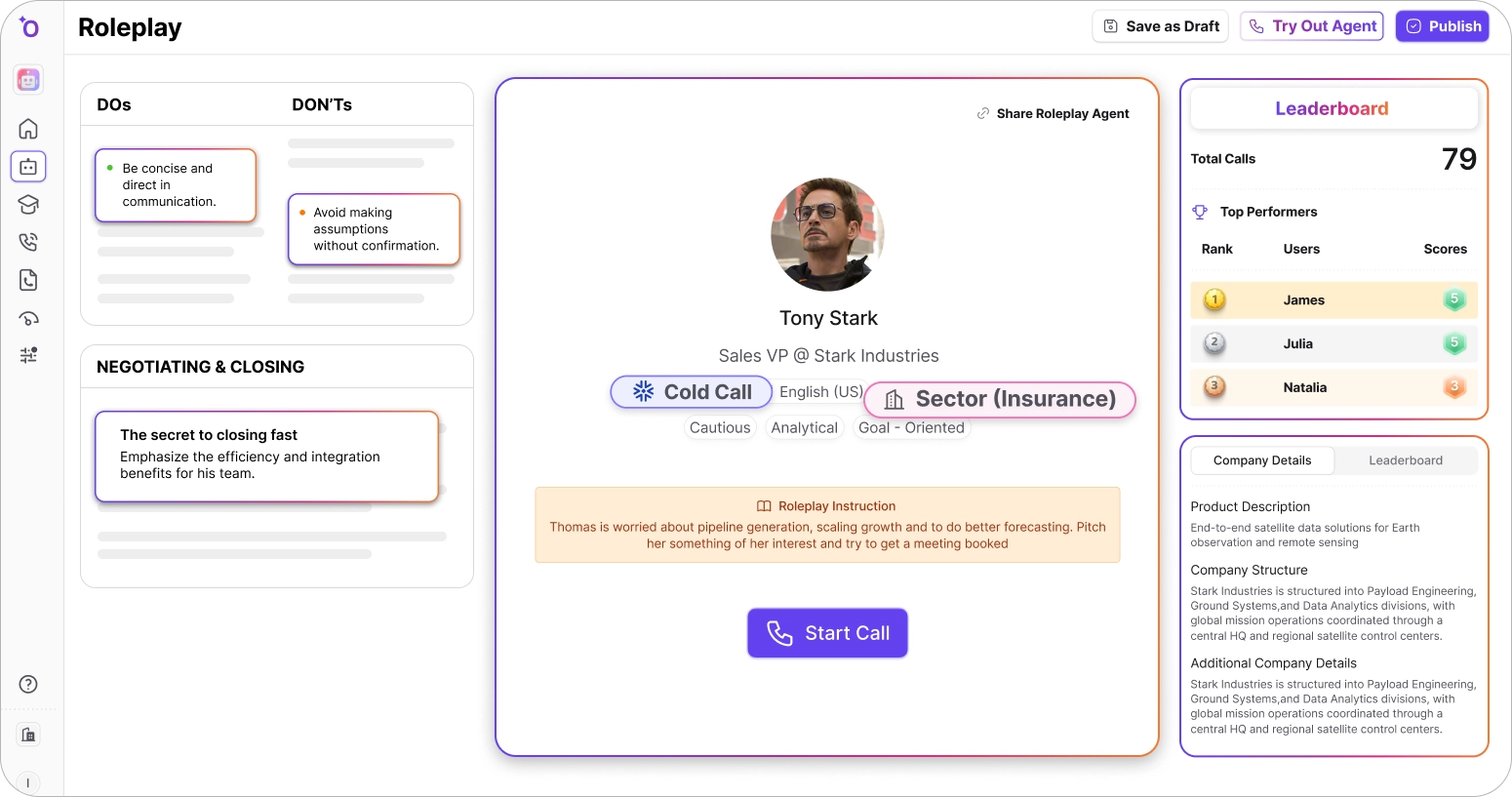
Outdoo is a unified AI roleplay and coaching platform for customer-facing teams that also includes conversation intelligence and revenue intelligence capabilities. While Gong focuses mainly on analyzing conversations after they happen, Outdoo connects roleplay practice, live customer conversations, and post-call assessment in one system so teams can see whether training actually changes behavior.
Key Use Cases & Capabilities:
A notable distinction is pre-call preparation. Gong analyzes conversations after they occur. Outdoo adds structured practice before live calls through AI sales roleplay. Reps can simulate cold calls, discovery conversations, demos, and multi-stakeholder scenarios using realistic buyer personas grounded in real data.
Roleplays can be generated in one click from past calls or objection patterns, reducing manual setup for enablement teams.
You can try and experience Outdoo's AI Roleplay for free here.
Who's Outdoo Ideal for:
- Customer-facing teams that want practice tied to execution: Teams that want coaching to improve what happens in real conversations, not just in training environments.
- Enablement and RevOps leaders: Organizations that need visibility across roleplay, live calls, and pipeline impact in one place.
- Companies using existing revenue tools: Teams using Gong, Clari, or other conversation intelligence platforms that want to add structured roleplay and closed-loop coaching on top.
Outdoo pricing :
Outdoo offers a Free plan, a Usage-based plan that scales with usage, and a Custom plan tailored to team size for enterprise needs. Unlike Gong, there is no separate platform fee and no additional support fee, which makes pricing simpler and easier to plan for.
The model is also more flexible. Teams can start with the workflows they need most, validate impact, and expand over time without taking on the layered fees and rigid structure that often make Gong pricing harder to manage
For teams evaluating Gong.io pricing in 2026 and looking for a platform that connects training, coaching, conversation intelligence, and revenue visibility in a more cost-aligned structure, Outdoo offers a consolidated approach without layered fees or long-term contractual lock-in.
2. Fathom vs. Gong.io
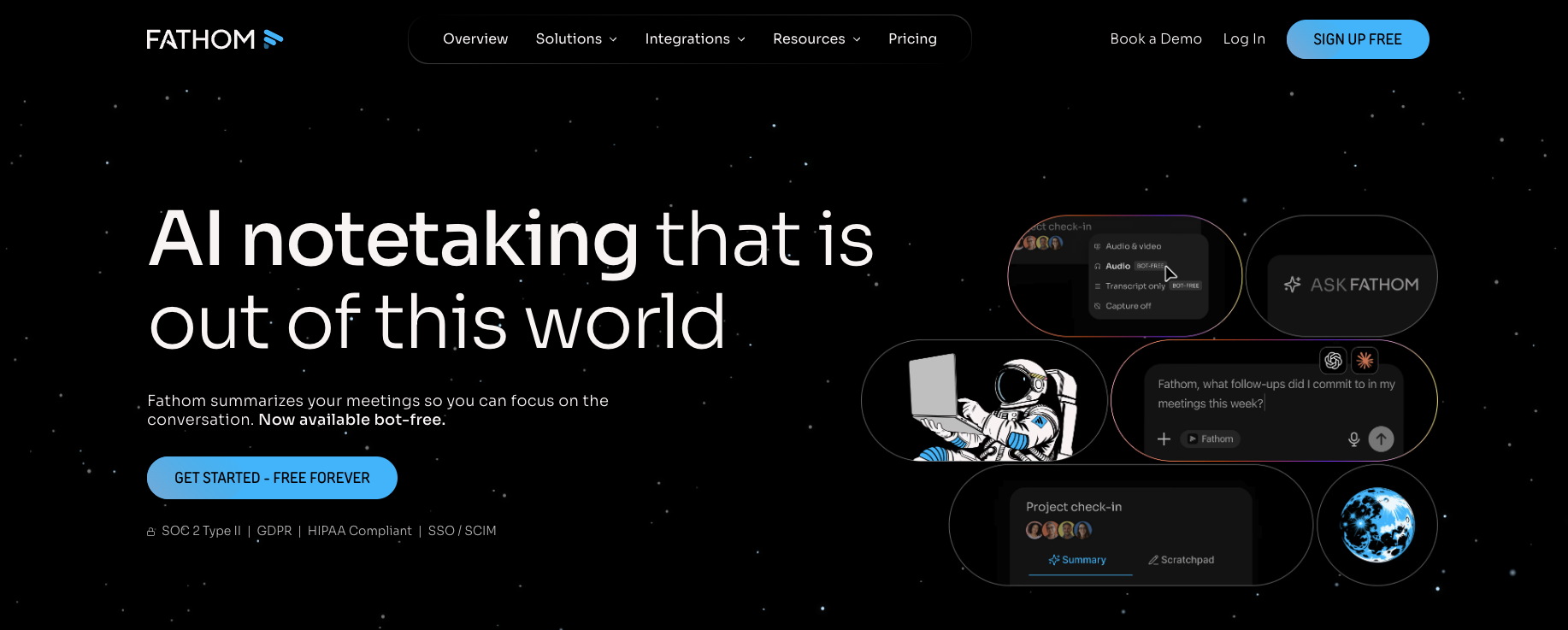
Fathom is a different animal from Gong — it's an AI meeting notetaker and meeting intelligence tool first, not a full revenue intelligence platform, and it's built for a much broader audience than just sales. Fathom auto-records, transcribes, and summarizes calls on Zoom, Google Meet, and Microsoft Teams, and its newer bot-free desktop app captures meetings without a bot joining the call at all. If you're pricing out Gong and the 1,360–1,600 per user, plus a $5,000 platform fee and $7,500 onboarding, gives you sticker shock, Fathom is worth a look as a much lighter, much cheaper alternative that still covers CRM sync and coaching.
Key Use Cases:
- Sales Call Capture & CRM Follow-Up: Fathom auto-syncs notes and action items into Salesforce or HubSpot at the field level, with deal view and coaching scorecards on its Business tier — covering a meaningful slice of what Gong's revenue intelligence layer does, without the forecasting depth.
- Cross-Team Meeting Intelligence: Unlike Gong, which is built around sales calls, Fathom is used just as heavily by customer success, marketing, and general teams for capturing research calls, tracking sentiment, and staying present in meetings instead of note-taking.
- AI-Native Workflows: Native ChatGPT and Claude integrations let reps and managers pull meeting context directly into the AI tools they're already using, which Gong doesn't offer.
Ideal for:
- Teams Priced Out of Gong: Fathom's free plan is unlimited and free forever, with no seat minimum, and even its top Business tier runs a fraction of Gong's per-user cost with no platform or onboarding fees.
- Small-to-Mid-Size Sales Teams: Fathom scales down cleanly — solo reps and small teams can run on Free or Premium, while Team and Business tiers (2-user minimum) add the collaborative and CRM features growing teams need.
- Teams That Don't Need Deep Forecasting: If you want solid call capture, CRM sync, and coaching signals but don't need Gong's advanced deal analytics and revenue forecasting, Fathom covers the essentials at a much lower cost.
Fathom Pricing:
Fathom publishes its pricing openly, which is a contrast to Gong's quote-only model. Individuals get a genuinely free-forever plan (unlimited recordings, transcription, and AI summaries, no seat minimum), with Premium at 20/month(16/month annual) adding advanced summaries and AI action items. For teams, Team runs 19/monthperuser(15/month annual, 2-user minimum) and Business runs 34/monthperuser(25/month annual, 2-user minimum) — Business is the tier that adds Gong-like CRM field sync, deal view, and coaching scorecards. Enterprise is custom-quoted and adds Launch Assist onboarding, org-wide security controls, and a dedicated CSM. There's no separate platform fee and no mandatory onboarding cost at any tier below Enterprise, and all paid plans carry a 90-day guarantee.
To sum it up: a 10-person team on Gong is looking at roughly 13,600–16,000/year in per-user costs alone, plus a $5,000 annual platform fee and a $7,500 one-time onboarding charge — north of $26,000 in year one before factoring in the 3-year commitment Gong often requires. That same team on Fathom's Business tier would run about $3,000/year total, with no platform fee, no onboarding fee, and no multi-year lock-in.
Bottom line: Fathom isn't trying to be Gong — it doesn't match Gong's deal forecasting or deep revenue analytics. But if what you actually need is reliable call capture, CRM sync, and coaching visibility across sales, CS, and marketing, Fathom gets you most of the practical value at a fraction of the price, with the flexibility to start free and scale up only when you need
3. Chorus.ai vs. Gong.io
Chorus.ai (now part of ZoomInfo) is another leading conversation intelligence tool often compared to Gong. Chorus is known for its strong call recording/transcription quality and coaching insights. It’s a bit more narrowly focused on conversation analysis (whereas Gong pitches itself as broader revenue intelligence including deal pipeline).

Key Use Cases:
- Conversation Intelligence for Sales & CS: Chorus automatically records sales calls and virtual meetings, transcribes them, and uses AI to identify key topics (e.g. pricing discussions, next steps). Managers use it to review calls and coach reps on talk tracks and best practices. (It’s not limited to Sales – Customer Success and other client-facing teams can also use Chorus to glean insights, making it a broader use tool beyond just sales.)
- Team Coaching and Skill Development: Chorus provides analytics on rep behaviors (talk time, patience, filler words, etc.) and can highlight coachable moments. It aligns closely with improving sales call performance and ramping up new reps via call libraries and example moments.
- Market and Deal Intelligence: By analyzing many conversations, Chorus can surface market trends (e.g. common competitor mentions or product feedback) and deal risks. It’s positioned to help managers spot which deals might be in trouble based on call patterns, similar to Gong’s deal intelligence – though Gong’s forecasting features are more advanced.
Ideal for:
- Mid-sized to Large Sales Teams: Chorus tends to target medium and enterprise customers (it’s built into the ZoomInfo platform now). It works well for sales orgs that want conversation analytics but maybe don’t need all of Gong’s bells and whistles in pipeline forecasting.
- Teams Already Using ZoomInfo: If you’re a ZoomInfo customer, Chorus integrates natively. It can be ideal for teams that want their conversation intelligence tied in with ZoomInfo’s data and engagement tools. (It’s worth noting Chorus was an independent product, but since the acquisition, it complements ZoomInfo’s suite).
- Cost-Conscious Orgs Needing Core CI: Those who find Gong too pricey might consider Chorus as a “similar, but cheaper” alternative. It delivers the core conversation intelligence at a lower price point, albeit with a slightly less slick interface and less AI-driven deal guidance than Gong.
Chorus Pricing :
Chorus.ai is not fully transparent on pricing (you have to contact sales), but reports indicate it starts around $8,000 per year minimum, which includes 3 user seats. Additional seats are roughly $1,200 per user/year (about $100 per month). So, for example, a 10-person team would pay ~$16,400/year for Chorus. Contracts are typically annual (some deals are 2-year) but you might negotiate terms. The key point: Chorus doesn’t charge a separate platform fee like Gong does; the ~$8K serves as the base package. And there’s usually no extra onboarding fee – support and integrations are included in the subscription.
In practice, companies have noted Chorus comes out significantly cheaper than Gong for similar team sizes (often 30–50% less costly on license fees). One reason is ZoomInfo can bundle Chorus with other products or give volume discounts if you use more of their tools. If you’re price-shopping, you can leverage that in negotiations. Also, Chorus sometimes offers a short free trial (sales-assisted) to test it, whereas Gong does not – which is a nice way to evaluate before you buy.
Bottom Line: Chorus.ai is a proven conversation intelligence platform that can be a budget-friendly alternative to Gong for many companies. You’ll get a powerful coaching tool for your sales calls, and you might save a substantial amount, especially if you’re already a ZoomInfo customer. Just be prepared to go through a quoting process, as Chorus’s pricing isn’t posted publicly either.
4. Salesloft vs. Gong.io
Salesloft is a bit different from the others on this list – it’s actually a Sales Engagement platform first, with some conversation intelligence capabilities baked in. Salesloft is widely used for managing sales outreach (email cadences, dialing, sequencing) and it added call recording/AI features to compete in the revenue intelligence space. If you’re considering Gong, Salesloft might come up as an alternative if you prefer an all-in-one solution for both engagement and conversation analysis.

Key Use Cases:
- Sales Engagement Automation: Salesloft is best known for its core tools like email cadence scheduling, automated dialer calls, voicemail drops, and cadence analytics. It helps SDRs/Account Executives manage their prospecting and follow-ups in a streamlined way.
- Pipeline and Deal Monitoring: Salesloft provides deal dashboards and basic deal intelligence signals (it can track email/call engagement in deals, helping identify risk). It’s not as specialized in deal analytics as Gong, but it gives a view of pipeline health and rep activity that managers find useful.
- Call Recording & Analysis: Within Salesloft’s platform, there is a feature (often called Salesloft Conversations) that records calls and meetings, transcribes them, and allows managers to coach reps. This is effectively Salesloft’s built-in Gong-like feature. It can flag keywords and topics, though it’s somewhat more limited in AI insights compared to standalone CI tools. The benefit is it’s integrated with the cadence tool – e.g., you can have one platform for both making the calls and analyzing them.
Ideal for:
- Sales Teams Wanting One Platform: If your team would prefer to minimize tools, Salesloft offers a one-stop shop: it handles outreach and provides conversation intelligence. This is ideal for companies that value convenience and integration over having the absolute best-of-breed in each category.
- Mid-Large Organizations: Salesloft is commonly used by medium to large sales teams. It’s robust and enterprise-ready. Small startups might find it too heavy if they only need call intelligence (in which case a lighter tool like Fireflies or Avoma could suffice).
- Teams Comparing to Outreach.io: Often Salesloft is evaluated alongside Outreach.io (another Sales engagement platform). Interestingly, Outreach itself doesn’t have as deep native Conversation Intelligence as Salesloft does with Conversations. If you’re leaning toward a sales engagement suite, Salesloft’s inclusion of conversation intelligence could sway you.
Salesloft Pricing:
Salesloft doesn’t publicly list pricing either – it’s quote-based, with packages (usually Prospect, Sell, Engage, or Enterprise tiers as of recent years). Based on various sources, Salesloft’s pricing ranges roughly from $125 to $165 per user per month for the full platform (Sell/Enterprise packages). That translates to about $1,500–$1,980 per user/year on an annual contract. There are also limited packages (for just cadencing or just one part of the platform) that can be lower – e.g. the Prospect or Engage packages might be ~$60–$100/user/month for limited features.
In addition to the license cost, Salesloft typically charges a one-time onboarding fee in the range of $3,000 (for training and implementation). This is much lower than Gong’s $7.5K services fee, but it’s still an extra cost to budget for. Contracts are annual only (no month-to-month), and some packages might require a minimum number of seats. On the plus side, Salesloft doesn’t have a separate “platform fee.” And if you only need certain modules (say just the cadencing and not the dialer), you might negotiate a lower price per seat.
To sum it: Salesloft can end up costing in the ballpark of Gong’s pricing for the fully loaded version, but you’re getting more than just conversation intelligence – you’re also paying for the sales engagement capabilities. If you were already budgeting for a cadence tool, consolidating with Salesloft might be efficient.
Bottom line: Salesloft isn’t a direct apples-to-apples alternative to Gong on its own, because it’s a broader platform. However, it’s absolutely an option to consider if you’re looking to both engage leads and analyze calls under one roof. If you have the budget, Salesloft can replace the need for Gong by offering “good enough” conversation intelligence alongside world-class sales engagement tools. Just be sure your team will leverage all parts of it; otherwise, you might pay a premium for features you don’t use.
5. Fireflies.ai vs. Gong.io
Fireflies.ai takes a different approach: it’s fundamentally an AI meeting assistant designed to record meetings, transcribe them, and help with note-taking. Over the years, Fireflies has added some conversation intelligence features (like keyword tracking and team analytics), but it’s positioned as a lightweight, very affordable tool relative to Gong. Many small businesses or individual professionals start with Fireflies because of its free tier and simple setup.

Key Use Cases:
- Automatic Call Recording & Transcription: Fireflies connects to your virtual meetings (Zoom, Teams, Google Meet, etc.) and automatically records and transcribes the conversation. This is great for having written notes of sales calls, discovery meetings, demos, etc., without a human note-taker.
- Knowledge Management & Search: Every call transcript is store
- d in a searchable repository. You can quickly search past calls for specific keywords or topics. For example, find all calls where “pricing” or a competitor was mentioned. This is a basic form of conversational insight that can be surprisingly useful (and is essentially free with Fireflies).
- Team Collaboration: Fireflies allows you to add comments or mark important moments (“soundbites”) in call transcripts, and share call recordings with team members. It’s handy for collaborating on deals or sharing a key customer quote with product teams. Some teams use it to create a library of best-call snippets, though it’s not as advanced in scoring calls as Gong.
- Conversational Intelligence (Basic): In its higher plans, Fireflies has features like topic tracking, speaker talk-time analytics, and even some AI-generated summaries of calls. These give a flavor of conversation intelligence – e.g., you can get a summary email after a call with action items. It’s not as in-depth as Gong’s deal risk analyses or coaching insights, but it adds value for the price point.
Ideal for:
- Small to Mid-Sized Teams / Startups: If you are a startup or a small business that can’t invest six figures into a CI tool, Fireflies is an attractive choice. You can start with the free version and upgrade to a paid plan as you grow. It’s also popular among individual sales reps or consultants who just want call transcription for personal use.
- Teams Focused on Note-Taking Over Analytics: Fireflies is best if your primary need is “never miss details from a call”. It’s essentially like having an AI note-taker in every meeting. If you don’t need the heavy analytics or predictive features of Gong, Fireflies might cover your essentials.
- Flexible Budget Scenarios: Fireflies offers monthly plans and even a free tier. Teams that need month-to-month flexibility (perhaps project-based or client-based work) will appreciate this. Also, those who want to try conversation AI with minimal commitment often start here because you can always upgrade or switch later as needs evolve.
Fireflies Pricing :
One of Fireflies’ biggest selling points is its pricing. Fireflies.ai offers a Free plan that anyone can use (with some limits on storage and transcription minutes). Its paid plans are very affordable: Pro is $10/user/month (billed annually) – about $120 per user/year – which gives unlimited transcription and some AI features. The Business plan is $19/user/month (annual) – about $228 per year – which adds conversation intelligence features and unlimited storage. Even the Enterprise plan is only $39/user/month ($468/year) with advanced admin controls. Monthly billing is available at slightly higher rates (e.g. $18/mo for Pro if not annual).
In short, even Fireflies’ most expensive plan costs less per user than Gong’s cheapest! And with Fireflies you can literally start for $0 to test it out. There’s no platform fee, no required services fee, and you can cancel or downgrade at any time. This kind of pricing flexibility is virtually unheard of with Gong or Chorus (which require annual commitments and have high minimums). That said, you do “get what you pay for” in some respects – Fireflies is more self-serve and you won’t have a dedicated CSM training your team as you might with an enterprise product. But many find that a worthwhile trade-off.
Bottom line: Fireflies.ai is an excellent Gong alternative for small teams or budget-conscious situations. It covers the fundamentals of recording and mining your sales calls, at a fraction of the cost. Many organizations might even start with Fireflies and later upgrade to something like Outdoo AI or Gong when they scale. If you’re just beginning your conversation intelligence journey or need to prove value before a big investment, Fireflies is a safe and useful choice.
Other Notable Alternatives: Avoma and Jiminny
Aside from the four above, a couple of other revenue and conversation intelligence tools are worth mentioning: Avoma and Jiminny. Depending on your needs, these could be viable Gong alternatives as well:
1. Avoma:
Avoma blends meeting assistant features (transcription, note-taking) with modular revenue intelligence tools. It’s known for transparent pricing and intuitive design. Plans start at $19/user/month, and advanced modules like conversation and revenue intelligence can be added (~$29/user/month each).
Avoma offers free viewer seats, making it budget-friendly for teams with lots of managers or collaborators who don't need to record. Total cost stays well below Gong even with full feature sets.
2. Jiminny:
Jiminny is a strong CI and coaching platform popular in Europe. It provides real-time note-taking, call scoring, and deal insights, plus integrations with major CRMs. Pricing starts around $85/user/month (annual), without platform fees. It offers free insight-only seats and a simple onboarding process. While it may approach Gong's cost, its focus on usability and real-time features appeals to many.In summary, the conversation intelligence space in 2026 has a range of players.
To summarize, the revenue intelligence space in 2026 has matured to offer flexible, budget-friendly options. Tools like Outdoo AI, Fireflies, and Avoma let you optimize for ROI, while platforms like Salesloft and Chorus provide more enterprise-grade functionality. The right solution depends on your scale, budget, and how deeply you want to integrate insights into your sales motion.
Choosing the Right Revenue Intelligence Tool
Selecting the right alternative to Gong.io is less about feature parity and more about alignment with your sales motion, budget structure, and coaching philosophy. Gong remains a powerful revenue intelligence platform, but its pricing model and long-term commitments do not fit every organization. Many growth-stage and enterprise teams are now prioritizing platforms that combine conversation intelligence, measurable coaching impact, and predictable cost structures.
Here is a simplified way to think about the landscape:
1. Gong.io delivers deep conversation analytics and forecasting capabilities, but comes with higher annual per-seat costs, platform fees, onboarding charges, and multi-year contracts. It is best suited for large enterprises with established budgets and procurement leverage.
2. Outdoo brings together AI roleplay, coaching, conversation intelligence, CRM automation, and revenue visibility in a single system. With no platform fees, free onboarding, and flexible contract options, it is designed for teams that want measurable performance improvement without heavy upfront commitments.
3. Chorus.ai offers strong transcription and call coaching within the ZoomInfo ecosystem. It can be a practical option for mid-market and enterprise teams already invested in ZoomInfo’s broader GTM stack.
4. Salesloft combines sales engagement with conversation insights, making it appealing for teams looking to consolidate outreach and call intelligence under one platform, though pricing can approach Gong at scale.
5. Fireflies.ai provides affordable meeting transcription and lightweight conversation insights, ideal for small teams or organizations starting their revenue intelligence journey.
6. Avoma and Jiminny offer modular and region-focused alternatives, each balancing cost and coaching depth in different ways depending on team size and geography.
As you evaluate these platforms, consider what actually drives performance in your organization. Do you need forecasting intelligence, structured rep coaching, automated CRM updates, AI roleplay practice, or a combination of all four? How important is contract flexibility? Will your reps consistently use the tool, or will it sit unused after rollout?
Ultimately, a revenue intelligence platform should improve win rates, reduce ramp time, strengthen coaching, and increase forecast confidence. The right solution is the one that integrates into your workflow and proves value in real selling scenarios, not just in dashboards.
If you are exploring Gong.io pricing and weighing alternatives, it may help to see how a closed-loop AI roleplay and coaching system works in practice. A live walkthrough of Outdoo can show how practice sessions, real calls, scoring frameworks, and CRM workflows connect into one measurable system.
Scheduling a demo allows you to evaluate the fit against your current revenue process and determine whether it aligns with your performance and ROI goals.
Frequently Asked Questions
.svg)
Gong's pricing typically ranges from $1,200 to $1,600 per user per year, plus a mandatory platform subscription fee of $5,000. For example, a small team of 10 users would pay approximately $21,000 annually, not including additional onboarding and training fees.
Gong faces competition from several revenue intelligence platforms, including Chorus.ai, Salesloft, and Fireflies.ai. Each of these alternatives offers different pricing structures and features that may appeal to various organizations.
Determining the best AI tool for revenue intelligence depends on specific organizational needs and budget constraints. Gong is a market leader, but alternatives like Outdoo, Chorus.ai, and Salesloft also provide strong capabilities and may offer more flexible pricing.
The decision to go public is influenced by various factors including market conditions, company performance, and strategic goals.
Outdoo stands out as a robust alternative to Gong by offering a comprehensive AI roleplay and coaching platform specifically designed for enterprise customer-facing teams. Unlike Gong, which primarily focuses on conversation analytics, Outdoo integrates immersive roleplay simulations with real customer interactions, ensuring that training translates directly into improved performance. Our adaptive AI technology not only evaluates practice sessions and live calls with a unified scoring framework but also provides targeted post-call coaching that validates skill application. This holistic approach empowers organizations to close the loop between training and execution, driving measurable improvements in sales effectiveness while maintaining compliance and security at scale.
Table of Contents
Talk to Sales
Have questions about training and enablement for your sales, CS, support, or leadership team? Let's talk.
Talk to Sales