



When people search for the best AI sales training tools, they're usually looking for one of two things: a platform reps can practice on before they get on the phone, or a tool that reviews the calls they've already had. Outdoo does both, and this guide breaks down where each tool on this list fits.
Most sales reps forget 70% of what they learn within 24 hours of a training session. That stat alone explains why so many organizations invest in training programs and still see inconsistent execution on live calls.
The difference between programs that work and programs that don't usually comes down to one thing: whether reps get enough realistic practice before they talk to real customers. That is exactly where AI sales training software has changed the game. Instead of static slide decks and one-off workshops, the best tools now let reps rehearse real scenarios, get instant feedback, and build skills that actually show up in pipeline results.
This guide breaks down 8 of the best AI sales training software platforms in 2026, covering what each tool does, what it costs, and who it is best suited for. If you are specifically looking for roleplay-focused tools, we also have a dedicated guide to the best AI sales roleplay tools. Before you compare them, check each one against the features to look for in AI sales training software.
Why AI Roleplay Is Becoming Core to Sales Training
Traditional sales training often stops at playbooks, shadowing, and one-time workshops. That approach works for knowledge transfer, but it rarely gives reps enough hands-on practice before they step into live customer conversations.
AI roleplay helps close that gap. Teams can simulate discovery calls, cold calls, demos, and objection handling in a repeatable environment. Reps get instant feedback, and managers can track skill progression without sitting in on every call. If you want to understand the mechanics first, here is how AI sales simulation works, from scenario build to scoring.
Research supports this shift. According to StreamAlive, only about 15% of concepts learned in passive training are actually applied on the job. Active practice, where reps apply knowledge in realistic scenarios, can boost retention to 75% compared to 5% from watching videos alone. For sales leaders, AI roleplay makes training easier to scale and easier to connect to real performance outcomes.
Reps retain about 75% of what they learn through active practice, compared to just 5% from watching a training video. That gap is the whole reason AI roleplay exists.
Tools at a Glance: Grouped by What They Do Best
Not every tool on this list solves the same problem. Before diving into the full breakdown, here is a quick way to orient yourself based on what your team needs most. If you are still deciding what to look for, our guide on how to choose the right AI sales roleplay tool walks through team fit, scoring and a 30-day pilot.
1. AI Roleplay & Practice
These tools let reps rehearse real sales scenarios with AI buyers before going live. Best for teams focused on onboarding, skill building, and pre-call preparation.
Tools: Outdoo, Eubrics AI, Hyperbound, SecondNature
2. Call Coaching & Conversation Analysis
These tools analyze real customer conversations and surface coaching insights. Best for teams that want to improve live execution and give managers data-driven feedback.
Tools: Outdoo, Convin.ai, Dialpad Connect
3. Sales Enablement & Content Management
These platforms organize training content, sales collateral, and learning paths in one hub. Best for enterprise teams managing complex product lines and large distributed sales orgs.
Tools: Highspot, Seismic, Salesloft
Some tools span more than one category. Outdoo, for example, combines roleplay with call scoring and coaching in a single system. Hyperbound also bridges practice and live call analysis through its Real Call Scoring feature. The full reviews below cover where each tool is strongest and where it falls short.
Quick Comparison of 9 Best AI Sales Training Software
| Software | Category | Best For | Starting Price |
|---|---|---|---|
| Outdoo AI | AI Roleplay & Coaching Platform | Teams wanting closed-loop training with multi-persona roleplay | Free, usage-based and custom Enterprise |
| Eubrics AI | AI Roleplay & Automated Call QA | Teams wanting realistic AI roleplay combined with automated call QA and data-driven coaching plans | Custom quote |
| Hyperbound | AI Sales Roleplay & Coaching | B2B teams focused on realistic roleplay at scale | Custom (subscription) |
| SecondNature | AI Conversational Sales Training | Mid-market teams needing structured roleplay practice | Custom quote |
| Convin.ai | AI Call Analytics & Agent Coaching | Contact centers and support-heavy sales teams | Custom quote |
| Highspot | Sales Enablement & Content Management | Enterprise teams needing content + training in one hub | ~$91K/year avg (Vendr) |
| Dialpad Connect | AI-Powered Business Communications | Small teams needing call coaching built into their phone system | $15/user/month |
| Quantified AI | AI Sales Coaching with Digital Avatars | Large orgs wanting judgment-free, avatar-based practice | Custom quote |
| PitchMonster | AI Roleplay Simulations | SMBs and startups exploring AI roleplay on a budget | Free / $19/month |
Sources: G2, Vendr, Techimply. All pricing and feature information is based on publicly available data as of 2026 and may vary based on negotiations, team size, and feature selection.
1. Outdoo AI: Best Overall AI Sales Training and Roleplay Platform

Outdoo AI is the only tool on this list that scores practice roleplays and live customer calls with the same scorecard, so a manager can actually see whether what a rep learned in practice shows up on a real call.
It helps reps practice realistic buyer conversations and day-to-day workflows, get scored on both simulations and live calls using the same framework, and receive structured coaching that closes the gap between training and execution. For the workflow side specifically, see our comparison of the best AI roleplay tools for workflow and CRM training.
The platform also includes conversation intelligence and revenue intelligence capabilities for teams that want call analysis, coaching insights, and deal visibility alongside their training workflows.
What Outdoo AI covers across AI roleplay, coaching, and execution:
- AI Roleplays: Practice cold calls, discovery, demos, objection handling, and post-sales scenarios like renewals and upsells with realistic AI buyer personas.
- Multi-Persona Roleplays: Simulate conversations with up to 3 stakeholders at once, such as procurement, finance, and IT, each with competing priorities and overlapping questions.
- Resource Upload: Upload playbooks, call recordings, or objection libraries to ground the AI roleplay agent in your actual messaging and buyer behaviors.
- Unified AI Scorecards: Score roleplay sessions and live calls against the same framework, aligned to MEDDIC, BANT, or SPIN.
- One-Click Roleplay Creation: Generate scenarios instantly from past calls or objection patterns.
- AI Coaching & Micro-Learning: Personalized reinforcement paths driven by real performance data.
- 120+ Integrations: SCORM, xAPI, LMS, CRM, and CI platform support with enterprise security (GDPR, HIPAA, SOC 2). See all integrations.
What makes Outdoo AI different from typical AI sales training tools:
- Closes the loop between practice and execution by scoring both roleplay and live calls against the same framework.
- Multi-persona roleplays prepare reps for real enterprise dynamics where multiple stakeholders raise competing concerns simultaneously.
- Resource uploads let enablement teams ground every simulation in their actual playbooks and call recordings rather than generic scenarios.
- Works as a standalone platform or layers on top of existing tools like Gong, Clari, and Docebo.
Where Outdoo AI falls short:
- Not designed for individual users like consultants, freelancers, or podcasters.
- Enterprise pricing requires a consultation to scope integrations and compliance needs, though the Free and usage-based plans are self-serve.
What sets Outdoo AI apart:
Most AI training tools offer one-on-one roleplay with a single AI buyer. Outdoo's multi-persona roleplay puts up to three stakeholders into the same simulation, where they interrupt, ask parallel questions, and redirect based on competing priorities. This trains reps for how enterprise deals actually play out, not a clean, linear discovery process.
The other differentiator is how scenarios get built. Teams upload their own playbooks, call recordings, and objection libraries to set context for the AI agent. Combined with unified scoring across practice and live calls, this creates a direct feedback loop: practice, execute, compare scores, and coach the gap.
Best For:
Sales enablement and L&D leaders who need training to translate into measurable performance changes, and customer-facing teams that want structured roleplay, coaching, and scoring in one platform.
Outdoo AI's pricing and how it is structured:
Free plan with usage credits, plus usage-based and Enterprise (custom quote) plans based on team size and capabilities needed. No platform fees, no paid onboarding, and no forced multi-year lock-ins. See the pricing page for more details.
Testimonial:
"Not only is the product top tier - from the easy-to-use UI and the AI coaching and summary features, but the customer service experience has been unmatched from Day 1."
Read on G2
Read on G2
2. Eubrics AI: Best for Realistic AI Roleplay and Automated Call QA
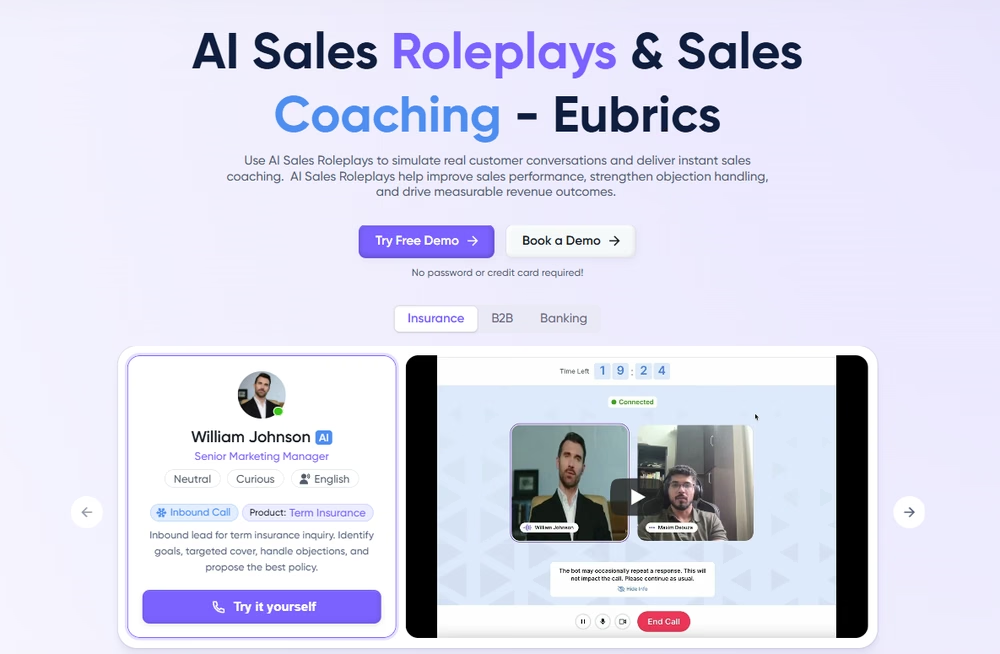
Eubrics AI is an AI sales coaching platform built for enterprise and mid-market revenue teams that need to move beyond generic training. It offers AI roleplay bots tailored to a team's specific product, ICP, pricing, and market - with each bot simulating a customer persona that adapts to how the rep sells.
Key Features of Eubrics AI:
- Custom AI Bot Builder: Create custom AI bots that mirror your specific customer personas in just minutes, tailored to your unique sales scenarios for realistic, relevant practice.
- Automated Call QA: Simplify and scale quality assurance by automating the evaluation of every call, with detailed insights on each rep's performance across key metrics from objection handling to communication.
- Personalized Coaching Plans: After each call or roleplay, the platform auto-generates rep-specific development plans based on identified skill gaps, tracked on individual dashboards.
- AI Mentor: An always-on AI sales coach providing post-call insights, performance tracking, and on-demand guidance for reps between manager sessions.
- CRM Integrations: Integrates with Salesforce, Freshsales, BambooHR, and Zoho CRM for smooth data flow across systems.
Where Eubrics works well:
- Realistic AI-powered sales roleplay simulations can significantly cut down onboarding time, with companies reporting over 50% reduction in rep ramp-up time.
- Highly customizable bot creation makes it easy to tailor scenarios to specific customer personas and sales workflows in minutes.
- Bridges practice and live performance through automated call scoring against the same criteria used in roleplay.
- Strong fit for mid-to-large enterprises that need a scalable, data-driven approach to sales upskilling.
Where Eubrics falls short:
- Pricing is not publicly listed, so teams need to contact sales for a custom quote.
- The platform is primarily built for sales coaching, and teams looking for a broader LMS may need complementary tools.
What sets Eubrics apart:
Eubrics goes beyond roleplay by connecting practice directly to live call performance. Every real call is automatically analyzed and scored across key selling competencies, creating a closed feedback loop between training and execution.
The platform combines call analysis, performance reports, and personalized AI copilots to drive measurable business outcomes, rather than just training completion.
Best For:
Enterprise and mid-market B2B sales teams, particularly in BFSI, SaaS, and insurance, that want realistic AI roleplay combined with automated call QA and data-driven coaching plans.
Eubrics' pricing and how it is structured:
Eubrics has not declared public pricing, and teams need to contact sales for a custom quote based on their requirements.
3. Hyperbound: Best for Realistic AI Roleplay and Enablement

Hyperbound is an AI sales roleplay and coaching platform focused on helping B2B sales teams practice realistic buyer conversations at scale. It converts ICP descriptions into interactive AI buyers in under two minutes and supports practice across cold calls, discovery, demos, objection handling, and post-sales scenarios. For a detailed side-by-side, see Hyperbound vs Outdoo.
What Hyperbound covers:
- AI Roleplay Simulations: Dynamic buyer personas trained on 2M+ hours of real B2B sales calls with bot variations to prevent repetitive practice.
- Custom AI Bot Builder: Create tailored scenarios from ICP descriptions in under 3 minutes.
- Multi-Party Roleplays: Practice with multiple AI buyer personas in one session for complex deal scenarios.
- AI Real Call Scoring: Automatically score actual customer calls against your custom methodology.
- AI Scorecards & Coaching: Instant feedback on talk ratios, methodology adherence, and objection handling.
- Gamification: Leaderboards and performance tracking across 25+ languages.
Where Hyperbound works well:
- Some of the most realistic AI buyer personas in the category, with responses that feel natural and unpredictable.
- Bot creation is fast and highly customizable, making it easy for enablement teams to build new scenarios.
- Combines roleplay practice with real call scoring, allowing teams to measure whether practice skills transfer to live conversations.
- Strong onboarding use case with claims of up to 50% faster ramp time.
Where Hyperbound falls short:
- Pricing is not publicly listed and reviews suggest it sits at a premium price point.
- Integrations are lighter compared to full-stack platforms, which may require additional consideration for complex tech ecosystems.
What sets Hyperbound apart:
Hyperbound's AI buyers adapt dynamically based on how the rep responds, making each session feel closer to a real sales call than a scripted exercise. The ability to create bot variations keeps engagement high over time.
Its Real Call Scoring feature bridges practice and live performance. Managers can score actual customer calls against the same scorecards used in roleplay, creating a data-driven feedback loop that shows whether training is translating into better execution.
Best For:
B2B sales teams, especially SDR and AE orgs, that want best-in-class roleplay realism and a data-driven connection between practice sessions and live call performance.
Hyperbound's pricing and how it is structured:
Hyperbound does not publicly disclose pricing. It operates on a subscription model with monthly and annual plans. Based on G2 reviews, it is positioned at a premium price point. Contact Hyperbound for a quote.
Testimonial:
"The bot creation tool is spectacular, I love being able to fill in specific details about the prospect to make the conversations as realistic as possible."
Read on G2
Read on G2
Looking for other options in this space? See the full guide to Hyperbound alternatives.
4. SecondNature: Best for Structured Roleplay and Onboarding

SecondNature uses conversational AI to help sales reps practice realistic scenarios through a virtual pitch partner. Reps engage in interactive roleplays covering discovery calls, cold calling, objection handling, and more, then receive performance-based feedback to sharpen their techniques. For a detailed comparison, see SecondNature vs Outdoo.
What SecondNature covers:
- AI Conversational Roleplays: Simulations that mimic natural conversation patterns rather than scripted flows.
- Pre-Built & Custom Scenarios: Ready-made and customizable role-playing scenarios for different sales stages.
- Real-Time Feedback: Instant performance feedback after each session.
- Analytics Dashboard: Track rep progress, identify coaching areas, and monitor team-wide performance trends.
- Certification Workflows: Structured certifications for onboarding and ongoing training.
Where SecondNature works well:
- Realistic simulations that feel like natural conversations rather than scripted exercises.
- Immediate feedback helps reps identify and address weaknesses quickly.
- Analytics dashboard gives sales leaders visibility into team-wide performance trends.
Where SecondNature falls short:
- Pre-defined scenarios can feel restrictive for experienced users who want more customized or challenging simulations.
- The AI's behavior can become predictable over repeated sessions, reducing the training challenge.
What sets SecondNature apart:
SecondNature was one of the earlier platforms to focus specifically on AI-powered sales roleplay and has built a solid foundation in conversational realism. It concentrates on the practice and feedback loop rather than trying to be a full revenue intelligence platform, making it simpler to adopt.
That focused scope is both its strength and limitation. Teams that want post-call analysis, deal tracking, or CRM automation will need additional tools in their stack.
Best For:
Mid-market sales teams and enablement leaders who want a focused AI roleplay solution for onboarding and ongoing skill development without the complexity of a full-stack platform.
SecondNature's pricing and how it is structured:
SecondNature does not publicly disclose pricing. Teams need to contact sales for a custom quote based on their requirements.
Testimonial:
"The most helpful thing about AI is practicing a meaningful conversation and making sure all important aspects are talked about. The upside of using AI is that it is in the privacy of your own space."
Read on G2
Read on G2
Considering your options beyond SecondNature? See the full breakdown of SecondNature alternatives.
5. Convin.ai: Best for AI Call Analytics and Agent Coaching

Convin.ai is an AI-powered platform that analyzes customer interactions across calls, chats, and emails to surface coaching insights and improve agent performance. While it serves sales teams, it is especially strong for contact centers and organizations with high-volume customer-facing conversations.
What Convin.ai covers:
- Automated Quality Assurance: AI-powered scoring across omnichannel conversations.
- Real-Time Agent Assist: Live prompts and suggestions during customer interactions.
- AI-Driven Coaching: Recommendations based on call analysis and performance patterns.
- Voice of the Customer: Surface recurring themes and sentiment from conversations.
- Dispute Resolution: Tools for fair and transparent performance reviews.
Where Convin.ai works well:
- Detailed call insights and analytics provide granular visibility into agent performance.
- Quality score tracking across weekly, monthly, and custom timeframes helps monitor progress consistently.
- Real-time agent assist can guide reps during live conversations, not just after the fact.
Where Convin.ai falls short:
- Scenario-based audits are not well-supported by the AI system, requiring manual intervention for complex evaluations.
- Users have reported periodic interface glitches, including tasks not displaying on login and filters resetting.
What sets Convin.ai apart:
Convin.ai's strength is post-interaction analysis at scale. Rather than focusing on practice simulations, it applies AI to evaluate real customer conversations and generate coaching insights automatically, making it valuable for high-volume teams.
Its real-time agent assist feature surfaces prompts while conversations are happening, which adds a live guidance layer most training-focused tools lack.
Best For:
Contact centers, support-heavy sales teams, and organizations that need automated QA scoring and real-time coaching across high-volume customer interactions.
Convin.ai's pricing and how it is structured:
Convin.ai does not publicly disclose pricing. Contact their sales team for a custom quote.
Testimonial:
"Manual Audits are easily located. You receive training when you initially join, and it is easy to design a new audit template to enable you to modify the way you are marking."
Quality Analyst
Read on G2
6. Highspot: Best for Enterprise Content and Training Management

Highspot is a comprehensive sales enablement platform that combines content management, training delivery, coaching, and analytics in a unified system. It is built for enterprise organizations that need to manage large volumes of training materials, sales collateral, and coaching programs from a single hub.
What Highspot covers:
- Centralized Content Hub: Store all marketing, sales, and training materials in one searchable platform.
- AI Content Recommendations: Surface the right content based on deal stage and buyer context.
- Training & Coaching Modules: Video assessments, role-play simulations, and guided selling experiences (Sales Plays).
- Analytics: Track content usage, engagement, and influence on deal outcomes.
- Content Governance: Keep materials current and compliant across teams.
Where Highspot works well:
- Serves as a true single hub for training content, sales collateral, coaching, and analytics.
- Organizing and searching content is straightforward, reducing time reps spend looking for materials.
- Coaching features connect call recordings with training components for more contextual feedback.
Where Highspot falls short:
- Advanced features like meeting intelligence and content governance have a significant learning curve.
- Tracking the direct impact of specific content on revenue outcomes remains a challenge, despite strong analytics.
What sets Highspot apart:
Highspot's value is not in roleplay or call analysis. It is in being the central nervous system for all sales enablement content and programs. For enterprise teams with hundreds of reps and constantly updating materials, having one platform that organizes everything and measures what actually influences deals is a major operational advantage.
While its AI simulation capabilities are not as deep as dedicated roleplay tools, its strength is ensuring reps can find, use, and learn from the right materials at the right time.
Best For:
Enterprise sales enablement and L&D teams that need a unified platform for content management, training delivery, and coaching programs, particularly organizations with complex product lines.
Highspot's enterprise pricing and how it is structured:
Highspot provides custom pricing based on the features you choose. Vendr reveals that the average contract value is approximately $91,460 annually, making it an enterprise-level investment.
Testimonials:
"Highspot is a great content management, training and coaching platform that allows us to equip, train and coach our sellers. We've been able to easily integrate it into our existing tech stack."
Sr. Product Consultant
Read on G2
Evaluating your options? See the full guide to Highspot alternatives.
7. Dialpad Connect: Best for Call Coaching Built into the Phone System

Dialpad Connect is an AI-powered business communications platform that includes built-in call coaching and training features. Rather than being a standalone training tool, it embeds coaching directly into the phone system reps already use for customer calls.
What Dialpad Connect covers:
- Real-Time AI Coaching: Live suggestions and talking points during calls.
- Automatic Recording & Transcription: AI-generated transcripts for every call.
- Custom Moment Tracking: Flag keywords, competitors, and objection patterns.
- Post-Call Analytics: Metrics on talk time, sentiment, and call outcomes.
- Native CRM Integrations: Salesforce, HubSpot, Zendesk, and more.
Where Dialpad Connect works well:
- Coaching is built into the workflow rather than being a separate platform reps need to log into.
- Call transcripts and recordings are immediately available for review and training.
- Affordable entry point compared to dedicated conversation intelligence tools.
Where Dialpad Connect falls short:
- Automated transcription accuracy varies and can create challenges with text-based summaries.
- Call recordings and transcripts are deleted when a department or employee is removed, leading to loss of historical data.
What sets Dialpad Connect apart:
Because Dialpad is the phone system, coaching happens where the work happens. Reps do not need to switch between a dialer and a separate training platform. AI suggestions surface during live calls, and transcripts are generated automatically.
That said, it does not offer roleplay simulations, structured learning paths, or certification workflows. Its coaching features are a valuable add-on for teams already using Dialpad for communications.
Best For:
Small to mid-sized sales teams that want call coaching and analytics built directly into their phone system without adding another vendor.
Dialpad Connect's pricing and how it is structured:
| Plan | Price | Ideal For |
|---|---|---|
| Standard Plan | $15/user/month (billed annually) | Small to early mid-market teams |
| Pro Plan | $25/user/month (billed annually) | Mid-market teams needing advanced integrations |
| Enterprise Plan | Custom Pricing | Large organizations with complex requirements |
Testimonial:
"DialPad allowed us to improve our processes for recording and logging call metrics with their detailed analytics. Being able to access both call transcripts and recordings was very helpful for providing coaching and feedback to the team."
Director of Business Development
Read on G2
8. Quantified AI: Best for Avatar-Based Communication Coaching
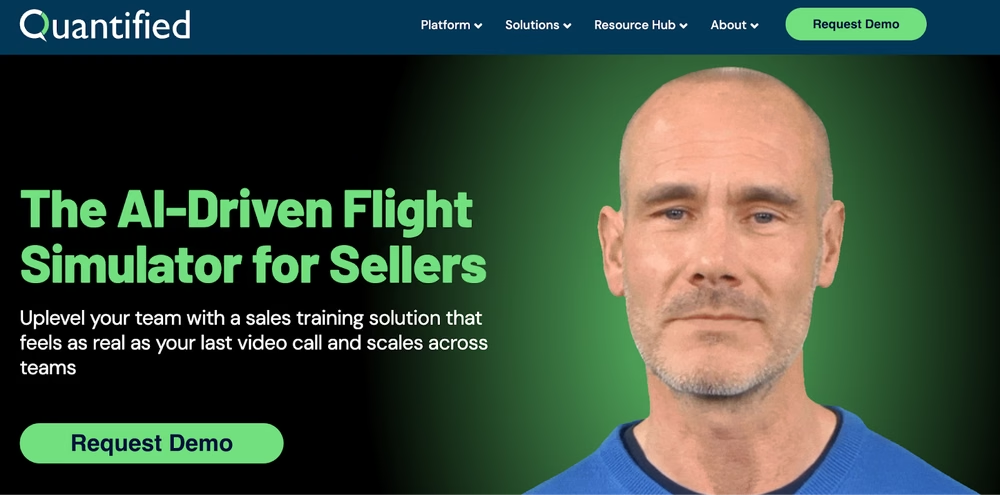
Quantified AI is a sales coaching platform that uses AI-generated digital avatars to create a judgment-free practice environment. Reps interact with virtual characters in simulated sales conversations and receive detailed feedback on communication skills, messaging accuracy, and delivery.
What Quantified AI covers:
- AI Avatar-Based Simulations: Realistic visual AI characters that respond in real time.
- Communication Analytics: Detailed feedback on speech patterns, pacing, confidence, and filler words.
- Custom Scenarios: Tailored to specific products, industries, and sales processes.
- Certification Workflows: Assessment and skill validation for onboarding and ongoing training.
- Scalable Practice: Self-paced sessions without requiring manager involvement.
Where Quantified AI works well:
- Judgment-free environment is especially helpful for new hires building confidence at their own pace.
- High degree of customization allows organizations to tailor simulations to specific training needs.
- Precise feedback on communication skills helps reps identify subtle areas for improvement in delivery.
Where Quantified AI falls short:
- The AI avatar may need additional sessions to adapt to specialized industry terminology.
- Open-ended, dynamic dialogue branching can be limited compared to some dedicated roleplay platforms.
What sets Quantified AI apart:
Quantified AI focuses on visual, avatar-based interactions rather than audio-only simulations. This creates a more immersive practice session that mirrors presenting to a real person, which is particularly useful for demos and in-person sales delivery.
It also assesses not just what reps say, but how they say it, including pacing, filler words, confidence signals, and vocal delivery. For teams focused on polishing presentation skills, this level of communication feedback is a meaningful differentiator.
Best For:
Large sales organizations and enablement teams that want avatar-based practice environments focused on communication quality, especially for onboarding, certification, and presentation skills.
Quantified AI's pricing and how it is structured:
Quantified AI does not publicly disclose pricing. Contact their team for a custom quote.
Testimonial:
"Quantified, a startup focused on sales learning technology, has launched a new platform that uses AI to simulate sales conversations and provide coaching to reps."
Project Manager
Read on G2
See the full guide to Quantified AI alternatives to compare other options in this space.
9. PitchMonster: Best for Affordable AI Roleplay on Small Teams
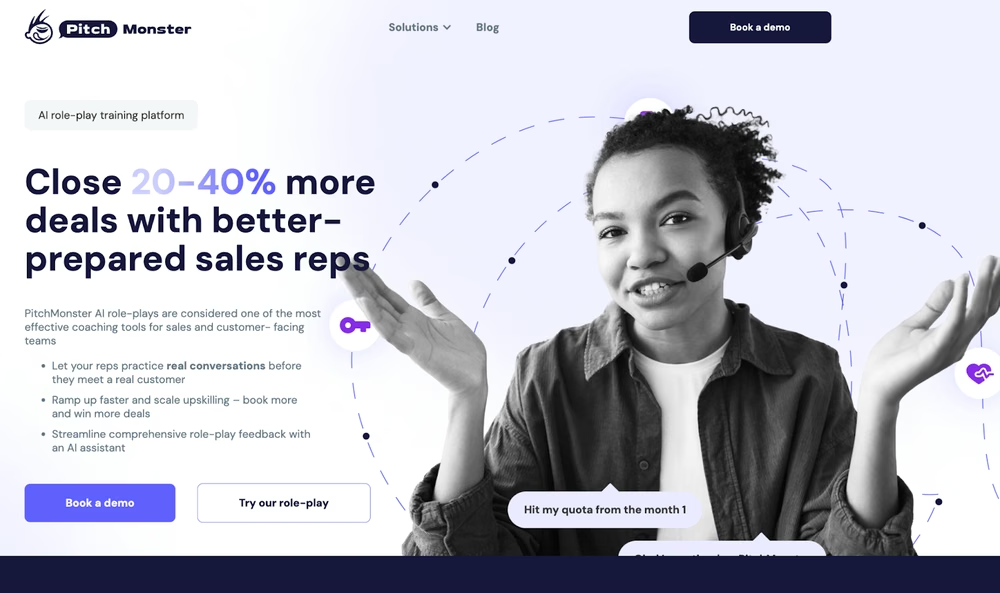
PitchMonster is a lightweight AI sales training tool that helps customer-facing teams practice through roleplay simulations. It is designed for teams that want to start using AI-driven practice without a large budget or complex implementation.
What PitchMonster covers:
- 48+ Ready-to-Use Exercises: Covering sales pitches, objection handling, and customer discovery.
- AI Feedback: Analysis on filler words, pacing, vocabulary, and delivery.
- Custom Scenario Builder: Create product-specific and process-specific training.
- Gamified Leaderboards: Track and reward top performers to encourage competition.
- Certification Workflows: Lightweight onboarding and skill validation.
Where PitchMonster works well:
- Large library of pre-built exercises means teams can start practicing immediately.
- Gamified leaderboards create healthy competition and drive engagement.
- Very affordable entry point with a functional free plan.
Where PitchMonster falls short:
- Pre-designed templates and AI-generated content may lack the depth of more advanced platforms.
- AI feedback focuses more on delivery mechanics than on strategic selling skills or methodology adherence.
What sets PitchMonster apart:
PitchMonster's biggest advantage is accessibility. With a free plan, 48+ ready-made exercises, and simple setup, teams can be up and running with AI roleplay in minutes. For startups or small teams trying AI training for the first time, this low barrier to entry makes it easy to test the approach.
The trade-off is depth. It does not offer conversation intelligence, real call scoring, CRM integrations, or dynamic AI personas. But for teams that just need a straightforward way to get reps practicing, it delivers solid value at a fraction of enterprise pricing.
Best For:
SMBs, startups, and small sales teams exploring AI roleplay training for the first time, especially those that want to test the approach with minimal financial commitment.
PitchMonster's pricing and how it is structured:
PitchMonster offers a Free Plan for teams getting started. The Premium Plan is $19 per month with unlimited training capabilities.
Testimonial:
"This brilliant piece of software is the missing link from onboarding and ongoing product education. You bring in new people, bend over sideways to get them up to speed, then pray."
Head of Sales, Credit Suite
Read on Product Hunt
See the full breakdown of PitchMonster alternatives if you're exploring other lightweight options.
How to Pick by Use Case: A Quick Decision Guide
The right AI sales training tool depends on what you are trying to solve first.
1. If your main goal is faster onboarding and ramp time: Look at tools with strong AI roleplay capabilities. Outdoo AI, Hyperbound, and SecondNature all let new reps practice real scenarios before live calls. PitchMonster works well for smaller teams on a budget. Outdoo stands out here as it lets users create roleplays from real pipeline calls and letting teams customize agents using playbooks and call recordings, making training more realistic and effective.
2. If your priority is preparing reps for complex, multi-stakeholder deals: Outdoo's multi-persona roleplay is built for this. Reps practice managing overlapping priorities from procurement, finance, and IT in a single simulation.
3. If your priority is improving live call execution and coaching quality: Outdoo AI and Convin.ai analyze real calls and generate coaching insights. Dialpad embeds coaching directly into the phone system.
4. If you need content management and training delivery at enterprise scale: Highspot is purpose-built for this, combining content management, learning paths, certifications, and analytics in one platform.
5. If you want to improve communication and presentation skills: Quantified AI's avatar-based simulations and detailed speech analytics are specifically designed for this.
6. If you need a closed-loop system connecting training to execution: Outdoo scores both roleplay sessions and live calls against the same framework, and gives leaders visibility into whether training is influencing how reps perform.
7. If budget is the primary constraint: PitchMonster and Dialpad ($15/user/month) offer the most affordable entry points.
Bottomline: Overall, if you want one platform that brings everything together, Outdoo is the strongest all-around choice. It combines realistic roleplays, real call analysis, and unified scoring in one system, so teams can train, execute, and measure improvement without switching tools.
This makes it especially valuable for organizations that care about not just training reps, but actually improving how they perform in live deals.
Final Thoughts
AI sales training software is most valuable when it helps reps do more than consume content. The platforms that drive real results create a feedback loop between practice, coaching, and live execution so teams can improve continuously rather than hoping that a workshop or slide deck sticks.
The right tool depends on where your team needs the most help. If reps are ramping too slowly, start with roleplay. If coaching is inconsistent, look at tools that score real calls and surface actionable gaps. If your deals involve multiple stakeholders, prioritize platforms with multi-persona simulations that reflect how enterprise buying actually works.
For teams evaluating their options, Outdoo AI combines AI roleplay, structured coaching, unified scoring, and resource-based scenario building in one platform, helping customer-facing teams turn training into measurable performance improvement.
Book a demo to see how it works with your team's specific workflow.
Frequently Asked Questions
.svg)
It depends on what you need most. If you want reps practicing before they get on real calls, look at Outdoo, Hyperbound, or SecondNature. If you want your existing calls reviewed and scored, look at Convin.ai or Dialpad Connect. Outdoo is the one tool on this list built to do both from the same platform.
AI tools personalize learning paths, simulate real sales conversations, and provide instant feedback. This helps new reps ramp faster, build confidence early, and apply skills in real customer scenarios.
Yes, many AI sales training tools offer flexible plans for SMBs and mid-market teams. They help smaller teams scale coaching without needing large enablement resources.
Look for interactive roleplays, real time coaching, analytics dashboards, CRM integrations, and scalability. The ability to measure how training impacts deal outcomes is especially valuable.
Traditional training is static and one size fits all, while AI driven training adapts to each rep’s strengths and gaps. It provides continuous feedback, data backed insights, and measurable improvement over time.
Table of Contents
Talk to Sales
Have questions about training and enablement for your sales, CS, support, or leadership team? Let's talk.
Talk to Sales