



Sales reps spend roughly 28% of their week actually selling. The rest of their time gets eaten by manual CRM updates, follow-up admin, scheduling, and post-call workflows that nobody trained them to enjoy.
That is the gap sales automation tools are built to close. According to HubSpot's research, 61% of high-performing sales teams use automation to accelerate revenue growth, while the global sales automation market is on track to reach $11.42 billion by 2027. The reason is simple: every hour reps spend on admin is an hour they are not in front of a customer.
The hard part is choosing the right tools. Sales automation now covers everything from CRM and prospecting to coaching, conversation intelligence, and post-call workflow execution. The 10 platforms in this guide each solve a different layer of the problem.
This guide compares the 10 best sales automation tools in 2026. You will see what each one does best, where it falls short, and how to pick the right combination based on your team size and sales motion.
Note: Last updated in May 2026. This guide is based on a detailed review of each platform's publicly available product information, G2 reviews, community feedback, and verified user data as of the time of writing. Platform capabilities, pricing, and positioning change frequently. We revisit and update this guide regularly to ensure accuracy.
Why Sales Automation Has Moved Beyond CRM
For years, sales automation meant "CRM with rules." You set up triggers, the system logged activities, and reps clicked through tasks. That layer is still important, but it is no longer where the real differentiation is.
The shift in 2026 is toward automation that improves how reps execute, not just what gets logged. Tools now generate AI roleplays from real pipeline calls. Coaching scorecards run automatically across both practice and live conversations. CRM fields update themselves based on what was said on the call. The reps who used to spend 30 minutes a day on admin can now spend that time preparing for their next high-stakes conversation.
This is why the best sales automation tools in 2026 are not standalone task automators. They are systems that connect prospecting, conversations, coaching, and CRM workflows into one continuous loop.
Top Sales Automation Tools in 2026: Quick Comparison
In the above comparison table, some tools span more than one category. Outdoo, for example, combines AI roleplay and coaching with CRM automation and conversation intelligence in one system. Clari covers forecasting and revenue operations with conversation intelligence built in. The full reviews below cover where each tool is strongest and where it falls short.
1. Outdoo AI: Best for AI Coaching, Roleplay, and CRM Automation

Outdoo is an enterprise AI roleplay and coaching platform built for customer-facing teams, with built-in conversation intelligence, revenue intelligence, and CRM automation. It automates the parts of the sales process that traditionally required a manager: scoring calls, generating coaching feedback, updating CRM fields, and turning live conversations into practice scenarios reps can rehearse before the next call.
Where most sales automation tools stop at task automation, Outdoo automates the coaching loop itself. The same AI scorecard runs across both practice and real calls, so leaders can see whether training is translating into better execution. Next steps, deal updates, and disposition fields sync automatically into Salesforce and HubSpot via CRM automation, eliminating the manual admin work that drags reps away from selling.
What Outdoo AI covers across AI roleplay, coaching, and CRM automation:
What makes Outdoo AI different from typical sales automation tools:
What to know before rolling out Outdoo AI:
Outdoo AI's pricing and how it is structured:
Best For
- Sales enablement, L&D, and revenue leaders who want coaching, conversation intelligence, and CRM workflow automation working together as one closed-loop system, especially for teams handling complex deals.
Editor's Take
Outdoo AI stands out because it automates the part of sales that has historically been the most manual: coaching. By tying AI roleplay, conversation intelligence, and CRM automation together, it removes the admin work that drags reps away from selling and turns every real call into structured practice for the next one.
2. Salesforce: Best for Enterprise CRM and Sales Process Automation
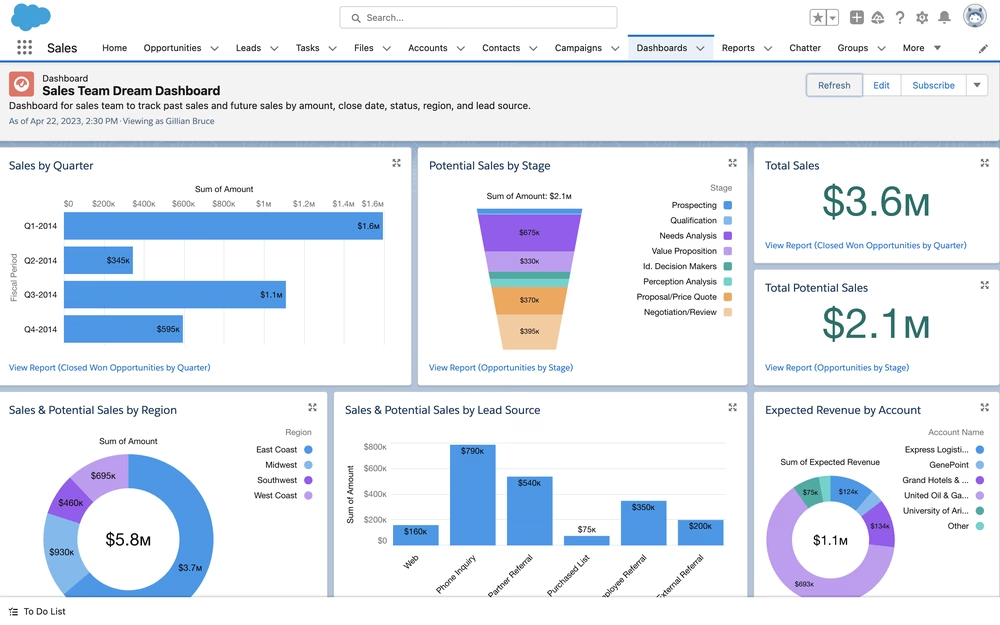
Salesforce is the most widely deployed CRM and sales process automation platform on the market. It combines customer relationship management, sales process automation, and AI-driven insights through its Einstein layer, with deep customization for organizations of every size. For teams that want a single system to manage the entire customer lifecycle, Salesforce remains the default choice.
Salesforce Key Features:
Where Salesforce works well:
Where Salesforce falls short:
Salesforce Pricing Details:
Best For
- Mid-market and enterprise teams that need a fully customizable CRM as the foundation of their sales tech stack.
Editor's Take
Salesforce is the default CRM choice for a reason: depth, flexibility, and ecosystem. The trade-off is that it stops at CRM. Teams that want to automate coaching, conversation analysis, or roleplay practice still need a layer like Outdoo on top of it. The two work well together: Salesforce as the system of record, Outdoo as the layer that keeps it clean and reps coached.
3. HubSpot: Best for All-in-One CRM and Sales Automation
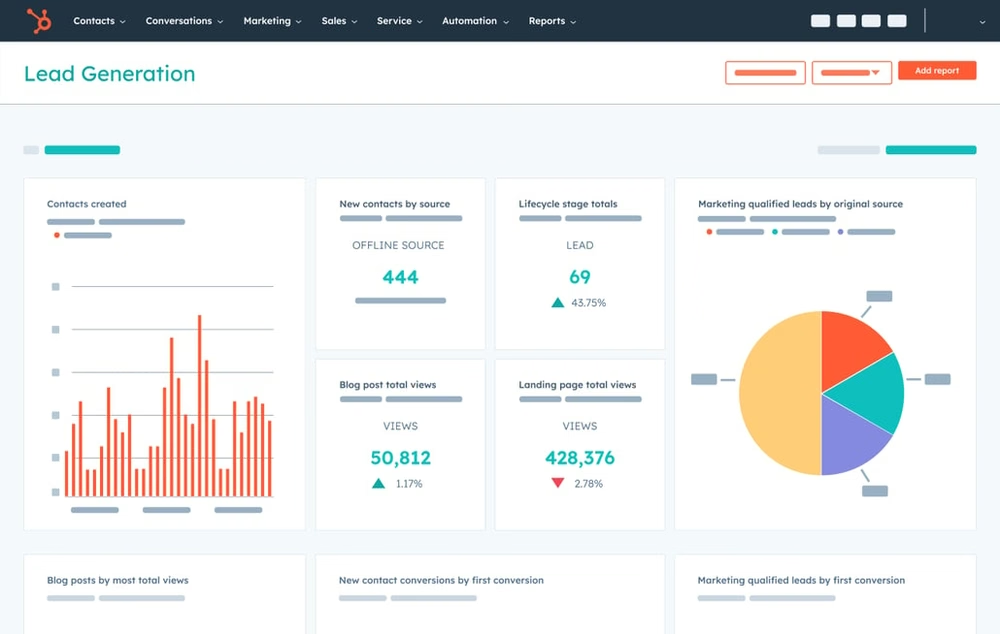
HubSpot offers an all-in-one suite for marketing, sales, and customer service, with a free CRM at the core and paid hubs that add automation, sequencing, and reporting on top. Its biggest strength is ease of adoption: most teams can be up and running in days rather than months, which makes it especially popular with mid-market and growth-stage companies.
HubSpot Key Features:
Where HubSpot works well:
Where HubSpot falls short:
HubSpot's pricing and how it is structured:
Best For
- Mid-market and growth-stage teams that want an all-in-one CRM, marketing, and sales platform with easy onboarding.
Editor's Take
HubSpot earns its popularity through usability. Teams that struggle to get adoption on Salesforce often find HubSpot easier to roll out. Like Salesforce, it works best when paired with a coaching and conversation intelligence layer. Outdoo's native HubSpot integration makes that pairing straightforward.
4. Clari: Best for Revenue Operations and Forecast Automation

Clari is a revenue intelligence and operations platform focused on forecasting accuracy and pipeline governance. It connects sales, marketing, and customer success data into a unified view, giving revenue leaders the visibility they need to manage complex pipelines at scale. For enterprise teams that need to automate forecasting and deal inspection workflows, Clari is one of the strongest options.
Clari Key Features:
Where Clari works well:
Where Clari falls short:
Clari's pricing and how it is structured:
- Custom pricing based on team size and deployment scope. See our Clari alternatives guide for context.
Best For
- Enterprise revenue leadership teams that need precise sales forecasting, pipeline governance, and cross-functional visibility at scale.
Editor's Take
Clari is the gold standard for revenue operations and forecasting. The gap, like Salesforce and HubSpot, is execution. Knowing a deal is at risk does not save it. Pairing Clari with a coaching platform like Outdoo gives leaders both the visibility to spot risks and the practice environment to fix them.
5. Clearbit: Best for Automated CRM Data Enrichment and Lead Intelligence
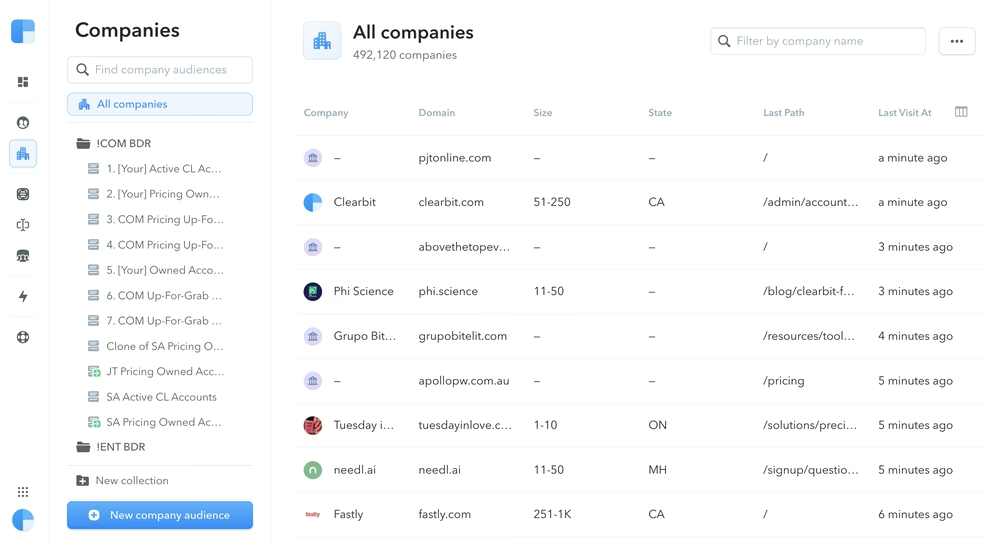
Clearbit (now part of HubSpot) is a data enrichment platform that automatically appends company and contact information to your CRM records. It pulls firmographic, technographic, and behavioral data in real time, helping sales teams prioritize leads and tailor outreach without manual research.
Clearbit Key Features:
Where Clearbit works well:
Where Clearbit falls short:
Clearbit's pricing and how it is structured:
- Custom pricing based on usage and feature access.
Best For
- Teams that need automated CRM data enrichment and contact intelligence, especially those already invested in the HubSpot ecosystem.
Editor's Take
Clearbit solves a real problem: dirty CRM data. By keeping records enriched automatically, it saves reps hours of manual research and makes lead scoring more accurate. It pairs well with tools like Outdoo that also reduce admin work, since the cleaner the CRM, the more useful the revenue intelligence and coaching layers become.
6. Bombora: Best for B2B Intent Data and Account Prioritization
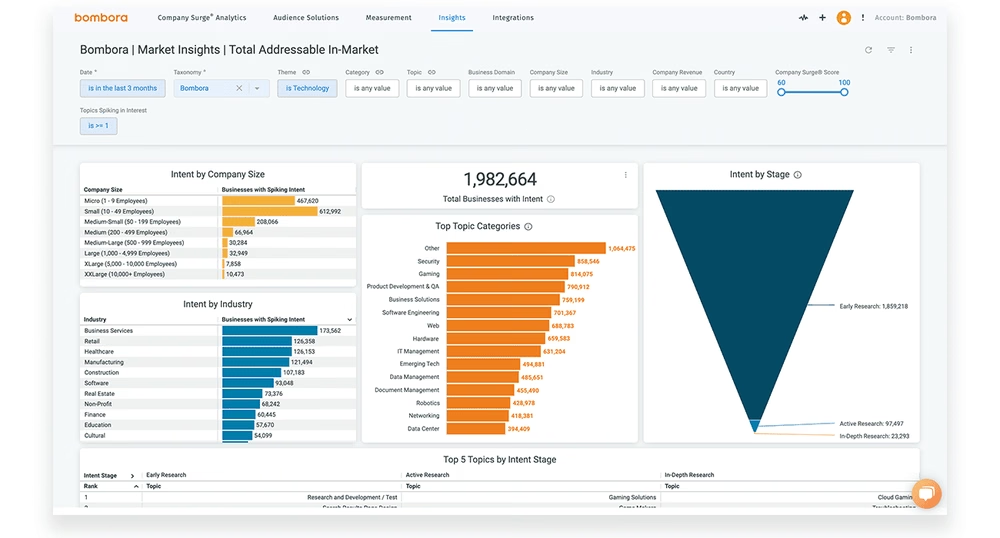
Bombora is the leading intent data provider for B2B, surfacing which accounts are actively researching topics relevant to your product. It analyzes anonymized content consumption across thousands of B2B publishers to identify in-market buyers before they fill out a form, making it especially valuable for ABM and demand generation teams.
Bombora Key Features:
Where Bombora works well:
Where Bombora falls short:
Bombora's pricing and how it is structured:
- Custom pricing based on data volume and topic configurations.
Best For
- ABM and demand generation teams that need to identify in-market accounts before they raise their hand.
Editor's Take
Bombora is the strongest intent data provider in B2B. The trade-off is that intent signals only tell you who is researching, not who is ready to buy. Pairing Bombora with a coaching platform like Outdoo means that when reps do engage in-market accounts, they are also prepared to handle those conversations well.
7. 6sense: Best for Predictive ABM and Revenue Workflow Automation
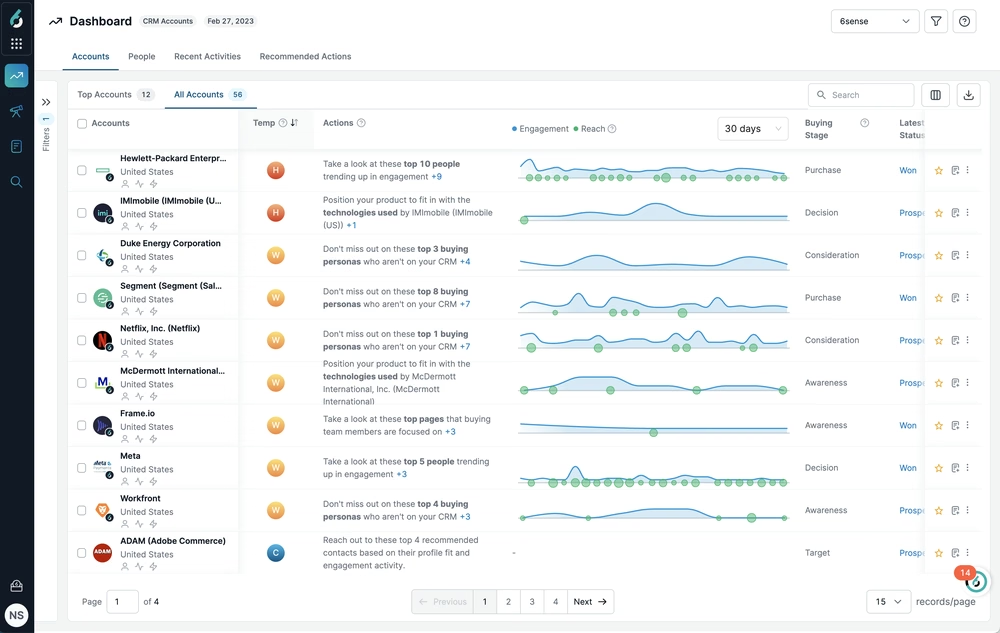
6sense is a predictive ABM and demand orchestration platform that combines intent data, AI-driven account scoring, and audience targeting. It is built for enterprise teams running coordinated revenue programs across marketing and sales, with strong workflow automation for engaging in-market accounts.
6sense Key Features:
Where 6sense works well:
Where 6sense falls short:
6sense's pricing and how it is structured:
- Custom pricing based on deployment scope.
Best For
- Enterprise ABM and demand teams that need predictive scoring, intent data, and coordinated revenue workflows in one platform.
Editor's Take
6sense is built for enterprise revenue orchestration. The predictive scoring and ABM automation are best in class. But identifying the right accounts is only half the equation. When those high-priority deals enter live conversation, reps still need to handle them well. That is where a closed-loop AI coaching platform like Outdoo complements 6sense effectively.
8. Dealfront: Best for B2B Sales Engagement in European Markets
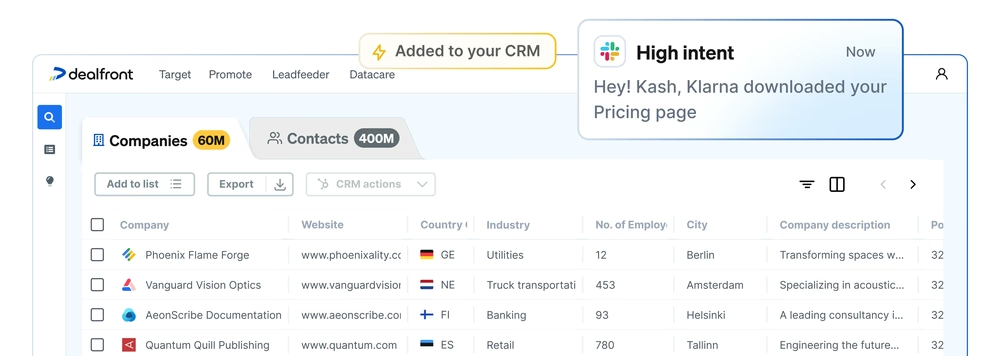
Dealfront combines website visitor identification, lead scoring, and outbound automation into a B2B sales engagement platform. It is particularly strong in European markets, with GDPR-compliant data and a focus on identifying companies visiting your website who have not yet filled out a form.
Dealfront Key Features:
Where Dealfront works well:
Where Dealfront falls short:
Dealfront's pricing and how it is structured:
- Custom pricing based on usage and feature set.
Best For
- European-focused B2B teams that need visitor identification, lead scoring, and outbound automation in one platform with GDPR compliance built in.
Editor's Take
Dealfront is the strongest sales engagement platform for European markets. The combination of website intelligence and outbound automation makes it useful for teams that need to identify and engage in-market accounts quickly. As with any engagement tool, the value compounds when paired with a coaching layer that ensures reps handle those conversations well once they go live.
9. VanillaSoft: Best for High-Volume Inside Sales and Dialer Automation
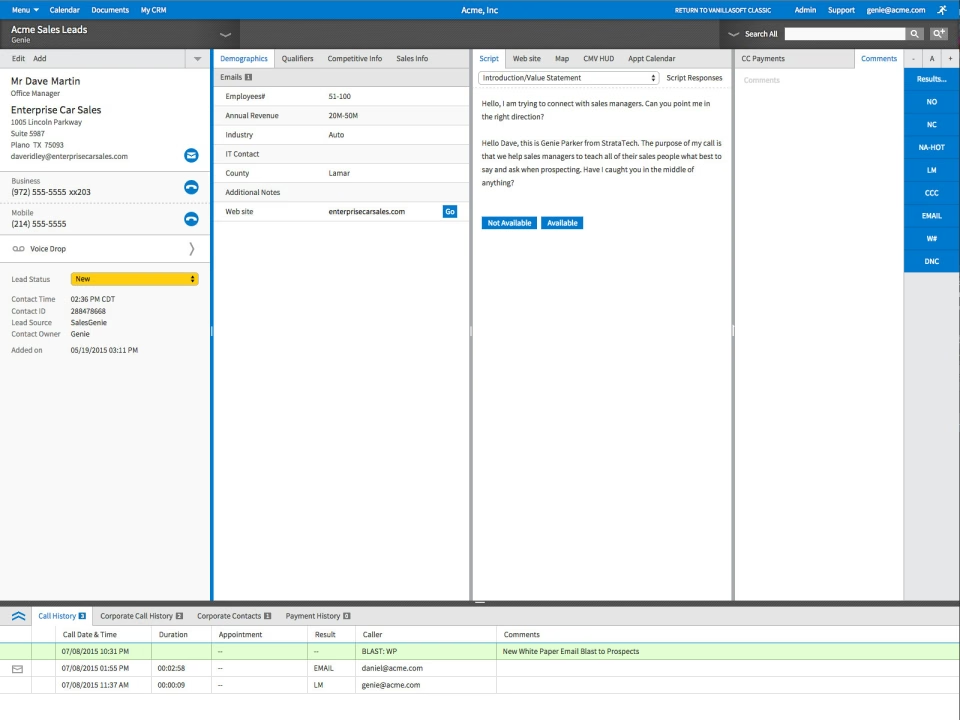
VanillaSoft is a sales engagement and dialer platform built for high-volume, lead-based inside sales teams. It combines queue-based lead routing, auto-dialing, email sequencing, and SMS into one workflow, making it particularly effective for industries with high call volumes like insurance, financial services, and education.
What VanillaSoft covers:
Where VanillaSoft works well:
Where VanillaSoft falls short:
VanillaSoft Pricing Details:
- Custom pricing based on team size and features.
Best For
- High-volume inside sales teams in industries like insurance, financial services, and education that need queue-based dialing and multi-channel outreach.
Editor's Take
VanillaSoft is purpose-built for high-volume inside sales. The trade-off is that pure dial-and-pitch motions struggle without strong coaching. Teams running 50+ calls a day per rep see the biggest ROI when they pair a dialer like VanillaSoft with a coaching platform like Outdoo, where every live call becomes structured practice for the next one.
How to Choose the Right Sales Automation Tool
The right tool depends on which part of the sales workflow you are trying to automate. Here is a quick guide based on the most common scenarios.
1. If you need a foundational CRM: Salesforce or HubSpot. Salesforce wins for customization at enterprise scale. HubSpot wins for ease of adoption.
2. If your priority is forecasting accuracy and pipeline visibility: Clari is the strongest option for enterprise revenue ops.
3. If you want to identify in-market accounts before they raise their hand: Bombora and 6sense lead the intent data and ABM categories.
4. If your CRM data is messy and slowing reps down: Clearbit automates enrichment so reps spend less time researching and more time selling.
5. If you run high-volume outbound: VanillaSoft handles dialer-driven inside sales. Dealfront is strong for European B2B engagement.
6. If you want to automate the coaching loop and reduce rep admin: Outdoo AI automates CRM updates, generates AI roleplays from real pipeline calls, and scores both practice and live calls with the same framework. This is the layer most sales automation stacks are missing.
7. If you handle complex, multi-stakeholder deals: Outdoo's multi-persona roleplays let reps practice with up to 3 stakeholders in one session, automating the prep work that managers used to do manually.
Bottom line: Most teams already have a CRM. What is usually missing is the layer that automates coaching, reduces CRM admin, and turns every real customer call into structured practice for the next one. That is where Outdoo AI fits in, working alongside Salesforce, HubSpot, Clari, and the rest of the stack rather than replacing them.
Final Thoughts
Sales automation in 2026 is no longer just about logging activities in your CRM. The platforms that move the needle today are the ones that automate the work managers used to do by hand: scoring calls, generating coaching feedback, prepping reps for the next conversation, and keeping CRM data clean without rep effort.
If you are building a stack from scratch, start with a CRM foundation (Salesforce or HubSpot), add a forecasting layer (Clari) if you are at enterprise scale, layer in intent data (Bombora, 6sense, or Clearbit) for prospecting, and add engagement automation (Dealfront, VanillaSoft) for outbound.
And whatever else you choose, do not skip the coaching automation layer. The reps using your CRM are the ones doing the actual selling. Outdoo closes that loop by combining AI roleplay, conversation intelligence, and CRM automation into one system that helps reps spend less time on admin and more time getting better at the conversations that drive revenue.
Book a demo to see how Outdoo automates the coaching loop for your team and works alongside your existing CRM stack.
Frequently Asked Questions
.svg)
Sales automation tools are software solutions designed to streamline and automate various sales processes. They help sales teams manage tasks such as lead nurturing, follow-up emails, and data entry, allowing them to focus on building relationships and closing deals.
To choose the best sales automation tool, identify your specific needs, evaluate the features offered by different tools, ensure integration with existing systems, assess scalability, review pricing, and read user reviews. Taking advantage of free trials can also help you test the tool before committing.
The top sales automation tools for 2026 include Outdoo, Dealfront, Salesforce, HubSpot, Clearbit, Bombora, Clari, Mailtastic, 6sense, and VanillaSoft. Each tool offers unique features and capabilities to enhance sales processes.
When selecting sales automation software, look for features such as CRM integration, lead scoring, email tracking, task automation, advanced analytics, and customizable workflows. These features can help improve efficiency and effectiveness in your sales processes.
Outdoo is an advanced AI roleplay and coaching platform specifically designed for enterprise sales teams seeking to enhance their performance through targeted training. By seamlessly integrating roleplay practice with real customer interactions and post-call assessments, Outdoo ensures that coaching translates into measurable behavior change. This platform empowers sales professionals to engage in realistic scenarios, apply learned skills in live calls, and receive structured feedback that drives continuous improvement, ultimately leading to increased sales effectiveness and better customer engagement.
Table of Contents
Talk to Sales
Have questions about training and enablement for your sales, CS, support, or leadership team? Let's talk.
Talk to Sales