



If you've been searching for "Clari pricing 2026," you're not alone.
Clari has emerged as a leading revenue platform for sales forecasting and analytics, but figuring out its pricing (and value) isn't straightforward!
In this guide, we'll break down what Clari does and why it's popular, explain how its pricing works (the core platform and add-on modules like Copilot and Groove) with any available cost estimates, share what real users on G2, Reddit, and elsewhere praise or complain about , and compare top alternatives including Gong, Salesloft, Outreach, and Outdoo AI (which approaches revenue performance through AI roleplay and closed-loop coaching rather than just dashboards and forecasting). By the end, you'll have a clear picture of whether Clari is worth it for your organization or if an alternative might better suit your needs.
Let's dive in!
This blog was last updated in May 2026. Pricing details are accurate as of the date of the last update and may change.
What is Clari and Why Is It Popular?
Clari is an AI-powered Revenue Orchestration platform that helps sales teams drive predictable growth. In plain terms, Clari gives revenue leaders a "single pane of glass" to see all their deals and forecasts in one place. It connects to your CRM (like Salesforce), emails, calendars, and even sales calls to provide real-time insights into your pipeline. With Clari, sales managers can quickly see which deals are on track or at risk, and sales reps get guidance on next steps to hit their targets. Think of Clari as the command center for your revenue process – it pulls in all the signals (deal stages, activities, buyer interactions) and uses AI to highlight where you should focus to meet your quota.
Why do people like it?
For one, Clari can significantly improve forecasting accuracy and accountability. Users often praise how Clari "spots risk and opportunity in the pipeline" and brings rigor to the forecasting process. Instead of relying on gut feel or last-minute spreadsheets, sales leaders using Clari get a data-driven forecast with AI insights (Clari's AI can score deals and even project likely outcomes). Many large enterprises (Clari's customers include the likes of Adobe, Zoom, Okta, etc.) credit Clari with making their revenue more efficient and predictable.
One G2 reviewer noted that Clari "made identifying pipeline gaps and improving deal visibility much easier", allowing for more informed decisions during the quarter. In short, Clari is popular because it helps sales teams see the truth of their pipeline at a glance – what's moving, what's stalled, what's likely to close – and this visibility is gold for high-pressure sales environments.
Clari's appeal also comes from its expanding capabilities. Over the past couple of years, Clari has grown from a forecasting tool into a broader platform. It acquired the conversation intelligence software Wingman (now Clari Copilot) to automatically record and analyze sales calls, and it acquired the sales engagement platform Groove to integrate outbound prospecting workflows. This means Clari now spans everything from call transcripts and AI call summaries to email cadence automation, on top of its core forecasting analytics. By positioning itself as an end-to-end revenue platform, Clari aims to replace a patchwork of point solutions with one unified system.
Key reasons enterprises choose Clari:
Clari's approach merges several traditionally separate functions into one system:
- Revenue Orchestration: Instead of just recording meetings, Clari actively orchestrates workflows across teams with AI-driven insights that guide actions and automated processes. In other words, it not only captures data but also tells your team what to do next to prevent deals from slipping through cracks.
- Predictive Intelligence: The platform's AI analyzes patterns across millions of deals to forecast outcomes, flag risks, and recommend proactive actions before problems impact revenue. Clari can crunch historical and pipeline data at scale to predict which deals are likely to close and which are at risk, early in the quarter.
- Enterprise Scale: Clari is built for complex, large organizations. It supports multiple teams/territories and diverse revenue models (subscription, consumption-based, etc.), handling the needs of global enterprises without breaking a sweat. This means it can manage huge pipelines and varied sales motions (new sales, renewals, upsells) all in one place.
- Industry Recognition: Clari has been recognized as a leader in this space. Forrester's Q3 2024 Wave report on Revenue Orchestration Platforms named Clari a Leader, noting that "Clari provides a single platform to run revenue." Top-tier companies like Adobe, Okta, Zoom, and Workday trust Clari to manage their multi-million-dollar revenue operations, underscoring the platform's credibility and impact.
In short, Clari's strength lies not just in capturing sales conversations but in connecting every revenue signal (activity data, pipeline changes, forecast updates, etc.) into one unified system to drive consistent, predictable outcomes. It was even dubbed the first to truly solve "revenue leak" at a boardroom level. Given these advantages, it's clear why Clari has become popular among enterprises looking to rigorously manage their revenue process.
Clari's Platform Modules and Capabilities
Before diving into pricing, it's important to understand Clari's modular platform. Unlike a single-point tool, Clari offers multiple integrated modules that work together as a unified Revenue Platform. Organizations can purchase these components individually or as a bundle, which is one reason pricing varies. Here are Clari's core modules and what they do:
- Clari Capture: Automatically captures every revenue-critical activity across email, calendar, calls, and meetings. This eliminates manual data entry and ensures complete visibility into all customer touchpoints. (No more reps forgetting to log meetings or emails – Clari Capture grabs it all for you.)
- Clari Inspect: Provides AI-driven deal inspection and opportunity management. Sales teams can assess deal health, identify risk signals, and take action based on a comprehensive, real-time view of the pipeline. It's like an intelligent magnifying glass for your deals, showing which ones need attention and why.
- Clari Forecast: Delivers enterprise-grade forecasting with AI insights. Clari supports complex revenue models (subscription, usage-based, etc.) and can forecast with up to 98% accuracy by the second week of the quarter. In practice, it modernizes forecasting from spreadsheets to an AI-driven system for confidently predicting revenue.
- Clari Align: Enables mutual action plans and buyer collaboration through shared workspaces. This helps sellers and customers stay literally "aligned" on next steps, timelines, and requirements to close deals, improving accountability on both sides.
- Clari Copilot: The conversation intelligence module (acquired as Wingman) that provides call recording, transcription, real-time AI coaching, and post-call analytics. Essentially, Copilot is Clari's answer to tools like Gong – it captures sales calls and uses AI to help reps with cues, summaries, and insights from those conversations.
- RevAI: Clari's AI engine that powers deal scoring, forecast predictions, and workflow automation across the platform. RevAI is behind the scenes crunching data to deliver Clari's intelligent insights (like which deals are at risk, or what next step to take).
- RevDB: The underlying revenue data warehouse that aggregates CRM info and other tool data into a unified dataset. Think of RevDB as Clari's single source of truth for all your revenue data – by connecting to Salesforce, HubSpot, and other systems, it keeps everyone working off the same real-time numbers.
- Revenue Cadences: Structured, repeatable workflows to ensure consistent execution across teams. Revenue Cadences allow revenue leaders to enforce a standard rhythm (e.g. weekly pipeline reviews, QBR processes) so that nothing falls through the cracks and best practices are followed company-wide.
Each of these modules addresses a piece of the revenue process, and together they form Clari's full platform. This modular approach is also why Clari's pricing can range widely – some may only license Clari Copilot for conversation intelligence, while others deploy the full Revenue Platform with all modules.
Clari Pricing in 2026: How It Works
Clari's pricing isn't published on their website – it's tailored for each customer and tends to be quote-based. However, the structure can be understood by its modular components. Clari is essentially sold as a core platform (forecasting & pipeline management) with several add-on modules you can include: notably Clari Copilot (conversation intelligence, formerly Wingman) and Groove by Clari (sales engagement automation).
In 2026, Clari advertises that you can "get started quickly, then add more" with no extra platform fees, but in practice the total cost can add up depending on which pieces you need. Let's break down the key modules and their typical pricing based on available data and reports:
1. Clari Core (Forecasting & Pipeline Analytics)
What it includes:
The core Clari platform gives you the forecasting engine, pipeline inspection dashboards, opportunity "health" scores, and analytics that Clari is known for. This is the base that pulls data from your CRM and other sources to provide things like forecast roll-ups, deal change alerts, and "at-risk" opportunity flags. It also includes Clari's AI scoring of deals and some baseline reporting for your team's activities
Clari Core Pricing:
The core module is the bulk of Clari's cost. According to industry benchmarks, Clari's base platform license runs around $100–$120 per user per month (billed annually). In other words, roughly $1,200–$1,500 per user per year for the forecasting and pipeline functionality. This can vary based on volume (larger teams may negotiate lower per-seat rates) and any enterprise discounts, but mid-triple-digit per user per year is a common range. Keep in mind there's often a minimum seat count or deal size. One analysis noted that Clari's base package at ~$100/user covers forecasting, but effective costs can climb higher once you add other modules or required services.
Clari does not require a separate "platform fee" on top (unlike some competitors) – their pricing page emphasizes no extra fees for integrations or support. However, large deployments might incur implementation costs or admin licenses. For example, enterprise deals might include an onboarding package or charges for sandbox environments and admin users. External reviewers have observed that implementation and admin costs can add an additional 20–30% in the first year of a Clari project. Clari's sales team will typically bundle those into your quote.
Who it's for:
Nearly all Clari customers will have this core platform, it's aimed at sales/revenue leadership and RevOps teams who need accurate forecasts and pipeline control. If your goal is to improve forecast accuracy and get a unified view of all deals, this is the piece you're buying. It's best suited for organizations with dozens or hundreds of deals in flight, where manual forecasting (via spreadsheets or CRM alone) has become error-prone or insufficient.
Key limitations:
The core Clari module by itself doesn't capture call recordings or emails – it relies on data syncing from your CRM and your reps' inputs. So its insights are only as good as the underlying data. Users caution that "garbage in, garbage out" applies: if your team isn't disciplined about CRM updates, Clari will mostly just highlight those gaps. Also, some reviews note that Clari's standard reports, while powerful, may not cover every custom need – advanced customization often requires help from Clari's support (the tool has some rigidity in what end-users can configure). Nonetheless, for most, the core delivers tremendous value by catching slipped deals and forecasting issues early.
2. Clari Copilot (Conversation Intelligence)
What it includes:
Copilot is Clari's conversation intelligence module – essentially the capabilities from Wingman, which Clari acquired. This add-on automatically records your sales calls and video meetings, transcribes them, and analyzes them with AI. Copilot provides features like AI-generated call summaries, smart topic trackers (e.g. it can flag when a competitor or pricing is mentioned), call coaching for reps, and even real-time "battle cards" that pop up to help reps handle objections during a call. It's comparable to standalone tools like Gong or Chorus in functionality. Copilot integrates those call insights back into the Clari platform, so you can link call activity to deals in your pipeline dashboards.
Clari Copilot Pricing:
Clari Copilot is typically licensed per user (seat) per year, with different plans. When it was Wingman, pricing was actually published, and we have a good sense of it: there were three tiers named Growth, Accelerator, and Enterprise.
According to TrustRadius and Capterra data,
- Clari Copilot "Growth Plan": The Growth plan approximates to $720 per user/year which means it will cost about $60 per user/month
- Clari Copilot "Accelerator" Plan: Approximately $1,080 per user per year, which comes out to about $90 per user per month (billed annually). This is the lower-tier Copilot plan that includes core conversation intelligence features.Clari Copilot "Enterprise" Plan: Approximately $1,320 per user per year (~$110 per month annually). This higher-tier plan adds more advanced features (like greater security, API access, and a dedicated CSM for support). Essentially, Accelerator vs Enterprise for Copilot is about basic vs. advanced functionality – the Enterprise plan costs roughly 22% more per seat.
- Clari Copilot "Enterprise" Plan: Approximately $1,320 per user per year (~$110 per month annually). This higher-tier plan adds more advanced features (like greater security, API access, and a dedicated CSM for support). Essentially, Accelerator vs Enterprise for Copilot is about basic vs. advanced functionality – the Enterprise plan costs roughly 22% more per seat.
The Accelerator plan (around $90/month) is commonly chosen by mid-size teams and includes the full suite of Wingman features like the AI summaries, custom "bot" naming, call snippet sharing, etc.. The Enterprise plan (around $110/month) adds advanced security features like single sign-on (SSO), API access, a dedicated CSM, and HIPAA-grade compliance needed by larger organizations. There is a free trial available for Copilot, but no free-forever version.
It's worth noting that Clari might offer Copilot at a lower price if purchased with the whole platform, or even include a basic level of it in big deals, but generally these figures are a reliable ballpark. In fact, a recent 2026 update suggested Clari was positioning Copilot in the range of $120–$160 per user/month list price if sold standalone – a bit higher than the old Wingman prices. Whether that's due to bundling with the platform or expanded features is unclear, but be aware prices may inch up under Clari's umbrella.
Who it's for:
Sales teams that want to capture and learn from their conversations. If you have a team of account executives or SDRs making lots of calls/demos, Copilot ensures none of those calls are lost – every conversation is recorded, searchable, and can be reviewed for coaching. Many Clari customers add Copilot so that their managers can review call transcripts and new reps can learn from past calls. It's especially useful for remote sales teams or any organization that values call coaching and accountability.
Limitations:
Using Copilot means you'll have an AI bot joining your meetings (as "Wingman" or whatever name you set). Some users find this slightly awkward or worry it might affect how prospects talk. One user noted "Wingman pops up as an additional caller" on Zoom and it took some getting used to. Generally people accept it, but it's a consideration (similar to having Gong's recorder in calls). On the tech side, Copilot's transcription accuracy is high but not flawless – heavy accents or poor audio can still pose challenges (common to all such tools). Also, the "battle card" feature that provides real-time tips is only as good as the playbooks you configure. It's powerful, but you need to invest time in setting up keywords and recommended responses for your team to really leverage it. Lastly, remember that Copilot is an add-on cost – if you budgeted for Clari's core and assume calls are included, they're not. You'll pay extra per rep for this module, which can significantly increase your total Clari spend.
3. Groove by Clari (Sales Engagement)
What it includes:
Groove is a sales engagement platform (similar to Outreach or Salesloft) that Clari acquired to round out their offering. This module focuses on the top-of-funnel and outreach side of sales. It provides capabilities like email sequencing/cadences, automated task reminders, a dialer for calls, LinkedIn integration, and templates – everything to help reps consistently reach out to prospects. By integrating Groove, Clari enables a workflow where your reps' outreach activities (emails sent, calls made, etc.) are automatically captured in Clari's revenue database. In theory, this means Clari not only knows what's happening after a deal is created, but also all the effort that went into generating and nurturing that opportunity. Groove was highly rated as a standalone tool for making reps more efficient in prospecting, and within Clari it complements the intelligence with execution.
Clari Groove Pricing:
Groove's pricing is not public under Clari, but historically Groove's standalone licenses ranged roughly from $50 up to $160 per user per month depending on edition and features. For instance, a basic email cadence license might be around $600 per user/year, while a fully loaded Groove with dialer, automation rules, etc., could be $1,500–$1,900 per user/year. Clari likely packages Groove as an add-on module, or in some cases, they may offer a bundled deal if a customer is replacing an Outreach/Salesloft with Groove. It's safe to assume adding Groove will push the Clari cost higher – one source noted that add-ons like Groove can push effective costs toward $200+ per user/month in total. In terms of overall contract value, Clari touts that you can consolidate tools by using their platform, but you'll want to compare if the combined price truly saves money versus separate systems.
Who it's for:
Teams that want integrated prospecting automation. If you currently use a separate sales engagement tool (or none at all), adopting Groove via Clari is appealing to keep your stack integrated. Fast-growing sales orgs with SDR teams, or Account Execs who do their own outreach, would benefit from Groove. It ensures that all those emails and calls to prospects are logged and tied into your pipeline analytics automatically. For example, your Clari dashboard can show not just deal stages but also how many outreach touches have happened on each deal, thanks to Groove's data capture. Companies that want to reduce toggling between multiple tools also see value here – reps can send emails and make calls from within one platform.
Limitations:
Since Groove was a separate product, some users report the integration into Clari isn't perfectly seamless yet. There can be a bit of a "clunky" or disjointed experience as Clari stitches together forecasting, CI, and engagement (one analysis pointed out Clari's approach of bolting on acquisitions versus a natively built platform, which can show in the UI/UX). Also, if you already have a contract with Outreach or Salesloft, switching to Groove means change management for your team's workflows. Feature-wise, while Groove is robust, top competitors like Outreach are constantly innovating, so you'll want to make sure Groove meets all your needs (e.g., does it have the specific dialing or social touches features you use?). Finally, consider that Groove may require a certain minimum purchase – large enterprises might need to license it widely to get full value, which could be expensive if only part of your team will use the engagement features.
4. Enterprise Features & Compliance
Beyond the main modules, Clari's Enterprise tier (often simply referred to as Clari Enterprise in contracts) includes additional security, compliance, and support benefits. For organizations in regulated industries or with large salesforces, these can be crucial. SSO/SAML integration for single sign-on is available so your users can log in with corporate credentials. HIPAA compliance and private data storage options are offered, which is important if you handle sensitive data (healthcare, finance). Audit logs and advanced permissioning come into play at this level as well. Enterprise customers also get a dedicated Customer Success Manager and priority support. Essentially, you're paying for white-glove treatment and assurance that Clari meets strict IT requirements.
Pricing:
Clari Enterprise doesn't have a publicly listed surcharge; instead, the per-user price typically reflects these capabilities. For instance, the Copilot Enterprise plan was $110/user/year versus $90 for regular, largely because of security features. For the overall platform, enterprises with many users often negotiate custom pricing (and possibly volume discounts). Clari's list price for an enterprise user with everything might be around $150+ per user/month, but a large deployment could negotiate down to something like $120 with a multi-year commitment, for example. Also expect that Clari will want multi-year contracts at the Enterprise level.
Who it's for:
Companies with 50+ sales users and/or strict requirements. If you need things like data residency options, advanced compliance certifications, or simply have a big team that necessitates a lot of administrative oversight, the Enterprise package is where Clari positions these needs. Also, if having a dedicated support contact is important to you (rather than standard support channels), you'll likely be looking at the Enterprise arrangement.
Limitations:
One caution from some enterprise users is to watch the contract terms and usage caps. Even at the top tier, Clari may impose certain limits (for example, Copilot might cap the number of call recording hours or require buying more if you exceed fair use). And there have been anecdotes of "true-up" charges if usage goes beyond what was anticipated. Always clarify things like what happens if your number of users grows mid-year, or if your team records way more meetings than expected. The key is to avoid any surprise bills by understanding the agreement (Clari's team will usually work with you on this, but it's wise to explicitly ask). Finally, while Enterprise support is generally good, a few users on forums have noted that initial support queries might be handled by AI or junior reps, which can be frustrating if you expected instant expert help. This isn't unique to Clari, but it's worth tempering expectations that "priority support" doesn't always mean immediate resolution.
Here's several factors that influence the final price you'll pay for Clari:
- Module selection: You can buy individual components (e.g. just Copilot) or the full platform. Licensing only one module costs far less than an enterprise-wide platform deal.
- Number of users: Clari pricing scales with the number of seats. (Some modules may offer "viewer" access for free or lower cost, but generally each active user license adds to cost.
- Contract length: Annual or multi-year contracts often come at a discounted per-user rate vs. monthly or short-term deals. Clari, like most SaaS, incentivizes longer commitments.
- Enterprise add-ons: If you require advanced security, compliance (e.g. SOC2, HIPAA), custom integrations, or other enterprise features, these can add to the base costs
- Implementation & support services: Deploying Clari often involves onboarding and integration work. Large deals might include professional services fees for implementation and training. Likewise, some plans include a dedicated Customer Success Manager – essentially baked-in support that you're paying for.
As you can see, Clari's pricing is highly customized. Small teams might only spend a few thousand dollars a year on a Copilot subscription, whereas a Fortune 500 company rolling out the full platform could be budgeting six or seven figures annually. This complexity is a double-edged sword: Clari can tailor a solution to your needs, but it also means you'll likely need to engage with Clari's sales team for a quote, rather than finding a straightforward price sheet.
Clari Pricing Summary
To summarize Clari's pricing structure in 2026, here's a quick snapshot of the major components and estimated costs:
- Clari Core (Forecasting & Pipeline): ~$100–$125 per user/month (annual) for the base platform. Unlocks forecasting, pipeline inspection, analytics, and RevOps controls. Target: Medium to large sales teams needing rigorous forecast accuracy.
- Clari Copilot (Conversation Intelligence): $60–$110 per user/month (annual) depending on plan. Provides call recording, transcription, AI summaries, and coaching insights. Target: Teams that want to analyze and improve sales calls.
- Groove by Clari (Sales Engagement): Roughly $50–$150 per user/month (varies by scope). Adds email/call cadences and automations to drive pipeline generation. Target: Teams focusing on outbound prospecting and sales productivity.
- Enterprise Add-Ons: Included in high-tier deals or a premium in Copilot plans (e.g. +~$20/user). Covers SSO, advanced security, dedicated support, and compliance (HIPAA, GDPR). Target: Enterprises with strict IT/security needs or large-scale deployments.
For an all-in Clari deployment (forecasting + Copilot + Groove at enterprise level), it's not uncommon for companies to invest six figures annually. In fact, Vendr (a SaaS buying platform) reported the average Clari contract was about $160,000 per year in total, with some large deals exceeding $1M. This underscores that Clari is designed primarily for serious, scaled revenue operations. If you only need one piece (like just the conversation intelligence), Clari can sell that à la carte (e.g. Copilot alone for ~$90/user/month) and that could be more affordable for a smaller team. But the full "revenue platform" experience is a significant investment.
Clari does offer substantial discounts for annual and multi-year commitments. Paying annually vs. monthly typically isn't an option – you will almost always be on an annual contract (often 2-3 year agreements for bigger deals). The benefit is you lock in pricing and often get 10-20% or more off the equivalent monthly rate by committing upfront. Just ensure the plan truly fits your needs, because it's not trivial to downsize once you've signed a contract for a certain number of seats for multiple years.
One more thing: Clari markets a very high ROI – they cite figures like 448% ROI and 15% faster deal cycles among customers. If those hold true for you, the pricing may well justify itself. But your mileage may vary, so it's wise to run your own internal calculation of the lift in revenue or efficiency needed to pay back the cost.
Which Clari Package (or Approach) Is Right for You?
Given Clari's modular nature and enterprise focus, it's important to consider whether you need Clari at all, and if so, which components. Here are some guidelines based on different scenarios:
1. Small Business or Startup – Probably Skip Clari (for Now)
If you're a scrappy team with, say, <10 sales reps or just starting to build your sales process, Clari will likely be overkill. The pricing alone can eat a huge chunk of a small team's budget, and the complexity might bog you down. For basic forecasting, you can often rely on your CRM's built-in forecasting features or even spreadsheets until you reach a certain scale. The exception might be if you only want the conversation intelligence piece – Clari Copilot could be used by smaller teams that just want call recording and insights. For example, a startup with 5 reps might use Copilot at ~$90/user to record calls instead of buying Gong. But even then, there are cheaper tools for call recording (more on that in alternatives).
In general, if you're small and cost-sensitive, focus on nailing your sales process manually first. Clari's value grows as your team and pipeline grow. Many companies only bring in Clari once they hit dozens of reps or a few hundred deals per quarter to manage. As one Redditor inferred, Clari and its peers target enterprise deals for a reason – smaller firms often find them "out of budget". So, don't feel bad sitting this one out if you're not ready; you can revisit Clari or its competitors when you have the volume to justify it.
2. Mid-Market Sales Team (Fast-Growing) – Consider Clari Core (Forecasting)
If you have, say, 20–100 salespeople and are growing, pipeline visibility might be a pressing issue. This is where Clari's core forecasting platform can deliver a ton of value. It will enforce a consistent forecasting cadence and give your VP of Sales and RevOps much more confidence in what the quarter will look like. Many companies in this range start to feel the pain of messy spreadsheets or reps sandbagging deals, and Clari brings order to that chaos. For a mid-market firm, the Clari Proposition is usually: "Get the forecasting platform first, see the immediate benefits in accuracy and time savings, and then layer on other modules as needed."
So, you might sign up for just the core Clari (and maybe a small number of Copilot seats as a pilot) initially. This keeps costs somewhat in check (e.g. 30 users * ~$1200/year = $36k/year for core Clari – a significant but manageable investment for a growing company). Ensure you have a dedicated RevOps or sales ops person who can own the tool internally, as successful forecasting with Clari still requires someone to champion the process. If budget allows, you can evaluate adding Copilot for your account executives to record calls. This could be phase 2, unless call insights are an immediate must-have for you. Groove (engagement) might be less urgent if you already have a solution or if your reps aren't doing massive outbound yet; you could continue with your current outreach tool or manual efforts and integrate that data into Clari via Salesforce for now.
In summary, for mid-market teams, start with the piece that solves your biggest pain. Often that's the forecasting/pipeline clarity. Clari's Business (core) module would fit, and you can add Copilot when you want to consolidate your tech stack for coaching. Clari themselves often note that companies of 50–200 employees can get a lot of mileage from just the core platform, using it to drive a culture of accountability in the sales team.
3. Large Enterprise or Complex Sales Org – Full Clari Platform (All Modules)
If you're an enterprise with a large, distributed salesforce (hundreds or thousands of reps, multiple business units, global operations), Clari's full revenue platform likely makes sense. In this scenario, you probably have dedicated budgets for RevOps tools and a mandate to standardize forecasting and pipeline management company-wide. Clari's core forecasting will be the backbone for sales leadership to run forecast calls and QBRs. Adding Copilot is generally a no-brainer at this level too – it means every customer interaction (calls, meetings) is captured and can be mined for insights at scale. Large companies use Clari Copilot not only to coach reps, but to aggregate Voice of Customer trends, see what top performers do differently on calls, etc. Similarly, with the acquisition of Groove, an enterprise that wants one integrated system might roll it out to their BDR/SDR teams and eliminate separate outreach software.
The key here is that at enterprise scale, Clari's value in unifying data is highest. Leadership gains visibility across all teams, and handoffs between roles (SDR -> AE -> Account Manager) are smoother since all info lives in Clari's "Revenue Database." Moreover, big enterprises often have the revenue to justify Clari – if it helps you win even a few extra big deals or avoid surprises, the ROI is huge. As an example, Fortinet (a large tech company) achieved 97% forecast accuracy after implementing Clari and saw far fewer quarter-end surprises. Those are the kind of results that make the cost worthwhile for an enterprise.
If you go this route, be prepared for a formal implementation project. Clari will usually work closely with your RevOps team to integrate CRM, import historical data, set up custom fields, etc. You may start with a specific division or region and expand from there. Large companies also benefit from Clari's Enterprise features like SSO, advanced analytics, and the dedicated support. For instance, a Fortune 500 deploying Clari enterprise-wide would lean on Clari's team for best practices and ongoing optimization (the dedicated CSM can conduct business reviews, help drive adoption initiatives, etc.).
Bottom line: if you're a large, complex sales organization, Clari's comprehensive platform can replace several point solutions and become a strategic system for revenue operations. Just ensure you're ready to invest not just money but also time and effort to fully leverage all its modules. When done right, Clari can become part of the DNA of how your sales org runs.
4. Primarily Interested in Conversation Intelligence (Calls Only)
What if your main interest is capturing and analyzing sales calls, but you're not sure about the whole Clari forecasting package? In that case, you might consider using Clari Copilot as a standalone or comparing it to other conversation intelligence tools. Clari does allow customers to purchase Copilot on its own (this was essentially buying Wingman). This could be suitable for a mid-sized sales team that already has a forecasting solution or isn't ready to revamp their forecast process, but wants to up their coaching and call insights.
If you choose this path, you'd pick a Copilot plan (Accelerator vs Enterprise) based on your needs for security and support. The Accelerator plan at ~$1,080/user/year will cover most features including transcripts, summaries, and integrations with your CRM. The Enterprise plan at $1,320/user/year adds things like SSO, API access and a customer success manager – choose that if you have a larger team or strict IT requirements. With standalone Copilot, your reps and managers would use the Wingman interface (now Clari Copilot interface) to review calls and snippets. You wouldn't necessarily get Clari's pipeline dashboards, but you would still gain a ton of value from the call recordings and AI insights on what's being discussed in your sales meetings.
This approach can work well for teams under ~50 users who mostly want to improve sales conversations rather than overhaul forecasting. It's also a way to "get in the Clari door" at a lower cost – some companies might start with Copilot, then later expand into the full Clari platform when they're ready. Do note, however, that if forecasting and pipeline management are pain points for you, Copilot alone won't solve those; it addresses a different need (conversation quality). In that case, you might also evaluate competitors of Copilot (like Gong, Chorus, etc.) which we'll discuss soon.
5. When to Look at Alternatives
Clari is powerful, but it is not automatically the right choice for every revenue team. In some cases, a platform that connects coaching, execution, and intelligence more tightly may be a better fit depending on your stage and priorities.
1. Budget pressure is real
If the investment feels heavy relative to your current revenue size, you may want a solution that focuses on the highest-impact workflows first. Some modern platforms allow you to start with conversation capture, coaching, or CRM automation, then expand into deeper revenue intelligence as your team scales.
2. You need speed, not a long rollout
Clari often requires structured onboarding and process alignment across teams. If you need faster time to value, look for platforms that can plug into your existing CRM and call stack quickly, auto-capture conversations, and start generating insights and coaching feedback without months of configuration.
3. You want execution support, not just visibility
Clari is strong at surfacing what is happening in the pipeline. But if your biggest challenge is improving rep readiness, objection handling, or deal execution, consider tools that go beyond dashboards. Platforms that connect live call analysis with structured feedback, AI-driven roleplay, and post-call reinforcement help ensure training actually changes behavior.
4. You care about closing the coaching loop
If you want to see whether practice translates into better live conversations, look for systems that apply the same scoring framework across roleplays and real customer calls. This creates measurable proof that coaching investments are improving execution, not just producing reports.
5. You prefer modular adoption over an all-in suite
Some organizations want to roll out capabilities in phases rather than committing to a broad enterprise platform upfront. Tools that allow you to start with conversation intelligence or AI coaching, then layer in deeper revenue analytics later, offer flexibility without sacrificing long-term growth.
Match the platform to your most urgent bottleneck. If executive-level forecast control is the priority, Clari can be a strong fit. If your focus is improving rep readiness, strengthening deal execution, and tying conversations directly to measurable outcomes, a platform built around AI roleplay, coaching, and revenue intelligence may deliver faster and more visible impact.
What Users Like and Dislike About Clari?
No review would be complete without hearing directly from users. Clari enjoys a strong reputation (it has a 4.6 out of 5 on G2 with thousands of reviews) and has won best software awards, but users aren't shy about its downsides either. Here's a summary of common praise and complaints:
What Users Love about Clari
- Improved Forecasting & Analytics: Many users praise Clari's impact on forecasting accuracy and efficiency. By consolidating pipeline data and applying AI, Clari makes forecasting faster and more reliable. "Forecasting – both in terms of accuracy and in terms of time spent on completing the task… now takes me 10–15 minutes instead of an hour," noted one customer success manager. In other words, teams spend less time fiddling with spreadsheets and more time acting on insights.
- Two-Way CRM Integration: Another favorite aspect is Clari's deep integration with CRM systems (like Salesforce). Changes made in Clari sync back to the CRM and vice versa, so reps and managers can work in Clari without breaking Salesforce hygiene. One G2 reviewer wrote, "My favorite part of Clari is the two-way integration with our CRM… I can update deals from my view in Clari. It's great!". This bi-directional sync saves time and ensures everyone is looking at the same data, whether in Clari or the CRM.
- Conversation Intelligence & AI Notes: Users of Clari Copilot (the Wingman-based call intelligence module) love how it automates note-taking and call summaries. "The summary feature has quickly eliminated the need for taking separate call notes… saving me a lot of time," said one sales rep on G2. Reps can stay engaged in calls instead of scribbling notes, knowing Clari's AI will transcribe and even highlight next steps afterward. This boosts productivity and data capture quality.
- Enterprise Support & Partnership: Clari's customer success and support teams get a shout-out from enterprise clients. Users appreciate a "partnership approach" where Clari's team works closely during onboarding and beyond. One user noted that Clari's team was "always eager to help us solve problems," which is crucial when rolling out a complex platform across a large org. Essentially, Clari doesn't feel like just a vendor but more like a partner invested in the customer's success.
Common Complaints or Challenges
- Pricing Complexity & Increases: The #1 frustration you'll hear is about pricing transparency. Clari's pricing is often negotiated case-by-case, which some find opaque or inconsistent. Moreover, existing customers have reported significant price hikes at renewal. For example, Clari Copilot's cost reportedly jumped from around $60/user to $120+ in some cases. Such increases (without clear ROI justification) left a bad taste. In sum, many wish Clari's pricing was more predictable and justifiable: it's a powerful tool, but you need to continually justify the expense to budget holders.
- Steep Learning Curve: Clari's breadth can be a double-edged sword. Multiple users mention that implementing Clari and getting teams fully onboarded wasn't the smoothest process. It requires change management – reps and managers must adapt to new workflows and dashboards, and initial setup/configuration can be complex. One reviewer noted that while Clari eventually delivered value, the early phase "wasn't the smoothest" and required help from Clari's team to meet a tight timeline. Bottom line: expect an investment in time and training before everyone gets the hang of it.
- UI and Flexibility Limitations: Some users feel the Clari interface could be more flexible or modern. For example, a G2 review pointed out they'd like more ability to customize columns or views, and that parts of the UI (e.g. forecasting section) feel a bit dated. While these are not deal-breakers, they show that Clari's design is very "enterprise-functional" and may not delight everyone in terms of user experience.
- Bundling Pressure: A few customers remarked that Clari's sales team pushes for bundled solutions (selling the full platform) rather than allowing truly à la carte module purchases. This can inflate the cost if you only really needed one piece. For instance, a mid-market company might just want the conversation intelligence, but find themselves being upsold on forecasting and other modules. That can lead to paying for more than you use.
- Cost/ROI Concerns: Hand-in-hand with pricing issues, there's a theme of "Is the juice worth the squeeze?" on forums like Reddit. In r/SalesOperations, one user said "Clari is a great tool…my reps love using Clari to make updates over SFDC," but acknowledged the significant investment required. This captures the sentiment that while Clari delivers strong capabilities, organizations need to fully utilize it to justify the spend. Smaller teams or those not ready to leverage all features might find the ROI doesn't pan out. There's an opportunity cost to buying a Ferrari of a platform and only driving it in first gear.
Lastly, a noteworthy concern from some enterprise users is over-reliance on manual inputs – i.e., Clari doesn't automatically solve CRM hygiene issues. If reps don't log activities or update deal stages, Clari can't magically forecast correctly. This isn't Clari's fault per se, but it's a reality that some users mention: you must pair Clari with enforcement of data discipline, or else you might be frustrated that the insights aren't as accurate as you expected. In a humorous sense, Clari can shine a light on problems (like an empty next step field) but you have to fix them.
In aggregate, the sentiment is: Clari is a powerful, almost indispensable tool for many sales orgs, but you pay for it – both in dollars and in the effort to adopt it. The good news is that most who push through those costs and challenges feel it's "worth it" because of the control and foresight it provides. As one operations lead put it on G2, "Despite some limitations, I can't imagine running our forecast without Clari now." That speaks volumes about the stickiness of the product once it's embedded in a company's process.
Top Alternatives to Clari in 2026
Clari may be a leader in revenue intelligence and forecasting, but it's not the only game in town. Depending on your needs, you might consider other platforms – some that focus on similar revenue analytics, and others that tackle parts of the puzzle like conversation intelligence or sales engagement. Here are some of the top alternatives to Clari, along with how they compare:
| Platform | Primary Focus | Core Strengths | Limitations vs Clari | Typical Pricing (Est.) |
|---|---|---|---|---|
| Outdoo | AI Roleplay, Coaching & Revenue Intelligence | Closed-loop coaching from practice to live calls; AI roleplays generated from real deals; Unified scoring across simulations and real conversations; Revenue intelligence with deal risk, CRM sync, and pipeline visibility. | Newer platform compared to legacy enterprise incumbents; May require change management for teams used to traditional forecasting-only tools. | Modular pricing; flexible deployment; Typically lower total cost than full Clari + Gong stack. |
| Gong | Conversation Intelligence & Deal Insights | Deep call analytics; Advanced keyword, sentiment, and coaching insights; Strong adoption across enterprise sales teams. | Forecasting capabilities less mature than Clari's core; Premium pricing; Often requires pairing with separate forecasting tools. | ~$1,200–$1,500 per user/year; Larger deployments can exceed $150K annually. |
| Outreach | Sales Engagement & Execution | Powerful email and call sequencing; Multi-channel cadences; AI assistant for live call guidance. | Forecasting and revenue roll-ups less robust than Clari; Primarily rep workflow focused, not executive forecast control. | ~$100–$150 per user/month (varies by edition and contract length). |
| Salesloft | Sales Engagement with Light Forecasting | User-friendly cadence workflows; Integrated calling and basic pipeline tracking; All-in-one rep productivity environment. | Forecasting and AI deal scoring less advanced than Clari; Conversation analytics not as deep as Gong. | ~$75–$125 per user/month depending on package. |
| People.ai | Activity Capture & Deal Scoring | Automatic CRM activity logging; Buying group identification; AI engagement-based opportunity scoring. | Does not replace formal forecasting workflow; No native deep call transcription layer. | ~$50–$100 per user/month (enterprise contracts). |
| BoostUp & Similar | Modern Revenue Intelligence | Faster deployment; AI-driven pipeline scoring; Often more flexible for mid-market teams. | Less proven at large enterprise scale; Smaller ecosystem and support footprint. | ~$50–$80 per user/month (mid-market pricing). |
1. Outdoo AI – AI Roleplay & Coaching Platform with Revenue Intelligence

Outdoo AI is an enterprise AI roleplay and coaching platform built for customer-facing teams that want both visibility and execution improvement in one system. Alongside its AI coaching capabilities, Outdoo AI includes a full revenue intelligence layer that captures calls, emails, meetings, and CRM activity to generate deal insights, risk signals, pipeline visibility, and forecasting support. It connects conversation data directly to opportunities, helping leaders understand not just what is happening in the pipeline, but why.
Unlike traditional revenue platforms that focus mainly on forecast control and pipeline inspection, Outdoo AI combines revenue intelligence with skill development. It links roleplay practice, live customer conversations, CRM automation, and post-call assessment into a continuous feedback loop. Teams prepare through realistic AI simulations, execute in real calls, and receive structured scoring that confirms whether coaching is translating into measurable performance improvement.
How it compares to Clari:
Clari is built primarily for revenue orchestration and executive forecasting. It excels at roll-ups, pipeline governance, and enterprise visibility.
Outdoo AI covers revenue intelligence as well, including deal risk detection, sentiment tracking, stakeholder mapping, and automated CRM updates. Where it extends further is in execution enablement. Insights from real deals can instantly generate AI-powered roleplays so reps can practice handling similar objections or scenarios before the next customer interaction.
Outdoo AI also applies unified AI scoring across both simulations and live calls. The same structured framework evaluates discovery depth, objection handling, value articulation, and messaging consistency in practice and execution. This creates a measurable link between training and real revenue outcomes, moving beyond visibility into active performance improvement. See a head-to-head breakdown in the Clari vs Outdoo AI comparison.
Key Capabilities
1. Closed-Loop Coaching From Practice to Performance
Outdoo AI connects pre-call preparation, live call intelligence, and post-call reinforcement. Leaders can see whether skills practiced in simulations appear consistently in real customer conversations.
2. Create Roleplays From Real Conversations and Playbooks
Roleplays can be generated from recorded calls, transcripts, battlecards, or connected conversation intelligence tools. Scenarios reflect real objections and deal context rather than theoretical scripts.
3. Unified AI Scoring Across Practice and Live Calls
Deep, multi-dimensional scorecards are applied consistently across simulations and real calls, enabling objective comparison of skill adoption across individuals and teams.
4. Personalized Micro-Learning
When gaps are detected, Outdoo AI automatically recommends focused micro-roleplays and reinforcement modules aligned to the rep's real performance data.
5. Multi-Persona Simulations for Complex Deals
Reps can practice with multiple AI personas in a single scenario (up to 3 stakeholders), preparing for enterprise buying committees and multi-stakeholder conversations.
6. Workflow Simulation
Reps practice CRM logging, dispositioning, and post-call workflows inside the workflow simulation environment, mirroring real systems before touching live data.
7. Multi-Modal Roleplay (Voice, Video, Chat)
Teams can practice across voice, video (with screen sharing), and chat modes, matching the channels they actually use with customers.
8. Enterprise-Grade Security and Compliance
Outdoo AI supports GDPR, HIPAA, CCPA, and SOC 2 compliance, with SSO, role-based controls, private cloud options, and PII data scrubbing. The platform supports 120+ languages for global teams, with SSO, role-based controls, private cloud options, and PII data scrubbing to meet global enterprise requirements.
Outdoo AI Pricing & Deployment Approach
Outdoo AI follows a tiered pricing model (Free, Usage-based, Custom) designed to support both initial evaluation and enterprise-scale deployments. The Free plan includes usage credits and unlimited team members for initial evaluation, plus core roleplay and coaching capabilities. Usage-based adds multi-persona roleplays, certifications, workflow simulation, and deeper performance tracking as usage grows. Custom includes full customization with CRM, LMS, and conversation intelligence integrations, along with SCORM, xAPI, private cloud, and advanced AI configurations.
Ideal for:
Revenue, enablement, and operations leaders who want forecasting visibility and execution improvement within a single platform. Outdoo AI is built for organizations that aim to improve deal outcomes by improving rep behavior, connecting training directly to execution, and validating that coaching drives measurable performance gains.
2. Gong – Revenue Intelligence Platform
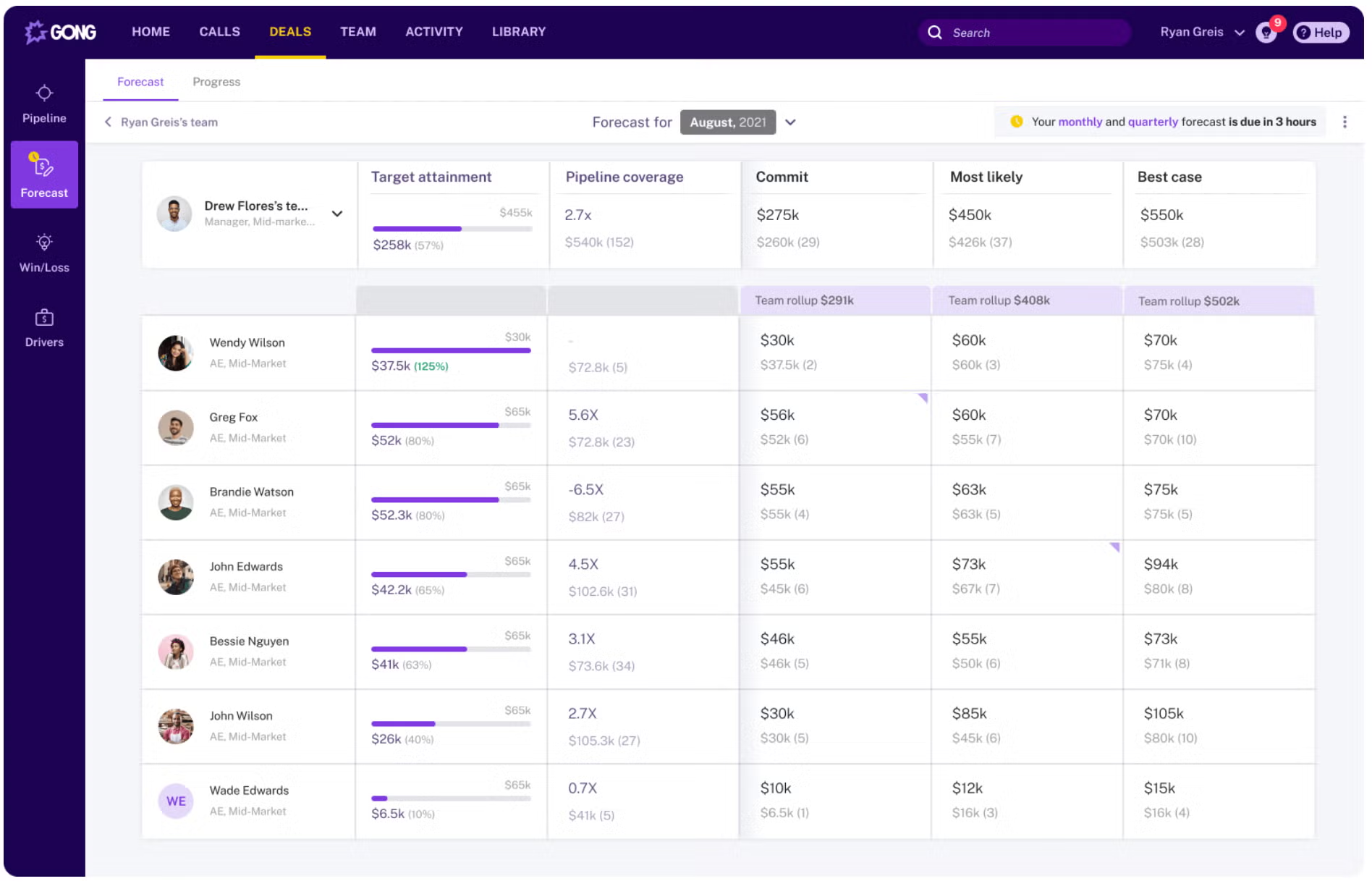
Gong is best known as the category pioneer in revenue intelligence. It records sales calls and uses AI to analyze them for keywords, topics, sentiment, and more. Over the years, Gong has expanded its scope to include deal tracking and even a forecasting add-on (Gong Forecast). Essentially, Gong started from the rep coaching angle (what's happening on calls) and is moving towards Clari's territory of pipeline analytics. Many companies that use Clari also use Gong specifically for its world-class call analysis and coaching tools.
How it compares to Clari:
Gong's strength is in deep call analytics. It provides insights like talk-to-listen ratios, how often certain competitors come up, which messaging correlates with won deals, etc., far beyond basic transcription. Clari Copilot (Wingman) offers call recording and summaries but is generally considered a notch below Gong in AI sophistication and breadth of analytics. On the flip side, Clari's forecasting and pipeline modules have been stronger than Gong's newer efforts in those areas. Gong is catching up by launching their own forecasting, but historically if you needed robust roll-ups and pipeline views, Clari was better. In essence, Gong is a better coaching tool, Clari is a better forecasting tool – which is why some large enterprises actually deployed both.
Gong Pricing:
Gong is a premium product. Like Clari, it's quote-based, but for ballpark purposes, Gong has been cited around $1200–$1500 per user/year for its full platform (and sometimes more). One analysis pegged a unified Gong license (including their newer products) at roughly $250 per user/month in 2024. For a team of 50, that's $150k/year, comparable to Clari's level. Gong typically also has a platform or implementation fee ($5k+). So, cost-wise, Gong isn't a way to save money versus Clari – it might even be slightly more expensive if you want everything. If your priority is maximizing sales effectiveness through call coaching and you have the budget, Gong is the gold standard. But if your main pain is forecasting, Gong alone might not satisfy that (you'd consider their Forecast add-on, or go to Clari/others).
Ideal for:
Sales organizations that put a premium on rep coaching, messaging consistency, and deal intelligence derived from conversations. Also, Gong's insights are often favored by product marketing and sales enablement teams to understand market responses. If you can only choose one – Gong or Clari – ask whether improving sales conversations or improving forecast rigor is more critical. That will often guide the decision.
Evaluating both options? See a full breakdown in our Gong alternatives guide.
3. Outreach – Sales Engagement & Sales Execution Platform
Outreach is a leading sales engagement platform, traditionally used to automate email sequences, call sequences, and general prospecting workflows. In recent years, Outreach has evolved into what it calls a "Sales Execution Platform," adding features like Outreach Kaia (an AI assistant for calls, similar to a copilot) and Outreach Commit (a lightweight forecasting tool). Outreach essentially comes from the opposite side of the spectrum as Clari – it started with top-of-funnel engagement and is moving towards pipeline analytics.

How it compares to Clari:
Outreach's core use case is different: it's primarily used by SDRs and AEs to execute outreach cadences. If you need to send thousands of emails and tasks in a coordinated way, Outreach is top-notch. Clari's Groove module tries to address that, but Outreach is arguably more mature and feature-rich in engagement (Outreach and Salesloft dominate that category). In terms of intelligence, Outreach has introduced features to compete – for example, Outreach Kaia can join calls and provide real-time notes and objection handling (similar to Clari Copilot). Outreach also offers deal insights like "opportunity health scores" using ML, somewhat akin to Clari's risk scoring. However, Outreach's forecasting (Commit) is not as in-depth as Clari's. Outreach can give a basic forecast view and pipeline trend, but it's not as specialized in revenue roll-ups and analytics as Clari. Where Outreach shines is providing a single platform for a rep to do their daily work (call, email, LinkedIn tasks) and then layering some insights on top. Clari, conversely, is a system you log into mainly for analysis and review, not to execute outreach.
Outreach Pricing:
Outreach doesn't publish pricing either, but it's in the same ballpark as other top-tier sales tools. Generally, $100–$150 per user per month is a reasonable estimate for Outreach in 2025. Many deals might come in around $1200–$1800 per user/year depending on volume and options, similar to Salesloft. Outreach often has minimum seat requirements for certain features. If you're replacing Clari with Outreach, you'd potentially save money only if you were already in need of Outreach's engagement capabilities; otherwise you'd be paying for functions you might not use.
On Reddit, some have noted Outreach's pricing and contract structure can also be tough (multi-year, etc.), so it's not necessarily a cheaper or easier vendor than Clari – it's just solving a different problem with overlap. For a full feature-by-feature comparison, see our Outreach alternatives guide.
Ideal for:
Teams that want an all-in-one tool for both engagement and some level of intelligence. For example, a mid-sized company might use Outreach to handle both their prospecting cadences and to get insights on which deals are at risk without buying Clari separately. Outreach is a great fit if your sales process is very outreach-heavy and you prefer to keep reps working in one platform. It's also worth considering if you have an existing Outreach deployment – their newer intelligence features might mean you don't need Clari on top, if they meet your needs. However, hardcore RevOps folks might still prefer Clari's deeper forecasting capabilities in large environments.
4. Salesloft – Sales Engagement with Light Revenue Insights
Salesloft is the other big player in the sales engagement world (often seen as Outreach's main competitor). It provides similar functionality: email sequencing, dialing, cadence automation, call recording, etc. Salesloft has a module called "Deals" which provides pipeline and forecast management, and "Conversations" which is their integrated conversation intelligence (after acquiring a company called Noteninja and partnering for speech analytics). Essentially, Salesloft is positioning itself as an all-in-one platform from prospecting to closing, with some overlap into Clari/Gong territory via its Deals and Conversations add-ons.

How it compares to Clari:
Salesloft's strength is in engagement and workflow. It's often praised for a user-friendly interface and quick onboarding for reps compared to Outreach. When it comes to revenue intelligence, Salesloft Deals gives you a Kanban board of opportunities and basic forecasting tools, but it's not as sophisticated as Clari's AI-driven forecasts. Salesloft Conversations can record calls and provide transcripts, but it's generally considered a more basic version of what Gong or Clari Copilot can do. So if we compare directly, Salesloft = Outreach-like engagement + some Clari-lite features. A company might choose Salesloft over Clari if their primary need is to equip reps with sequencing and phone dialer capabilities, and they're okay with a simpler forecasting add-on. In fact, Salesloft explicitly markets comparisons against Clari on their site, arguing that Salesloft can provide "one platform for both engagement and coaching" vs. needing Clari + other tools. The reality is Salesloft's forecasting is adequate for high-level needs but lacks the depth of Clari's analytics (no AI scoring as advanced, fewer custom forecast categories, etc.).
Salesloft Pricing:
Salesloft's pricing is comparable to Outreach. You can expect somewhere in the $100/user/month range for their core platform on annual contracts. They have different editions (Team, Enterprise, etc.) and the Conversations/Deals modules might cost extra or come in higher tiers. Often, Salesloft might come out a bit cheaper than Outreach at scale, but not by a huge margin. For example, a Salesloft plan might be ~$75/user if only core features, and go up to $125+ with all the add-ons. They do sometimes offer more flexible packages for mid-market (e.g., one could choose not to buy the Conversations module if they prefer another CI tool). If you already were going to buy a sales engagement platform, adding Deals/Conversations in Salesloft could be more cost-effective than buying a separate Clari or Gong – but you have to weigh feature depth.
Exploring your options? Our Salesloft alternatives guide covers the full competitive landscape.
Ideal for:
Organizations that want to streamline sales rep tools – Salesloft can empower reps to do outreach, track their deals, and get basic coaching in one place. It's often favored by slightly smaller teams or those who found Outreach too complex/expensive. If you are considering Clari but realize you don't need that level of forecasting sophistication and would rather invest in rep productivity, Salesloft could be a better fit. Also, for companies with a strong focus on outbound (lots of SDRs, heavy cadence usage) with some need for pipeline insights, Salesloft addresses both in a unified way. Just remember, at the very high-end of forecasting needs, Salesloft won't fully replace Clari – but it might be "good enough" if your forecasting can be simpler.
5. People.ai – AI Revenue Intelligence and Data Capture
People.ai is a platform that automatically captures sales activities (emails, meetings, calls) and uses AI to glean insights about engagement and pipeline. It's a bit different from Clari in that it started with data capture and contact enrichment, solving the problem of reps not logging things in CRM. People.ai then provides analytics on top, like which deals have sufficient executive engagement, which reps are multitouching their opportunities, and it can even identify new contacts involved in a deal. In terms of forecasting, People.ai gives predictive scores for opportunities based on the captured activity patterns, which can supplement or even challenge a manager's forecast call.

How it compares to Clari:
People.ai overlaps with Clari primarily in pipeline health and AI insights. It might not do a traditional forecast roll-up like Clari (it doesn't replace the management forecast process), but it provides an AI perspective on your pipeline: for example, an opportunity with low email responsiveness might get flagged. Clari also provides some activity-based scoring, but People.ai's heritage is in a more granular activity capture and relationship mapping. Another difference: People.ai doesn't do conversation transcription like Copilot/Gong – it's more focused on logging that a meeting happened and who attended, not the full transcript. So if you need call recording, People.ai isn't a direct solution (though it can integrate with tools that do that). People.ai is often used in tandem with a forecasting tool: for instance, a company might use Salesforce forecasts or InsightSquared, plus People.ai to ensure activity data is captured and to get AI deal scoring.
People.ai Pricing:
People.ai is typically sold as an enterprise solution as well, often by number of users or sometimes based on database size. Reports suggest its pricing can also be in the similar range (high tens of thousands per year for a deployment). It might be a bit more flexible since it's often sold per Salesforce seat or similar, but expect something like $50-100 per user/month in pricing. People.ai's value prop is saving rep time and enhancing CRM data, which can justify its cost if those are big issues. If comparing to Clari, People.ai could be a slightly cheaper add-on to Salesforce instead of buying Clari's full platform – but it wouldn't give you a UI for forecast calls, etc., just insights.
Ideal for:
Companies that struggle with CRM data quality and want to automate that, and those who want AI deal insights without a full Clari deployment. It's popular in enterprises where reps have to log lots of sales activities – People.ai relieves that by auto-logging and then management can see who's engaged at what account. If you already have a forecasting process you trust (even if manual), People.ai can layer on predictive scoring to highlight which deals might slip. It's also CRM-agnostic to an extent (works with Salesforce, etc.), so it's more a backend intelligence boost rather than a whole new workflow tool. Some might use People.ai alongside Clari – but if budget is an either/or, you'd choose Clari for forecast process or People.ai if you mainly need the data capture and activity intelligence.
6. BoostUp & Similar Platforms – Modern Revenue Intelligence Alternatives
BoostUp.ai is one of several emerging revenue intelligence platforms (others include Atrium, InsightSquared, Aviso, Forecast.io, etc.) aiming to challenge Clari with more modern AI and often a focus on ease-of-use. BoostUp, in particular, offers end-to-end capabilities: it connects to CRM and communication tools to provide forecast predictions, deal risk scoring, and even has a built-in conversation intelligence component. These newer tools often market themselves as more affordable or flexible compared to Clari, targeting mid-market companies that need insights but can't swallow Clari's price or complexity.
Ideal for:
Organizations that want the benefits of AI-driven revenue insights but with a leaner tool. If you find Clari appealing but can't justify the heavy investment, trying a platform like BoostUp, Aviso, or InsightSquared could be a good middle path. They tend to cater to tech-savvy mid-market firms, including those using CRMs like HubSpot (Clari historically has been very Salesforce-focused, whereas some alternatives support multiple CRMs or focus on HubSpot users who are typically smaller). They're also good for teams that want faster implementation – maybe you need something in place this quarter and can't do a long project; these up-and-comers often emphasize quick deployment and ease of configuration.
Considering only Clari Copilot alternatives with conversation intelligence?
If your interest in Clari was primarily around the conversation intelligence (Copilot) piece, there are also many AI meeting note-takers that can be considered alternatives for that portion. For example, Fireflies.ai and Otter.ai are popular tools that will record and transcribe meetings at a much lower cost. Fireflies offers a generous free tier and low-priced paid plans (~$10-$19/user) for unlimited transcriptions, which is far cheaper than Clari Copilot's pricing. Otter.ai similarly has a low-cost plan around $20/user for real-time transcription and basic summary. These tools lack the deeper sales coaching or pipeline integration – they won't tie the call to an opportunity or give deal insights – but if all you need is the meeting notes and transcripts, they are viable alternatives to buying Clari Copilot or Gong. Teams that want a purpose-built alternative for call coaching should also look at the leading sales coaching software options available today.
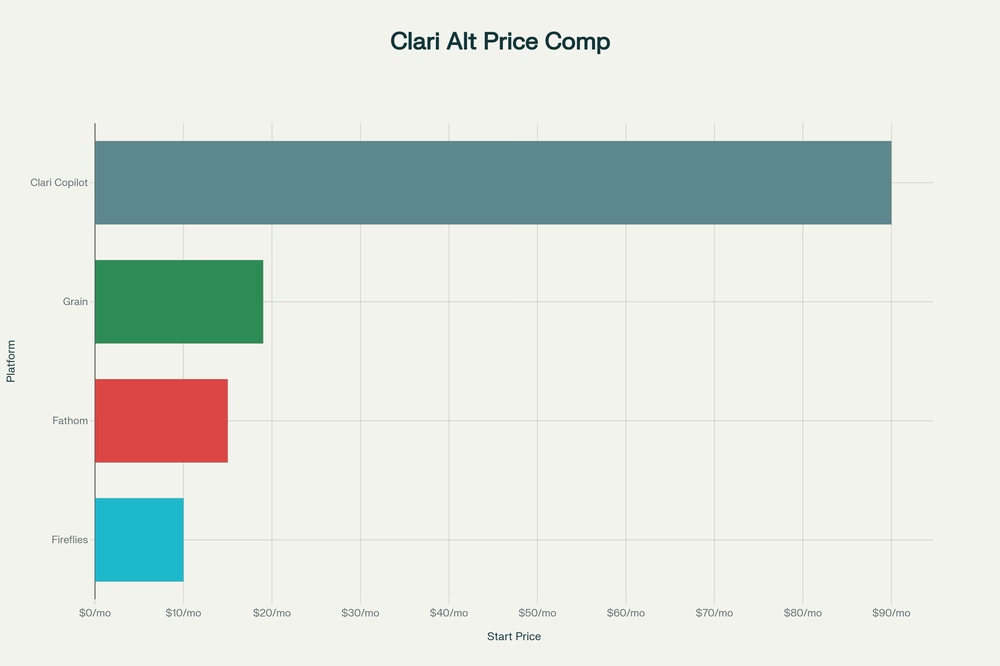
Some teams use these in combination with other forecasting methods: e.g., use Fireflies to get call notes, and separately manage pipeline in Excel or Salesforce reports. It's a bit more manual, but certainly budget-friendly. The key is understanding what functionality you truly need. If it's transcribe calls and search them – Fireflies, Otter, or Chorus Free Edition (Zoom offers a basic transcription too) could suffice. If it's analyze calls for coaching – you might lean Gong/Chorus/Clari Copilot. And if it's full revenue orchestration – that's where Clari and the similar platforms shine.
To put these alternatives in perspective, here's a quick comparison of Clari versus some competitors:
| Platform | Core Focus | Strengths | Notable Limitations | Typical Price |
|---|---|---|---|---|
| Clari | Forecasting & RevOps AI | Best-in-class forecast roll-ups and pipeline analytics; broad suite (forecast, calls, engagement) in one; enterprise-ready. | Very expensive for full platform; long implementation; depends on CRM data quality. | ~$120/user/mo (base); $200+ with add-ons |
| Gong | Conversation Intelligence & Deals | Industry-leading call recording and analytics (keywords, sentiment, coaching); strong deal insights from calls; robust adoption in sales orgs. | Premium cost; forecasting module still maturing; doesn't do engagement/cadences. | ~$125/user/mo (est., full suite) |
| Outreach | Sales Engagement + AI Insights | Powerful multi-channel sequencing; Kai AI assistant for calls; has basic pipeline and deal scoring; consolidates outreach and some forecasting. | Steep learning curve; expensive for small teams; pipeline/forecast features not as deep as dedicated tools. | ~$100–$150/user/mo (engagement platform) |
| Salesloft | Sales Engagement + Light Forecast | Excellent for guided selling workflows and cadences; user-friendly; offers Deals (basic forecasting board) and Conversations (call recording) as add-ons. | Forecasting and CI features are less advanced; may require adding other tools as you scale; still fairly costly for full suite. | ~$100/user/mo (varies by package) |
| People.ai | Activity Capture & Deal Scoring | Automates CRM data entry; great at analyzing engagement levels and identifying buying group contacts; provides AI-driven opportunity scores from activity patterns. | Doesn't replace a forecast process (complements it); no native call transcription; geared to Salesforce-heavy shops. | ~$50–$100/user/mo (enterprise deals) |
| BoostUp.ai (and similar) | Revenue Intelligence (Modern AI) | Quick deployment; often more affordable; provides end-to-end insights (forecast, pipeline, call transcripts) with modern UI; flexible for mid-market. | Newer entrants (less proven at large scale); may lack some advanced customization; smaller support teams. | ~$50–$80/user/mo (mid-market pricing) |
| Outdoo AI | AI Roleplay & Closed-Loop Coaching | Connects AI roleplay, unified call scoring, and coaching in one system; includes revenue intelligence and CRM automation; 150+ integrations; enterprise-ready. | Not a dedicated forecasting or sequencing tool; best suited for teams prioritizing coaching and execution improvement. | Free tier; Usage-based and Enterprise tiers custom-priced |
| Fireflies / Otter | Meeting Transcription (Point Tool) | Very low cost or free for transcription; easy to use for capturing calls; can integrate with Zoom/Teams for auto-recording. | No sales-specific analytics; storage or usage limits on free tiers; doesn't link to CRM deals without manual effort. | Free tier; Paid ~$10–$30/user/mo |
As you can see, the landscape is rich. If Clari is not the right fit, there is likely an alternative that is – whether you need a complete platform replacement or just a supplement for a specific function (like call tracking). Next, we'll discuss how the space is evolving beyond just note-taking and forecasts, into truly intelligent systems that can not only tell you what's happening but help you change what will happen, and where Outdoo AI fits into that future.
Why Outdoo AI Takes a Different Approach to Revenue Performance
Revenue platforms like Clari, Gong, and others have transformed how teams track pipeline and forecast revenue. They centralize data, surface risk, and bring discipline to revenue reviews. That visibility has become table stakes.
But most of these systems are still retrospective by design. They explain what is happening in the pipeline and where risk exists. They do not directly change how the next conversation unfolds. Knowing a deal is at risk is useful. Helping a rep handle that risk differently in the very next call is where real performance lift begins.
Outdoo AI bridges this gap. It combines revenue intelligence (deal insights, risk detection, pipeline visibility, CRM automation) with AI roleplay and structured coaching in one closed-loop system. Insights from live deals generate targeted practice scenarios. The same AI scoring framework evaluates discovery depth, objection handling, and value articulation across both simulations and live calls. Practice informs execution, execution validates coaching, and insights continuously refine training.
See how Outdoo AI connects deal signals to practice and measurable performance improvement:
Clari focuses on top-down forecast accuracy and pipeline governance. Outdoo AI connects that visibility to bottom-up skill development and measurable behavior change. For enterprise teams seeking structured forecasting, Clari remains a proven option. For teams aiming to improve deal outcomes by improving rep execution, a connected intelligence and coaching model may offer broader impact.
Wrapping Up
Clari's pricing reflects its position as a structured, enterprise-grade revenue platform. It delivers strong forecasting discipline, pipeline governance, and executive visibility. For organizations prioritizing control and predictability at scale, that foundation matters.
But revenue performance is not driven by dashboards alone. It is shaped by how well reps handle objections, run discovery, involve stakeholders, and advance deals in real conversations. Visibility highlights risk, yet execution determines results.
As you evaluate your options, clarify the constraint inside your revenue engine. Do you need tighter forecast oversight, or do you need stronger execution inside live deals. The answer should guide your investment.
If you are exploring a system that connects revenue intelligence with measurable skill development through AI roleplay and coaching, it helps to see it in action. A live walkthrough can show how deal signals translate into AI roleplays, structured scoring, and continuous coaching inside one platform.
Book a demo to see how Outdoo AI can move your team beyond static forecasting and turn insight into consistent performance across your revenue teams.
Frequently Asked Questions
.svg)
Clari excels at revenue orchestration and forecasting, providing strong pipeline governance, executive visibility, and structured insights across large organizations.
Most platforms show what’s happening in the pipeline but don’t help reps improve execution in real time. Modern teams need insight that drives measurable behavior change.
Outdoo bridges revenue intelligence with execution, turning live deal signals into AI-driven roleplays and structured coaching, helping reps practice real scenarios and improve outcomes.
Yes. Outdoo automatically syncs summaries, next steps, and stakeholder signals with Salesforce, HubSpot, and other CRMs, reducing manual entry and keeping pipeline data accurate.
If your focus is enterprise-grade forecasting, Clari is proven. For teams aiming to improve deal outcomes through skill development and actionable insights, AI-powered platforms like Outdoo offer broader impact.
Table of Contents
Talk to Sales
Have questions about training and enablement for your sales, CS, support, or leadership team? Let's talk.
Talk to Sales