



Sales teams are searching for Yoodli alternatives because Yoodli scores how reps sound and how clearly they deliver, but is less focused on whether the conversation advanced the deal. Yoodli has limited native CRM integration, evaluates conversations primarily on delivery and communication quality rather than methodology adherence to frameworks like MEDDIC or SPIN, and does not simulate post-call workflow execution like CRM logging and dispositioning.
For B2B sales teams running MEDDIC, SPIN, or Challenger, Outdoo is one of the strongest Yoodli alternatives available: it replaces speech-delivery scoring with roleplay that's scored against your actual sales methodology and tied to live CRM data.
For individuals practicing public speaking, presentations, or interview prep, Yoodli works well. For enterprise sales orgs running structured training and certification, Yoodli stops short of what enablement teams need.
AI sales roleplay has become a core part of modern enablement. Teams use AI-powered practice to simulate buyer conversations, standardize training, and scale repetition across discovery, demo, objection handling, and negotiation stages. Continuous practice has replaced occasional mock calls as the baseline for ramp and ongoing development.
The gap is not in speech analysis. The gap is that Yoodli evaluates communication delivery, not deal progression. Practice stays disconnected from CRM context, coaching stops at delivery metrics, and improvement is hard to measure against pipeline outcomes.
That is why teams are evaluating alternatives like Outdoo AI, Second Nature, Hyperbound, PitchMonster, Quantified, Mindtickle, and Zenarate. These platforms extend beyond speech coaching by connecting roleplay with deal context, conversation intelligence, methodology adherence, and real performance outcomes across the revenue cycle.
This comparison is based on a detailed evaluation of each platform's capabilities, pricing structure, and real user feedback from G2, Capterra, Product Hunt, and community forums. We assessed each platform across roleplay realism, coaching depth, integration with sales workflows, and the ability to translate training into live deal execution and post-call performance across customer-facing teams.
Best Yoodli alternatives in 2026 at a glance
The best Yoodli alternative depends on your specific need, but Outdoo AI is built for enterprise teams that need training to translate into measurable performance. Outdoo AI connects roleplay practice, live customer interactions, and post-call workflows into one closed-loop system, while other tools tend to address only one layer of the training stack.
Where does Yoodli fall short for sales teams?
Yoodli falls short for sales teams in seven specific ways: delivery-focused feedback that does not evaluate deal progression, limited native CRM and pipeline integration, multi-persona simulations that are not grounded in live deal data, coaching feedback that does not translate into execution, methodology adherence that depends on customer-uploaded materials rather than pre-built frameworks, compliance and certification gaps that limit team-scale rollouts in regulated industries, and a coaching model that operates as a standalone tool rather than part of a unified revenue enablement system.
1. Yoodli evaluates delivery, not what was said
Yoodli scores filler words, pacing, eye contact, and tone. A rep can score well on every Yoodli delivery metric and still fail to ask a qualifying question, miss a buying signal, or end a call without a concrete next step. For interview prep and presentation rehearsal, delivery metrics are the right outcome. For sales conversations, the question that matters most is whether the conversation moved the deal forward, and Yoodli does not answer that.

One G2 reviewer put it directly: "Yoodli is great at analyzing how you speak (pacing, filler words, clarity), but it doesn't always evaluate the quality or strategy of what you're saying." That's the same gap sales teams keep running into: strong delivery scoring, no evaluation against sales strategy, qualification depth, or objection handling.
2. Yoodli has limited connection to real deals and CRM data
Yoodli roleplays start from generic prompts or user-created scripts. There is no native way to generate a practice scenario from a specific deal a rep is working on, pull in objections from last week's discovery call, or simulate stakeholder dynamics from a CRM record. Every Yoodli session is built in isolation from the pipeline.
Teams increasingly want simulations grounded in real opportunities, where reps practice against current objections and current deal stages. Generic practice environments fall short when sales motions involve buying committees and evolving buyer dynamics.
3. Yoodli's multi-persona simulations are not connected to live deal data
Yoodli does support multi-persona simulations with up to three AI personas, including buying committees and panel-style interactions. The structural limitation is that Yoodli's multi-persona scenarios are built from uploaded materials, scripts, and scenario libraries inside Yoodli's own environment rather than generated from live deal data in the CRM. For enterprise reps preparing for a specific upcoming meeting with a real buying committee, the practice scenario does not pull in the actual stakeholders, objections from the prior call, or the deal stage they're sitting in. The simulation reflects the persona templates uploaded to Yoodli, not the conversation that's about to happen.
Modern enterprise B2B deals involve three to seven stakeholders. The skill of running a one-on-one practice call is fundamentally different from the skill of holding a buying committee meeting where a CFO interrupts with an ROI question while procurement pushes on terms and the champion stays quiet. Outdoo AI's multi-persona scenarios pull from CRM context, real call transcripts, and LinkedIn profiles, so reps practice against the specific stakeholder dynamics they're about to face on a live deal.
4. Yoodli's coaching feedback does not translate into execution
Yoodli reports that a rep used "um" 14 times. Yoodli does not report that a rep failed to ask a budget question until minute 18 or that the rep did not multi-thread the deal. Both are facts about the call, but only one changes what the rep does next time. Without a coaching loop that ties feedback to specific behaviors and follow-up practice, training plateaus quickly.
5. Yoodli does not align with sales methodologies
Most enterprise sales orgs run on a defined methodology, such as SPIN, BANT, MEDDIC, MEDDPICC, or Challenger, and need scoring that maps to that framework. Yoodli does not offer methodology-aligned scorecards out of the box. Reps cannot be evaluated on whether they uncovered each MEDDIC component, whether they ran a proper SPIN sequence, or whether their Challenger insight landed. For teams that have invested in a methodology, this is a structural gap.
6. Yoodli is not built for team-scale rollouts in regulated industries
Yoodli's self-serve model works for individual users. For a 50-person sales org or an enterprise rolling out across regions, Yoodli lacks the certification workflows, admin controls, SCORM and xAPI support, and deep CRM integrations that enterprise enablement teams need to deploy and govern training programs at scale. Yoodli is SOC 2 Type 2 certified and GDPR compliant, but it does not publish HIPAA or CCPA attestations, which matters for regulated industries planning a team-wide rollout.
7. Yoodli does not fit into unified revenue enablement systems
Sales teams are moving away from isolated practice tools toward integrated systems that connect roleplay, coaching, conversation intelligence, and CRM data in one place. This approach allows organizations to link practice directly to execution and measure impact on revenue outcomes. Yoodli operates as a standalone communication tool rather than as part of a broader enablement system, which limits visibility for leaders trying to connect training investment to deal outcomes.
1. Outdoo AI: Best overall Yoodli alternative for enterprise teams
Category: Enterprise AI roleplay and coaching platform that closes the loop from practice to performance
Best suited for: Enterprise and global teams that need customer-facing functions like sales, customer success, and customer support to perform consistently in real customer conversations, especially in complex scenarios involving multi-stakeholder deals, methodology adherence, and post-call workflow execution.
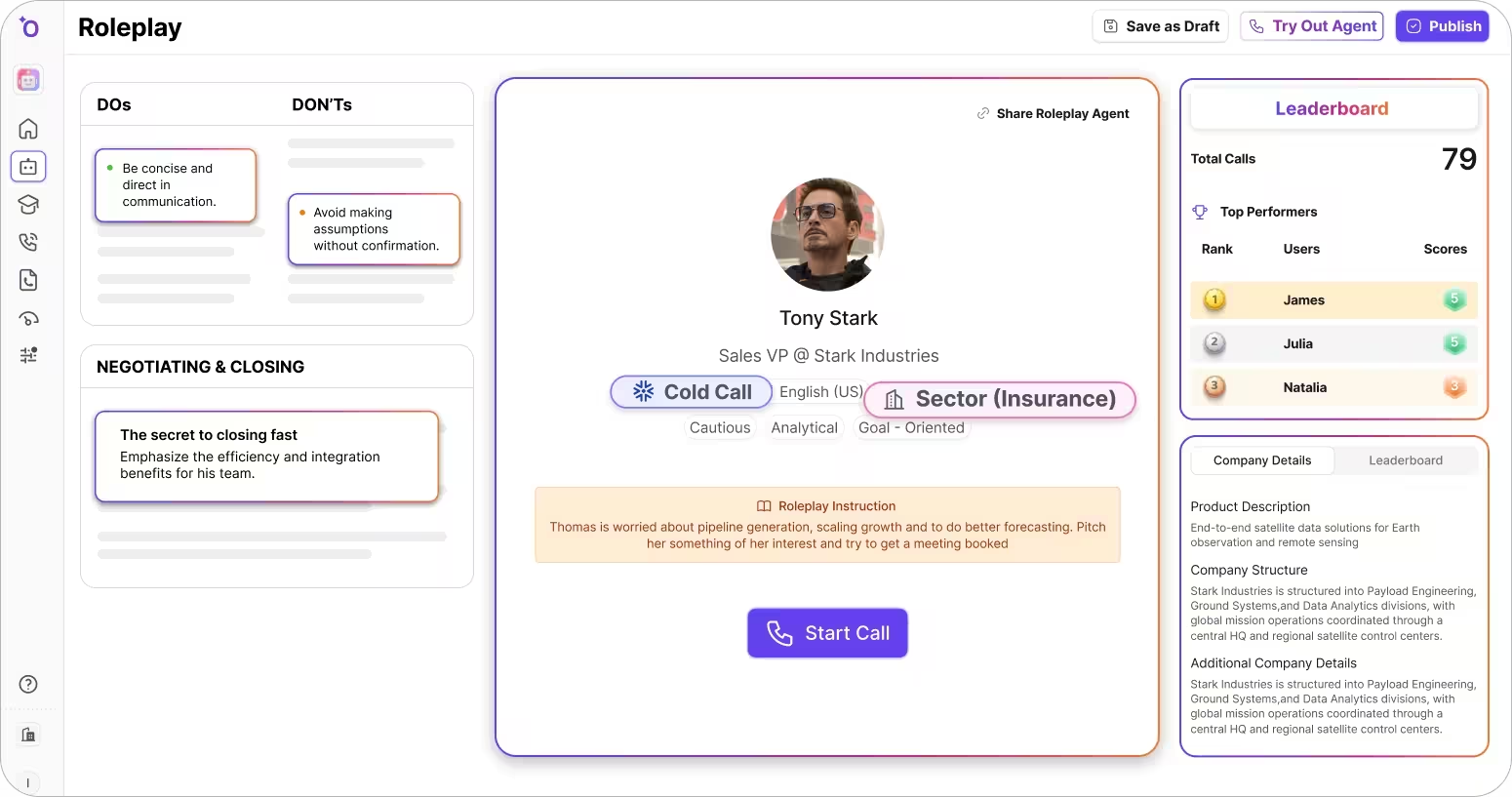
Outdoo AI is an enterprise AI roleplay and coaching platform built for customer-facing teams that need training to translate into measurable execution. Outdoo AI combines AI roleplay, live conversation analysis, and workflow simulation into one closed-loop system that connects pre-call preparation, live customer interactions, and post-call reinforcement.
Reps practice through realistic roleplays grounded in real customer conversations and CRM data, apply those skills in live calls scored against the same scorecard, and improve through targeted micro-roleplays generated from specific behavioral gaps. The system tracks both conversation quality and post-call workflow accuracy (CRM logging, dispositioning, process navigation), which gives enterprise leaders visibility not just into whether training happened, but into whether training changed behavior in front of customers.
How is Outdoo AI different from Yoodli?
Outdoo AI connects roleplay practice with post-call workflow execution and ties scoring directly to deal outcomes. Yoodli connects roleplay practice with real-time on-screen coaching during live conversations, with a focus on delivery and communication quality. Both platforms support multi-persona simulations, customer-uploaded materials, and enterprise tiers. The structural difference is what each platform was built to evaluate. Outdoo AI evaluates whether MEDDIC components got uncovered, whether objections were resolved, and whether post-call CRM workflows got completed accurately. Yoodli evaluates whether the conversation followed the customer's chosen coaching framework with clarity, pacing, and presence.
What capabilities does Outdoo AI provide for enterprise sales teams?
Outdoo AI provides ten enterprise capabilities that directly address the gaps in Yoodli:
- Three roleplay modes: Chat-based for quick objection drills, voice for phone-first SDR motion, and video with lifelike AI avatars and screen-sharing simulation for demo and discovery practice
- Multi-persona simulations: Reps practice against up to three AI stakeholders in a single scenario (CFO, champion, procurement, or any combination), each behaving distinctly. Long sessions can be paused and resumed without losing context
- Multi-lingual roleplays: Practice runs in multiple languages, useful for global teams running localized GTM motions
- Methodology-aligned scorecards: Scorecards align to SPIN, BANT, MEDDIC, MEDDPICC, Challenger, or build from your own evaluation rubrics by uploading governance documents
- Unified scoring across practice and live calls: The same multi-dimensional scorecard evaluates a roleplay and a real customer call, surfacing skills that show up in practice but disappear under real customer pressure
- Dynamic recommendations: When scoring identifies a behavioral gap, Outdoo AI automatically generates a targeted micro-roleplay and surfaces relevant battle cards aligned to your processes and methodology
- LinkedIn-based scenario creation: Generate roleplays from LinkedIn profiles for outbound preparation against named accounts
- Workflow training beyond conversation: Reps practice CRM logging, disposition selection, data entry, and process navigation in environments that mirror actual systems
- Gatekeeper roleplay: Practice and get scored on cold-call screening conversations before a rep ever reaches the decision-maker, a phase most alternatives, including Yoodli, don't simulate separately
- Revenue outcome correlation: Outdoo AI connects roleplay scores, live call scores, and pipeline data to surface which specific behaviors and methodology elements correlate with won deals
How does Outdoo AI fit into real enterprise sales workflows?
Outdoo AI connects preparation, execution, and feedback into a continuous loop:
What is Outdoo AI's pricing model?
Outdoo AI follows a tiered pricing model designed to support both initial adoption and enterprise-scale deployments. Pricing is structured around usage, capabilities, and integration depth rather than simple per-seat licensing.
- Free tier available for initial evaluation, including core roleplay and coaching capabilities
- Flex tier (usage-based) adds multi-persona roleplays, certifications, workflow simulation, and deeper performance tracking
- Enterprise tier includes full customization with integrations across CRM, LMS, and call scoring systems, along with security, compliance, and deployment flexibility
- Pricing scales based on usage, number of users, and scope of workflows being simulated and analyzed
- Custom deployments may include support for SCORM, xAPI, private cloud environments, and advanced AI configurations
Outdoo AI is positioned as a system-level investment. Enterprise teams typically evaluate Outdoo AI's pricing based on how effectively the platform improves execution quality, reduces ramp time, and ensures consistency across both conversations and workflows.
Outdoo AI vs Yoodli: side-by-side comparison
Both Outdoo AI and Yoodli are AI roleplay platforms used by sales and enablement teams, but the two products solve different problems. Yoodli is a communication coaching platform that has expanded into sales practice. Outdoo AI is a sales coaching system built from the ground up around real customer conversations and revenue execution. The table below reflects publicly available information on both platforms as of April 2026.
Yoodli is a strong communication coaching platform with real enterprise traction, including Google, Snowflake, and Databricks. The differentiation that matters is not whether Yoodli does communication well, because Yoodli does.
The differentiation is what each platform is built to evaluate and improve. Yoodli evaluates the conversation as a communication artifact: how clearly it was delivered, how well it followed the methodology framework the team uploaded.
Outdoo AI evaluates the conversation as a deal-progression artifact: whether MEDDIC components got uncovered, whether objections were resolved or deflected, whether the post-call CRM update was completed accurately, and whether the behaviors that show up in practice carry into live calls and into closed-won deals. Teams whose primary outcome is communication readiness often choose Yoodli. Teams whose primary outcome is execution against a defined sales motion typically need the deeper integration with CRM, conversation intelligence, and post-call workflow that Outdoo AI is built around.
Want a deeper look at AI roleplay platforms? Compare the top AI sales roleplay tools built for enterprise teams.
2. Second Nature: Best for structured onboarding and communication training
Category: AI roleplay and virtual sales coaching platform
Best suited for: Enterprise teams that want to standardize onboarding, certification, and communication skills across large sales orgs.

Second Nature is an AI roleplay and virtual coaching platform built around a virtual AI coach named Jenny. Second Nature focuses on structured sales training where reps progress through predefined scenarios, receive feedback on delivery and clarity, and complete certification workflows before customer-facing activities.
Second Nature is typically used in onboarding and certification programs, with performance measured through training completion and certification milestones rather than real deal execution. Second Nature works well for improving communication delivery, including tone, clarity, and presentation, but is less focused on how those skills translate into real customer conversations or live pipeline scenarios.
What does Second Nature do well?
Second Nature is strong in environments where structured communication training is the priority:
Where does Second Nature fall short?
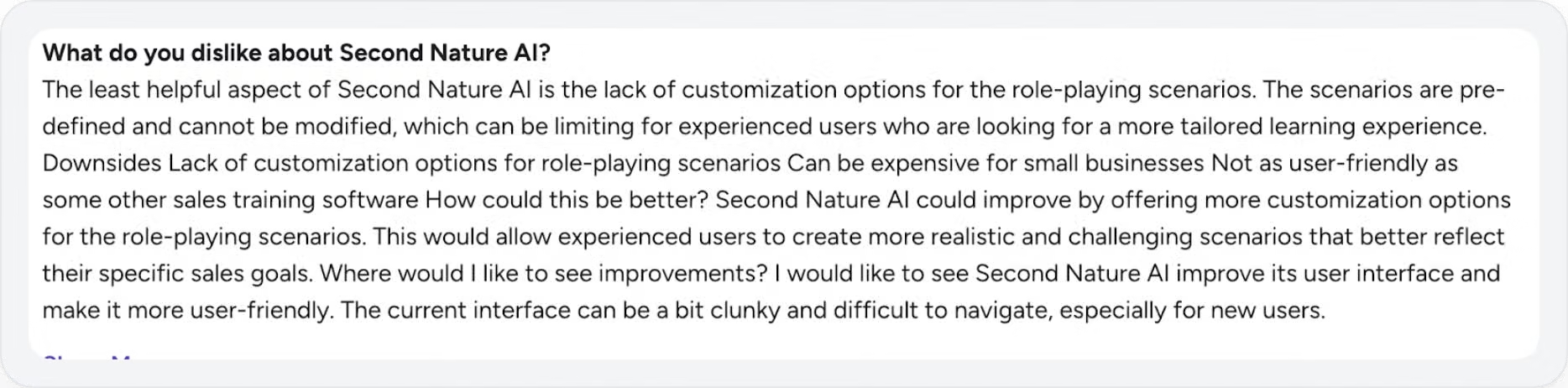
Second Nature falls short on scenario flexibility, customization for industry context, and platform usability. User reviews consistently surface scripted-feeling roleplays that do not adapt to unexpected responses.
How much does Second Nature cost?
Second Nature follows a sales-led, enterprise pricing model with limited transparency on the website. User-reported data places Second Nature pricing at approximately $30 to $40 per user per month (G2 data, last updated November 2025), with minimum annual deals often starting around $20K for mid-sized and enterprise teams.

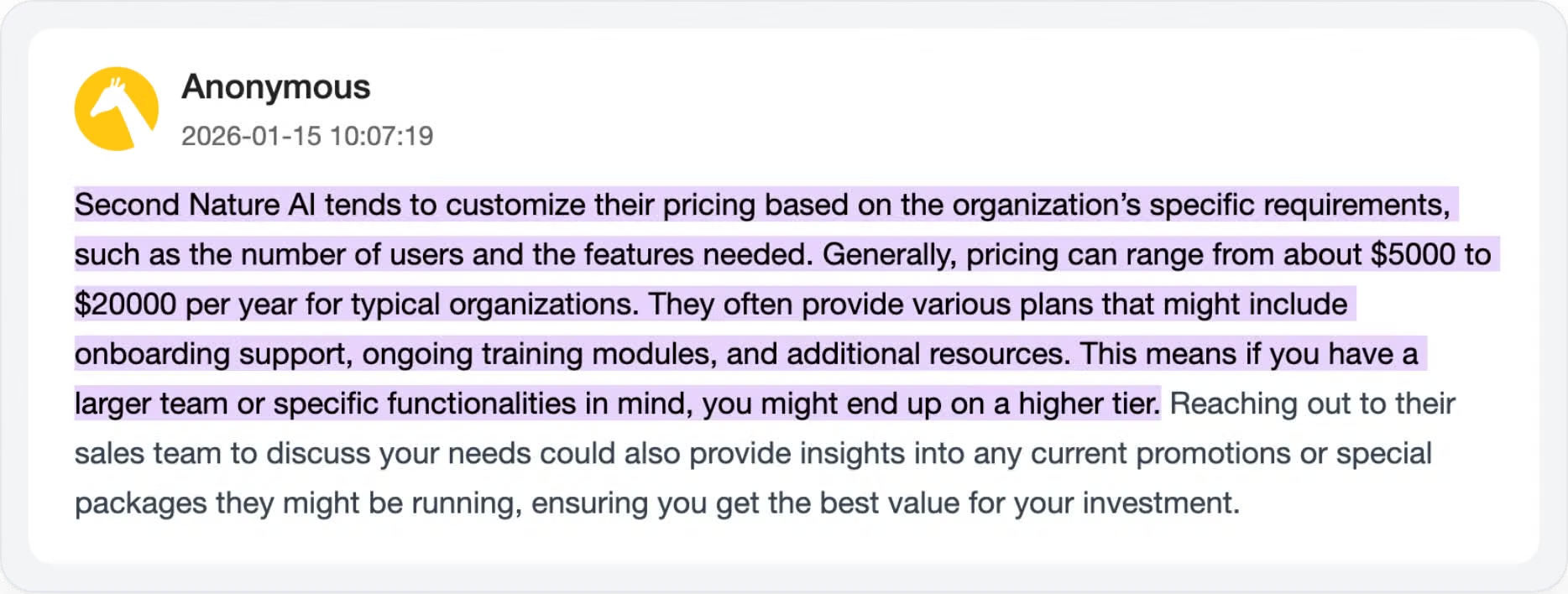
- Estimated pricing: $30 to $40 per user per month based on aggregated user reports
- Enterprise deal size: Minimum deals often start around $20K annually for mid-sized and enterprise teams
- Customization-driven cost: Pricing varies depending on number of users, onboarding support, training modules, and additional services
- Limited upfront visibility: No clear pricing is published on Second Nature's website, and teams typically need to engage Second Nature's sales team to understand actual costs
Community feedback indicates that Second Nature's pricing can vary substantially based on requirements, with different tiers offered depending on usage, features, and support level. Teams should expect Second Nature pricing to scale with both team size and program complexity, especially when deploying structured onboarding and certification programs.
What should teams consider before choosing Second Nature?

Teams evaluating Second Nature should consider:
- Second Nature roleplays are designed for training scenarios, not directly tied to live deals or pipeline context
- Second Nature scenario flexibility can be limiting for teams that need to adapt messaging across industries
- Customization depth may not meet the needs of advanced teams looking for highly dynamic or multi-layered simulations
- CRM integrations and call data are not central to Second Nature's workflow, creating gaps between training and execution
- Pricing is not transparent and typically requires engaging sales, with costs scaling based on team size and program scope
- Implementation timelines can extend to a few months for enterprise onboarding rollouts
Considering alternatives to Second Nature? Explore tools that offer better flexibility and pricing.
3. Hyperbound: Best for SDR-focused, high-volume roleplay practice
Category: AI roleplay and gamified sales training platform
Best suited for: SDR teams that need frequent practice and repetition for outbound calling, cold call objections, and early-stage discovery conversations.

Hyperbound is an AI roleplay platform designed for outbound sales teams that drive consistent practice through gamification and repetition. Hyperbound focuses on helping SDRs improve cold calls and early-stage discovery using AI buyer bots, leaderboards, and quick feedback loops.
Hyperbound is built for speed and volume. Reps run through scenarios quickly, repeat conversations multiple times, and build familiarity with common objections and cold call patterns. Hyperbound is a strong fit for teams that depend on high activity levels and continuous outbound practice, but is less suited for AE discovery, complex deal cycles, or advanced sales situations.
What does Hyperbound do well?
Hyperbound is effective for teams that prioritize consistent outbound practice and engagement:
Where does Hyperbound fall short?
Hyperbound falls short on scenario depth, coaching context, and broader sales-cycle coverage. User reviews surface two recurring issues: bot setup takes meaningful upfront time, and coaching feedback often lacks the contextual nuance complex sales conversations require.


How much does Hyperbound cost?
Hyperbound follows a tiered pricing approach with a free entry point and a custom plan for advanced capabilities. The structure supports both early experimentation and team-level adoption.
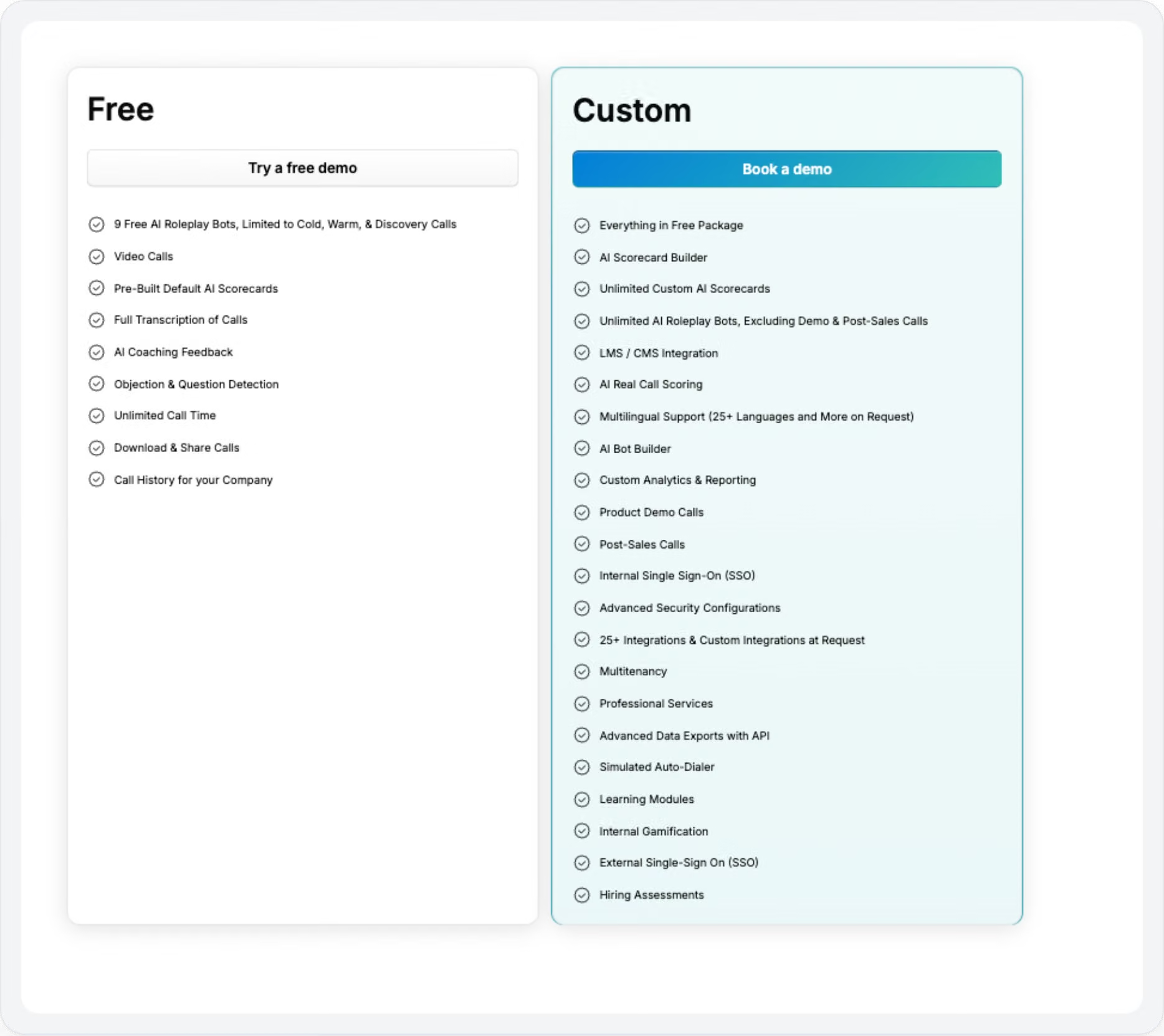
- Hyperbound free plan: Includes limited roleplay bots, basic scorecards, transcription, and coaching feedback for core use cases
- Hyperbound custom plan for teams: Adds unlimited bots, custom scorecards, analytics, integrations, and security configurations
- Pricing scales with usage: Varies based on team size, feature requirements, and customization
- Demo-led access: Most advanced Hyperbound capabilities require engaging sales through a demo
Hyperbound's pricing structure works for teams testing the waters with a free tier before committing to a paid plan, but full visibility into enterprise pricing requires a sales conversation.
Looking beyond Hyperbound? See how leading platforms compare for AI sales roleplay in 2026.
4. PitchMonster: Best for gamified roleplay and SDR pitch training
Category: AI roleplay platform focused on gamified sales practice
Best suited for: SDR teams and fast-growing sales orgs that want quick, engaging roleplay practice without heavy enablement program overhead.

PitchMonster is an AI roleplay platform that uses gamification to drive rep participation through short practice sessions designed around common sales scenarios like cold calls, demos, and pitches. PitchMonster focuses on making roleplay practice fast, engaging, and easy to adopt.
PitchMonster is built for speed and engagement rather than depth. Reps quickly run through scenarios, receive instant feedback, and stay motivated through leaderboards and team-based competition. PitchMonster is a strong fit for high-velocity teams where consistent practice and rep engagement matter more than structured coaching or deep performance analysis.
What does PitchMonster do well?
PitchMonster works well for teams that want to increase practice frequency and keep reps engaged through gamified experience:
Where does PitchMonster fall short?
PitchMonster falls short on scenario maintenance at scale, user and workflow management, and product experience consistency. User reviews surface three recurring patterns:



How much does PitchMonster cost?
PitchMonster follows a simple, product-led pricing model with a free plan and paid plans starting around $19 per user per month, making PitchMonster accessible for smaller teams without a heavy sales process.
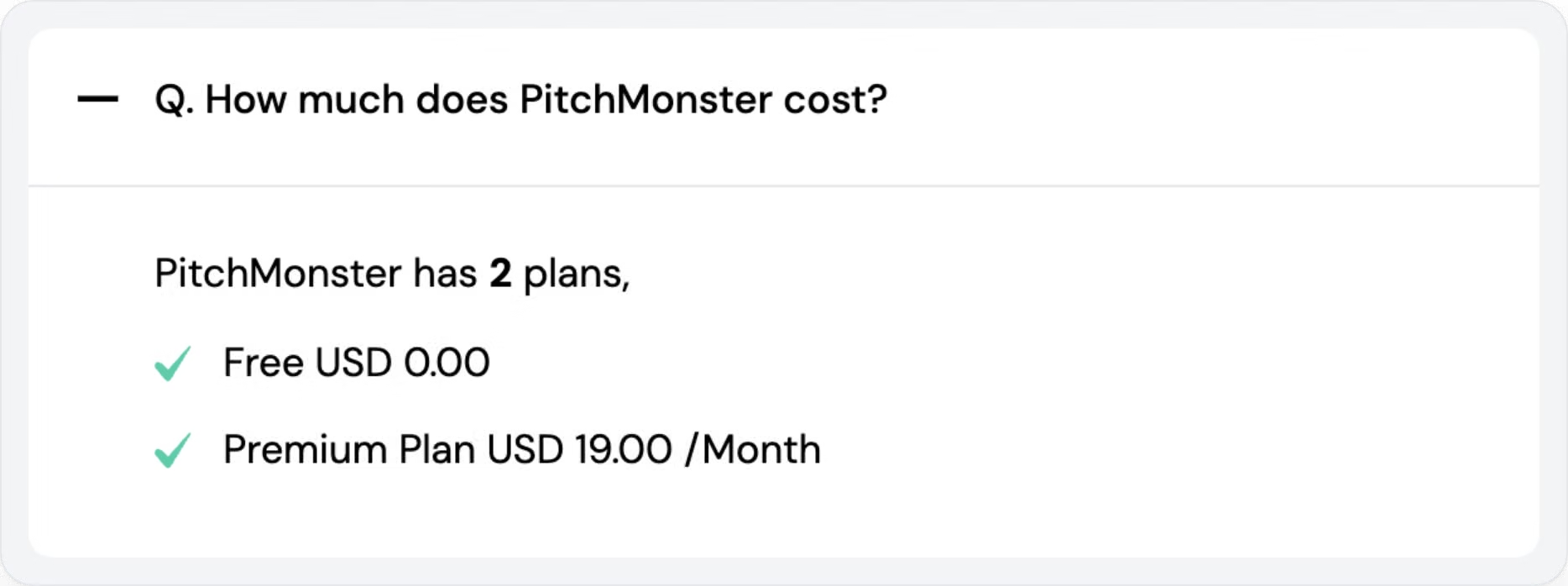
- The SaaS Advisor website indicates a free plan along with a paid plan starting around $19 per month
- PitchMonster pricing is based on number of seats, with volume discounts for larger teams
- Contracts are typically 12 months, with shorter 3- or 6-month options in some cases
- Final pricing is often customized based on team size and requirements
- Support is included via chat and email across plans, with no separate premium support tier
PitchMonster sits between fully self-serve tools and enterprise platforms. Teams can start quickly, but PitchMonster's pricing and contracts may still involve some sales interaction as usage scales.
What should teams consider before choosing PitchMonster?
- PitchMonster is designed for quick practice rather than structured coaching tied to real deals
- PitchMonster lacks integration with CRM and conversation intelligence data, limiting real-world context
- May not provide enough depth for teams looking to track performance improvement over time
- PitchMonster is better suited for SDR and mid-market teams than enterprise sales environments
Looking beyond PitchMonster? See how leading sales coaching platforms compare for sales teams in 2026.
5. Quantified: Best for structured certification and regulated industries
Category: AI-powered sales training and assessment platform
Best suited for: Enterprise teams in regulated industries (life sciences, pharma, financial services) that rely on formal onboarding, certification, and standardized performance evaluation.

Quantified is an AI-powered sales training and assessment platform built for organizations that treat training as a structured program with defined milestones and measurable outcomes. Quantified focuses on evaluating how reps perform within guided scenarios, with emphasis on readiness, consistency, and benchmarking across teams.
Quantified is typically used in onboarding and certification workflows where reps must meet specific standards before advancing. Quantified simulations are designed to assess performance against predefined criteria, helping teams track progress and maintain consistency across large groups, particularly in regulated industries like life sciences, pharma, and financial services.
What does Quantified do well?
Quantified is effective for organizations that prioritize structured training programs and consistent evaluation:
Where does Quantified fall short?
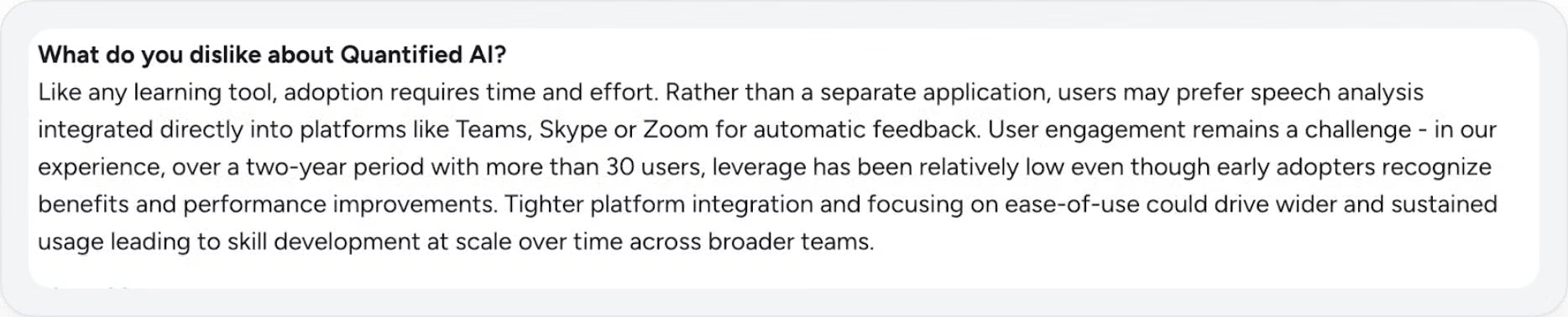
Quantified falls short on adaptability, conversational flexibility, and adoption across daily workflows. User reviews surface clear patterns:


How much does Quantified cost?
Quantified follows a subscription-based pricing model not publicly disclosed on the official website. Based on third-party sources and aggregated data, estimated Quantified pricing is in the range of $85 to $110 per user per month, though actual costs vary by features, onboarding requirements, and scale.

- Quantified pricing is customized based on team size, use case, and training scope
- Enterprise deployments may include additional costs for onboarding, configuration, and support
- No upfront pricing visibility, requiring engagement with Quantified's sales team for accurate quotes
- Estimated ranges should be treated as directional, not definitive
Evaluating alternatives to Quantified? Read our complete guide to top Quantified alternatives.
6. Mindtickle: Best for enterprise sales enablement and readiness at scale
Category: Sales enablement and readiness platform with coaching and training capabilities
Best suited for: Large enterprise sales teams that need structured onboarding, ongoing training, and performance tracking across hundreds or thousands of reps.

Mindtickle is a sales enablement platform designed to improve rep readiness across onboarding, training, and ongoing coaching. Mindtickle combines learning, content management, and performance tracking into one system used by enablement and revenue teams.
Mindtickle focuses on structured programs, helping teams onboard new reps, reinforce best practices, and track readiness across different roles and regions. Mindtickle is built around formal training workflows rather than lightweight practice, with strong emphasis on process, measurement, and governance.
What does Mindtickle do well?
Mindtickle is strong in organizations that require structured enablement and centralized control:
Where does Mindtickle fall short?
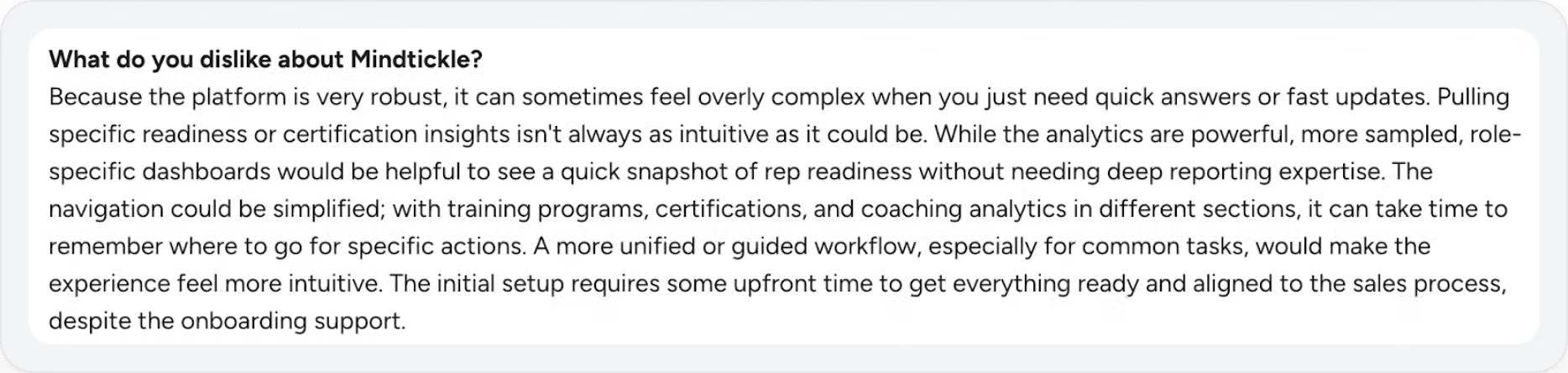
Mindtickle falls short on usability, flexibility, and operational complexity. User reviews consistently surface three challenges:


How much does Mindtickle cost?
Mindtickle follows a fully sales-led, enterprise pricing model with costs structured around bundled capabilities and large-scale deployments. User-reported data places typical Mindtickle pricing at $47K to $82K annually.
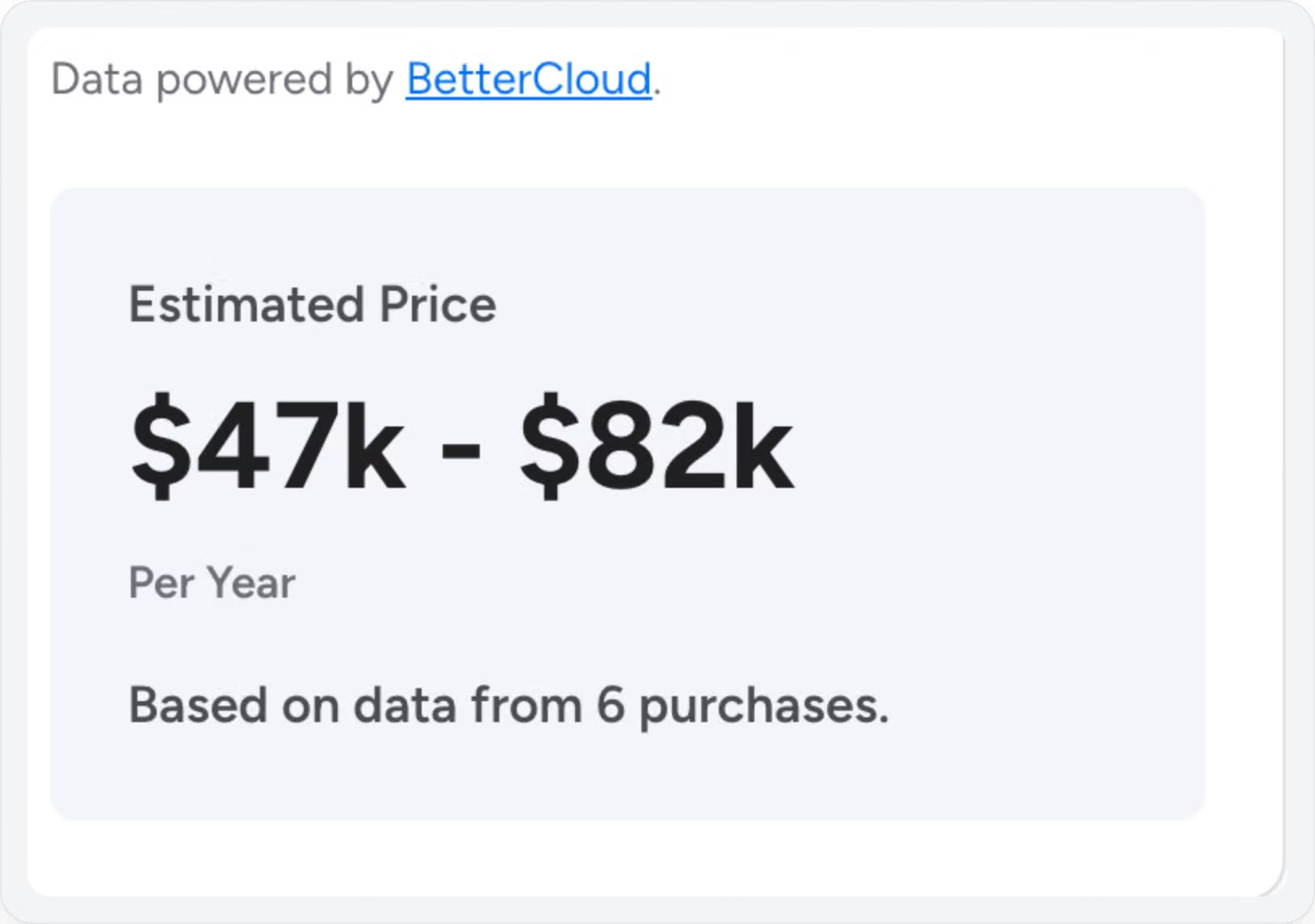
- Average estimated Mindtickle pricing for a regular organization: $47K to $82K annually
- Pricing is packaged across modules such as training, coaching, readiness, and content management
- Costs scale based on number of users, regions, and overall enablement program complexity
- Discounts may apply for larger Mindtickle deployments, with reported average discounts around 19%
- Implementation timelines can extend to roughly 2 months, reflecting setup complexity
Mindtickle is positioned as a significant enterprise investment, best suited for organizations looking to centralize enablement, training, and readiness into one system rather than adopting lightweight or standalone tools.
Looking for a better alternative to Mindtickle? Read our complete guide to top Mindtickle alternatives.
7. Zenarate: Best for contact center simulation training
Category: AI-powered simulation training and coaching platform
Best suited for: Customer support, contact center, healthcare, and service-driven teams that need structured simulation training and performance consistency.

Zenarate is a simulation-first training platform that combines conversation practice, software simulation, and coaching into a unified system. Zenarate focuses on helping contact center, customer support, healthcare, and service teams improve customer interactions through guided simulations, performance analysis, and continuous coaching.
Zenarate extends beyond conversation practice by incorporating software and workflow simulations alongside interactions, allowing teams to train on both communication skills and process adherence within structured environments. Zenarate is commonly used in industries where consistency, compliance, and process adherence are critical.
What does Zenarate do well?
Zenarate is effective for teams that require structured, process-driven training with strong focus on consistency:
Where does Zenarate fall short?
Zenarate falls short on flexibility, depth of coaching for tenured agents, and AI conversation recognition. User reviews surface three recurring patterns:


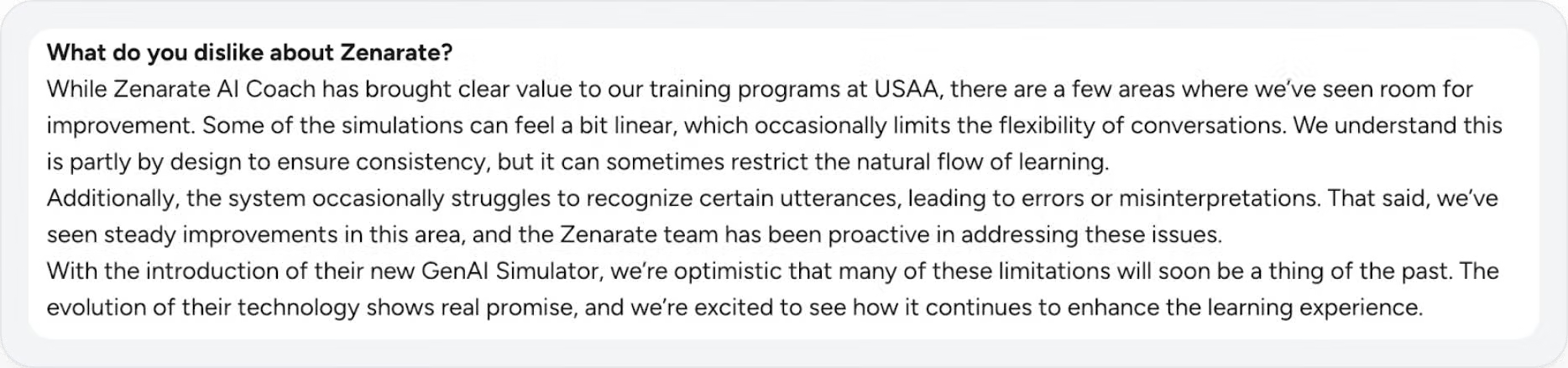
How much does Zenarate cost?
Zenarate follows a sales-led pricing model where detailed costs are shared during demos based on team size, deployment scope, and training requirements. Zenarate does not publish fixed pricing tiers or entry-level plans.
- Zenarate pricing is customized for large-scale training programs across contact centers and service teams
- Costs vary based on simulation depth, coaching features, and number of users
- Zenarate is typically positioned for enterprise deployments rather than small teams or individual use
- Requires direct engagement with Zenarate's sales team to receive a tailored quote
- No publicly listed plans or self-serve pricing options
This structure aligns with how Zenarate is deployed, where organizations implement Zenarate as part of broader training and performance programs across teams and regions.
How to choose the right Yoodli alternative
Choose a Yoodli alternative based on these seven criteria: roleplay realism, multi-stakeholder simulation, methodology alignment, deal and pipeline integration, coaching that drives behavior change, workflow simulation, and integration depth.
1. How realistic is the AI roleplay?
Most AI roleplay tools simulate conversations, but depth varies significantly. Look for systems that generate dynamic, unscripted interactions where AI buyers introduce real objections, shift context mid-conversation, and respond differently based on rep behavior.
2. Does the platform support multi-stakeholder buying committees?
Modern enterprise sales rarely involves a single decision maker. Evaluate whether the platform supports multi-persona roleplays where reps interact with multiple stakeholders (such as a CFO, champion, and procurement lead) in a single scenario, with each persona behaving distinctly.
3. Does the platform align with your sales methodology?
If your team has invested in MEDDIC, MEDDPICC, SPIN, BANT, or Challenger, your training platform should evaluate reps against that framework. Look for platforms that support methodology-aligned scorecards or allow you to upload your own evaluation rubrics.
4. Does the platform connect to real deals and pipeline data?
Roleplay should not exist in isolation from actual selling. Prioritize platforms that connect simulations to CRM data, deal stages, call transcripts, and live customer interactions to ensure practice reflects current pipeline realities.
5. Does coaching drive real behavior change?
Feedback alone does not improve performance unless it carries into execution. Look for platforms that connect practice, live calls, and post-call evaluation into a continuous coaching loop that drives measurable behavior change.
6. Does the platform support in-call and post-call workflow simulation?
Sales reps perform operational tasks during and after live conversations: CRM updates, dispositioning, data entry, navigation across systems. Evaluate whether the platform allows reps to practice these workflows in environments that mirror real systems, not just the spoken part of the conversation.
7. How deep are the integrations?
Most platforms claim integrations, but depth often remains limited to basic connections. Evaluate whether the system syncs data across CRM, conversation intelligence, dialers, LMS, and analytics tools to create a unified workflow. SCORM and xAPI support matter for organizations running structured learning programs through an LMS or LXP.
Which Yoodli alternative is best for your team?
The best Yoodli alternative depends on your primary use case:
- For high-volume SDR outbound practice: If your priority is outbound volume and objection handling, Outdoo AI lets reps build practice scenarios straight from a LinkedIn profile, so they're rehearsing against a specific account before they ever pick up the phone.
- For B2B sales teams running complex, multi-stakeholder deals: Outdoo AI is built for exactly this. It runs roleplays against up to three AI stakeholders in one scenario (CFO, champion, procurement) and scores reps against SPIN, BANT, MEDDIC, MEDDPICC, or Challenger, whichever your team uses.
- For enterprise enablement rollouts: Outdoo AI adds what Yoodli doesn't have out of the box: HIPAA and CCPA compliance, certification workflows and admin controls, SCORM/xAPI support for your LMS, and workflow simulation so reps also practice the CRM logging and dispositioning that happens after the call.
- For contact center and customer support training: Outdoo AI extends the same closed-loop coaching model, roleplay, live-call scoring, and workflow practice, to support and CS teams, not just sales.
- For fast, low-cost pitch practice: PitchMonster fits best. It's built for short, gamified practice sessions with instant feedback, without the enablement overhead the platforms above carry.
While each tool addresses a specific layer of sales training, most enterprise teams eventually need more than isolated improvements. Practice quality alone is not the challenge. The real test is whether that improvement carries through into real deals, methodology adherence, and measurable revenue outcomes.
Outdoo AI addresses this gap by combining AI roleplays in chat, voice, and video modes with multi-persona simulations, methodology-aligned scorecards (SPIN, BANT, MEDDIC, MEDDPICC, Challenger), live call analysis, multi-lingual support, and in-call and post-call workflow simulation in one system. Enterprise teams prepare before conversations, execute during live customer interactions, and complete workflows like CRM logging and dispositioning in realistic environments that mirror actual systems.
This creates a closed-loop coaching system where practice informs execution, execution validates improvement, and insights continuously refine training. Enterprise leaders gain visibility not just into how reps perform in simulations, but into how consistently they execute across the customer-facing workflow, and which conversational behaviors actually correlate with won deals in their business.
If your goal is to move beyond delivery coaching and build a system that improves real performance across conversations and workflows, the next step is to see how this works in practice. Book a demo to understand how Outdoo AI can align training directly with execution in your environment.
Frequently Asked Questions
.svg)
The best Yoodli alternatives in 2026 are Outdoo AI, Second Nature, Hyperbound, PitchMonster, Quantified, Mindtickle, and Zenarate. Outdoo AI is the most complete enterprise alternative because Outdoo AI combines AI roleplay, live call coaching, methodology-aligned scoring, and post-call workflow simulation in a single system. Second Nature works for structured onboarding. Hyperbound suits SDR outbound practice. PitchMonster fits low-cost pitch practice. Quantified supports certification in regulated industries. Mindtickle delivers full enterprise enablement. Zenarate handles contact center training.
Yoodli is an AI communication coaching platform with sales roleplay capabilities, focused on improving how reps deliver and communicate. Outdoo AI is an AI sales coaching platform that closes the loop from practice to performance, connecting roleplay, post-call workflow execution, and revenue outcome correlation in one system. Both platforms support multi-persona simulations and customer-uploaded materials. The structural difference is that Outdoo AI's scorecards align directly to sales methodologies (SPIN, BANT, MEDDIC, MEDDPICC, Challenger), and the same scorecard evaluates roleplay practice and the live customer call that follows. Yoodli's pricing starts free, with Pro at $8/month and Advanced (unlimited roleplays) at $20/month for individuals, both billed annually; enterprise/team pricing is not published. Outdoo AI has a free tier and a usage-based tier, along with custom pricing for enterprises.
For B2B sales teams, Outdoo is the strongest Yoodli alternative. Where Yoodli scores how clearly and confidently someone speaks, Outdoo scores whether the rep actually followed your sales methodology (MEDDIC, SPIN, Challenger, whichever you use), simulates the CRM workflow steps that come after the call, and ties practice performance back to real call outcomes.
Yoodli offers a free tier with limited usage, a Pro plan at $8 per month for individuals, an Advanced plan at $20 per month with unlimited roleplays and additional privacy controls (annual billing saves up to 40% on both paid tiers), and Enterprise plans that require a sales conversation. Yoodli's individual pricing is listed publicly on yoodli.ai/pricing, but Yoodli's Team/Enterprise tier, the one that actually competes with Outdoo, has no published price anywhere. Yoodli is SOC 2 Type 2 certified and GDPR compliant.
Yoodli supports multi-persona simulations with up to three AI personas, including buying committees and panel-style interactions. Outdoo AI also supports up to three AI stakeholders per scenario with each persona behaving distinctly based on configured priorities and objection styles. The differentiation between the two on this dimension is integration depth: Outdoo AI's multi-persona scenarios pull from real CRM data, deal context, and call transcripts, and the same scorecard evaluates the practice session and the live call that follows. Yoodli's multi-persona scenarios are built from uploaded materials and scenario libraries within Yoodli's own environment.
Table of Contents
Talk to Sales
Have questions about training and enablement for your sales, CS, support, or leadership team? Let's talk.
Talk to Sales