



Sales teams have never tackled a more competitive and fast-paced environment. Reps need every edge they can get to move the performance needle, and structured sales coaching is one of the highest-leverage investments a company can make.
According to Forbes research, 67% of companies that invested in formal sales coaching over three years saw higher revenue growth and quota attainment. Other studies show 25% to 40% increases in sales activity, leads generated, average deal size, and close ratios with structured coaching programs.
The catch is that most conversations about sales coaching are narrow. Effective coaching touches every part of a rep's day: from prospecting to discovery, demos, objection handling, and post-sales workflows. No single tool covers all of it. The best sales coaching stacks usually combine two or three platforms that handle different layers.
This guide breaks down the best sales coaching tools in 2026. You will see which tools fit which part of the workflow, how they compare, and how to build a stack that actually moves the needle.
Note: Last updated on June 2026. This guide is based on a detailed review of each platform's publicly available product information, G2 reviews, community feedback, and verified user data as of the time of writing. Platform capabilities, pricing, and positioning change frequently. We revisit and update this guide regularly to ensure accuracy.
15 Best Sales Coaching Tools in 2026: Quick Comparison
Among the above list, Outdoo AI is the only platform on this list that combines AI roleplay, closed-loop coaching, and conversation intelligence into one system with unified scoring across both practice and live calls. Other tools handle specific layers well, but most coaching stacks need two or three platforms to cover the full workflow.
1. Outdoo AI: Best for Enterprise Sales Coaching and AI Roleplay
Category: AI Roleplay and Closed-Loop Coaching

Outdoo AI is an enterprise AI roleplay and coaching platform built for customer-facing teams. It is the only platform on this list that combines AI roleplay, closed-loop coaching, and conversation intelligence in one system, with unified scoring across both practice sessions and live customer calls.
Where most coaching tools focus on either practice (roleplay platforms) or inspection (call analytics), Outdoo connects the two. Insights from live calls translate directly into AI-generated roleplays. Reps practice the exact objections and scenarios they just heard, then go into the next call better prepared. Managers see whether coaching is actually changing behavior, not just whether it happened.
What Outdoo AI covers across AI roleplay, coaching, and execution:
What makes Outdoo AI different from typical sales coaching tools:
Where Outdoo AI falls short:
Best For:
Sales enablement, L&D, and revenue leaders who want practice, live execution, and coaching tied into one measurable loop, especially for teams handling complex, multi-stakeholder deals.
Outdoo AI's pricing and how it is structured:
Tailored pricing across Free, Premium, and Enterprise tiers based on team size and capabilities needed. Book a demo for details.
2. Spiky: Best for Real-Time Conversation Intelligence and In-Call Coaching
Category: Conversation Intelligence and Real-Time Coaching
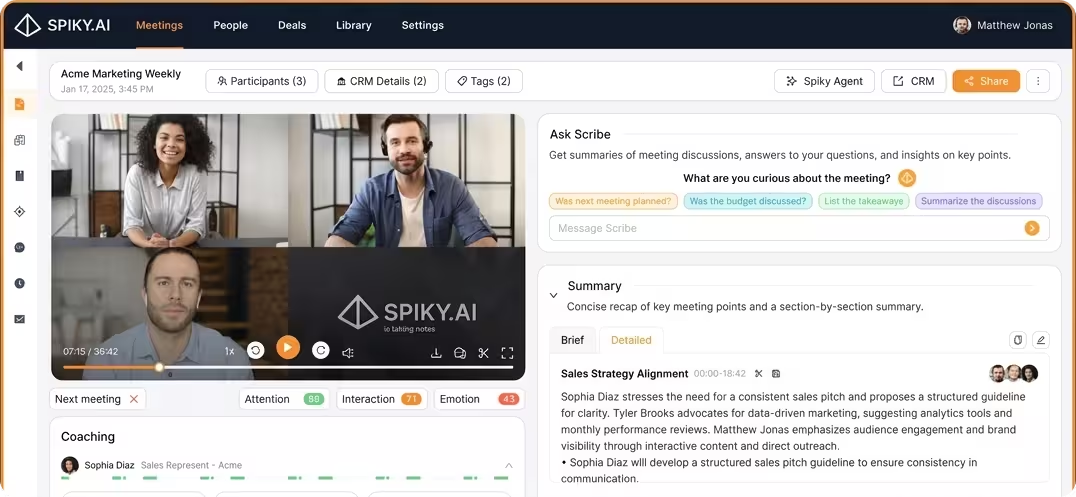
Spiky is an AI-powered conversation intelligence and sales coaching platform built for revenue teams that want coaching to happen while the call is still in progress, not only after the recording is reviewed.
The platform combines live meeting intelligence, real-time rep guidance, playbook tracking, objection detection, CRM sync, and post-call coaching insights. During calls, Spiky can surface prompts around objections, talk ratios, speaking pace, tone, buyer engagement, and methodology coverage. After the call, managers get structured insights that help identify coaching opportunities, track rep behavior, and understand which conversations are moving deals forward.
Spiky is especially useful for teams that already have a defined sales methodology and want reps to follow it more consistently across live customer conversations. Instead of relying only on managers to review recordings after the fact, Spiky helps reps course-correct during the call and gives leaders a clearer view of execution quality across the team.
What Spiky covers:
Where Spiky works well:
Where Spiky falls short:
Best For:
Mid-market and enterprise sales teams that want real-time guidance during live calls, stronger playbook adherence, and structured post-call coaching insights.
Spiky’s pricing and how it is structured:
Custom pricing. Teams should contact Spiky for current plan details based on team size, usage, integrations, and coaching requirements.
3. AmpUp AI: Best for Turning Top-Rep Patterns Into Team-Wide Sales Coaching
Category: AI Sales Coaching and Deal Execution
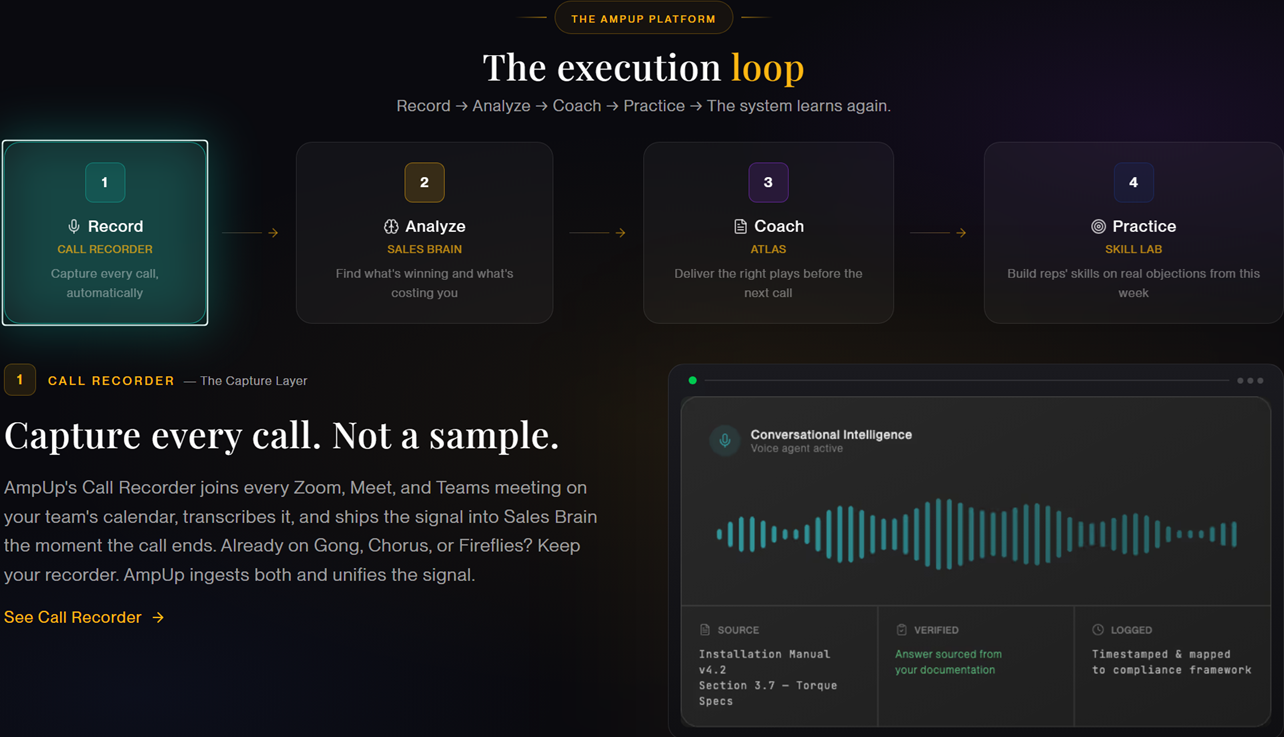
AmpUp AI is an AI sales coaching platform built for sales teams that want every rep to perform more like their top sellers. Instead of relying on generic playbooks or occasional manager-led call reviews, AmpUp analyzes sales interactions to identify what high-performing reps do differently and turns those patterns into personalized coaching for the rest of the team.
The platform focuses on closing the execution gap between top performers and the broader sales team. It gives reps coaching before and after calls, helps managers spot skill gaps from real call patterns, and creates AI roleplay scenarios from the objections and deal situations reps are actually facing.
AmpUp is especially useful for teams where top-performer knowledge is trapped in a few reps' heads and managers do not have enough time to coach every call. It sits alongside the sales workflow, helping teams convert real conversation data into preparation, coaching, and practice.
What AmpUp AI covers:
Where AmpUp AI works well:
Where AmpUp AI falls short:
Best For:
Sales teams that want to turn top-performer behavior into repeatable coaching, especially when managers are stretched too thin to review every call or coach every rep consistently.
AmpUp AI's pricing and how it is structured:
Pricing is available through AmpUp's sales team. AmpUp lists plan options for pilots, growth teams, and larger deployments, with pricing based on team size and requirements.
4. Mindtickle: Best for Structured Enterprise Onboarding and Readiness
Category: Sales Readiness and Training
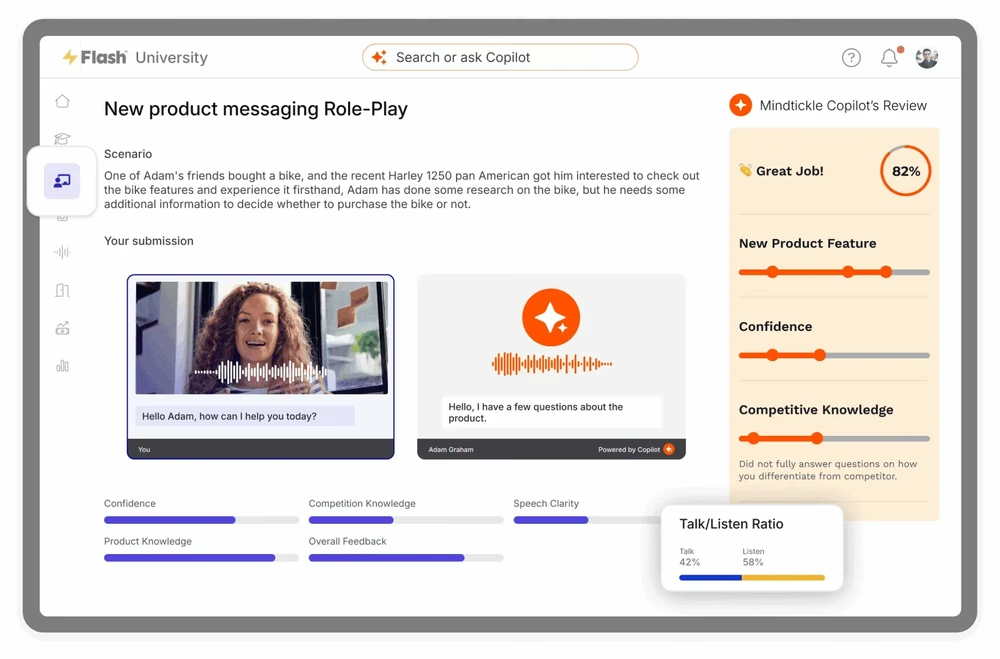
Mindtickle is a sales readiness and enablement platform built for structured onboarding, certification, and skill development at enterprise scale. It is one of the most widely deployed platforms for teams running formal training programs.
The platform lets you define ideal sales rep profiles, build certification paths, and track rep development against business outcomes. Its content management feature ensures the right materials surface at the right moment in the learning journey.
What Mindtickle covers:
Where Mindtickle works well:
Where Mindtickle falls short:
Best For:
Enterprise teams running structured onboarding, certification, and readiness programs at scale.
Mindtickle's pricing:
Not publicly disclosed. See our Mindtickle alternatives guide for pricing context.
4. Gong: Best for Conversation Intelligence and Call Inspection
Category: Conversation Intelligence for Coaching

Gong is one of the most established conversation intelligence platforms in B2B sales. It analyzes customer calls, emails, and meetings to surface coaching moments, deal risks, and behavioral patterns across the entire revenue cycle.
For sales coaching specifically, Gong gives managers visibility into how reps actually communicate with prospects. The trade-off is that Gong is built for inspection rather than execution. It tells you what happened on a call, but turning that into measurable behavior change still falls on managers.
Teams that want to close that gap often pair Gong with Outdoo for closed-loop coaching: the same scorecard runs across both Gong-recorded live calls and Outdoo's AI roleplay practice, so leaders can see whether the skills being coached actually show up in execution.
What Gong covers:
Where Gong leads in conversation analytics:
Where Gong falls short as a standalone coaching system:
Best For:
Large enterprise sales organizations with dedicated RevOps and enablement teams that need deep conversation analytics for coaching.
Gong's pricing and how it is structured:
Estimated to be $5,000 base price plus $1,600/user/year. See our Gong alternatives guide for more pricing context.
5. Proshort: Best for In-Workflow Execution Coaching
Category: AI Sales Execution and Workflow Coaching

Proshort is an AI-powered sales execution platform that helps sales teams improve CRM hygiene, prepare for deals with AI roleplay, automate workflows, and guide reps with contextual coaching directly within their workflow.
The platform sits inside the rep's day-to-day workflow, surfacing coaching prompts and AI guidance based on deal context rather than treating coaching as a separate session.
What Proshort covers:
Where Proshort adds value:
Where Proshort is still catching up:
Best For:
Mid-market and enterprise sales orgs that want AI execution coaching tied directly to CRM hygiene and workflow automation.
Proshort's pricing and how it is structured:
Professional: $75/user/month. Enterprise: Custom pricing.
6. Highspot: Best for Content-Led Enablement and Coaching
Category: Enablement Platform with Coaching

Highspot is a unified sales enablement platform that combines content management, training, coaching, and analytics into a single system. It is one of the most established platforms in the enablement category, particularly for enterprise teams with complex product lines.
Coaching in Highspot is built around content and playbooks. Reps get guided selling workflows, video assessments, and roleplay simulations tied to specific deal scenarios.
What Highspot covers:
Where Highspot works well:
Where Highspot falls short:
Best For:
Enterprise sales and enablement teams that need a unified platform for content, training, and coaching across large, distributed sales orgs.
Highspot's enterprise pricing and how it is structured:
Custom pricing. Vendr data suggests an average contract value of approximately $91,460 annually. See Highspot alternatives for a full platform comparison.
7. Hyperbound: Best for High-Volume SDR Roleplay Practice
Category: AI Roleplay for SDR Coaching

Hyperbound is an AI sales roleplay platform focused on helping B2B teams practice realistic buyer conversations at scale. It is particularly strong for SDR and AE teams that need high-volume practice on outbound calls, discovery, and objection handling.
The platform converts ICP descriptions into interactive AI buyers in under two minutes, with dynamic buyer personas trained on real B2B sales calls. Its Real Call Scoring feature also lets managers score actual customer calls against the same scorecards used in roleplay.
What Hyperbound covers:
Where Hyperbound works well:
Where Hyperbound falls short:
Best For:
SDR and AE teams that need high-volume, realistic roleplay practice with data-driven connections between practice and live call performance.
Hyperbound's pricing and how it is structured:
Not publicly disclosed. Operates on a subscription model with monthly and annual plans. See Hyperbound alternatives for a full platform comparison.
8. Salesforce Enablement: Best for CRM-Native Coaching in Salesforce
Category: Enterprise Enablement
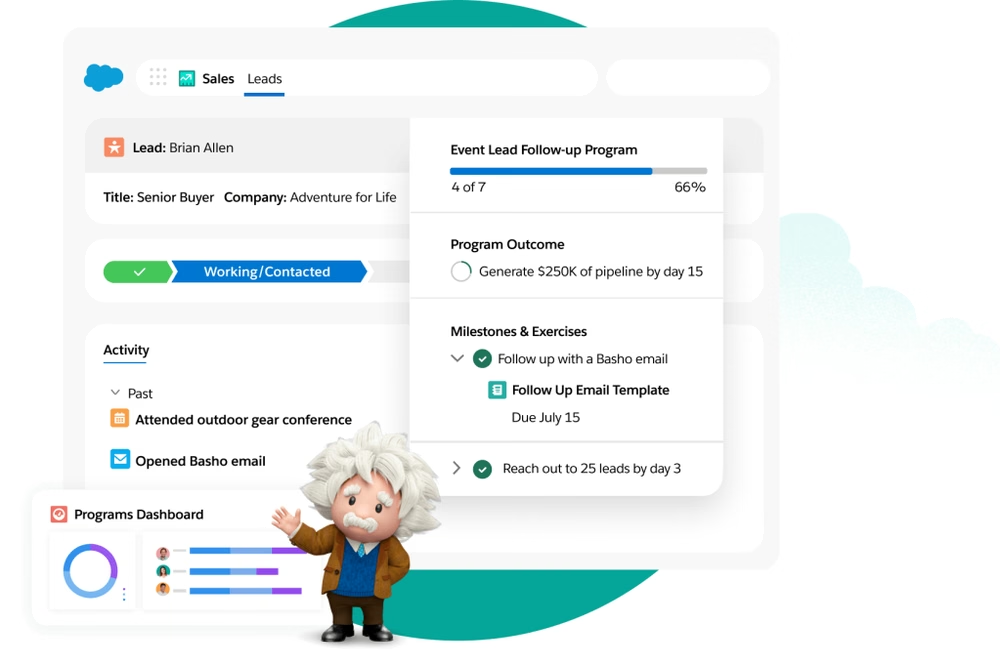
Following its 2021 acquisition of LevelJump, Salesforce Enablement links tailored coaching programs directly to CRM milestones, metrics, and business outcomes. For teams already invested in the Salesforce ecosystem, it is the most native option.
The platform focuses on tying enablement activity to revenue outcomes, with in-app coaching, guidance, and walkthroughs delivered inside Salesforce itself.
What Salesforce Enablement covers
Where Salesforce Enablement works well:
Where Salesforce Enablement falls short:
Best For:
Enterprise teams already deeply invested in Salesforce who want enablement tied directly to CRM milestones.
Salesforce Enablement's pricing and how it is structured:
$100/user/month, billed annually.
9. Allego: Best for Video-Based Learning and Peer Coaching
Category: Training, Content, and Coaching

Allego combines training, content management, and coaching into a unified platform. It is known for video-based learning, peer collaboration, and AI-driven coaching recommendations tied to rep activity.
What Allego covers:
Where Allego works well:
Where Allego works well:
Allego's pricing and how it is structured:
Mid-market and enterprise enablement teams that want training, content, and coaching in a unified video-based platform.
Pricing:
Custom pricing; quote-based plans only. See Allego alternatives for a full comparison.
10. SecondNature: Best for Structured Onboarding and Pitch Certification
Category: AI Roleplay for Onboarding

SecondNature uses conversational AI to help sales reps practice realistic scenarios through a virtual pitch partner. It is particularly strong for structured onboarding and pitch certification, where reps move through predefined scenarios with consistent feedback.
What SecondNature covers:
Where SecondNature works well:
Cons:
Where SecondNature falls short:
Mid-market teams that need a focused AI roleplay solution for onboarding and certification.
Pricing:
Estimated $30 to $40 per user per month, based on aggregated user data. Custom enterprise plans available. See Second Nature alternatives for a full comparison.
11. Saleshood: Best for Playbook-Driven Coaching and Training
Category: Coaching Playbooks and Training
![Highspot vs SalesHood: The Definitive Comparison [January 2026]](https://cdn.prod.website-files.com/666fdec617b81d256ca8f1e5/6a120fc870c7e02ecfb71b8b_6a120fb8b5bbcbaf1ed3471b_6a02c714793316e69efdc9e9_SalesHood-pages-dashboard-1024x567.avif)
SalesHood is a sales coaching and training platform built around interactive playbooks, video coaching, and roleplay simulations. It centralizes sales training and best-practice playbooks in a single hub, helping reps ramp faster.
What Saleshood covers:
Where Saleshood works well:
Where Saleshood falls short:
Best For:
Mid-market sales teams that want structured coaching playbooks, video coaching, and training in one platform.
Saleshood's pricing and how it is structured:
Starts at approximately $45 per user per month.
12. HubSpot Sales Hub: Best for Lightweight CRM-Native Coaching
Category: CRM-Native Coaching
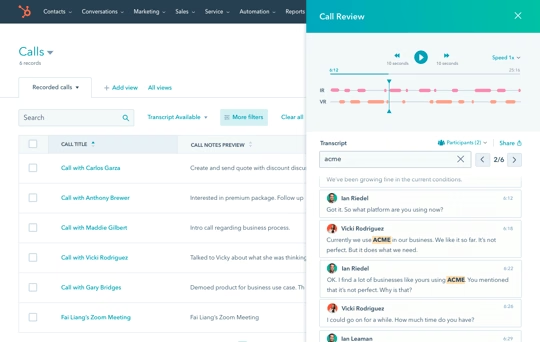
HubSpot Sales Hub combines CRM, sales engagement, and coaching workflows into a single platform. For teams already on HubSpot, it adds call recording, sequences, and lightweight coaching directly inside the CRM.
It is not a dedicated coaching platform, but for mid-market teams that want coaching tied to CRM data without a separate vendor, it works well as a starting point.
What HubSpot Sales Hub covers:
Where HubSpot Sales Hub works well:
Where HubSpot Sales Hub falls short:
Best For:
Mid-market teams already on HubSpot that want lightweight coaching tied to CRM data without adding a separate vendor.
HubSpot Sales Hub's pricing and how it is structured:
From $90/seat/month for Sales Hub Professional. Enterprise plans available.
13. Quantified AI: Best for Avatar-Based Communication Coaching
Category: AI Avatar-Based Coaching

Quantified AI uses AI-generated digital avatars to create a judgment-free practice environment for sales reps. Reps interact with virtual characters in simulated conversations and receive detailed feedback on communication skills, messaging, and delivery.
The platform is particularly useful for teams focused on presentation skills, communication quality, and onboarding readiness rather than full sales execution.
What Quantified AI covers:
Where Quantified AI works well:
Where Quantified AI falls short:
Best For:
Large sales organizations that want avatar-based practice for communication quality, onboarding, and presentation skills.
Quantified AI's pricing and how it is structured:
Custom pricing. Third-party data suggests $85 to $110 per user per month, though actual costs vary by deployment. See Quantified AI alternatives for a full comparison.
14. Otter: Best for Affordable Call Capture on Small Teams
Category: Call Capture for Coaching
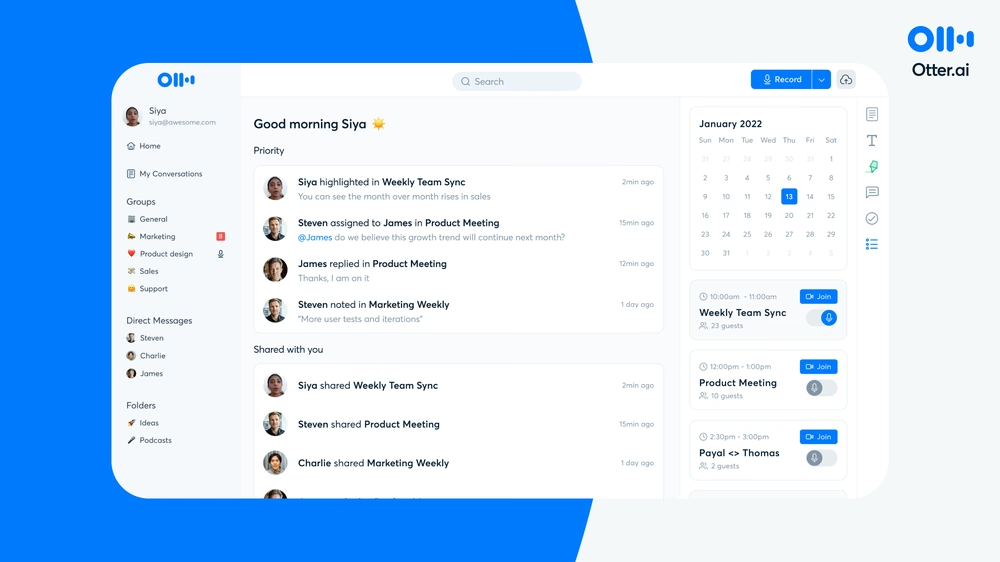
Otter is a real-time transcription tool that captures meetings, calls, and conversations across devices. It is not a dedicated coaching platform, but for small teams that need affordable call capture to feed into coaching workflows, it does the job.
What Otter covers:
Where Otter works as an entry point:
Where Otter falls short as a coaching tool:
Best For:
Small teams that need affordable call capture to feed into a larger coaching workflow. Most teams will pair Otter with a dedicated coaching platform like Outdoo for actual rep development.
Otter's pricing and how it is structured:
Free plan available. Paid plans start at $16.99 per user per month. See Otter AI pricing details for a full breakdown.
How to Pick the Right Sales Coaching Tool
The right tool depends on what part of the coaching workflow is most broken for your team. Here is a quick guide based on the most common scenarios.
1. If new rep ramp time is the bottleneck: Mindtickle, SecondNature, and Salesforce Enablement handle structured onboarding and certification well. Outdoo adds AI roleplay practice that mirrors the real scenarios reps will face.
2. If reps struggle with complex, multi-stakeholder deals: Outdoo's multi-persona roleplays let reps practice with up to 3 stakeholders in one session, which no other platform on this list offers.
3. If coaching is inconsistent across managers: Gong and Outdoo both apply structured scorecards across live calls. Outdoo extends this with AI-augmented coaching running the same scorecards across practice sessions, making coaching impact measurable.
4. If you need coaching tied to specific deals: Proshort and Outdoo both tie coaching to deal context. Proshort focuses on workflow guidance, Outdoo focuses on closed-loop coaching with AI roleplay.
5. If you want enablement content alongside coaching: Highspot, Allego, and Mindtickle handle this well. None of them offer dedicated AI roleplay practice, so they often pair with Outdoo or a similar coaching layer.
6. If communication quality is the focus: Quantified AI and SecondNature both specialize in delivery and communication coaching.
7. If your team is small and budget-conscious: HubSpot Sales Hub (if you are already on HubSpot) or Otter for basic call capture. Most small teams outgrow these quickly.
8. If you want one platform that closes the loop between practice, live calls, and coaching: Outdoo is the only platform on this list that does all three in one system, with unified scoring across simulations and real conversations.
Bottom line: Most teams need two or three tools to cover the full coaching workflow. The most effective stacks combine a closed-loop coaching platform like Outdoo AI with a content and enablement platform (Highspot, Allego, or Mindtickle), and sometimes a CRM-native coaching layer (HubSpot or Salesforce Enablement) for deal-specific context.
How Zwicker Built a Scalable Coaching Program with Outdoo AI
The shift from inspection-only coaching to closed-loop coaching is not theoretical. Teams that have made the switch report measurable changes in ramp time, execution quality, and coaching consistency.
Here's a video on how Zwicker was able to scale up coaching with Outdoo AI.T
The above customer story from Outdoo AI explains how Zwicker moved away from traditional roleplay (which was not working) to a structured AI roleplay and coaching approach.
Final Thoughts
Sales coaching in 2026 is no longer about a manager listening to a few calls a week. It is a continuous, structured loop between practice, execution, and reinforcement. The right tools depend on which part of that loop is most broken for your team.
If you are building from scratch, start with the layer that fixes the biggest gap. For most teams, that is either AI roleplay (to fix execution quality) or sales readiness (to fix ramp time). Add conversation intelligence and enablement platforms as the team scales.
And whatever else you choose, do not skip the closed-loop layer. The teams that see the biggest gains from sales coaching are the ones that can prove training is changing behavior, not just that it happened.
Outdoo AI brings practice, live execution, and coaching together in one closed-loop system. Book a demo to see how it can help your team turn coaching investment into measurable performance improvement.
Frequently Asked Questions
.svg)
Use CRM data to track performance, give personalized feedback, map sales workflows and provide focused training programs to improve skills.
Practice customer conversations through roleplays, review calls for feedback, set learning paths and track progress to measure improvement.
Sales reps can practice real scenarios, get instant guidance, and identify improvement areas using tools like Outdoo AI, which simulates conversations, scores performance, and helps teams turn coaching into measurable results.
Apply insights from coaching, experiment with strategies in daily calls, and measure outcomes to improve performance consistently.
Sales managers track performance metrics like conversion rates, deal movement, and call quality over time. They compare results before and after coaching to spot improvement. Regular reviews help confirm coaching is driving better sales outcomes.
Table of Contents
Talk to Sales
Have questions about training and enablement for your sales, CS, support, or leadership team? Let's talk.
Talk to Sales